
full timeline
UN autonomous weapons treaty negotiations
The International Committee of the Red Cross has issued an urgent appeal for legally binding rules on AI-controlled weapons after United Nations negotiations in Geneva failed to reach an agreement.
Follow UN autonomous weapons treaty negotiations in the Factlen app and get an alert when there is news. Get the app
Share this story
Latest report
Red Cross Warns Time Is Running Out on Autonomous Weapons Rules After UN Talks Stall
The International Committee of the Red Cross has issued an urgent appeal for legally binding rules on AI-controlled weapons after United Nations negotiations in Geneva failed to reach an agreement. Member states instead opted to extend discussions until 2028, prompting warnings from humanitarian groups that the technology is outpacing diplomatic efforts.
- UN member states failed to launch formal negotiations for a treaty on autonomous weapons, extending talks to 2028.
- The International Committee of the Red Cross warned that the window to establish meaningful human control is rapidly closing.
- Amnesty International called the delay a wasted opportunity and urged moving negotiations to the UN General Assembly.
- The core dispute remains whether existing international humanitarian law is sufficient to govern military artificial intelligence.
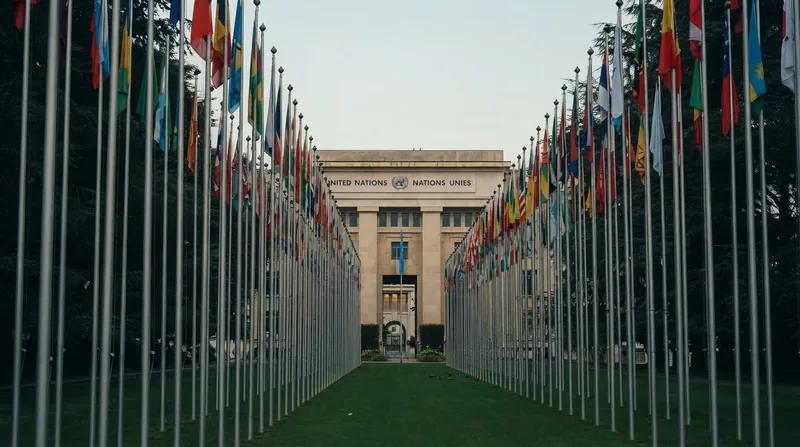
The future of artificial intelligence on the battlefield is not being decided in Silicon Valley server farms or military testing grounds. It is being determined in the conference rooms of the United Nations in Geneva, where the diplomatic process governing conventional weapons has effectively stalled.[1][3]
During the November 2026 summit of the Convention on Certain Conventional Weapons, member states failed to launch formal negotiations for a legally binding treaty on lethal autonomous weapons systems. Instead, delegates agreed only to elaborate on potential rules by the year 2028.[3][4]
The two-year delay has prompted an immediate and stark warning from the International Committee of the Red Cross. The humanitarian organization stated that the window to establish meaningful human control over autonomous weapons is rapidly closing as the technology proliferates.[1][2]
"The international community is moving too slowly," the ICRC noted in its renewed urgent call. The organization emphasized that while diplomats debate definitions, weapons systems capable of selecting and engaging targets without human intervention are already being developed and deployed.[2]
The 2028 Extension
The agreement to extend discussions until 2028 represents a compromise between nations pushing for an immediate ban and those investing heavily in military artificial intelligence. The consensus-based structure of the UN forum means that a single dissenting state can block binding resolutions.[4][6]
Amnesty International characterized the outcome as a wasted opportunity that fails to address the urgency of the situation. The human rights group argued that pushing the deadline back by 24 months allows major military powers to continue developing these systems without international legal constraints.[5]
The core of the diplomatic dispute centers on what constitutes meaningful human control over a weapon system. While fully autonomous killer robots often dominate public discourse, the actual technology involves varying degrees of algorithmic targeting and automated firing mechanisms.[1][6]
Some nations argue that existing international humanitarian law is sufficient to govern the use of AI in combat. They maintain that human commanders remain legally responsible for the deployment of any weapon, regardless of its specific level of autonomy.[3][4]
Conversely, a growing coalition of countries has expressed support for a specific legal instrument to govern the technology. These states argue that algorithms cannot be held accountable for war crimes, making a dedicated treaty essential for global security.[4][6]
The Technological Reality
The diplomatic timeline stands in sharp contrast to the rapid pace of technological advancement in the defense sector. While the United Nations aims for a framework by 2028, defense contractors are actively marketing loitering munitions and drone swarms with increasingly sophisticated autonomous capabilities.[1][3]
These systems are often marketed as precision-guided or AI-assisted, blurring the line between automated targeting aids and fully autonomous lethal force. A skeptical view of these capabilities suggests that the marketing language often outpaces the actual reliability of the underlying algorithms.[1][6]
The ICRC has specifically called for strict prohibitions on unpredictable autonomous weapons and those designed to target humans directly. They argue that machine learning systems, which adapt based on their environment, introduce unacceptable levels of unpredictability into combat scenarios.[2]
"Weapons that target humans and those whose effects cannot be anticipated must be strictly prohibited," the ICRC statement detailed. The organization maintains that delegating life-and-death decisions to sensors and software violates the fundamental principles of humanity.[2]
The challenge of verification further complicates the international regulatory landscape. Unlike nuclear or chemical weapons, the autonomy of a drone or missile is often a matter of software code rather than physical hardware, making compliance exceptionally difficult to monitor.[1][5]
Shifting the Forum
Frustration with the consensus model in Geneva has led some advocates to propose moving the negotiations to a different international forum. They point to the successful treaties banning landmines and cluster munitions, which were achieved outside the traditional UN consensus framework.[4][5]
Amnesty International has explicitly called for states to bypass the stalled Convention on Certain Conventional Weapons. The organization is urging the UN General Assembly to take up the mandate, where resolutions can be passed by a simple majority vote rather than requiring unanimous agreement.[5]
Moving the debate to the General Assembly would allow the majority of nations to draft a binding treaty relatively quickly. However, a treaty drafted without the participation of major military powers would face significant enforcement challenges and might fail to curb the actual deployment of the technology.[3][6]
The United States and Russia, both heavily invested in military artificial intelligence, have historically opposed a preemptive ban on autonomous weapons. Their participation is widely considered essential for any regulatory framework to have a meaningful impact on global conflict.[4][6]
The US has previously proposed a non-binding code of conduct for the responsible military use of artificial intelligence. This approach focuses on establishing best practices and voluntary guidelines rather than imposing strict legal prohibitions on development.[3][4]
The Accountability Gap
A central concern for humanitarian organizations is the accountability gap created by autonomous systems on the battlefield. If an AI-driven weapon commits a violation of international law, determining liability between the programmer, the manufacturer, and the deploying commander remains legally ambiguous.[1][2]
The ICRC emphasizes that legal obligations under the Geneva Conventions apply exclusively to humans, not to machines. The organization insists that human operators must retain the ability to intervene and abort attacks to ensure compliance with the principles of distinction and proportionality.[2]
As the 2028 deadline approaches, the pressure on international diplomats will only intensify. The next two years of elaboration will require translating abstract ethical concerns into concrete legal definitions that can withstand the chaotic realities of modern warfare.[3][4]
The risk, according to the Red Cross, is that the international community will arrive at a regulatory framework only after autonomous weapons have become a standard component of global arsenals. Once integrated into military doctrine, rolling back the technology becomes exponentially more difficult.[1][2]
The outcome of these negotiations will ultimately determine whether the decision to apply lethal force remains a uniquely human responsibility. Until a binding agreement is reached, the development of military AI continues without specific international constraints.[5][6]
Sources
- [1]The Guardian — It will soon be too late to regulate use of autonomous weapons, warns Red Cross Read on The Guardian →
- [2]International Committee of the Red Cross — ICRC renews urgent call for legally binding rules on autonomous weapons after failure to launch negotiations Read on International Committee of the Red Cross →
- [3]AP News — UN-backed talks extend AI killer robot discussions to 2028 Read on AP News →
- [4]Al Jazeera — Nations agree to 'elaborate' on rules for AI-run 'killer robots' by 2028 Read on Al Jazeera →
- [5]Amnesty International — Global: States' Failure to Launch Negotiations on an Autonomous Weapons Treaty Is a Wasted Opportunity Read on Amnesty International →
- [6]NPR — Killer robots: U.N. talks fall short of hopes for legally binding rules Read on NPR →
What to watch
- Member states have set a 2028 target to negotiate a regulatory framework on lethal autonomous weapons.
- Negotiators face significant challenges in defining "meaningful human control" and preventing major military powers from vetoing the final text.
- Amnesty International has urged moving negotiations to the UN General Assembly.
Charts, maps and images
Timeline
November 2026
Red Cross Warns Time Is Running Out on Autonomous Weapons Rules After UN Talks Stall
UN Member States Agree to Pursue Global Regulations on Autonomous Weapons by 2028
UN Geneva Conference Convenes to Debate Global Prohibitions on Autonomous Weapons
US and Russia Move to Block Binding UN Rules on Autonomous Weapons


September 2026
US and Russia Remove Human Oversight Requirement From Draft UN AI Weapons Treaty
AI128 Countries Agree on First UN Framework Defining Autonomous Weapons
July 2026
The End of Arms Control Consensus: How the UN's Push for a LAWS Treaty Rewrites the Future of Warfare
How the story developed
The push for international regulations on artificial intelligence in warfare accelerated by July 17, 2026, when the UN Secretary-General called for a legally binding treaty on autonomous weapons by the end of the year. The proposed framework sought to mandate "meaningful human control" over the use of force, banning fully autonomous systems while regulating semi-autonomous military AI. Experts warned that delegating lethal force to algorithms risked automated discrimination and rapid "flash wars." Frustrated by consensus deadlocks in Geneva, a massive coalition of states moved the debate to the UN General Assembly, while major military powers resisted a binding ban to maintain strategic flexibility.
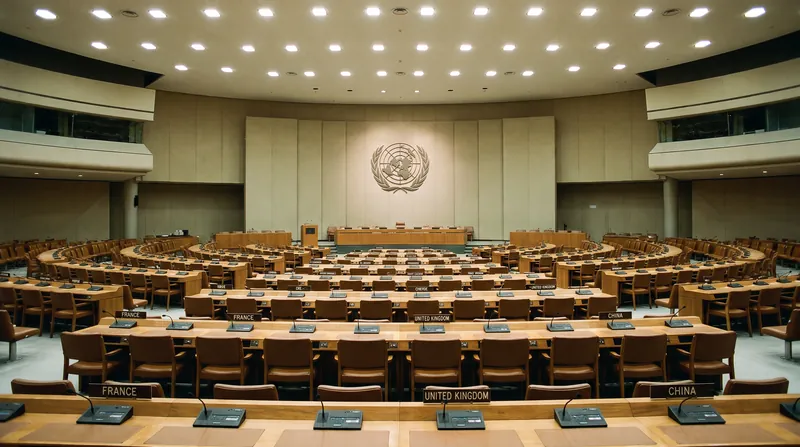
On September 7, 2026, a coalition of 128 nations reached a consensus on a non-binding text defining lethal autonomous weapons at UN talks in Geneva. The framework established a shared definition but imposed no immediate restrictions on the development or use of the weapons. Major military powers, including the US and Russia, successfully pushed for flexible language and opposed legally binding rules. Humanitarian groups criticized the agreement, arguing that measures to protect civilians were substantially diluted. Member states scheduled a decision for November 2026 on whether to use the text as a basis for negotiating a binding international treaty.
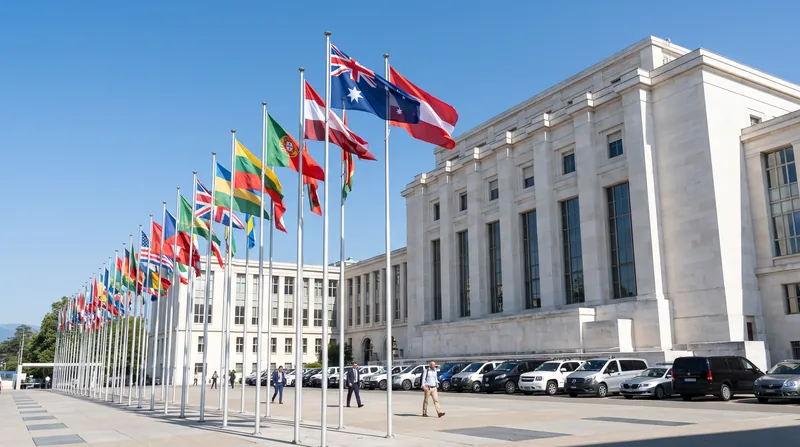
During a 15-hour closed-door session in Geneva reported on September 27, 2026, US and Russian diplomats collaborated to remove the human oversight requirement from the draft UN AI weapons treaty. With UN cameras turned off and observers removed, provisions requiring AI weapons to operate predictably and reliably, along with ethical considerations, were stripped from the text. Human rights groups warned the revisions crossed a moral boundary and eliminated accountability for civilian casualties.
By November 6, 2026, 163 states backed a UN General Assembly resolution to establish binding international rules on lethal autonomous weapons. In response, the United States and Russia actively maneuvered to block a formal negotiating mandate at the upcoming Convention on Certain Conventional Weapons review conference in Geneva, advocating for voluntary measures and internal working groups. Humanitarian organizations warned that delaying a treaty allowed defense contractors to continue deploying algorithms that cannot reliably distinguish between combatants and civilians.
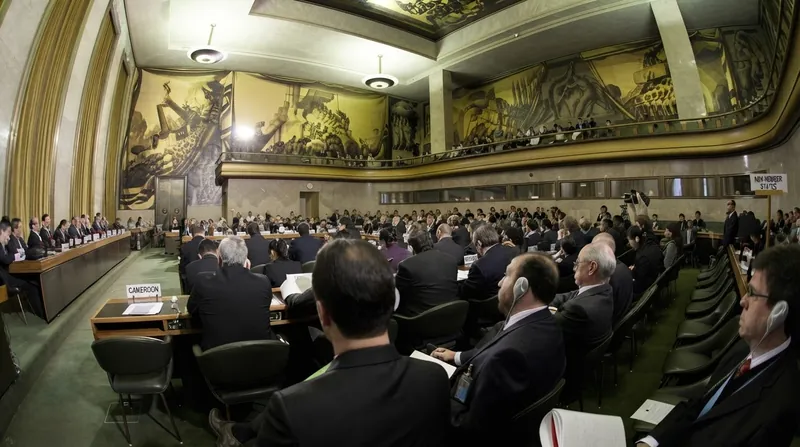
The United Nations convened a major conference in Geneva on November 14, 2026, to debate binding international restrictions on systems capable of selecting and engaging targets without human intervention. Advocacy groups urged member states to launch formal treaty negotiations to prohibit systems lacking human control. However, the conference faced immediate challenges due to the consensus-based decision-making process and opposition from major military powers, setting the stage for the eventual deadlock over the regulatory framework.