
Trump Intensifies Election Fraud Claims, Raising Fears of National Emergency Declaration
The administration is amplifying allegations of noncitizen voting and foreign interference, laying the groundwork for a potential emergency declaration to oversee the 2026 midterms.
By Adel Khoury

With less than three months until the 2026 midterm elections, President Donald Trump has significantly escalated his rhetoric regarding election integrity, laying the groundwork for what allies and critics alike warn could be an unprecedented declaration of a national emergency.
In a series of recent moves, the administration has intensified its focus on alleged vulnerabilities in state voting systems, framing them as a direct threat to national security. The escalation reached a new threshold when the president, asked directly by a conservative broadcaster if he would declare a "national security emergency for elections," pointedly refused to rule it out, stating that "stranger things have happened."[1][5]
The foundation for this potential maneuver was laid during a rare primetime television address in July. Speaking from the Oval Office, Trump claimed that the American electoral system falls "catastrophically short" of being secure and asserted that upcoming elections are highly vulnerable to foreign manipulation and widespread fraud. Primetime addresses are historically reserved for major national crises, natural disasters, or military actions, signaling the administration's clear intent to elevate routine election administration to the level of a severe national security threat that requires immediate federal intervention.[6]
Following the address, the White House and federal intelligence agencies began releasing a steady stream of declassified documents designed to bolster the president’s claims. This included intelligence memos detailing theoretical electronic voting machine vulnerabilities and instances of foreign access to state voter registration data. While independent election experts noted that much of the material was already public and did not prove that any actual votes were altered, the administration has aggressively used the disclosures to argue that federal intervention is absolutely necessary to protect the midterms.[1][2]
The mechanism being floated by the president’s allies relies on the National Emergencies Act (NEA), a 1976 law that formalizes the president's power to declare national emergencies and unlock specific statutory powers. Under normal circumstances, the NEA is used for sanctions, public health crises, or military deployments.
However, legal scholars and election experts emphasize that the NEA does not grant the executive branch the authority to cancel, postpone, or take over federal elections. The U.S. Constitution explicitly places the power to administer elections in the hands of the states, with Congress acting as a backstop.[3][4]
Despite these constitutional constraints, pro-Trump activists and organizations linked to the Election Integrity Network have reportedly been circulating a 17-page draft executive order. This document allegedly uses claims of foreign interference as a pretext for granting the president sweeping unilateral power over election administration. Prominent allies, including former political strategist Steve Bannon, have publicly predicted that an emergency declaration is imminent, urging supporters to prepare for extraordinary executive action in the final weeks of August.[1][3]
To build the public case for an emergency declaration, the administration has heavily amplified isolated incidents of administrative errors at the state level. When New Jersey recently disclosed that a software glitch had inadvertently allowed several thousand noncitizens to register to vote—though only a tiny fraction actually cast ballots—the Department of Homeland Security immediately issued a public notice. The agency argued that the localized error demonstrated a pressing need for standardized federal oversight and justified stripping states of their traditional autonomy over voter registration systems.[1]
This narrative was further fueled by a controversial brief released by the U.S. Census Bureau, which claimed to have identified tens of thousands of noncitizens who voted in previous elections based on a preliminary data match. The methodology behind the brief was not disclosed, drawing sharp criticism from democracy advocates and election officials who described the analysis as fundamentally flawed. Nevertheless, the data points have been weaponized to support the administration's broader assertion that state voter rolls are hopelessly compromised and require federal remediation.[1][3]
The push for federal control is part of what civil rights organizations describe as a multipronged strategy to subvert the electoral process. A comprehensive report by the Center for American Progress outlined 15 distinct tactics currently being employed by the administration, ranging from weaponizing federal agencies to demanding sensitive voter data from the states. The report argues that the ultimate goal is to create enough systemic doubt to justify extraordinary executive intervention, effectively nationalizing the election process under the guise of national security.[3]
The Department of Homeland Security has already begun applying pressure to state governments to comply with federal directives. DHS officials have reportedly threatened to withhold federal election security resources from states that refuse to turn over their voter rolls for federal inspection. This aggressive posture has alarmed state election directors across the political spectrum, both Republican and Democratic, who view the demands as a severe infringement on state sovereignty and a violation of established legal precedents regarding voter privacy.[2][4]
Historically, the United States has never canceled or postponed a federal election, even during the most severe national crises. Elections proceeded on schedule during the Civil War, the 1918 influenza pandemic, and World War II. Legal experts note that two separate federal courts have already blocked the administration's previous attempts to unilaterally rewrite election rules, with judges consistently ruling that the executive branch lacks the constitutional authority to override state election laws.[3][4]
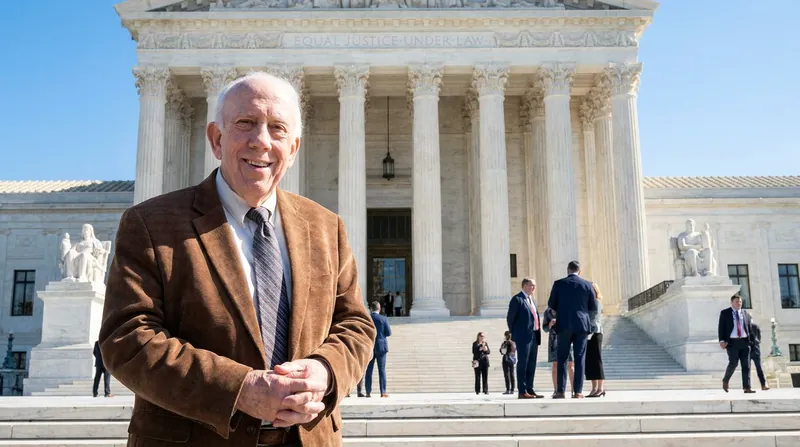
If the president were to follow through and declare a national emergency over the elections, the immediate result would likely be a constitutional crisis and a flurry of emergency litigation. State attorneys general and civil rights groups are already preparing legal injunctions to block any executive order that attempts to alter voting procedures, ban mail-in ballots, or seize voting machines. The Supreme Court would almost certainly be forced to intervene on an expedited timeline.[4][5]
While an emergency declaration would face immediate and severe headwinds in the courts, experts warn that the mere act of declaring one could achieve the administration's secondary objective: injecting massive uncertainty into the electoral process. By framing the midterms as a compromised national security event before a single vote is counted, the administration is establishing a predicate to challenge the results, ensuring that the outcome is litigated not just at the ballot box, but in the courts and the court of public opinion.[1][3]
Key points
- President Trump has refused to rule out declaring a national security emergency to oversee the 2026 midterm elections.
- The administration is amplifying claims of noncitizen voting and foreign interference to build a pretext for federal intervention.
- The U.S. Constitution grants states, not the executive branch, the authority to administer federal elections.
- Legal experts warn that an emergency declaration would immediately face court injunctions but could succeed in sowing widespread doubt about the election results.
Unanswered questions
- Whether the president will actually sign the drafted executive order before November.
- How the Supreme Court would rule on the use of the National Emergencies Act to alter state election procedures.
- The extent to which state election directors would comply with federal demands for voter roll data.
How we got here
July 2026
President Trump delivers a primetime address claiming the electoral system is vulnerable to foreign manipulation.
Late July 2026
The administration declassifies intelligence memos regarding voting machine vulnerabilities to bolster fraud claims.
August 2026
Trump refuses to rule out declaring a national security emergency for the upcoming midterm elections.
- Executive Security Proponents
- Argue that the electoral system is vulnerable to foreign interference and noncitizen voting, requiring federal oversight.
- Constitutional Originalists
- Emphasize that the U.S. Constitution strictly vests the power to administer elections in the states, not the executive branch.
- Voting Rights Advocates
- View the emergency rhetoric as a manufactured crisis designed to suppress voter turnout and subvert the midterm results.
- Election Administration Experts
- Focus on the logistical reality of secure voting, debunking claims of widespread fraud with empirical data.
Perspectives this story doesn't cover
- Local poll workers facing increased scrutiny
- International election observers
Sources
Source coverage
6 outlets
4 viewpoints surfaced






- [1]The GuardianElection Administration Experts
President's speech, declassification of documents and heightened claims of noncitizen voting have experts concerned
Read on The Guardian → - [2]Los Angeles TimesConstitutional Originalists
Trump has spent months waging an unusually aggressive campaign to reshape how states run elections
Read on Los Angeles Times → - [3]Center for American ProgressVoting Rights Advocates
The Trump Administration's 15 election sabotage tactics
Read on Center for American Progress → - [4]Democracy DocketConstitutional Originalists
Trump Considers National Emergency Over State Elections
Read on Democracy Docket → - [5]Common DreamsVoting Rights Advocates
Trump Doesn't Rule Out 'National Security Emergency for Elections'
Read on Common Dreams → - [6]Associated PressExecutive Security Proponents
Trump uses primetime address to raise doubts about past elections
Read on Associated Press →
More in News & Politics
See all →Senate Procedure
The Byrd Rule and the Three Tests: How the Senate Uses Reconciliation to Pass Legislation with a Simple Majority
5 sources
Campaign Finance
DNC and Watchdogs File Federal Lawsuits Over Trump's Taxpayer-Funded Ad Blitz
5 sources
Dual Sovereignty
The Dual Sovereignty Doctrine: Why the Double Jeopardy Clause Allows Two Trials for One Crime
6 sources
Climate Liability
Supreme Court Hears Landmark Arguments on Whether Cities Can Sue Big Oil Over Climate Damages
4 sources
Comments
Every angle. Every day.
Get News & Politics stories with full source coverage and perspective breakdowns, free every day.