
The Mechanics of the Sovereign Halt: How Mexico's Intervention Reshapes the Cruise Industry's Private Destination Strategy
The Mexican government's decision to block a $292 million mega-resort in Mahahual signals a turning point in Caribbean tourism. By asserting environmental sovereignty over the Mesoamerican Reef, host nations are rewriting the rules for cruise line expansion.
In short
- Mexico's environmental agency, SEMARNAT, blocked a $292 million private cruise resort in Mahahual due to ecological risks.
- The proposed 82-hectare development threatened local mangroves and the fragile Mesoamerican Reef system.
- Regulators cited the severe risk of saline intrusion into the Yucatán's freshwater aquifers from planned reverse osmosis plants.
Most travelers assume that when a major cruise line purchases coastal land for a private resort, the subsequent construction is merely a formality. The prevailing narrative suggests that the economic promise of thousands of daily visitors easily overrides local zoning laws, clearing the path for water slides and branded beach clubs.
But the recent halt of a massive development project on Mexico’s Yucatán Peninsula proves this assumption is fundamentally outdated. Host nations are no longer handing over their coastlines unconditionally; instead, they are deploying rigorous environmental frameworks to protect their most fragile ecosystems from the footprint of mega-ships.[6]
This paradigm shift crystallized when Mexico’s Secretariat of Environment and Natural Resources—known as SEMARNAT—officially blocked the construction of a sprawling water park and resort in the coastal town of Mahahual. The project, backed by a $292 million investment from a major cruise operator, was designed to replicate the highly profitable private-island models seen in the Bahamas.
However, federal regulators determined that the development posed an unacceptable risk to the region's aquifers and the adjacent Caribe Mexicano Biosphere Reserve. Rather than accepting the promised economic windfall, the government prioritized the ecological balance of the coastline.[1][2]
The scale of the proposed intervention was staggering. Plans submitted to regulators outlined an 82.58-hectare footprint that would have transformed a quiet stretch of the coast into a high-capacity entertainment zone. The blueprints included massive freshwater pools, extensive retail spaces, and infrastructure designed to process thousands of disembarking passengers simultaneously. For the cruise industry, this represented the ultimate Western Caribbean strategy: a controlled, branded environment where the operator captures every dollar spent ashore. For the local ecosystem, however, it represented an unprecedented physical load.[1][6]
The mechanism driving this sovereign halt is the rigorous application of the Environmental Impact Statement, or MIA (Manifestación de Impacto Ambiental). In previous decades, these assessments were often treated as bureaucratic hurdles that could be mitigated with minor design tweaks or compensatory fees. Today, agencies like SEMARNAT are scrutinizing the cumulative, long-term impact of high-density tourism with a much sharper lens. The agency's Directorate General of Environmental Impact and Risk conducted a granular technical review, moving beyond surface-level aesthetics to examine the subterranean consequences of the build.[1][6]
Regulators specifically cited the threat of saline intrusion from proposed reverse osmosis plants. Reverse osmosis is standard technology for generating freshwater in remote resorts, but it produces a highly concentrated brine byproduct. If improperly managed, this brine can seep into the porous limestone aquifer of the Yucatán, permanently contaminating the freshwater supply that both the local community and the surrounding flora depend upon. The environmental assessment concluded that the project's mitigation strategies for this hydrological risk were simply insufficient.[1][6]
Above ground, the scrutiny focused heavily on the region's mangroves. These dense, salt-tolerant coastal forests are the unsung heroes of tropical shorelines, serving as critical nurseries for juvenile fish and providing a natural buffer against hurricane storm surges. The development plans required the alteration of land use across more than 16 hectares, threatening the integrity of these protected groves. SEMARNAT's ruling underscored that mangroves are not merely decorative landscaping; they are foundational pillars of the coastal ecosystem that cannot be easily replaced or relocated.[1][4]
At the heart of this sovereign intervention is the protection of the Mesoamerican Reef. Stretching over 600 miles along the coasts of Mexico, Belize, Guatemala, and Honduras, it is the second-largest barrier reef system in the world. This underwater labyrinth supports a vibrant array of marine life, from endangered sea turtles to whale sharks, and serves as the primary draw for eco-tourists visiting the region. However, the reef is highly sensitive to changes in water quality, temperature, and physical disturbance.[4]
Academic assessments of the region highlight that the reef already faces compounding pressures from climate change, coral diseases, and the sheer volume of maritime traffic. A recent study of tourism dynamics in the area found that while the vast majority of visitors consider themselves environmentally conscious, awareness of the specific ecological regulations protecting the reef remains alarmingly low. Short-stay cruise visitors, who make up a significant portion of the demographic, often lack the time or context to engage deeply with local conservation efforts.[3]
The biological vulnerability of the reef is exacerbated by the realities of maritime waste. The sheer scale of modern cruise tourism places an immense, often invisible burden on local waters. Environmental Protection Agency data indicates that a single cruise ship carrying 3,000 passengers can generate up to 150,000 gallons of sewage in a single week.
While modern vessels utilize advanced wastewater treatment systems, the cumulative discharge of nutrients like nitrogen and phosphorus into the surrounding ocean can spur dense algae blooms. These blooms block sunlight and smother the slow-growing coral polyps beneath them.[4][5]
The demographic mismatch between the host town and the visiting ships further illustrates the necessity of the sovereign halt. Mahahual is a traditional fishing village with a permanent population of roughly 2,600 residents. The proposed private destination would have introduced a daily transient population exponentially larger than the town itself, fundamentally altering the demographic and infrastructural balance of the municipality. A sudden influx of tens of thousands of people requires a logistical backbone that small coastal towns simply do not possess.[2][6]
This infrastructure strain is already visible in the community. Despite the presence of an existing cruise pier that opened in 2001, Mahahual struggles with unpaved roads, chronic electricity outages, and severe waste management challenges. The promise that mega-tourism automatically funds municipal upgrades has proven hollow. The sovereign halt mechanism effectively acts as a circuit breaker, preventing new, massive transient populations from overwhelming municipal resources before the foundational infrastructure can be modernized.[2][6]
Beyond environmental preservation, the intervention highlights a growing awareness of the 'economic leakage' inherent in the private destination model. Cruise ships are designed as floating cities, bundling food, entertainment, and lodging into the ticket price. When passengers disembark at a corporate-owned, gated beach club, the vast majority of their spending remains within the cruise line's closed ecosystem. Academic analyses of the Mexican cruise sector describe it as an oligopoly, where global holding companies extract the lion's share of the profits while leaving the host communities to manage the physical footprint.[2]
By halting developments that monopolize the tourist experience, host nations are implicitly demanding a more equitable distribution of tourism revenues. The rejection of the Mahahual project was bolstered by significant public pushback, including thousands of citizen comments submitted during the environmental review process. Local advocates and environmental collectives successfully argued that the long-term health of the reef and the community holds more value than the short-term construction of a branded water park.[1][2]
What remains uncertain is how the cruise industry will adapt its Western Caribbean strategy in response to these stricter sovereign boundaries. Operators have expressed a willingness to re-engage with stakeholders and propose scaled-down, sustainable alternatives, but the era of unchecked coastal privatization appears to be closing. The industry must now navigate a landscape where environmental compliance is not a negotiable line item, but a hard, non-negotiable limit.[1][6]
For travelers, this shift promises a future where Caribbean itineraries are shaped less by engineered mega-resorts and more by the authentic, protected natural landscapes that define the region. The mechanics of the sovereign halt demonstrate that true luxury in travel is increasingly defined by preservation rather than unchecked expansion. As Mexico and other host nations draw a firm line in the sand, the ultimate winner is the Mesoamerican Reef—and the generations of travelers who will still be able to witness its vibrant, living ecosystems.[4][6]
Key terms
- SEMARNAT
- Mexico's Secretariat of Environment and Natural Resources, the federal agency responsible for environmental protection and the approval of development permits.
- Environmental Impact Statement (MIA)
- A detailed technical assessment required by regulators to evaluate the potential ecological consequences of a proposed development.
- Mesoamerican Reef
- The second-largest barrier reef system in the world, stretching 600 miles along the coasts of four Central American countries.
- Saline Intrusion
- The movement of saltwater into freshwater aquifers, which can permanently contaminate local drinking water supplies.
- Economic Leakage
- A scenario in tourism where the revenue generated by visitors leaves the host community and is captured by foreign corporations.
Reader questions
What is a sovereign halt in the cruise industry?
A sovereign halt occurs when a host nation's government uses environmental or legal frameworks to block the construction of a cruise line's private destination, prioritizing ecological preservation over corporate expansion.
Why did Mexico block the Mahahual cruise resort?
Mexico's environmental agency, SEMARNAT, determined that the 82-hectare project posed severe risks to local mangroves, the Mesoamerican Reef, and the region's freshwater aquifers due to potential saline intrusion.
What is the Mesoamerican Reef?
It is the second-largest barrier reef system in the world, stretching 600 miles along the coasts of Mexico, Belize, Guatemala, and Honduras. It is highly vulnerable to pollution and sedimentation.
How do private cruise destinations affect local economies?
While they bring thousands of visitors ashore, private destinations often result in 'economic leakage,' where the vast majority of passenger spending remains within the cruise line's corporate ecosystem rather than benefiting local businesses.
Where opinion splits
The Conservationist View
Details the biological imperative of protecting the reef and mangroves from irreversible damage.
For environmental regulators and marine biologists, the halt of mega-resorts is a non-negotiable step toward saving the Mesoamerican Reef. Conservationists argue that the cumulative impact of dredging, wastewater discharge, and mangrove destruction permanently alters the coastal ecosystem. They point to the slow recovery rates of coral reefs and insist that no amount of corporate compensatory funding can replace the natural storm buffering and biodiversity provided by an untouched coastline.
The Local Economic View
Explains the frustration with the oligopoly model and the desire for tourism that actually enriches the host town.
Local community advocates view the sovereign halt as a necessary correction to decades of economic leakage. They argue that the 'private destination' model turns host towns into mere backdrops, where municipal resources like electricity and waste management are drained by tens of thousands of daily visitors, while the actual revenue is captured behind the gates of corporate-owned beach clubs. This camp demands a tourism model that integrates with, rather than bypasses, local businesses.
The Industry Strategy View
Outlines why cruise lines pursue private destinations to control the guest experience and maximize onboard revenue.
From the perspective of cruise operators, private destinations are essential for delivering a consistent, high-quality product that modern travelers demand. Industry strategists argue that these multi-million dollar investments create local construction jobs and provide a safe, curated environment for guests. They maintain that with advanced technology like reverse osmosis and modern wastewater treatment, large-scale resorts can coexist with the environment, though they acknowledge that future projects will require much deeper collaboration with sovereign regulators.
- Environmental Regulators & Conservationists
- Argue that the long-term health of the Mesoamerican Reef and coastal aquifers must take precedence over high-density tourism development.
- Local Community Advocates
- Focus on the infrastructure strain and economic leakage, demanding that tourism development provides equitable benefits rather than overwhelming municipal resources.
- Cruise Industry Operators
- Emphasize the economic investment, job creation, and controlled guest experiences that private destinations bring to the Western Caribbean market.
Perspectives this story doesn't cover
- Independent local business owners who rely on cruise foot traffic
- Marine biologists studying long-term acoustic impacts of mega-ships
Sources
Source coverage
6 outlets
3 viewpoints surfaced






- [1]Seatrade Cruise NewsCruise Industry Operators
Here's why SEMARNAT rejected Royal Caribbean's Perfect Day Mexico
Read on Seatrade Cruise News → - [2]El PaisLocal Community Advocates
The dark side of cruise ships in Mexico
Read on El Pais → - [3]MDPILocal Community Advocates
Tourists' Environmental Awareness and Conservation Behaviors on Cozumel Island
Read on MDPI → - [4]Sustainable Travel InternationalEnvironmental Regulators & Conservationists
Protecting the Mesoamerican Reef from Tourism Pressures
Read on Sustainable Travel International → - [5]ArcGISEnvironmental Regulators & Conservationists
The Environmental Impacts of Cruise Piers on the Mesoamerican Barrier Reef
Read on ArcGIS → - [6]Factlen Editorial Team
Synthesis by Factlen editorial team
Read on Factlen Editorial Team →

More in Travel
See all →Shore Power
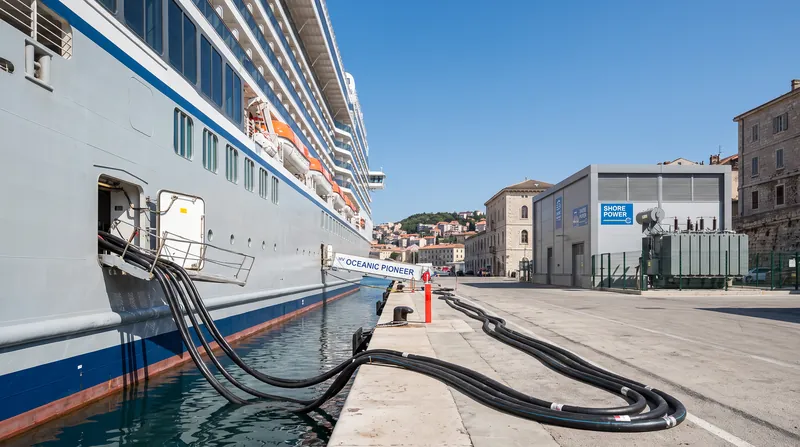
The 2030 Shore Power Deadline: How European Ports Are Forcing Cruise Ships to Plug Into the Local Grid
4 sources
Maritime Medicine
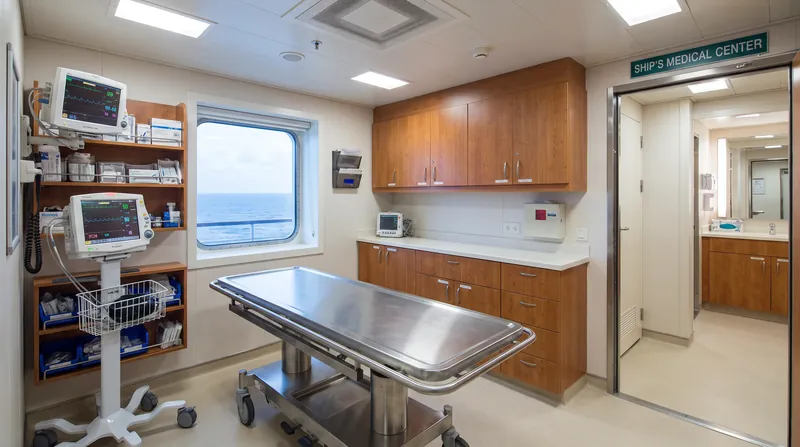
The ACEP Level III Standard: How Cruise Ship Medical Centers Are Actually Staffed and Equipped
5 sources
Maritime Measurement
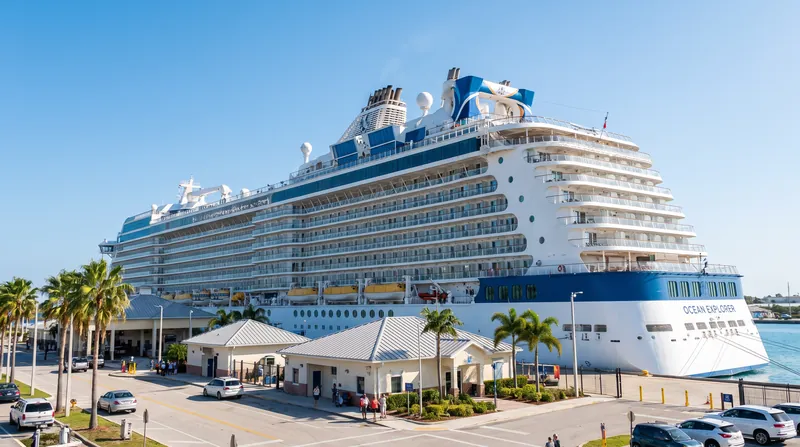
The Volume Illusion: How the 1969 IMO Convention Measures a Cruise Ship's Size Without Weighing It
6 sources
Maritime Law
Why Foreign-Flagged Cruise Ships Cannot Sail Directly Between US Ports
8 sources
Comments
Every angle. Every day.
Get Travel stories with full source coverage and perspective breakdowns, free every day.