
The 0.1 m²·K/W Standard: How TOG Ratings Calibrate Infant Sleep Bags to Prevent Overheating
Wearable blankets have replaced loose bedding to reduce suffocation risks, but infants cannot regulate their own body temperature. The Thermal Overall Grade (TOG) system quantifies fabric insulation to match nursery temperatures, mitigating the overheating risks associated with Sudden Infant Death Syndrome.
By Hui Lin

In short
- The Thermal Overall Grade (TOG) system quantifies fabric insulation, with 1.0 TOG equaling exactly 0.1 m²·K/W of thermal resistance.
- Matching a sleep sack's TOG rating to the nursery temperature prevents infant overheating, a known risk factor for Sudden Infant Death Syndrome.
- The revised EN 16781:2026 standard strictly regulates thermal claims, banning weighted sleep bags and capping the thermal resistance of sleeved garments.
On June 21, 2022, the American Academy of Pediatrics updated its safe sleep guidelines, cementing the recommendation that infants sleep entirely without loose blankets. This medical directive accelerated the adoption of wearable sleep sacks, shifting the burden of temperature control from layered bedding to a single garment.[3]
While removing loose blankets eliminates suffocation hazards, it introduces a secondary risk: overheating. Infants cannot regulate their own body temperature through sweating or shivering as effectively as adults do. Consequently, a sleep sack that is too thick traps excessive metabolic heat against the child's skin.[3]
Research identifies overheating as a primary environmental risk factor for Sudden Infant Death Syndrome (SIDS). To mitigate this, textile manufacturers rely on a precise metric known as the Thermal Overall Grade, or TOG, to quantify exactly how much heat a specific fabric blend retains.[3][5]
For parents, the actionable takeaway is strict calibration. By matching the sleep sack's TOG rating to the nursery's ambient temperature, caregivers can maintain the AAP's recommended 68 to 72 degrees Fahrenheit (20 to 22 degrees Celsius) environment without risking thermal stress.[3][8]
The physics of thermal resistance
The TOG unit was originally developed in the 1960s by the Shirley Institute in the United Kingdom to measure the thermal resistance of textiles. Scientifically, one TOG equals exactly 0.1 square meters Kelvin per watt (0.1 m²·K/W) of thermal resistance.[5][6]
This metric calculates how effectively a material prevents heat from passing through it. The thermal resistance in TOGs equals ten times the temperature difference in Celsius between the two surfaces of a material when the heat flow equals one watt per square meter.[6]
In practical terms, a sleep sack does not generate heat; it merely traps the air warmed by the infant's basal metabolic rate. A higher TOG rating indicates a thicker or denser fiber structure that traps more stationary air, slowing the rate at which body heat escapes into the room.[5]
To measure this accurately, laboratories use a device called a Shirley Togmeter. The fabric is placed on a heated copper plate that simulates human skin temperature, and sensors measure exactly how much electrical power is required to maintain that temperature beneath the textile layer.[5]
"Unlike the duvet, the sleep bag is worn and so it is less like bedding and more like clothing," notes the testing and certification firm SGS.[1]
"It is intended to be worn by the child without additional bedding and so its insulation value has to be chosen to suit the environment."[1]
Calibrating fabric to room temperature
Manufacturers typically produce infant sleep bags in three standard thermal grades, each engineered for a specific temperature bracket. A 0.5 TOG rating provides 0.05 m²·K/W of thermal resistance and consists of unpadded, single-layer cotton or muslin.[4]
This lightweight 0.5 TOG configuration is strictly designed for warm climates or summer months. It safely accommodates nursery temperatures exceeding 75 degrees Fahrenheit (24 degrees Celsius), allowing maximum heat dissipation while still providing the secure sensation of a swaddle.[4]
The 1.0 TOG sleep bag serves as the temperate baseline, offering 0.1 m²·K/W of resistance through lightly padded or double-layered fabric. This rating aligns perfectly with the AAP's recommended year-round nursery temperature of 68 to 72 degrees Fahrenheit, making it the most versatile option for standard indoor climates.[3][4][7]
For cooler environments dropping between 61 and 68 degrees Fahrenheit (16 to 20 degrees Celsius), a 2.5 TOG bag provides 0.25 m²·K/W of resistance. These winter-weight garments feature thick polyester or cotton wadding to retain heat when ambient room temperatures fall significantly.[4]
European safety standards
Because inaccurate thermal claims pose a direct medical risk to infants, sleep sack manufacturing is heavily regulated in Europe. The foundational benchmark was the British standard BS 8510:2009, which first mandated that baby sleep bags carry accurate TOG ratings alongside relevant temperature guidance.[4]
That standard evolved into the broader European directive EN 16781, which specifies strict safety requirements and testing methods for children's sleep bags used in cots. First published in 2018, EN 16781 mandates rigorous laboratory testing to verify that a garment's declared TOG rating matches its actual thermal resistance.[1][2]
The standard also dictates maximum neck and armhole dimensions to ensure an infant cannot slip down inside the bag and suffocate. It strictly prohibits long threads, looped labels, and accessible filling materials that could pose choking or strangulation hazards during unsupervised sleep.[1]
The 2026 revision and sleeved garments
In October 2026, a revised edition of the standard, EN 16781:2026, takes effect across the European market. This update introduces stricter controls on thermal safety, explicitly banning weighted sleep bags and refining how multi-seasonal modular garments are tested and labeled.[2]
The 2026 revision also clarifies the thermal impact of attached sleeves, which can drastically increase a child's overall heat retention.
"Where sleeves are present, the declared thermal resistance is based on measurements of the body of the sleep bag," explains the testing laboratory Intertek.[2]
Intertek notes that the sleeves themselves are excluded from the primary TOG number. Instead, the standard addresses the additional warming effect by applying a strict lower maximum permitted thermal resistance to sleeved products, capping them at 0.30 m²·K/W, or 3.0 TOG.[2]
Layering and practical application
A sleep sack's thermal resistance does not operate in isolation; the clothing worn underneath it cumulatively adds to the total insulation. European textile guidelines estimate that each layer of standard cotton baby clothing adds approximately 1.0 TOG to the overall thermal value.[7]
If an infant wears a standard cotton bodysuit under a 1.0 TOG sleep sack, the effective thermal resistance doubles to 2.0 TOG. Caregivers must factor these base layers into their temperature calculations to prevent inadvertently pushing the infant into a dangerous thermal bracket.[7]
Furthermore, the AAP guidelines emphasize that room-sharing without bed-sharing is the safest arrangement for the first six months. Because adult bodies generate significant ambient heat, a shared bedroom may run several degrees warmer than a dedicated nursery, requiring a lower TOG rating for the infant.[3][7]
Pediatricians at the American Academy of Pediatrics advise monitoring the infant directly rather than relying solely on room thermometers.[3]
The most reliable indicator of overheating is checking the back of the baby's neck or chest; if the skin feels hot or sweaty, one or more layers of clothing must be removed immediately.[3]
The TOG system transforms infant bedding from a subjective guessing game into a quantifiable science. By adhering to the 0.1 m²·K/W metric, manufacturers provide caregivers with the exact data required to maintain a safe, thermally neutral sleep environment year-round.[7]
How we did this
- Method
- Calculated the thermal resistance equivalence of standard TOG ratings to metric insulation values (m²·K/W) and cross-referenced them against the American Academy of Pediatrics' recommended nursery temperature ranges to determine the appropriate fabric thickness for safe infant sleep.
- What we found
- A 1.0 TOG sleep bag providing 0.1 m²·K/W of thermal resistance is the precise baseline required to maintain a safe infant body temperature within the AAP's recommended 68-72°F nursery environment without risking overheating.
- What we worked from
- 1 TOG thermal resistance definition: 0.1 m²·K/W — Silktime
- AAP recommended nursery temperature: 68-72°F — HALO Sleep
- Limits of this analysis
- Thermal resistance calculations assume standard cotton base layers; synthetic clothing or varying infant metabolic rates can alter the effective heat retention.
Jargon, explained
- Thermal Overall Grade (TOG)
- A unit of measurement used in the textile industry to quantify the thermal resistance and insulation warmth of a fabric.
- Thermal Resistance
- A measure of how effectively a material prevents heat from passing through it, calculated in square meters Kelvin per watt (m²·K/W).
- EN 16781
- The European safety standard that specifies design, chemical, and thermal requirements for children's sleep bags to prevent suffocation and overheating.
- Shirley Togmeter
- A laboratory device featuring a heated copper plate used to scientifically measure the thermal resistance of textiles.
- Sudden Infant Death Syndrome (SIDS)
- The unexplained death of a seemingly healthy baby, for which environmental overheating is a known contributing risk factor.
Common questions
Can I use a blanket instead of a sleep sack?
No. The American Academy of Pediatrics strictly advises against using loose blankets in a crib, as they pose a severe suffocation hazard if they cover the infant's face.
How do I know if my baby is overheating in their sleep sack?
Check the back of your baby's neck or their chest. If the skin feels hot to the touch or sweaty, they are too warm and you should remove a layer of clothing immediately.
Do the sleeves on a sleep sack count toward its TOG rating?
Under the EN 16781:2026 standard, the declared TOG rating only measures the body of the sleep bag. However, sleeved products are capped at a lower maximum thermal resistance (0.30 m²·K/W) to account for the extra warmth.
What should my baby wear underneath a 1.0 TOG sleep sack?
In a standard 68 to 72 degree Fahrenheit room, a single lightweight cotton bodysuit or footed pajama is typically sufficient underneath a 1.0 TOG sack.
Competing readings
Pediatricians and Sleep Researchers
Medical professionals prioritize the elimination of suffocation and overheating hazards in the infant sleep environment.
This perspective, championed by organizations like the American Academy of Pediatrics, emphasizes that infants cannot effectively regulate their own body temperature. They advocate for firm, flat sleep surfaces entirely free of loose blankets, relying instead on wearable sleep sacks. For this camp, the primary concern is mitigating environmental risk factors associated with Sudden Infant Death Syndrome (SIDS), making strict temperature control and the avoidance of heavy layering non-negotiable.
Textile Standards Regulators
Testing laboratories and standards bodies focus on the scientific accuracy and physical safety of consumer sleep products.
Regulators enforcing standards like EN 16781 view infant sleep bags as engineered safety devices rather than simple apparel. They require rigorous laboratory testing using devices like the Shirley Togmeter to ensure that a manufacturer's thermal resistance claims are mathematically accurate. This camp also strictly regulates physical design elements, mandating precise neck and armhole dimensions to prevent an infant from slipping inside the garment and suffocating.
Parents and Caregivers
Caregivers value practical, quantifiable metrics that remove the guesswork from dressing infants for sleep.
For parents managing varying seasonal temperatures and the anxiety of safe sleep guidelines, the TOG rating system provides a clear, actionable framework. Rather than guessing how many blankets equal a safe temperature, they rely on the standardized 0.1 m²·K/W metric to calibrate their child's bedding to the exact ambient temperature of the nursery, ensuring comfort without risking thermal stress.
- Pediatricians and Sleep Researchers
- Medical professionals prioritize the elimination of suffocation and overheating hazards in the infant sleep environment.
- Textile Standards Regulators
- Testing laboratories and standards bodies focus on the scientific accuracy and physical safety of consumer sleep products.
- Parents and Caregivers
- Caregivers value practical, quantifiable metrics that remove the guesswork from dressing infants for sleep.
Perspectives this story doesn't cover
- Infant Clothing Retailers
Sources
Source coverage
8 outlets
3 viewpoints surfaced








- [1]SGSTextile Standards Regulators
Safety in the sleeping environment
Read on SGS → - [2]IntertekTextile Standards Regulators
EN 16781:2026 replaces the 2018 edition for children's sleep bags
Read on Intertek → - [3]HealthyChildren.orgPediatricians and Sleep Researchers
AAP safe sleep recommendations for babies
Read on HealthyChildren.org → - [4]SlumbersacParents and Caregivers
What Tog Rating Should I Use?
Read on Slumbersac → - [5]YuppiechefParents and Caregivers
What on earth is the “tog”?
Read on Yuppiechef → - [6]Silktime
Tog (unit) - A measure of thermal resistance
Read on Silktime → - [7]Factlen Editorial Team
Synthesis by Factlen editorial team
Read on Factlen Editorial Team → - [8]HALO Sleep
AAP Guidelines for Safe Sleep
Read on HALO Sleep →
More in Shopping & Reviews
See all →Product Recall
Esjay US Recalls 276,000 Toddler Busy Boards Over Choking Hazard
4 sources
Product Safety
Colerinsec Recalls 38,500 Jerify Magnetic Toys Following Child Hospitalizations
5 sources

Mattress Safety
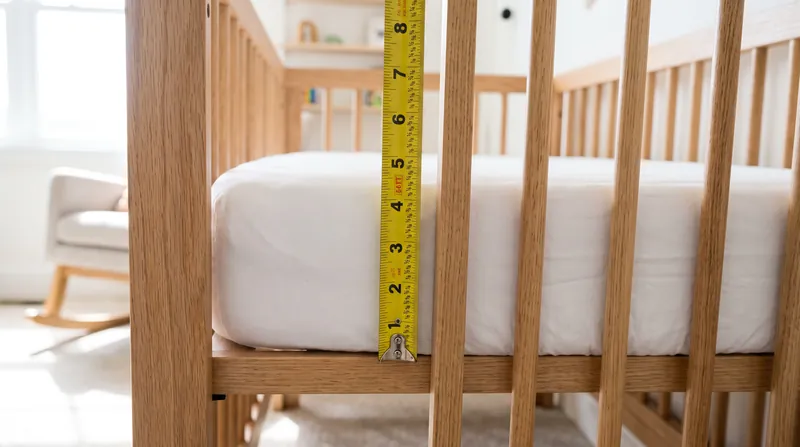
The 6-Inch Maximum: How the CPSC Standard Dictates Crib Mattress Thickness and Firmness to Prevent Suffocation
8 sources
Car Seat Safety
How Rigid LATCH Cuts Car Seat Installation Errors by 25 Percentage Points
3 sources
Comments
Every angle. Every day.
Get Shopping & Reviews stories with full source coverage and perspective breakdowns, free every day.