
NATO's 'Two-Front Blind Spot' on Taiwan and Russia Accelerates European Nuclear Autonomy Push
Revelations that NATO lacks a comprehensive strategy for simultaneous conflicts with Russia and China have intensified European efforts to develop an independent nuclear deterrent. Driven by severe U.S. munitions shortages and a shifting American defense posture, nations like France, Germany, and Finland are rapidly laying the groundwork for a Europeanized nuclear umbrella.
By Layla Zaher

At the Île Longue submarine base in Brittany, the architecture of European security is undergoing its most significant revision since the Cold War. Driven by the stark realization that NATO lacks a ready-made strategy for simultaneous aggression by Russia in Europe and China in the Indo-Pacific, European capitals are rapidly advancing plans for an autonomous nuclear deterrent. The shift moves beyond theoretical debate into structural policy, fundamentally altering the transatlantic defense consensus.[1][3]
The catalyst for this acceleration is a recognized vulnerability in Western military planning. Defense analysts and military officials have concluded that the United States is currently unprepared to manage a scenario where a Chinese assault on Taiwan coincides with a Russian strike on a NATO member state. War games simulating this two-front crisis indicate that Washington lacks both the weapons stockpiles and the industrial capacity to sustain prolonged, simultaneous high-intensity conflicts across two global theaters.[1]
This strategic deficit is being exacerbated by ongoing U.S. engagements in the Middle East. The diversion of Tomahawk cruise missiles and Patriot interceptors to manage the conflict with Iran has severely depleted American reserves. Shipments originally designated for the Indo-Pacific Command have been rerouted, while air-defense systems have been moved from South Korea, leaving forward-deployed forces exposed. The resulting backlog in American weapons deliveries has forced European and Asian allies to recognize the physical limits of the U.S. security umbrella.[2]
In response to this structural reality, France has positioned itself as the anchor for a new European defense paradigm. President Emmanuel Macron has formally articulated that France's nuclear deterrent now carries a distinctly "European dimension." Under a doctrine termed "forward deterrence," Paris is offering to extend its nuclear protection to allied nations, signaling that an attack on a key European partner could trigger a French nuclear response.[3][5]
The French initiative is rapidly gaining institutional traction. Germany, Belgium, and Poland have declared their willingness to participate in and financially contribute to this expanded nuclear framework. Discussions are underway to establish permanent consultations on nuclear strategy and potential joint research and development. While the ultimate launch authority remains in Paris, the pooling of resources represents a tangible step toward a Europeanized defense structure that operates parallel to, but independent of, Washington.[5]
The push for autonomy is also dismantling long-standing legal barriers across the continent. Finland, in a historic reversal of its Cold War posture, has announced its intention to amend its 1987 Nuclear Energy Act, lifting the full ban on the import, transport, and possession of nuclear weapons on its territory. The legislative overhaul is designed to remove legal constraints on Finland's homeland defense and allow full participation in both NATO's deterrence mechanisms and emerging European nuclear arrangements.[4]
The architecture of this autonomous deterrent may eventually integrate the United Kingdom. Following the 2025 Northwood Declaration, London and Paris have established a framework for closer nuclear coordination. While full operational integration remains complex, the potential for joint patrolling by nuclear-armed submarines and shared financing models offers a pathway to expand Europe's effective capabilities without requiring new nations to develop indigenous nuclear weapons programs.[5][6]
This realignment reflects a profound transformation in Europe's threat perception. The combination of Russia's transition to a wartime economy, China's rapid expansion of its long-range missile and naval fleets, and the transactional nature of recent U.S. defense policies has eroded confidence in automatic American reinforcement. European policymakers are increasingly treating the 2026 U.S. National Defense Strategy—which designates Russia primarily as a "European responsibility"—as a definitive signal to build self-reliant deterrence infrastructure.[3][6]
The European push for nuclear autonomy is not without institutional friction. Washington has expressed displeasure with Europe's drive toward defense independence, scrutinizing member states' procurement of American-made weaponry. U.S. defense officials maintain that European deterrence should remain strictly anchored within existing NATO nuclear-sharing agreements, warning that autonomous structures could fracture alliance unity and complicate command and control during a crisis.[3][6]
Despite American reservations, the momentum toward European strategic self-reliance appears structural rather than cyclical. As the continent scales its defense-industrial base to compensate for U.S. supply chain constraints, the integration of French and British nuclear capabilities with broader European financial and conventional support will likely accelerate. The resulting architecture aims to ensure that if the U.S. is forced to pivot entirely to the Indo-Pacific during a Taiwan crisis, Europe will possess the independent coercive power to deter Russian aggression on its eastern flank.[1][5][6]
Viewpoints in depth
European Strategic Autonomists
Advocates for an independent European nuclear umbrella argue that U.S. security guarantees are no longer unconditional.
Driven by the 2026 U.S. National Defense Strategy and the depletion of American munitions, this camp argues that Europe can no longer outsource its survival to Washington. Proponents view French President Emmanuel Macron's "forward deterrence" doctrine as the necessary foundation for a sovereign defense architecture. They argue that pooling European financial resources to expand the French and British nuclear arsenals is the only credible way to deter Russian aggression if the U.S. is forced to pivot its military entirely to the Indo-Pacific during a Taiwan crisis.
Transatlantic Integrationists
Defenders of the traditional NATO framework warn that an autonomous European deterrent could fracture alliance unity.
This perspective, often voiced by U.S. defense officials and traditionalist European policymakers, argues that nuclear deterrence must remain firmly under the NATO umbrella. They caution that establishing a parallel European nuclear command structure could lead to dangerous ambiguities during a crisis and invite proliferation chaos. Instead of pursuing strategic autonomy, this camp advocates for increased European burden-sharing within existing NATO nuclear-sharing agreements, emphasizing that a unified transatlantic front remains the most effective deterrent against Moscow.
Indo-Pacific Security Planners
Asian defense analysts warn that the two-front blind spot leaves regional allies critically vulnerable.
Viewing the crisis through the lens of the Indo-Pacific, this camp emphasizes the physical limits of the U.S. military-industrial base. Analysts highlight the diversion of Tomahawk missiles and Patriot interceptors from Asian commands to the Middle East as proof that Washington cannot simultaneously supply multiple theaters. They argue that the lack of a coordinated NATO strategy for a simultaneous Russian and Chinese offensive directly emboldens Beijing, raising fears that South Korea and Japan may eventually need to develop their own indigenous nuclear weapons to compensate for a stretched American umbrella.
What we don’t know
- How command and control structures would operate if non-nuclear European states co-finance the French nuclear arsenal.
- Whether the United Kingdom will fully integrate its nuclear deterrent into the proposed European framework.
- How Russia might alter its tactical nuclear posture in response to a formalized European nuclear umbrella.
- European Strategic Autonomists
- Advocates for an independent European nuclear umbrella argue that U.S. security guarantees are no longer unconditional.
- Transatlantic Integrationists
- Defenders of the traditional NATO framework warn that an autonomous European deterrent could fracture alliance unity.
- Indo-Pacific Security Planners
- Asian defense analysts warn that the two-front blind spot leaves regional allies critically vulnerable to Chinese aggression.
Sources
Source coverage
6 outlets
3 viewpoints surfaced






- [1]UA NewsIndo-Pacific Security Planners
NATO is not prepared for a simultaneous attack by Russia and China
Read on UA News → - [2]The Jerusalem PostIndo-Pacific Security Planners
The loss of interceptor missiles could be felt particularly acutely in Asia
Read on The Jerusalem Post → - [3]Global Security ReviewEuropean Strategic Autonomists
Beyond the American Umbrella: Europe's Turn to Forward Deterrence
Read on Global Security Review → - [4]Arms Control AssociationTransatlantic Integrationists
Finland to Join New European Nuclear Deterrent Concept
Read on Arms Control Association → - [5]BruegelEuropean Strategic Autonomists
Europe's nuclear deterrent enters a new phase
Read on Bruegel → - [6]Atlantic CouncilEuropean Strategic Autonomists
The path to European nuclear deterrence
Read on Atlantic Council →
More in Defense & Security
See all →Nuclear Deterrence
Lithuania Advances Constitutional Amendment to Lift Ban on Nuclear Weapons
7 sources

Arctic Infrastructure
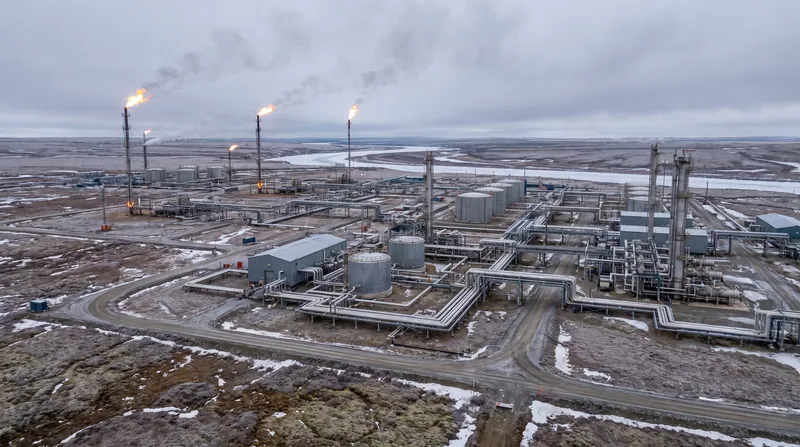
Ukraine Executes Deepest Strike of the War on Russian Arctic Gas Infrastructure
5 sources
Iran Airspace
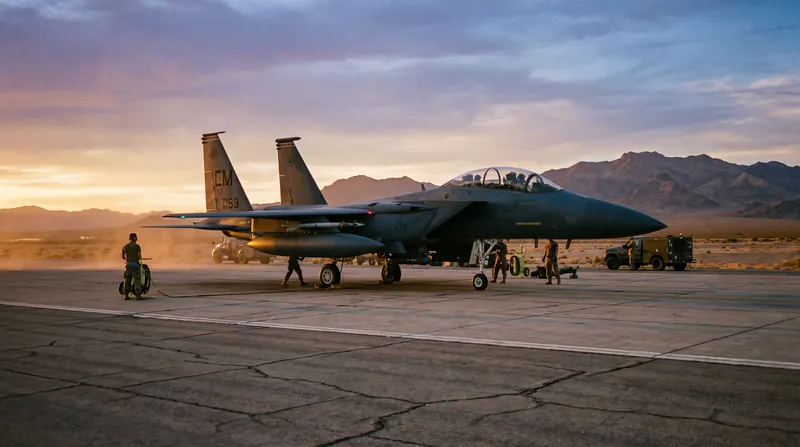
Declassified Footage Reveals Iranian MANPADS Downed U.S. F-15E in April
6 sources
Air Defense Economics
The Asymmetric Cost of Air Defense: Comparing Interceptor Prices to Loitering Munition Threats
7 sources

Comments
Every angle. Every day.
Get Defense & Security stories with full source coverage and perspective breakdowns, free every day.