
La Liga Secures €6.135 Billion Domestic Broadcast Deal Through 2032
Spain's top football flight has locked in a massive five-year television rights extension with Movistar Plus+ and DAZN, guaranteeing a 9% revenue increase.

For Spanish football fans, the anxiety of fragmented viewing and skyrocketing subscription costs has been a looming threat, especially as other European leagues scramble to secure stable television homes. But the viewing experience for the next half-decade has just been locked in.
The weekend ritual of tuning into Spain's top flight remains uninterrupted, financially anchored, and split evenly down the middle, providing a rare moment of clarity and relief for supporters who simply want to know where they can watch their teams play without navigating a maze of new streaming services.
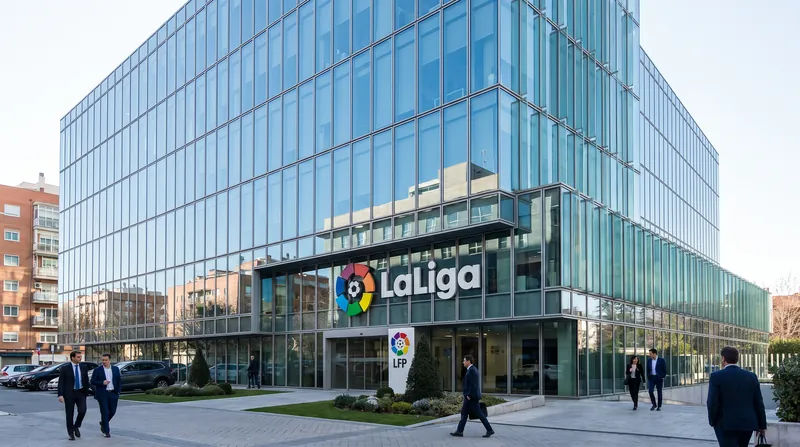
La Liga has officially secured a monumental €6.135 billion domestic broadcast agreement for the 2027 to 2032 cycle, cementing a nine percent overall revenue increase over its previous deal. The landmark package extends the league's strategic partnership with telecommunications giant Telefónica—operating through its Movistar Plus+ platform—and the dedicated sports streaming service DAZN.
By renewing with its two primary broadcast anchors, the league has chosen continuity and stability over the risky fragmentation that has characterized recent rights auctions across the continent, ensuring that the financial bedrock of Spanish professional football remains firmly intact for the foreseeable future.[1][2][8]
Under the renewed terms, the power dynamic shifts slightly to benefit the consumer's choice and viewing habits. Movistar Plus+ and DAZN will each broadcast exactly five matches per matchday, abandoning the previous model where Movistar held exclusive rights to three full matchdays per season.
This equal split guarantees that both platforms remain central to the Spanish football ecosystem, providing fans with a predictable, dual-platform viewing structure without the sudden blackouts of exclusive weekends. It also means that the fierce bidding war for subscribers will be fought on the quality of coverage, punditry, and platform reliability rather than sheer match volume.[5][7]
The core residential rights account for €5.25 billion of the total package, representing a steady six percent bump from the 2022–2027 cycle. However, the full €6.135 billion figure is achieved through aggressive, targeted growth in secondary commercial tiers.
Broadcast rights for commercial premises like bars and restaurants—a massive cultural component of how football is consumed in Spain—will generate €650 million. Meanwhile, the Segunda Division, rebranded as La Liga Hypermotion, sees its value surge by a remarkable 40 percent to €175 million. Free-to-air broadcasts and highlight packages round out the remaining €60 million, creating a diversified revenue stream.[3][5]
This financial victory arrives at a critical juncture for European football's media economy, which has shown signs of severe cooling. While the English Premier League continues to dominate with its staggering £6.7 billion domestic deal, other major competitions have faced catastrophic collapses in their broadcast valuations.
Most notably, France's Ligue 1 was forced to launch its own direct-to-consumer service after a rights auction failed entirely to meet expectations. By locking in a long-term, high-value contract, La Liga has successfully insulated its 42 professional clubs from the volatility and deflation currently shaking the broader sports media landscape.[2][4]
La Liga President Javier Tebas heralded the agreement as a triumph of financial sustainability, emphasizing that securing a €500 million overall growth in a complex international market is a testament to the league's underlying product.
Tebas also heavily credited the league's aggressive, highly sophisticated anti-piracy operations—which he recently likened to NASA in their technological scope and ambition—for protecting the value of the rights. By actively dismantling illegal streaming networks, the league gave its broadcast partners the necessary confidence to invest billions, knowing their exclusive content would not be freely siphoned off by black-market operators.[3][5]
For Telefónica and DAZN, the massive financial outlay is a calculated bet on long-term customer retention and digital ecosystem growth. Telefónica leverages live football to drive its broader telecommunications and broadband subscriptions, treating the sport as a highly effective loss-leader that keeps households locked into their network infrastructure.
DAZN, meanwhile, relies on the premium sporting content to anchor its streaming subscriber base in the Spanish market, ensuring the app remains a daily habit for millions of fans who might otherwise churn out during the offseason or after a single major event.[6][7]
Despite the overwhelming approval from the vast majority of Spanish clubs—with heavyweights like Atlético Madrid publicly praising the financial stability the deal brings—the agreement was not unanimously embraced. Real Madrid stood as the sole dissenting vote against the ratification of the contract. The club's opposition continues their long-standing ideological and financial friction with Tebas and the league's centralized commercial strategies, highlighting a persistent rift at the very top of the Spanish game over how football's immense wealth should be generated, packaged, and ultimately distributed among its participants.[1][4]
With the domestic foundation secured through 2032, La Liga's front office will now pivot its focus toward expanding its international broadcast footprint and closing the global revenue gap with the Premier League. For the clubs themselves, the immediate injection of guaranteed capital provides a reliable baseline to structure long-term player contracts, fund ambitious stadium renovations, and invest in the youth academies that remain the lifeblood of Spanish football. In an era of profound uncertainty for sports media, La Liga has successfully bought itself half a decade of lucrative peace.[1][3]
Key points
- La Liga has secured a €6.135 billion domestic broadcast deal for the 2027–2032 cycle, a 9% increase over the previous agreement.
- Telefónica (Movistar Plus+) and DAZN will continue to share the residential rights, now splitting the matches equally at five per matchday.
- The total package includes significant revenue growth from commercial premises and the Segunda Division.
- Real Madrid was the only club to vote against the ratification of the new five-year contract.
- La Liga Leadership
- League executives view the deal as a critical victory for financial sustainability and a validation of their aggressive anti-piracy efforts.
- Broadcasting Partners
- Telefónica and DAZN see the massive investment as essential for customer retention and anchoring their digital ecosystems.
- Dissenting Clubs
- A minority of elite clubs oppose the centralized commercial strategy and the long-term lock-in.
Perspectives this story doesn't cover
- Match-going supporters
- Lower-division clubs outside the Segunda
Sources
Source coverage
8 outlets
3 viewpoints surfaced








- [1]SportingpediaLa Liga Leadership
La Liga Sets New Benchmark with €6.135 Billion TV Rights Agreement for 2027-2032
Read on Sportingpedia → - [2]theScoreDissenting Clubs
La Liga signs new €6B TV rights deal
Read on theScore → - [3]Insider SportLa Liga Leadership
La Liga secures €6.135bn in domestic broadcast rights, as it looks to close the revenue gap on the Premier League
Read on Insider Sport → - [4]Football EspañaDissenting Clubs
La Liga sign record TV deal for 2027-2032 eclipsing €5b mark
Read on Football España → - [5]El PaísLa Liga Leadership
LaLiga adjudica por 6.135 millones los derechos audiovisuales
Read on El País → - [6]Zona MovilidadBroadcasting Partners
Movistar y Dazn adquieren derechos de LaLiga por 6.135 millones: un aumento del 6% hasta 2032
Read on Zona Movilidad → - [7]The ObjectiveBroadcasting Partners
Telefónica y Dazn renuevan los derechos del fútbol español por 5.250 millones
Read on The Objective → - [8]La LigaLa Liga Leadership
LALIGA Secures over €6.135 Billion in Domestic Audiovisual Revenue for 2027/28–2031/32, up 9% over Previous Cycle
Read on La Liga →
More in Sports
See all →Madrid Derby
Atlético Madrid Edges 10-Man Real Madrid in Derby to Move Second
4 sources

La Roja Roster
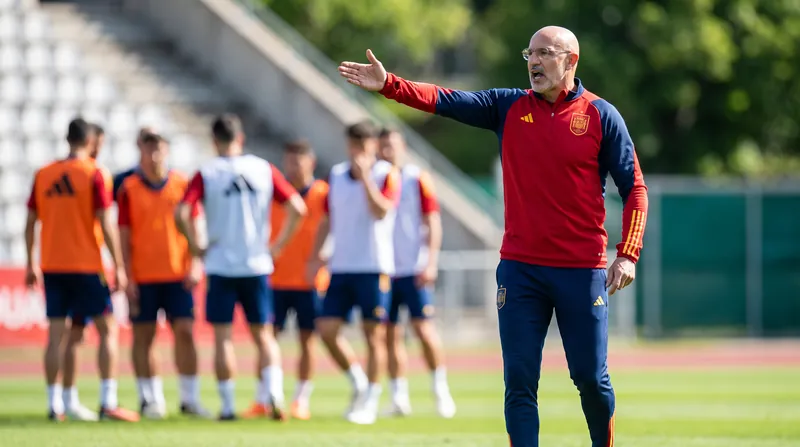
Spain Coach Luis de la Fuente Names First Post-World Cup Squad, Recalling Fermín López
5 sources
La Liga Record
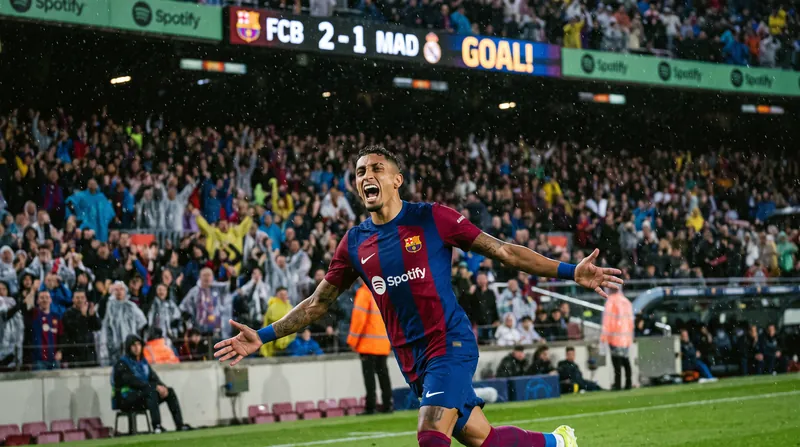
Raphinha Hat-Trick Powers Barcelona to Record-Setting Seventh Straight Win in 7-2 Rout
5 sources
La Liga Title Race
Carlos Espí Stoppage-Time Goal Rescues Real Madrid 3-2 Win at Elche After Squandering Two-Goal Lead
5 sources

Comments
Every angle. Every day.
Get Sports stories with full source coverage and perspective breakdowns, free every day.