
Iran Threatens to Expand War to Indian Ocean, Citing US-UK Base at Diego Garcia
An adviser to Iran's Supreme Leader warned that Tehran could expand the ongoing regional conflict into the Indian Ocean if the United States launches further military strikes.

How this story has developed
This report is part of a developing story — read the earlier chapters below.
- Iran Threatens US Carrier Group With New Qassem Basir Solid-Fuel Ballistic Missile
- Iran Threatens to Expand War to Indian Ocean, Citing US-UK Base at Diego Garcia (this article)
- Iranian Strategic Command
- Views the expansion of the threat zone as a necessary lever to force economic concessions and deter further strikes.
- Western Defense Establishment
- Focuses on containing the conflict, protecting maritime trade, and maintaining strategic assets like Diego Garcia.
- Regional Maritime Trade
- Focuses on the severe economic and logistical impacts of losing secure transit lanes in the Indian Ocean.
Perspectives this story doesn't cover
- Commercial Shipping Operators
- Indian Ocean Island Nations
Why it matters
Expanding the conflict into the Indian Ocean would threaten a third major global shipping corridor, potentially disrupting international supply chains and energy markets far beyond the already contested Red Sea and Persian Gulf.
In a video broadcast Thursday by Iran's Fars news agency, Yahya Rahim Safavi, a senior adviser to Supreme Leader Mojtaba Khamenei, explicitly named the Indian Ocean as the next potential theater of conflict if the United States launches further military strikes. The declaration marks the first time Tehran has formally threatened to push the confrontation beyond the Persian Gulf and the Red Sea, directly implicating the waters surrounding the joint U.S.-British military installation at Diego Garcia. The statement signals a calculated escalation in rhetoric as the regional crisis enters a new phase.[1][3]
"Since the conflict has spread from the Persian Gulf and Strait of Hormuz to the Red Sea, it is possible that, in response to more war, the front will expand even further, reaching the Indian Ocean and perhaps beyond," Safavi stated in the address. The warning arrives exactly seven months into a regional war that began in late February 2026, following U.S. and Israeli strikes that killed former Supreme Leader Ayatollah Ali Khamenei. By referencing the Indian Ocean, Iranian leadership is attempting to demonstrate that Western strategic depth is no longer immune to the fallout of the ongoing hostilities.[1][2]
Expanding the operational zone into the Indian Ocean would place a third critical maritime corridor under the shadow of the conflict, severely compounding existing logistical bottlenecks. Tehran has already locked down the Strait of Hormuz—a chokepoint that previously handled roughly 20 percent of global oil consumption—while Yemen's Houthi forces have seized sections of the Red Sea coastline, tightening their grip on the Bab al-Mandab Strait. The combined effect of these blockades has already forced international shipping conglomerates to reroute vessels around the Cape of Good Hope, adding weeks to transit times and significantly increasing insurance premiums.[2][5]
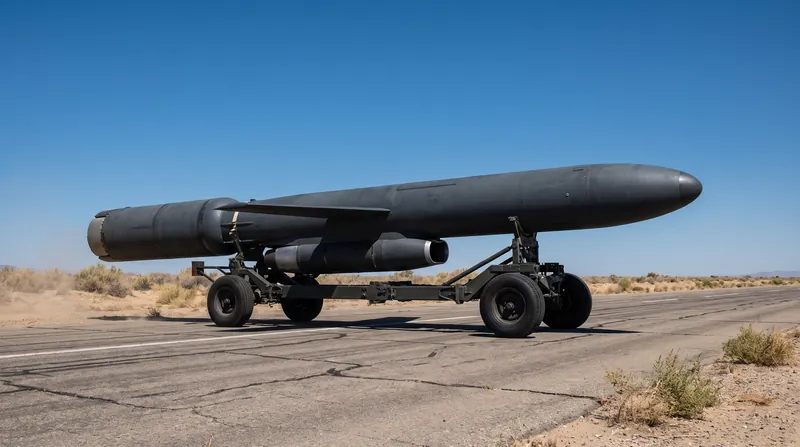
The specific reference to the Indian Ocean brings the Diego Garcia base directly into the strategic calculus of the conflict. Located nearly 4,000 kilometers southeast of the Iranian coast, the isolated atoll serves as a central logistics, intelligence, and bomber hub for U.S. Central Command. Any Iranian capability to threaten shipping or military assets at that extreme range would require deploying long-range anti-ship ballistic missiles or relying on asymmetric naval operations far beyond Iran's traditional littoral defense zones in the Persian Gulf. Military analysts note that while Iran's blue-water navy is limited, its drone and missile stockpiles have steadily grown in range and precision.[1][4]
The specific reference to the Indian Ocean brings the Diego Garcia base directly into the strategic calculus of the conflict.
The threat coincides with intense, indirect diplomatic maneuvering in New York, where Iranian and U.S. officials held sideline discussions during the 81st United Nations General Assembly this week. Negotiators are attempting to establish a framework to halt the hostilities, but the two sides remain separated by fundamental, structural demands. The timing of Safavi's video release appears designed to maximize Iranian leverage at the negotiating table, reminding Western diplomats of the economic and military costs associated with a failure to reach a comprehensive ceasefire agreement.[2][3]
Tehran has conditioned any cessation of its maritime blockades on the complete lifting of economic sanctions and the unconditional release of frozen Iranian sovereign assets held abroad. Iranian officials have framed the current standoff as an existential defense of their national infrastructure, arguing that previous strikes on scientific and civilian centers failed to break domestic resolve. By threatening the Indian Ocean, the Iranian government is signaling that it is prepared to absorb further economic punishment if its core demands are not met, effectively daring the United States to risk a broader global supply chain collapse.[2][3]
For global energy markets, the geographic expansion of the threat vector complicates an already strained and fragile supply chain. With the Red Sea and the Strait of Hormuz heavily contested, commercial carriers have increasingly relied on longer transit routes across the broader Indian Ocean to safely reach European and Asian ports. If those open-ocean routes are suddenly subjected to drone swarms or ballistic missile harassment, the shipping industry would face a severe deficit of secure transit lanes, potentially triggering a sharp spike in global energy costs and consumer goods pricing just as central banks attempt to manage inflation.[4][5]
If Iranian forces or their regional proxies begin targeting vessels in the open ocean, the international community would be forced to drastically expand its naval protection mandates. The U.S. Treasury Department has simultaneously escalated its economic pressure, announcing new measures this week aimed at shutting down Iranian international aviation by targeting fuel and landing support services across multiple international airports. These reciprocal escalations highlight a dangerous feedback loop: as Washington tightens the economic vice, Tehran responds by threatening the physical infrastructure of global trade, leaving very little room for de-escalation without significant concessions from one side.[3][4]
The immediate trajectory of the conflict now hinges on the U.S. response to the diplomatic terms presented in New York and the operational posture of U.S. naval strike groups currently deployed to the region. As both sides signal maximum combat readiness, the threshold for what constitutes a manageable exchange of fire continues to narrow. The introduction of the Indian Ocean and Diego Garcia into the rhetorical battlefield ensures that any future miscalculation will have immediate, cascading effects on global security and international commerce, transforming a regional dispute into a genuinely global crisis.[1][3]
What to know
- An adviser to Iran's Supreme Leader threatened to expand the war to the Indian Ocean if the U.S. attacks again.
- The warning explicitly cited the waters surrounding the U.S.-British military base at Diego Garcia.
- Expanding the conflict would threaten a third major maritime corridor, adding to disruptions in the Red Sea and Persian Gulf.
- The threat coincides with indirect diplomatic talks between U.S. and Iranian officials at the UN General Assembly.
Where opinion splits
Tehran's Deterrence Doctrine
Iranian military planners view the expansion of the threat zone as a necessary lever to force economic concessions.
By explicitly naming the Indian Ocean and implicitly threatening the Diego Garcia logistics hub, Iran's leadership is attempting to demonstrate that U.S. assets are not beyond reach. Advisers to Mojtaba Khamenei calculate that the global economic cost of a contested Indian Ocean will pressure Washington into accepting Tehran's demands for sanctions relief and the unfreezing of sovereign assets, framing the escalation as a defensive response to previous strikes.
U.S. and Allied Containment
Western military strategy centers on protecting critical infrastructure while maintaining forward operating capabilities.
For U.S. Central Command, the Diego Garcia base is a foundational node for projecting power across the Middle East and Indo-Pacific. The prospect of Iranian long-range strikes or asymmetric naval harassment reaching 4,000 kilometers into the Indian Ocean forces a recalculation of asset defense. The U.S. response has paired military readiness with tightening economic sanctions, aiming to degrade Iran's operational capacity without triggering an unmanageable regional war.
Sources
Source coverage
5 outlets
3 viewpoints surfaced


- [1]CNAWestern Defense Establishment
Iran threatens to expand war to Indian Ocean if US attacks again
Read on CNA → - [2]The HinduIranian Strategic Command
Iran threatens to expand war to Indian Ocean if U.S. attacks again
Read on The Hindu → - [3]WIONIranian Strategic Command
Iran war to reach Indian Ocean? Mojtaba's adviser issues chilling warning to US
Read on WION → - [4]Business RecorderRegional Maritime Trade
Iran threatens to expand war to Indian Ocean
Read on Business Recorder → - [5]The Straits TimesWestern Defense Establishment
Iran threatens to expand war to Indian Ocean if US attacks again
Read on The Straits Times →
Comments
More in Defense & Security
See all →Hybrid Warfare
Poland Confirms Sabotage of Starlink Ground Station as Russian Drones Crash in NATO-Member Romania
6 sources
NATO Readiness
Danish Intelligence Warns of 'Low But Growing Risk' of Limited Russian Military Attack on NATO
7 sources
Defense Supply Chain
Pentagon Investigates Diversion of F-35 Stealth Fighter Components to Hong Kong
7 sources
Defense Tech
Silicon Valley-Backed Covenant Unveils $500K Mass-Producible 'Anthem' Cruise Missile
4 sources
Every angle. Every day.
Get Defense & Security stories with full source coverage and perspective breakdowns delivered to your inbox.