
Inside the Steam Frame: How Valve's Hybrid Headset Aims to Rewire Virtual Reality
Valve is preparing to launch the Steam Frame, a standalone VR headset that streams PC games and natively runs traditional Steam titles. Armed with premium specs and eye-tracking, it represents the first major challenge to Meta's dominance in untethered virtual reality.

The long-awaited successor to the Valve Index is quietly arriving on American shores. In early June, the German container ship Posen docked in Los Angeles, offloading roughly 32 metric tons of hardware categorized as "Virtual Reality Devices" for Valve's distribution partner, Ceva. Industry analysts quickly identified the massive shipment as the first commercial wave of the "Steam Frame," Valve's highly anticipated standalone VR headset.[1]
Previously known by the internal codename "Deckard," the Steam Frame represents a fundamental shift in Valve's hardware strategy. When the company released the Index in 2019, it was a strictly tethered experience that required a high-end gaming PC and external tracking base stations mounted to the user's walls. The Steam Frame abandons that restrictive architecture in favor of a hybrid, fully wireless approach designed to compete directly with modern standalone devices.
At its core, the headset operates as a self-contained console. It runs a customized, VR-optimized version of SteamOS—the same Linux-based operating system that powers the wildly successful Steam Deck handheld. This allows the device to operate entirely untethered, downloading and playing games directly from the Steam store without ever connecting to a computer.[2]
But Valve is not abandoning its PC gaming roots. The Steam Frame is engineered to serve as a premium wireless streaming receiver for users who already own powerful gaming rigs. Utilizing Wi-Fi 6E and Wi-Fi 7 capabilities, the headset can beam graphically intense PCVR titles—like Half-Life: Alyx or Microsoft Flight Simulator—directly to the displays with virtually zero latency.[2]
Perhaps the most unique feature of the Steam Frame is its ability to bridge the gap between virtual reality and traditional gaming. Thanks to the Proton compatibility layer built into SteamOS, the headset can natively run standard 2D "flatscreen" Windows games. Users can launch their existing Steam library and play on a massive virtual theater screen projected inside the headset, effectively turning the device into a wearable, high-performance Steam Deck.
To achieve this standalone performance, Valve has packed the headset with premium mobile silicon. The Steam Frame is powered by Qualcomm's Snapdragon 8 Gen 3 processor, paired with 16 gigabytes of high-speed LPDDR5X RAM. That memory capacity is double what Meta currently offers in the Quest 3, providing developers with significantly more overhead for high-resolution textures and complex physics calculations.
The visual experience is driven by dual LCD panels pushing a resolution of 2160 by 2160 pixels per eye. To keep the headset as light and ergonomic as possible, Valve has utilized pancake lenses, an optical technology that folds light multiple times to drastically reduce the physical depth of the visor. This eliminates the bulky, front-heavy design that plagued older VR hardware while minimizing the "screen-door effect" that breaks immersion.
Motion clarity is a critical factor in preventing VR-induced nausea, and the Steam Frame caters to sensitive users with a wide range of refresh rates. The displays support native 72Hz, 80Hz, 90Hz, and 120Hz modes, with an experimental 144Hz option available for the most demanding competitive gamers. To ensure a smooth experience, Valve recently introduced the "Steam Frame Verified" program, which requires standalone games to hit a strict 90 frames-per-second target to earn the company's official seal of approval.
The headset's secret weapon, however, is its integrated eye-tracking technology. Internal cameras constantly monitor exactly where the user is looking, enabling a technique called foveated rendering. The headset focuses its processing power to render only the exact center of the user's gaze at maximum resolution, while subtly reducing the detail in the peripheral vision. This dramatically improves performance and battery life, and is also used to optimize the bandwidth during wireless PC streaming.
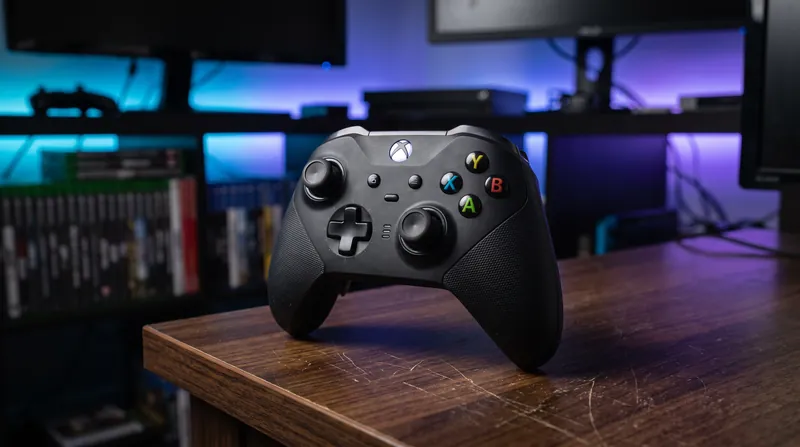
Control inputs have also received a major overhaul. The new controllers, codenamed "Roy," move away from the strap-on "knuckles" design of the Index in favor of a more traditional layout with motion-sensing rings. Crucially, they utilize tunneling magnetoresistance (TMR) thumbsticks, a technology that Valve claims offers far greater precision and durability than standard Hall Effect sensors, virtually eliminating the risk of stick drift.
Tracking is handled entirely inside-out via an array of monochrome cameras built into the headset's shell. While this eliminates the need for external base stations, it also highlights a specific design choice: Valve is prioritizing pure gaming over mixed reality. Unlike the Apple Vision Pro or the Meta Quest 3, the Steam Frame does not currently support high-resolution, full-color RGB passthrough for blending digital objects with the real world.
The market positioning of the Steam Frame places it in a fascinating middle ground. Meta dominates the mainstream market with the heavily subsidized, $500 Quest 3, while Apple has staked a claim on the ultra-premium $3,500 spatial computing segment. Valve is targeting the hardcore enthusiast—gamers who want the frictionless ease of a standalone device but refuse to compromise on visual fidelity and PC integration.
Manufacturing estimates from supply chain analysts suggest Valve is preparing for an annual production run of 400,000 to 600,000 units. This volume indicates that the company expects strong demand, though it remains a fraction of the tens of millions of units Meta has shipped over the lifespan of the Quest ecosystem.
The final, and most closely guarded, detail is the price. Global shortages in RAM and solid-state storage have reportedly complicated Valve's internal calculations, forcing the company to delay its pricing announcements earlier this year. Industry analysts currently expect the headset to land somewhere between $800 and $1,200, depending on the storage configuration.
If Valve can successfully deliver on these hardware promises, the Steam Frame could fundamentally rewire the virtual reality landscape. By allowing millions of Steam users to seamlessly access their existing libraries—both VR and traditional flatscreen titles—in a high-fidelity, untethered format, Valve is poised to prove that the future of VR doesn't have to be a walled garden.
Key points
- Import records show Valve recently brought 32 metric tons of VR hardware into the US.
- The Steam Frame functions as both a standalone console and a wireless PCVR streaming receiver.
- It features a Snapdragon 8 Gen 3 processor, 16GB of RAM, and dual 2160x2160 displays.
- Built-in eye tracking enables foveated rendering to optimize performance and battery life.
What we don’t know
- Valve has not yet announced the official retail price for the Steam Frame.
- It remains unclear exactly which day this summer the headset will become available for purchase.
- Valve has not confirmed if a new first-party VR game (like a sequel to Half-Life: Alyx) will launch alongside the hardware.
How we got here
June 2019
Valve releases the Index, a critically acclaimed but strictly tethered PCVR headset.
January 2021
Data miners discover the first references to a standalone Valve headset codenamed 'Deckard'.
November 2025
Valve officially announces the Steam Frame headset and its hybrid wireless architecture.
March 2026
Valve introduces the 'Steam Frame Verified' program, requiring standalone games to hit a strict 90 FPS target.
June 2026
Import records reveal 32 metric tons of Steam Frame units arriving at US distribution warehouses.
- PCVR Loyalists
- Enthusiasts who prioritize high-fidelity PC streaming, deep Steam ecosystem integration, and a worthy upgrade path from the aging Valve Index.
- Standalone VR Advocates
- Users and developers focused on the headset's untethered capabilities, mobile processor performance, and its ability to challenge Meta's market dominance.
- Hardware Analysts
- Industry watchers focused on manufacturing volumes, component costs, and the strategic pricing required to compete in a constrained supply chain.
Perspectives this story doesn't cover
- Meta executives responding to the new competition
- Independent VR developers optimizing for the new hardware
Sources
Source coverage
2 outlets
3 viewpoints surfaced


- [1]The VergePCVR Loyalists
Valve just imported 13 tons of VR headsets in one day
Read on The Verge → - [2]VideoCardzPCVR Loyalists
Valve's Steam Frame Welcome Tour leaks online, showing SteamOS VR interface
Read on VideoCardz →

More in Technology
See all →Mobile Hardware
Samsung to Roll Out Hardware-Level Privacy Display to All Galaxy S27 Flagship Models
2 sources

Data Sanitization
The Physical and Cryptographic Thresholds of Flash Memory Sanitization
7 sources

Platform Transition
Google Confirms ChromeOS Phase-Out by 2034, Mandating Transition to Android-Based Googlebook OS for Newer Devices
6 sources

In-Game Ads
Microsoft Patents System to Inject Advertisements During Game Downtime and Boss Fights
7 sources
Comments
Every angle. Every day.
Get Technology stories with full source coverage and perspective breakdowns, free every day.