
Influencers Face Backlash for Promoting AI Companies After OpenAI's 'Summer Camp' Marketing Mishap
A luxury retreat hosted by OpenAI for content creators has sparked intense online backlash, highlighting growing public skepticism toward artificial intelligence. The controversy is forcing the creator economy to rethink how it promotes AI products amid concerns over environmental impact and job displacement.
By Sofia Matos
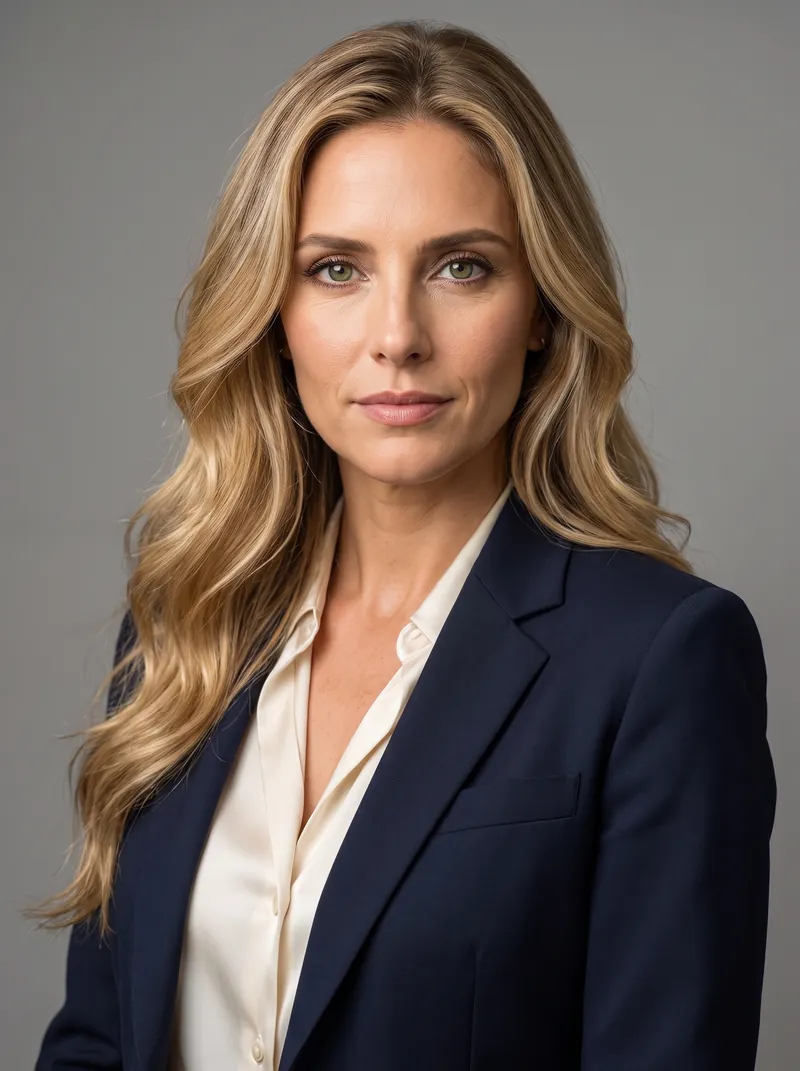
OpenAI's attempt to court the creator economy with a luxury "Summer Camp" has backfired, triggering a wave of public backlash that is forcing influencers to rethink how they promote artificial intelligence. In early August 2026, the AI giant invited a select group of business and tech influencers to Wildflower Farms, a high-end resort in upstate New York where rooms can exceed $2,000 a night.
The itinerary included farm-to-table dining, beekeeping sessions, and workshops on the newly launched ChatGPT Work product. But when attendees began posting their pastoral content online, their comment sections were quickly flooded with criticism. The incident highlights a growing disconnect between how AI companies view their products and how the public perceives the technology's broader societal impact.[1][3][4][6][8]
The backlash focused heavily on the stark contrast between the eco-friendly setting of the retreat and the environmental realities of generative AI. Commenters pointed out the irony of promoting AI amid nature while the industry faces intense scrutiny over the massive energy and water consumption required to cool its rapidly expanding data centers.
"Looks like a nice spot for a data center," one user commented on an influencer's post showcasing the Hudson Valley landscape, while others labeled the promotional trip "dystopian" and "morally bankrupt." The response was so severe that several creators deleted their posts or locked their comment sections entirely to stem the tide of negative engagement.[1][2][3][4][6]
For OpenAI, the retreat was intended as a straightforward educational initiative. A company spokesperson stated that the goal was to introduce creators to ChatGPT Work so they could gain hands-on experience and demonstrate practical uses to their audiences.
Influencers who attended the event expressed genuine surprise at the vitriol, noting on LinkedIn that they had no idea people were so fiercely anti-AI and describing the online reaction as a "shocking AI psychosis." The company hoped that by partnering with trusted voices, it could demystify its enterprise tools and present a softer, more approachable image.[2][3][6][8]
However, marketing experts note that applying the traditional influencer playbook—often used by fashion, beauty, and lifestyle brands—to a polarizing technology like AI was a significant strategic misstep. The highly curated nature of the trip clashed with the authenticity that audiences demand from creators.
Farm-to-table meals, wellness programming, and branded canvas bags are exactly the kind of stage management that modern audiences have grown adept at spotting and rejecting. When applied to a company whose technology is actively upending the livelihoods of the very creative class it was courting, the optics proved disastrous.[3][4][5]
The fallout from the Summer Camp is sending ripples through the broader creator economy, where promoting AI companies is increasingly viewed as a severe reputational hazard. Recent polling indicates that a significant portion of the public expects AI to have a negative impact, driven by fears of job displacement, copyright infringement, and environmental degradation. Influencers who previously accepted tech sponsorships without hesitation are now finding themselves pelted with virtual tomatoes, forcing talent managers to adopt new strategies to protect their clients' long-term earning potential and audience trust.[1][2][7]
In response to the increasingly hostile environment, AI technology firms are deploying structured risk mitigation tactics to secure creator partnerships. Startups like the generative video platform Higgsfield AI are utilizing sentiment analysis to scan creators' comment sections, identifying specific topics that are likely to trigger hatred rather than positive engagement. The company then advises clients on safe messaging pathways and works with them to navigate any ensuing backlash. The goal is to carefully tailor the message to convey that AI is a helpful tool rather than an existential threat.[1][7]
To offset the reputational exposure, compensation packages for AI promotions have expanded significantly across the industry. Talent managers report that creators are now demanding premiums of 20 to 30 percent above their standard rates to take on the risk of public shaming, with some high-profile deals reaching into the five-to-seven-figure range. While the financial upside remains a primary motivator for many influencers, talent executives warn that taking AI money can be shortsighted if it causes permanent damage to a creator's image and alienates their core audience.[1][7]
Creator adaptation strategies are rapidly evolving as the stakes grow higher. Some talent executives are now enforcing strict vetting criteria, advising clients to decline partnerships with unfamiliar AI brands or explicitly avoiding any company with "AI" in its name. Other influencers are implementing transparent content disclosures to distance their work from generative output, explicitly stating when their promotional materials rely on manual production techniques.
Key points
- OpenAI hosted a luxury 'Summer Camp' for influencers in upstate New York to promote its ChatGPT Work product.
- The pastoral brand trip sparked intense online backlash, with commenters criticizing the environmental impact of AI data centers.
- Influencers faced accusations of 'selling out,' prompting some to delete posts or lock their comment sections.
- Marketing experts criticized the use of traditional lifestyle influencer tactics for a highly polarizing technology.
- Content Creators
- Influencers and talent managers prioritizing audience trust and demanding higher compensation to offset the reputational risks of AI sponsorships.
- Skeptical Public
- Audiences rejecting AI lifestyle promotions, citing the technology's massive environmental footprint and potential for job displacement.
- AI Industry Marketers
- Tech companies attempting to humanize their products through lifestyle marketing and sentiment analysis to overcome public skepticism.
Perspectives this story doesn't cover
- Independent AI Researchers
- Data Center Host Communities
Sources
Source coverage
8 outlets
3 viewpoints surfaced








- [1]Business InsiderContent Creators
Influencers are being pelted with virtual tomatoes for promoting AI companies
Read on Business Insider → - [2]CBCSkeptical Public
OpenAI hosted an all-expenses-paid gathering of content creators at an idyllic New York state resort
Read on CBC → - [3]The WeekSkeptical Public
Since videos of OpenAI's first brand trip hosting business and tech influencers hit social media timelines
Read on The Week → - [4]DigidayContent Creators
The uproar over OpenAI's luxury creator trip to New York
Read on Digiday → - [5]Inc.AI Industry Marketers
OpenAI's Creator Retreat Sparked a Backlash. The Bigger Lesson Is About Staging, Not Strategy.
Read on Inc. → - [6]India TodaySkeptical Public
OpenAI's luxury 'summer camp' for influencers faces backlash over sustainability
Read on India Today → - [7]Hyper.aiContent Creators
Influencers navigating the creator economy face escalating pressures
Read on Hyper.ai → - [8]American BazaarAI Industry Marketers
OpenAI is facing online backlash after hosting a luxury retreat
Read on American Bazaar →
More in Artificial Intelligence
See all →Video Generation
How Temporal Attention Layers Enforce Frame Consistency in AI Video Generation
5 sources

Sovereign AI
Mistral Secures €3 Billion in Europe's Largest Tech Funding Round, Led by Samsung
10 sources

Federated Learning
How Federated Learning Trades Model Accuracy for Data Security
6 sources

AI Supply Chain
OpenAI to Terminate Cursor's Model Access Following $60 Billion SpaceX Acquisition
7 sources

Comments
Every angle. Every day.
Get Artificial Intelligence stories with full source coverage and perspective breakdowns, free every day.