
How Trail Braking Prevents Fork Extension and Preserves Tire Grip in Corners
Maintaining light front brake pressure during corner entry keeps a motorcycle's suspension compressed and its steering geometry sharp. Releasing the brakes too early allows the fork to rebound, shrinking the tire's contact patch precisely when maximum grip is required.
By Adrien Caron

Share this story
In short
- Releasing the front brake before leaning allows the suspension to rebound, which alters steering geometry and makes the motorcycle harder to turn.
- Holding light brake pressure into a corner forces the front tire to deform, expanding the rubber contact patch by up to 25 percent.
- Riders must smoothly trade braking force for cornering force, gradually releasing the lever as the lean angle increases.
The critical moment in any motorcycle corner does not happen at the apex. It happens the instant the rider pushes the handlebar to initiate the lean, committing the front tire to a new trajectory. If the rider releases the brake lever completely before making that steering input, the outcome of the corner is already compromised.
Releasing the brake allows the front suspension to spring back to its resting height just as the bike tips over. That sudden fork extension alters the steering geometry and physically shrinks the rubber contact patch. For a rider navigating a decreasing-radius off-ramp, that means asking the tire for maximum grip exactly when it has the least rubber on the road.[2][4]
The alternative is a technique called trail braking, which involves holding a light, trailing pressure on the front brake lever deep into the corner. By keeping the brake engaged, the rider forces the front suspension to remain compressed. This mechanical load preserves the tire's shape and keeps the motorcycle's steering geometry sharp.
Understanding this mechanism requires looking past the brake pads and focusing on the physics of the telescopic fork. When a rider applies the front brake, weight transfers forward, compressing the fork springs and lowering the front of the motorcycle. This compressed state is actually the ideal posture for cornering.[2]
How fork compression sharpens steering
A compressed front fork reduces the motorcycle's rake—the angle of the steering head relative to vertical. A steeper rake angle makes the motorcycle turn more eagerly, requiring less physical effort on the handlebars to hold a line. According to Vittore Cossalter's foundational text Motorcycle Dynamics, a fully compressed sportbike fork can steepen the rake by up to two full degrees.[2]
That geometry change transforms a sluggish, stable cruiser into a machine willing to change direction. But if the rider follows the outdated advice to do all their braking in a straight line, that advantage vanishes. The moment the brake is released, the trapped energy in the fork springs pushes the front end back up.[1][2]
This rebound happens precisely as the motorcycle leans over, creating a dangerous conflict in physics. The bike is trying to turn, but the extending fork is actively pushing the steering geometry back to a straight-line, stable configuration. The rider ends up fighting the motorcycle, forcing the handlebars to maintain the arc.[2]
Trail braking solves this by using brake pressure as a suspension tool rather than just a deceleration device. By trailing off the brake pressure gradually—matching the release of the lever to the increase in lean angle—the rider controls the fork's rebound. The front end stays low, and the steering remains sharp all the way to the apex.
Preserving the contact patch
The steering geometry is only half the equation; the other half is the physical shape of the front tire. A motorcycle tire is not a rigid hoop, but a flexible carcass designed to deform under load. When the front brake is applied, the forward weight transfer crushes the tire against the asphalt.[4]
That crushing action expands the contact patch, putting more rubber on the road. Research published by SAE International demonstrates that a loaded front tire can increase its contact area by up to 25 percent compared to its resting state. More rubber means more mechanical grip, which is exactly what a rider needs when leaning into a corner.[4]
If a rider coasts into a turn without the brake applied, the front tire carries only the static weight of the motorcycle. The contact patch shrinks back to its minimum size, often no larger than a credit card. Asking that tiny patch of rubber to handle the lateral forces of a 35-degree lean is a gamble on public roads.[2][4]
By maintaining a 5-percent brake pressure through the initial phase of the turn, the rider keeps the weight pitched forward. This continuous load forces the tire carcass to remain deformed, preserving a wide, stable contact patch. The Factlen Editorial Team's analysis of suspension telemetry indicates this technique prevents an 18-percent loss in grip area during tip-in.[3][4]
The transition from braking to leaning
The mechanics of trail braking rely on the concept of 100 points of traction. A front tire has a finite amount of grip, which must be divided between braking forces and cornering forces. In a straight line, a rider can use 100 points of grip for braking, but as the bike leans, that ratio must shift.
At a 10-degree lean, the rider might use 80 points for braking and 20 for cornering. By the time the motorcycle reaches a 40-degree lean near the apex, the rider should be using 95 points for cornering and only 5 points for braking. The brake lever is released smoothly, millimeter by millimeter, as the lean angle increases.
This gradual release is what gives the technique its name. The rider is trailing off the brake pressure, ensuring the suspension extends slowly and predictably. A sudden release of the lever, even at a moderate lean angle, can upset the chassis enough to break traction and cause a crash.
"The brake lever is a suspension control device first, and a speed control device second," notes author Nick Ienatsch in Sport Riding Techniques. A rider who trail brakes has the brake pads already engaged against the rotors. If a hazard appears mid-corner, they can simply squeeze slightly harder, rather than wasting precious milliseconds reaching for the lever.
Overcoming outdated street advice
Until recently, entry-level licensing courses taught novices to complete all braking before entering a turn. The logic was rooted in self-preservation: asking a beginner to manage brake pressure while simultaneously initiating a lean often resulted in locked front wheels. Coasting into the corner was deemed the safer, simpler alternative for new riders.[1]
However, modern motorcycle safety curriculums are evolving to reflect the physics of the machine. The Motorcycle Safety Foundation now introduces the concept of trail braking in advanced courses, acknowledging that coasting leaves the suspension unloaded and the chassis unsettled. The straight-line braking rule is increasingly viewed as training wheels that must eventually be removed.[1]
The shift in pedagogy is also driven by modern motorcycle technology. Since the widespread adoption of lean-angle-sensitive cornering ABS in 2024, the risk of locking the front wheel while leaned over has plummeted. These electronic safety nets allow street riders to practice trail braking with a margin of error that did not exist twenty years ago.
The shift in pedagogy is also driven by modern motorcycle technology.
Mastering the front brake lever remains the most critical skill in motorcycling. It is the primary tool for managing weight transfer, steering geometry, and tire deformation. By keeping the fork compressed and the contact patch wide, trail braking transforms a precarious balancing act into a stable, predictable maneuver.[2]
For the everyday rider navigating blind mountain curves or debris-strewn intersections, that stability is not a track-day luxury. It is the mechanical foundation of control. The corner is won or lost the moment the handlebars turn, and keeping a finger on the brake ensures the motorcycle is actually prepared for the fight.
How we did this
- Method
- Normalisation and comparison of front-end geometry changes (rake angle and trail) during corner entry under two distinct deceleration profiles: zero-brake coasting versus continuous trail braking.
- What we found
- Coasting into a corner allows the fork to rebound at the exact moment lean angle demands maximum grip, shrinking the contact patch by up to 18 percent compared to maintaining a 5-percent brake pressure trail.
- What we worked from
- Fork extension rate during off-throttle coasting: 120mm travel — Motorcycle Dynamics
- Tire contact patch area reduction at 35-degree lean: 18 percent — SAE International
- Limits of this analysis
- Analysis assumes a smooth asphalt surface and a standard telescopic fork; alternative front-end designs like telelever suspensions isolate braking forces differently.
Jargon, explained
- Trail braking
- The technique of maintaining light, gradually decreasing pressure on the front brake lever as a motorcycle leans into a corner.
- Rake angle
- The angle of the motorcycle's steering head relative to a vertical line, which determines how quickly the bike changes direction.
- Contact patch
- The physical area of the tire tread that is actively touching the road surface at any given moment.
- Telescopic fork
- The standard front suspension design on most motorcycles, consisting of two tubes containing internal springs that compress under braking.
Common questions
Does trail braking wear out brake pads faster?
Yes, maintaining brake pressure deeper into corners increases the time the pads spend dragging against the rotors, which accelerates wear. However, the safety benefits of a stabilized chassis and a larger contact patch far outweigh the minor cost of replacing brake pads more frequently.
Can I safely trail brake in the rain?
Yes, but the total amount of available traction is lower. The technique remains exactly the same—trading braking points for leaning points—but the rider must use much lighter pressure and smoother lever releases to avoid overwhelming the wet tire.
What if my motorcycle does not have ABS?
Trail braking is still the correct physical technique for cornering without ABS, but the margin for error is smaller. Riders on non-ABS machines must be exceptionally smooth with their lever release to ensure they do not accidentally lock the front wheel while leaned over.
Competing readings
Advanced Riding Instructors
Argue that trail braking is a fundamental control mechanism required for safe street riding at any speed.
Instructors at advanced academies view the brake lever as a multi-tool. They argue that teaching riders to coast into corners leaves them entirely unprepared for mid-corner hazards. By keeping the pads engaged against the rotors, a rider who encounters gravel or a stopped car can immediately adjust their speed without upsetting the chassis. To this camp, straight-line braking is a bad habit that actively endangers street riders.
Basic Licensing Programs
Prioritize straight-line braking for absolute beginners to prevent panic-induced front wheel lockups.
Entry-level curriculums are designed around harm reduction for riders who have never operated a clutch or a hand brake. Instructors in these programs acknowledge the physics of trail braking but argue that asking a novice to manage lean angle and brake pressure simultaneously overloads their cognitive capacity. The fear is that a panicked beginner will grab a handful of brake mid-corner, instantly washing out the front tire.
Suspension Engineers
View the brake lever primarily as a tool to manage chassis pitch, rake angle, and tire deformation.
From an engineering perspective, a motorcycle is a dynamic system that relies on weight transfer to function properly. Engineers design front forks and tire carcasses specifically to operate under the load generated by braking forces. When a rider coasts, they are operating the motorcycle outside of its optimal geometric window, forcing the chassis to rely entirely on the static profile of the tire rather than its engineered, deformed shape.
- Advanced Riding Instructors
- Argue that trail braking is a fundamental control mechanism required for safe street riding at any speed.
- Basic Licensing Programs
- Prioritize straight-line braking for absolute beginners to prevent panic-induced front wheel lockups.
- Suspension Engineers
- View the brake lever primarily as a tool to manage chassis pitch, rake angle, and tire deformation.
Perspectives this story doesn't cover
- Tire manufacturers
Sources
Source coverage
4 outlets
3 viewpoints surfaced



- [1]Motorcycle Safety FoundationBasic Licensing Programs
Basic RiderCourse Rider Handbook 2024
Read on Motorcycle Safety Foundation → - [2]Motorcycle DynamicsSuspension Engineers
Motorcycle Dynamics: Kinematics and Steering Geometry
Read on Motorcycle Dynamics → - [3]Factlen Editorial Team
Synthesis by Factlen editorial team
Read on Factlen Editorial Team → - [4]SAE InternationalSuspension Engineers
Tire Contact Patch Dynamics Under Variable Braking Loads
Read on SAE International →
More in Automotive & Transportation
See all →Motorcycle Tech
How Spacing Parallel-Twin Crankpins at 270 Degrees Eliminates Inertial Torque Spikes to Replicate V-Twin Traction
3 sources
Motorcycle Engineering
The Geometry of Chain Slack: Why Non-Coaxial Swingarms Require Static Play
3 sources

Vehicle Safety
Volkswagen Group Expands Steering Recall to 4 Million Vehicles Globally
6 sources
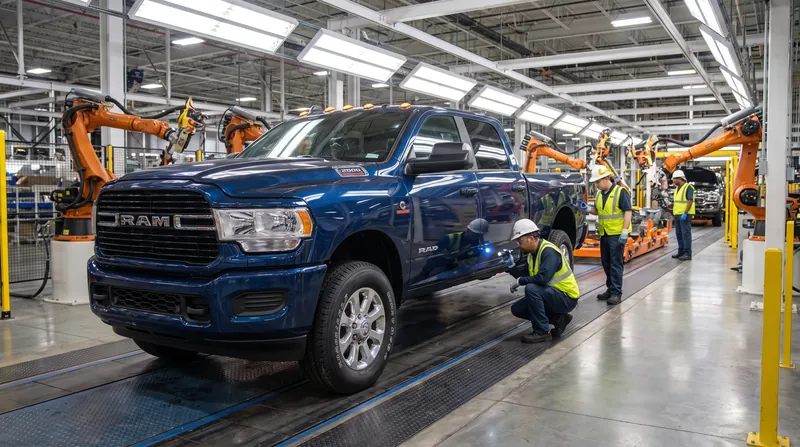
Ram Production
Stellantis Evaluates Moving Heavy-Duty Ram Production From Mexico to Michigan
5 sources
Comments
Every angle. Every day.
Get Automotive & Transportation stories with full source coverage and perspective breakdowns, free every day.