
How Carbon Fiber and Tensor Rubbers Transformed Table Tennis into a Supersonic Sport
Modern table tennis is a marvel of materials science, where carbon-infused blades and high-tension rubbers allow players to generate 9,000 RPM of spin. This explainer breaks down the physics and engineering that make it the fastest sport on a table.

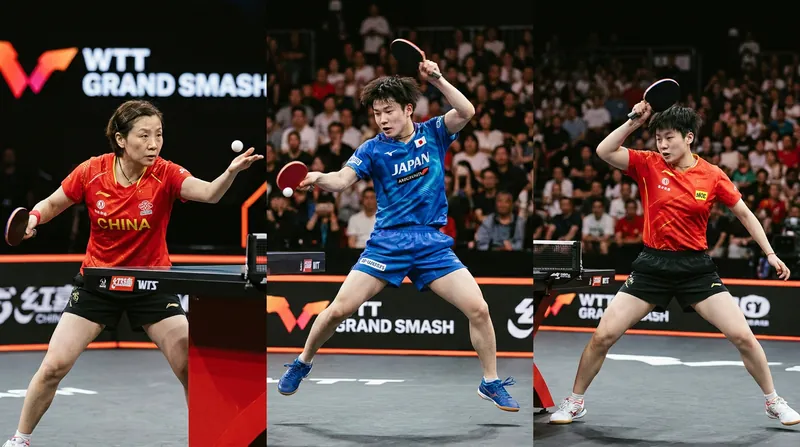
At the elite level, table tennis is a game played in fractions of a millisecond. A professional player's smash can propel the lightweight plastic ball at speeds exceeding 70 miles per hour across a table that is only nine feet long. At these velocities, athletes have roughly 0.2 seconds to recognize the shot, move their feet, adjust their racket angle, and swing. It is a sport that pushes human reflexes to their absolute biological limits.[1]
While the athleticism of the players is undeniable, the sheer speed and spin of the modern game are largely the result of a quiet revolution in materials science. The transition from the "hardbat" era of the mid-20th century to today's composite weapons has turned the table tennis racket into a highly engineered catapult.[1]
The foundation of this engineering marvel is the "blade"—the wooden core of the racket. To preserve the traditional feel of the sport, International Table Tennis Federation (ITTF) regulations mandate that the blade must be constructed of at least 85% natural wood by thickness. However, it is the remaining 15% where equipment manufacturers work their magic.[2]
Engineers weave ultra-thin layers of advanced synthetic materials, such as carbon fiber, Arylate, or Zylon, between the wood veneers. These composite layers fundamentally alter the physical properties of the racket, transforming a simple piece of wood into a high-performance energy transfer system.[4]
Carbon fiber drastically increases the overall stiffness of the blade. When a high-speed ball strikes a stiff carbon blade, significantly less kinetic energy is lost to the wood's natural vibration. Instead, that energy is efficiently returned to the ball, resulting in a much faster rebound off the racket face.[4]
Furthermore, the inclusion of carbon expands the racket's "sweet spot"—the optimal hitting area where energy transfer is maximized. This allows players to strike the ball slightly off-center during frantic, high-speed rallies without suffering a massive drop in speed or directional control.[4]
If the composite blade provides the raw speed, the rubber affixed to it provides the devastating spin. For decades, players relied on "speed glue," a volatile, solvent-based adhesive that expanded the pores of the rubber sponge, creating a trampoline effect. When the ITTF banned speed glue in 2008 due to health and safety concerns, it forced a massive shift in rubber manufacturing.[2]
Equipment scientists responded by inventing "tensor" rubbers. Instead of relying on players to manually stretch the rubber with chemical solvents before a match, manufacturers figured out how to build permanent tension directly into the molecular structure of the synthetic rubber sponge during the curing process.[5]
A modern tensor rubber acts like a tightly coiled spring. When the ball sinks into the porous sponge upon impact, the pre-stretched rubber snaps back violently. This mechanical catapult effect launches the ball forward with immense force, entirely replacing the need for chemical speed glues.[5]
Glued face-down onto this high-tension sponge is the "top sheet"—a pimpled rubber surface engineered for maximum friction. In the most common "inverted" rubber setup, the smooth side faces outward, providing a massive surface area to grip the plastic ball.[1]
When a professional player violently brushes the ball with this high-friction surface, they can generate astonishing rotational speeds. Elite players routinely produce topspin rates exceeding 9,000 revolutions per minute (RPM), turning the ball into a blur of kinetic energy.[3]
This extreme rotation triggers a fluid dynamics phenomenon known as the Magnus effect. As the spinning ball flies through the air, the friction of its surface drags a thin boundary layer of air along with it, altering the surrounding air pressure.[3]
Heavy topspin creates higher air pressure on the top of the ball and lower pressure on the bottom. This pressure differential exerts a strong downward force, causing the ball to dive sharply toward the table much faster than gravity alone would dictate.[3]
The Magnus effect is the only reason modern players can hit the ball with such ferocity. Without topspin pulling the ball down in a steep arc, a 70 mph shot would sail several feet past the end of the table. Spin is the invisible tether that keeps the supersonic ball in play.[6]
The biomechanics of the modern "loop" stroke have evolved specifically to maximize this aerodynamic effect. Players utilize their entire kinetic chain—driving from the legs, rotating the core, and executing a rapid forearm snap—to brush the ball at the exact optimal angle.[6]
Innovation in table tennis hasn't stopped at materials; it has recently altered the fundamental geometry of the racket itself. In 2021, a radical hexagonal blade design entered the professional scene, challenging a century of oval-shaped tradition.[7]
Traditional oval rackets have their sweet spot located dead in the center. The polygonal "Cybershape" design shifts the weight distribution, increasing the total hitting area in the upper half of the blade by roughly 11%.[7]
Because players naturally strike the ball near the tip of the racket during aggressive topspin loops to maximize leverage and racket-head speed, this geometric tweak provides more power and stability exactly where the athlete needs it most.[7]
The sport remains locked in a perpetual, fascinating dance between regulators and innovators. When the ITTF introduced slightly larger 40mm+ plastic balls to increase air resistance, slow the game down, and extend rally lengths for television audiences, engineers simply developed grippier, more explosive rubbers to compensate.[2][5]
Today's professional table tennis racket is a highly tuned composite instrument, customized down to the millimeter and milligram for each individual athlete. It stands as a brilliant testament to how sports science and engineering can elevate human reflexes to truly superhuman speeds.[1]
Key points
- Modern table tennis speeds are driven by composite blades and tensioned rubbers.
- Carbon fiber layers increase racket stiffness, returning more kinetic energy to the ball.
- Tensor rubbers act like mechanical springs, replacing banned chemical speed glues.
- High-friction surfaces allow players to generate 9,000 RPM of topspin.
- The Magnus effect forces the spinning ball to dive, keeping high-speed shots on the table.
- New geometric blade shapes are shifting the sweet spot to match modern swing mechanics.
How we got here
1950s
Sponge rubber is introduced, drastically changing the speed and spin of the game compared to traditional hardbats.
2000
The ITTF increases the ball size from 38mm to 40mm to slow the game down for television audiences.
2008
The ITTF officially bans the use of toxic speed glues, prompting the rise of factory-tensioned tensor rubbers.
2021
The hexagonal 'Cybershape' blade is introduced, challenging the traditional oval racket design.
- Equipment Scientists
- Focus on pushing the boundaries of materials science to maximize energy transfer, speed, and spin.
- ITTF Regulators
- Aim to balance technological advancement with the need for watchable, extended rallies and fair play.
- Sports Biomechanists
- Study how the human body adapts its movement patterns to harness the extreme physics of modern equipment.
Perspectives this story doesn't cover
- Recreational basement players
Sources
Source coverage
7 outlets
3 viewpoints surfaced







- [1]Factlen Editorial TeamSports Biomechanists
Synthesis by Factlen editorial team
Read on Factlen Editorial Team → - [2]International Table Tennis FederationITTF Regulators
Equipment Regulations and Racket Specifications
Read on International Table Tennis Federation → - [3]Journal of Sports SciencesSports Biomechanists
Aerodynamics of the table tennis ball and the Magnus effect
Read on Journal of Sports Sciences → - [4]Sports EngineeringEquipment Scientists
Energy transfer in carbon-fiber reinforced table tennis blades
Read on Sports Engineering → - [5]Physics TodayEquipment Scientists
The fluid dynamics of high-tension table tennis rubbers
Read on Physics Today → - [6]Asian Journal of Sports MedicineSports Biomechanists
Biomechanical analysis of the modern topspin loop
Read on Asian Journal of Sports Medicine → - [7]Stiga SportsEquipment Scientists
Cybershape: The science behind the hexagonal blade
Read on Stiga Sports →
More in Sports
See all →Standings
The Race to the WTT Finals: Rising Stars Kao Cheng-Jui and Oh Junsung Crash the Men's Top 20
5 sources

Standings
The Race to the WTT Finals: European Women Surge in the Mid-Summer Top 16 Standings
4 sources

Injury
Sreeja Akula Returns From Shoulder Surgery to Lead India's 2026 Asian Games Squad
5 sources

Standings
The Race to the WTT Finals: Quadri Aruna and Omar Assar Surge into Top 16 Contention
5 sources

Comments
Every angle. Every day.
Get Sports stories with full source coverage and perspective breakdowns, free every day.