
The Race for World No. 3: Zhu Yuling, Miwa Harimoto, and Kuai Man Locked in Historic 47-Point Standings Battle
As the July 2026 ITTF World Rankings are released, a mere 47 points separate the third, fourth, and fifth-ranked women in the world, setting up a high-stakes battle for seeding.
By Jackson Reed

Share this story
The summit of women's table tennis remains a two-player fortress. China's Sun Yingsha sits comfortably at World No. 1 with a staggering 11,350 points, while her compatriot Wang Manyu holds the No. 2 spot with 8,865. But just beneath that stratosphere, the July 6, 2026, ITTF World Rankings have revealed the most fiercely contested battle in the sport. A mere 47 points now separate the third, fourth, and fifth-ranked women in the world, creating a high-stakes, three-way tug-of-war that will define the second half of the WTT Series season.[1]
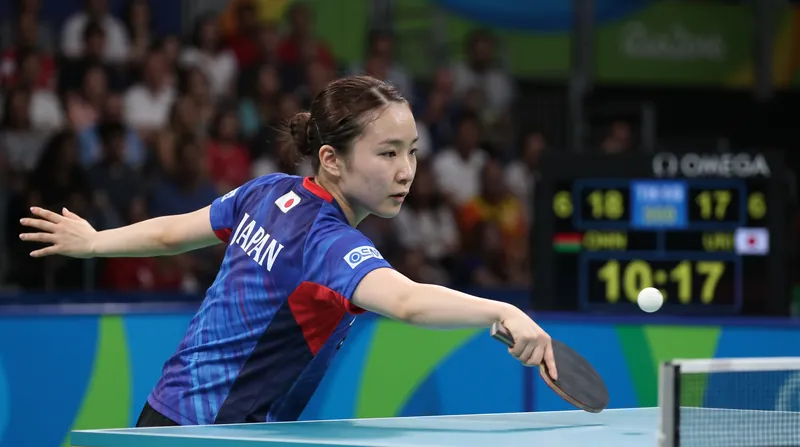
The numbers are mathematically jarring in a system that aggregates tens of thousands of points over a rolling 12-month period. China's veteran star Zhu Yuling clings to the World No. 3 ranking with 5,410 points. Breathing directly down her neck is Japanese teenage sensation Miwa Harimoto at 5,389 points—a deficit of just 21 points. Rounding out the trio is 22-year-old Chinese left-hander Kuai Man, who sits at 5,363 points, just 26 points behind Harimoto.[1]
This razor-thin margin is not merely a statistical curiosity; it carries massive competitive implications. In the rigid seeding structure of the WTT Series, securing a top-four world ranking is the holy grail.
The top four seeds are placed in separate quarters of the draw at major events, guaranteeing they will not face the overwhelming dominance of Sun Yingsha or Wang Manyu until the semifinals. Slipping to No. 5 means a player could draw the World No. 1 as early as the quarterfinals, drastically altering their path to a title and the accompanying prize money.[2][3]
The narrative surrounding this trio makes the mathematical deadlock even more compelling. At 31, Zhu Yuling represents one of the most inspiring comeback stories in modern table tennis. After stepping away from the sport years ago to undergo surgery and recover from a serious immune system illness, her return to the upper echelon of the ITTF rankings has been a masterclass in resilience. Zhu has adapted her game, relying less on sheer physical overpowering and more on her legendary defensive anticipation and flawless placement to outmaneuver younger, faster opponents.
Chasing Zhu is the embodiment of that younger, faster generation: Miwa Harimoto. The 18-year-old Japanese prodigy has spent the first half of the 2026 season playing with a relentless, aggressive tempo that frequently overwhelms veteran defenders.
Harimoto's ability to generate immense power off both wings while hugging the table has made her the most consistent non-Chinese threat on the tour. For Japanese table tennis fans, Harimoto represents the best hope of breaking the Chinese monopoly at the very top of the podium before the Los Angeles 2028 Olympic cycle fully accelerates.
Then there is Kuai Man, the 22-year-old heir apparent to the Chinese national team's legacy. Armed with a lethal left-handed serve and a devastating forehand loop, Kuai has steadily climbed the rankings over the past two years.
Her recent deep runs, including a grueling seven-game thriller against Sun Yingsha at the United States Smash in Ontario, California, proved she possesses the mental fortitude to challenge the sport's titans. Kuai is not just fighting for World No. 3; she is fighting to solidify her status as the definitive next-in-line for China's elite squad.
The integrity of this incredibly tight race was recently preserved by an administrative correction from the sport's governing body. In early July, the ITTF confirmed that a minor administrative error regarding the application of ranking regulation 4.2 had incorrectly removed points from a small number of players. Those points were swiftly reinstated in the July 6 release, ensuring that the 47-point spread between Zhu, Harimoto, and Kuai accurately reflects their rolling 12-month performances without any bureaucratic distortion.[1]
The battleground for this trio will soon shift to Japan. The WTT Champions Yokohama event, scheduled for early August, looms as the ultimate tiebreaker. Because WTT Champions events are elite-only, winner-takes-all tournaments offering 1,000 points to the champion and 700 to the runner-up, the current 47-point gap will almost certainly be obliterated. A single upset in the Round of 16 or a surprise run to the finals by any of the three women will completely rewrite the Top 5 hierarchy.
Beyond Yokohama, the race has broader implications for the season-ending WTT Finals Hong Kong 2026 in December. While Zhu, Harimoto, and Kuai are all mathematically locks to make the Top 16 cutline for the prestigious finale, their exact seeding will dictate their group-stage draws. The WTT Finals offer 1,500 points to the winner, making it the final, massive payload of the year that could cement one of these women as the definitive World No. 3 heading into 2027.[2]
For now, the table tennis world gets to watch a rare, perfect storm of ranking mathematics and generational storylines. It is a daily, tournament-by-tournament sprint between a veteran defending her hard-won legacy, a Japanese teenager looking to disrupt the world order, and a rising Chinese star eager to claim her inheritance. Every match, every game, and every single point they play for the rest of the summer will echo in the standings.[3]
Key points
- Sun Yingsha and Wang Manyu maintain a dominant hold on the World No. 1 and No. 2 rankings.
- Only 47 points separate Zhu Yuling (No. 3), Miwa Harimoto (No. 4), and Kuai Man (No. 5).
- Securing a top-four ranking is crucial for favorable seeding in upcoming major WTT events.
- The race features a compelling mix of a returning veteran, a Japanese teenage prodigy, and a rising Chinese star.
- The upcoming WTT Champions Yokohama in August offers 1,000 points, guaranteeing a major reshuffle in the standings.
How we got here
January 2026
The 2026 WTT Series begins, with Zhu Yuling holding a comfortable lead for the No. 3 spot following her successful return to the tour.
April 2026
Miwa Harimoto strings together deep runs in WTT Contender events, closing the ranking gap to under 200 points.
June 2026
Kuai Man's strong performance at the United States Smash brings her within striking distance of the top four.
July 6, 2026
The ITTF releases the Week 28 rankings, officially confirming the historic 47-point margin between the three players.
- Chinese National Team Supporters
- Focused on Zhu Yuling's inspiring veteran comeback and Kuai Man's steady development as the next generation of Chinese dominance.
- Japanese Table Tennis Fans
- Viewing Miwa Harimoto's rapid ascent as the ultimate disruptor to China's hold on the top podium spots.
- Neutral WTT Analysts
- Fascinated by the mathematical anomaly of the 47-point spread and the massive seeding implications it carries for upcoming major tournaments.
Perspectives this story doesn't cover
- Players ranked just outside the Top 5 who are trying to close the gap
- Tournament organizers who benefit from the heightened drama of the standings race
Sources
Source coverage
3 outlets
3 viewpoints surfaced



- [1]International Table Tennis Federation
ITTF Table Tennis World Ranking: 2026 Week 28
- [2]World Table Tennis
Race to WTT Finals Hong Kong 2026 Standings Updated
- [3]ESPNNeutral WTT Analysts
The math behind table tennis's tightest ranking battle
Read on ESPN →
More in Sports
See all →Europe Smash
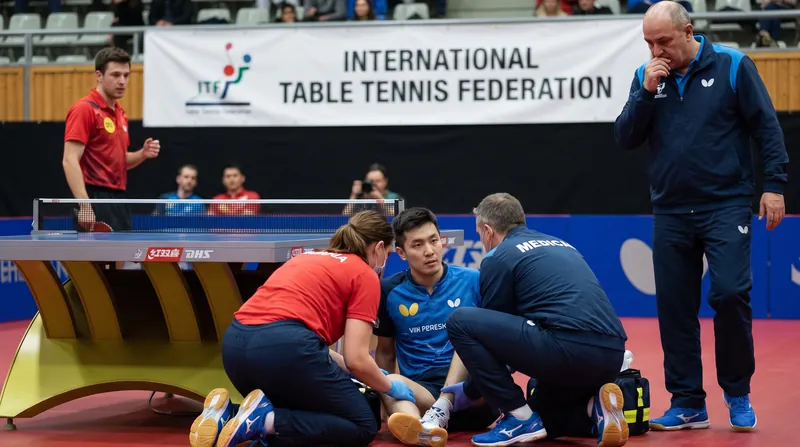
Europe Smash 2026 Preview: Truls Möregårdh Faces Dimitrij Ovtcharov in Blockbuster Opener
3 sources
Injury
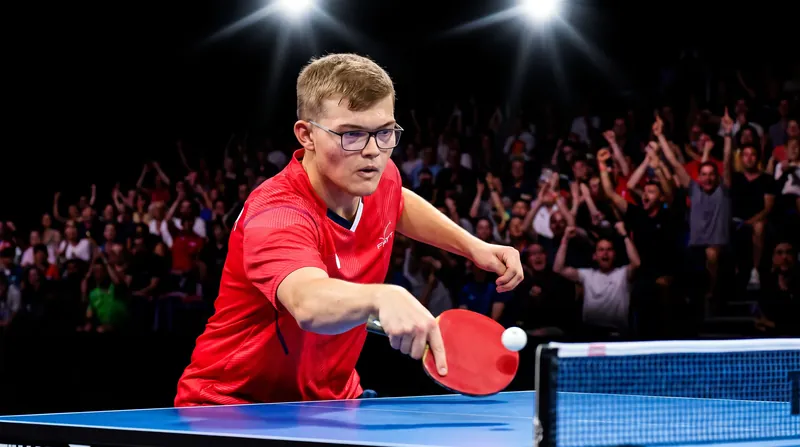
WTT Injury Report: Sun Yingsha Rests Ankle as Hugo Calderano Returns for Europe Smash
7 sources
Standings
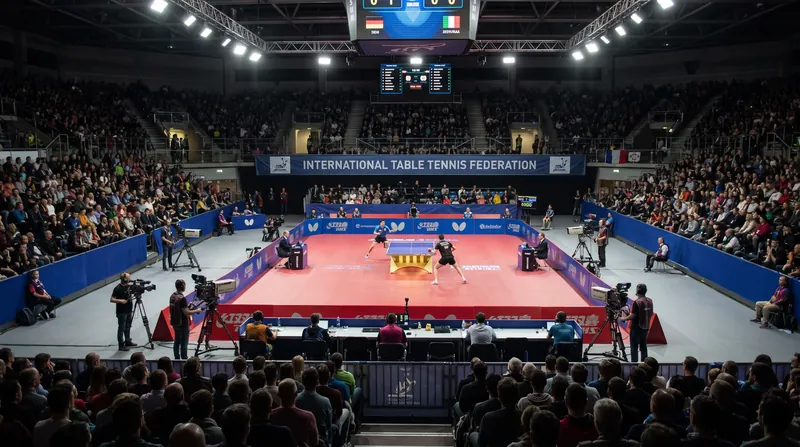
European Stars Surge in August ITTF Rankings as Moregard and Lebrun Challenge Chinese Dominance
5 sources
Injury
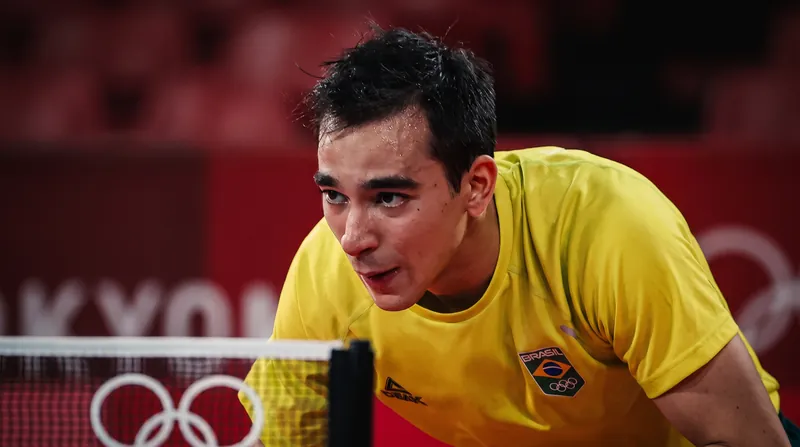
Global Table Tennis Injury Report: Zhu Yuling's Historic Post-Surgery Comeback and Aruna Quadri's Strategic Rehab
6 sources
Comments
Every angle. Every day.
Get Sports stories with full source coverage and perspective breakdowns, free every day.