
How Autonomous Trucks Are Evolving to Save Lives on U.S. Highways
As self-driving freight moves from pilot programs to commercial deployment, new data suggests autonomous systems could prevent thousands of highway fatalities annually.

In short
- The U.S. trucking industry faces a 1.2 million driver shortfall and high fatality rates driven by human error.
- Level 4 autonomous trucks process 10 gigabytes of sensor data per second, reacting 11 seconds faster than humans at night.
- NHTSA data shows fully autonomous vehicles are solely at fault in only 4% of multi-vehicle accidents.
The U.S. trucking industry moves more than 60% of all domestic goods by weight, serving as the undisputed backbone of the American economy. Yet, the sector is facing a compounding crisis. Over the next decade, the industry projects a shortfall of 1.2 million drivers, while freight demand continues to climb. More critically, the human toll of highway freight remains stubbornly high, with large commercial vehicles involved in one out of every eight fatal crashes on U.S. roads.[5]
Into this gap, autonomous vehicle technology is accelerating from experimental pilot programs to commercial reality. In 2026, the conversation surrounding self-driving trucks has shifted fundamentally. It is no longer just a question of whether a computer can navigate a 40-ton vehicle down an interstate, but rather how quickly this technology can be deployed to save lives.[1]
The safety argument rests on a stark reality: the Federal Motor Carrier Safety Administration attributes 87% of at-fault truck crashes to human error. Fatigue, distraction, and poor decision-making are inherent vulnerabilities of human drivers. Autonomous systems, by contrast, do not text, do not get tired, and are not bound by the biological limits that necessitate federal hours-of-service regulations.[4]
The mechanism behind this safety profile relies on a massive influx of real-time data. A modern Level 4 autonomous truck processes up to 10 gigabytes of sensor data every second. Using a combination of high-resolution cameras, radar, and lidar, these systems can see more than 450 meters down the road. At highway speeds in the dead of night, an autonomous system can detect and react to a pedestrian or a stalled vehicle up to 11 seconds faster than a human driver relying on standard headlights.[4]
Beyond onboard sensors, the next generation of autonomous freight utilizes Vehicle-to-Everything (V2X) communication. This technology allows trucks to communicate directly with roadside infrastructure and other vehicles. For instance, in pilot programs at California's Donner Pass, roadside units broadcast real-time updates on weather conditions, traffic density, and road surface states directly to the trucks. This allows the autonomous systems to proactively adjust their speed and routing long before a hazard is visible to their onboard cameras.[5]
The control algorithms governing these trucks also operate on a predictive model. Because heavy trucks have significant braking latency—it takes time for air brakes to engage and halt 80,000 pounds of mass—the software does not merely react to the current environment. Instead, it continuously calculates the predicted state of the vehicle milliseconds into the future, compensating for mechanical delays to ensure fail-operational safety.[5]
As these systems log millions of miles on public roads, a clearer picture of their safety record is emerging. However, parsing the data requires distinguishing between two very different technologies: Advanced Driver Assistance Systems (ADAS) and Automated Driving Systems (ADS).[3]
ADAS, which includes Level 2 systems like Tesla's Autopilot or Full Self-Driving (FSD), requires a human driver to remain attentive and ready to take control at all times. These systems have been involved in thousands of crashes, and companies have faced intense scrutiny for presenting misleading safety statistics that conflate highway driving with complex urban environments.
ADS, on the other hand, represents Level 4 autonomy, where the vehicle performs the entire driving task within a specific operational domain—such as a mapped interstate corridor—without any human intervention.[3]
Analysis of NHTSA crash data from 2021 through 2025 reveals a striking divergence between human and ADS performance. Out of more than 2,000 reported incidents involving autonomous vehicles, ADS-equipped vehicles were found to be solely at fault in only 4% of accidents involving other road users. The vast majority of incidents where the autonomous vehicle was at fault involved collisions with animals, not humans.[3][5]
The economic and societal implications of scaling this technology are massive. A March 2026 report by the Steer Group projects that by 2035, autonomous systems could prevent up to 490 deaths, 8,800 injuries, and 23,000 crashes annually on U.S. roads. This translates to an estimated $9.4 billion in annual socioeconomic safety benefits.[4]
Furthermore, the efficiency gains ripple throughout the supply chain. Because autonomous trucks are not restricted by the 11-hour daily driving limit imposed on human drivers, they can operate nearly 24/7. A 1,000-mile freight run from Fort Worth to Phoenix, which typically takes a human driver two days with mandatory rest breaks, can be completed by an autonomous truck in a single, uninterrupted day.[2]
This continuous operation also yields significant environmental benefits. Autonomous trucks utilize optimized driving patterns and coordinated platooning—where multiple trucks drive closely together to reduce aerodynamic drag. These techniques can reduce fuel consumption by up to 16%, saving billions of dollars for shippers and drastically cutting carbon emissions across the logistics sector.[5]
Despite the compelling data, public trust remains a significant hurdle. A 2026 poll commissioned by Advocates for Highway and Auto Safety found that 85% of Americans are concerned about sharing the road with driverless tractor-trailers. The visceral fear of an 80,000-pound robot navigating at 70 miles per hour is difficult to overcome with statistics alone.
However, the same poll revealed a path forward: 61% of respondents indicated their concerns would be addressed if companies were required to meet stringent, minimum government safety requirements.
The regulatory landscape is currently racing to catch up with the technology. At present, 35 states allow some form of autonomous truck testing or deployment, creating a fragmented patchwork of rules. Industry leaders and safety advocates alike are pushing for a unified federal framework.[2][5]
Legislation such as the AMERICA DRIVES Act and the BUILD America 250 Act are currently working their way through Congress. These bills aim to codify safety standards, establish a national data repository for AV crashes, and provide a clear regulatory pathway for commercial deployment, ensuring that the U.S. remains competitive in the global logistics market.[5]
The transition to fully autonomous freight will not happen overnight. The industry is currently focused on 'hub-to-hub' operations, where human drivers navigate the complex 'first and last mile' through city streets, while autonomous systems handle the long, predictable stretches of interstate highway.[2]
Edge cases—such as unpredictable construction zones, extreme weather events, and erratic human drivers—still pose significant engineering challenges. But as sensor technology improves and machine learning models ingest billions of miles of simulation data, the operational domains for these trucks are rapidly expanding.[5]
Ultimately, the deployment of autonomous trucks represents one of the most significant public health interventions available in modern transportation. As the technology matures from R&D to standard commercial practice, the narrative is shifting from the novelty of a computer driving a truck, to the moral imperative of deploying a system that does not drink, does not sleep, and does not look away from the road.[1][5]
Key terms
- Automated Driving System (ADS)
- A Level 3 to Level 5 autonomous system capable of performing the entire driving task without human intervention within a specific operational domain.
- Advanced Driver Assistance Systems (ADAS)
- Level 1 and Level 2 technologies, such as adaptive cruise control or lane-keeping, that require a human driver to remain fully engaged and supervise the vehicle.
- Vehicle-to-Everything (V2X)
- A communication system that allows vehicles to exchange real-time data with other vehicles, roadside infrastructure, and traffic management networks.
- Platooning
- A driving technique where multiple trucks travel closely together in a coordinated line to reduce aerodynamic drag and save fuel.
- Operational Design Domain (ODD)
- The specific conditions—such as weather, road types, and speeds—under which an autonomous system is designed to safely operate.
Frequently asked
Are autonomous trucks safer than human drivers?
Current data suggests they are. The FMCSA attributes 87% of at-fault truck crashes to human error, and NHTSA data shows fully autonomous vehicles are solely at fault in only 4% of multi-vehicle incidents.
Will autonomous trucks take away jobs?
The trucking industry is currently facing a projected shortfall of 1.2 million drivers over the next decade. Autonomous trucks are largely being deployed to fill this gap rather than replace existing drivers.
Do autonomous trucks drive in cities?
Most commercial deployments focus on 'hub-to-hub' models. Autonomous trucks handle the long highway stretches, while human drivers take over for the complex navigation required in urban centers.
How do self-driving trucks see at night?
They use a combination of lidar, radar, and high-resolution cameras that can detect objects up to 450 meters away, reacting significantly faster than a human relying on standard headlights.
Viewpoints in depth
The Freight Industry's View
Autonomous trucks are a necessary evolution to solve driver shortages and eliminate human-error fatalities.
Logistics operators and AV developers argue that the current system is fundamentally broken, with a massive driver shortage and an unacceptable rate of highway fatalities. By removing the human element—and thus fatigue, distraction, and hours-of-service limitations—they believe autonomous trucks will not only save thousands of lives but also drastically reduce the cost of consumer goods through 24/7 equipment utilization.
Safety Advocates' View
Widespread deployment must be paused until stringent federal safety standards and transparent data reporting are codified.
Consumer protection groups and safety advocates point to the public's deep apprehension about sharing the road with 80,000-pound driverless vehicles. They argue that while the technology shows promise, the current patchwork of state laws is insufficient. They demand rigorous, independent verification of safety claims, mandatory vision tests for autonomous systems, and strict federal oversight to ensure that software failures do not replace human errors with catastrophic systemic failures.
Data Analysts' View
The true safety record of autonomous vehicles is nuanced and heavily dependent on the level of autonomy.
Independent researchers emphasize the critical distinction between Level 2 driver-assist systems and Level 4 fully autonomous systems. While companies have sometimes conflated the two to produce misleading marketing statistics, the raw NHTSA data suggests that true Level 4 systems operate with remarkable safety in their defined domains. Analysts stress that the focus should remain on verified, third-party data rather than self-published corporate safety reports.
- Autonomous Freight Industry
- Argues that autonomous trucks will drastically reduce fatalities caused by human error while solving supply chain shortages.
- Highway Safety Advocates
- Emphasizes the need for strict federal safety standards, transparent crash reporting, and rigorous testing before widespread deployment.
- Technology Analysts
- Focuses on parsing the real-world data to separate marketing hype from actual technological progress and safety outcomes.
Perspectives this story doesn't cover
- Independent Truck Owner-Operators
- Supply Chain Logistics Managers
Sources
Source coverage
5 outlets
3 viewpoints surfaced





- [1]BloombergTechnology Analysts
Autonomous Trucks Can Be Life-Saving
Read on Bloomberg → - [2]FreightWavesAutonomous Freight Industry
RIDE AI 2026: The Commercial Momentum Behind Autonomous Trucking
Read on FreightWaves → - [3]National Highway Traffic Safety Administration (NHTSA)Highway Safety Advocates
Standing General Order on Crash Reporting for Automated Driving Systems
Read on National Highway Traffic Safety Administration (NHTSA) → - [4]Steer GroupAutonomous Freight Industry
The Economic and Safety Impacts of Autonomous Trucking
Read on Steer Group → - [5]Factlen Editorial TeamTechnology Analysts
Synthesis by Factlen editorial team
Read on Factlen Editorial Team →

More in Technology
See all →Autonomous Vehicles
UN Adopts First Global Regulation for Fully Autonomous Driving Systems, Unifying Standards for US, EU, and China
3 sources
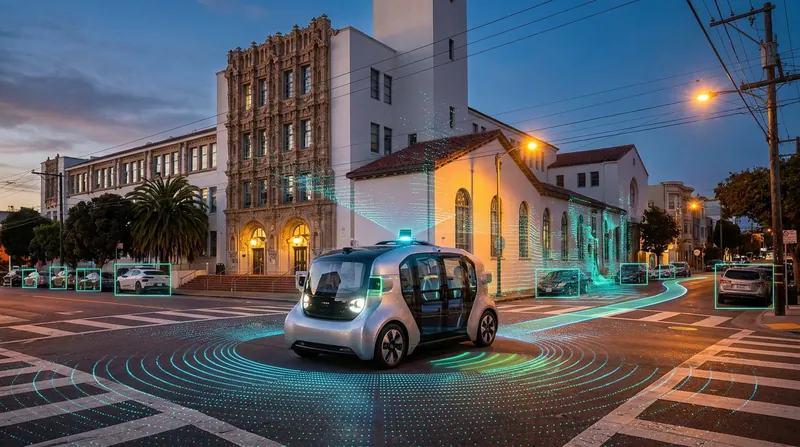
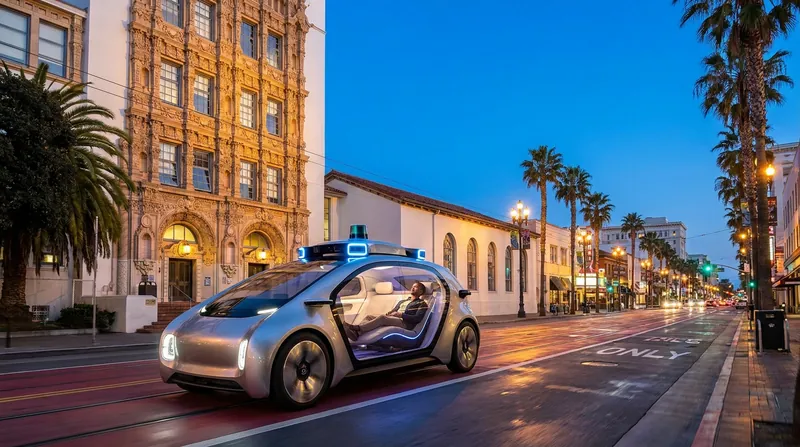
Robotaxi Race
The Global Robotaxi Race Reaches Commercial Scale: How 2026 Became the Year of Driverless Transit
3 sources
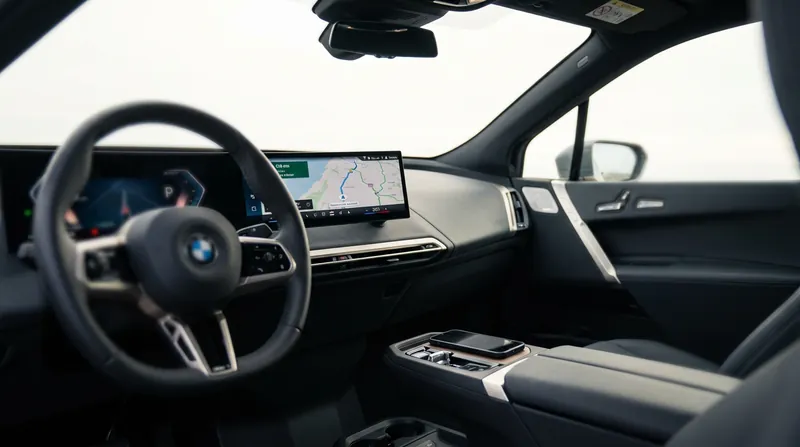
Dashboard Tech
Why Automakers Are Ditching Apple CarPlay and Android Auto
3 sources
Hydrodynamics
Bulbous Bows Trade Added Wetted Skin Friction for a Wave-Canceling Trough That Cuts Hull Drag by Up to 15 Percent
4 sources

Comments
Every angle. Every day.
Get Technology stories with full source coverage and perspective breakdowns, free every day.