
Executive Orders Direct USDA to Review Mandatory Country-of-Origin Labeling for Beef
President Trump signed directives giving the USDA 90 days to explore restoring mandatory origin labels for beef and ramping up antitrust enforcement against major meatpackers. The move follows intense backlash from domestic ranchers over a recent influx of imported South American beef.
By Irina Belova

Share this story
The binding constraint for any mandatory country-of-origin label on a grocery store ribeye is whether the federal government actually holds the legal authority to require it without triggering a bruising trade war. Right now, that authority remains an open question. On September 4, President Donald Trump signed a pair of executive orders directing the U.S. Department of Agriculture to spend the next 90 days digging through its regulatory toolbox to find a way to bring back mandatory origin labels for beef.
For shoppers standing at the meat counter trying to parse whether their ground chuck came from Texas or Argentina, the directive promises clarity. But for the administration, the move attempts to thread a difficult needle: satisfying domestic cattle ranchers furious over a recent influx of imported South American beef, while navigating the World Trade Organization rules that killed the last labeling mandate in 2016.[1][2][3]
The push for new labels stems directly from a sudden shift in the meat supply. On August 26, the administration issued a proclamation temporarily increasing the tariff-rate quota for imported lean beef trimmings by 300,000 metric tons—roughly 660 million pounds.
The move was designed to lower retail prices for consumers, with the beef primarily sourced from foreign markets. But it sparked immediate backlash from domestic producers, who are currently managing the smallest U.S. cattle herd since the 1950s. Ranchers argued the sudden flood of foreign supply would depress live cattle prices and stall efforts to rebuild domestic herds.[1][2][3]
In response, the new executive orders offer a sweeping set of directives aimed at the structural bottlenecks in the American meat industry. The most prominent is the 90-day review of mandatory country-of-origin labeling. Congress originally mandated the labels in 2002 and fully implemented them in 2013, but repealed the requirements for beef and pork in 2016 after the World Trade Organization ruled the policy discriminated against foreign livestock, authorizing Canada and Mexico to impose retaliatory tariffs.
The USDA, in consultation with the U.S. Trade Representative, must now conduct an economic analysis to determine if new regulations can survive a similar legal challenge, or if they must recommend new legislation to Congress. Meanwhile, two separate measures aimed at reinstituting the labels—Senate Bill 421 and House Bill 5818—are currently pending in Congress.[2][3]
Beyond the grocery aisle, the orders take direct aim at the consolidation of the meatpacking industry, where four major processors currently control the vast majority of the market. The directive instructs the USDA to prioritize investigations into unfair practices, price manipulation, and restraints on commerce under the Packers and Stockyards Act. The agency has 60 days to submit a report detailing its current enforcement actions and resource needs, and must coordinate closely with the Department of Justice on potential antitrust enforcement.[2]
"We're creating a program where small and medium-sized and large ranchers can sell their products directly to consumers so that they don't have to go through the big four processors and middlemen," Trump said during the White House signing event.
To build that alternative supply chain, the orders direct the USDA to expand the Cooperative Interstate Shipment and Talmadge-Aiken programs. These changes will allow more state-inspected meat to cross state lines, cutting the red tape that often traps small, regional processors in local markets. The USDA is also directed to establish a guaranteed loan program for these smaller facilities.[1][2]
Industry groups have largely welcomed the processing expansions, even as they remain divided on the labeling mandate. "We appreciate the president's support for small processors by exploring new opportunities and expanded inspection access," American Farm Bureau Federation President Zippy Duvall said following the signing. "Creating competition benefits both ranchers and consumers." However, Duvall noted that his organization continues to support voluntary, rather than mandatory, labeling to ensure compliance with World Trade Organization requirements.[2]
The executive actions also extend into wildlife management, addressing a long-standing friction point for ranchers operating in the American West. The orders direct the Department of the Interior to determine within 90 days whether gray wolves and Mexican wolves have met the recovery criteria to be delisted or downlisted under the Endangered Species Act.
If the criteria are met, the department is instructed to begin the appropriate process, which would ease the authorization for lethal removal when wolves prey on livestock, and update compensation standards for ranchers who lose animals to predators.[2][3]
For now, the immediate impact on the meat counter remains muted. The 300,000 metric tons of imported beef will continue to flow into the domestic supply chain, and any new labeling rules are months, if not years, away from taking effect. But the directives signal a sharp pivot in federal agricultural policy, placing the structural grievances of independent cattle producers at the center of the administration's regulatory agenda.[1][2][3]
Key points
- President Trump signed executive orders directing the USDA to review restoring mandatory country-of-origin labeling for beef within 90 days.
- The directives follow backlash from ranchers over a recent policy allowing 300,000 metric tons of imported lean beef trimmings at low tariff rates.
- The orders instruct the USDA to ramp up antitrust enforcement against the four major meatpackers controlling the market.
- Federal agencies will also expand programs allowing state-inspected meat to cross state lines, boosting small and regional processors.
- Independent Cattle Producers
- Advocate for mandatory labeling and aggressive antitrust enforcement to protect domestic live cattle prices.
- Agricultural Trade Groups
- Support expanded processing capacity but warn that mandatory labeling risks WTO retaliation and trade wars.
- Major Meat Processors
- Defend current supply chains and oppose regulatory interventions that mandate origin labeling.
Perspectives this story doesn't cover
- Consumer Advocacy Groups
- South American Beef Exporters
Sources
Source coverage
3 outlets
3 viewpoints surfaced


- [1]KBHB RadioIndependent Cattle Producers
Trump signs executive order aimed at country-of-origin labeling for beef
Read on KBHB Radio → - [2]Texas Farm BureauAgricultural Trade Groups
Trump signs executive orders directing federal review of beef policies
Read on Texas Farm Bureau → - [3]Texas ScorecardIndependent Cattle Producers
Trump Orders USDA To Explore Restoring Beef-Origin Labeling
Read on Texas Scorecard →
More in Food & Drink
See all →Culinary Science
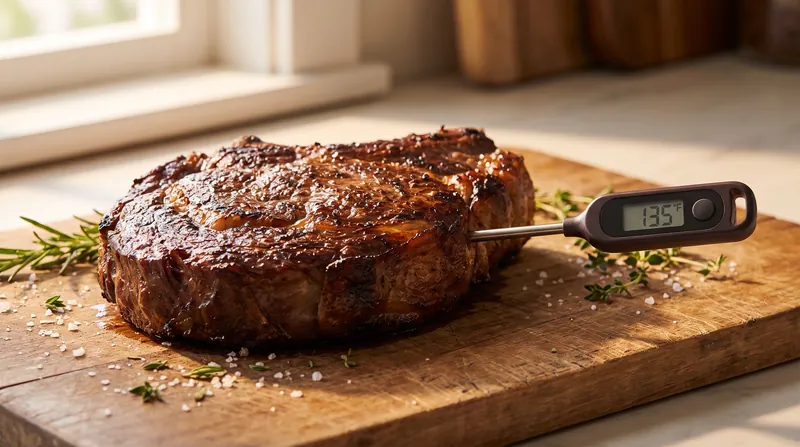
The 8°F Internal Temperature Drop: How Resting Meat Allows Muscle Fibers to Reabsorb Released Moisture
6 sources
Meat Processing
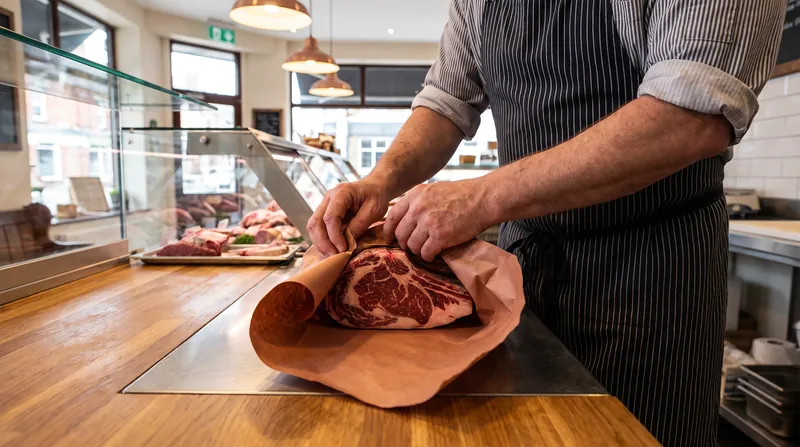
USDA Directs $50 Million to State Meat Inspection Programs to Ease Local Processing Bottlenecks
6 sources
Culinary Chemistry
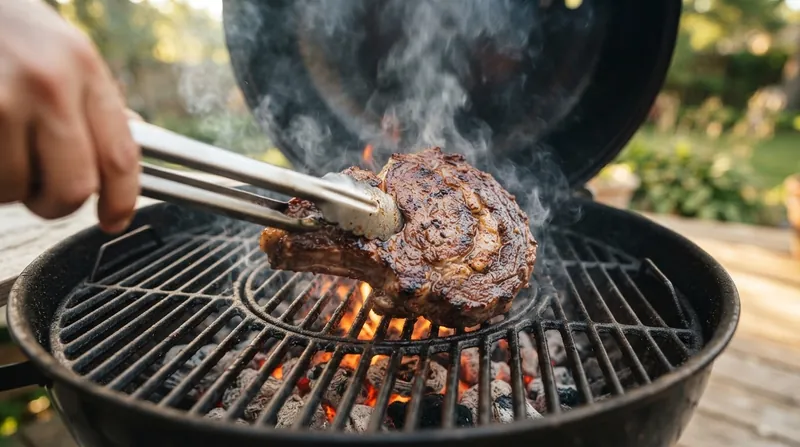
The 300°C Fat Pyrolysis Threshold: How Dripping Fat Creates Polycyclic Aromatic Hydrocarbons on a Grill
6 sources
Meat Supply
USDA Lowers 2026 Beef and Pork Production Forecasts on Slower Slaughter and Lighter Weights
3 sources

Comments
Every angle. Every day.
Get Food & Drink stories with full source coverage and perspective breakdowns, free every day.