
Chemical Breakdown of Wood: Cellulose and Lignin Create Barbecue Flavor
The secret to perfect barbecue isn't just heat—it's the complex chemical breakdown of cellulose, hemicellulose, and lignin that creates the ultimate flavor profile.

Share this story
In short
- Wood smoke is an active chemical ingredient, not just a byproduct of fire, fundamentally altering the flavor and structure of meat.
- Cellulose and hemicellulose break down into carbonyls, providing sweet aromas and aiding in the browning of the meat's crust.
- Lignin breaks down into phenols like guaiacol and syringol, which are responsible for the signature smoky taste and smell.
The sensory experience of a summer barbecue is universally recognized, but the mechanics behind it are often misunderstood. When a backyard griller tosses a chunk of wood onto hot coals, they are not just making a fire—they are initiating a complex sequence of chemical reactions. Smoke is not merely a byproduct of combustion; it is an active, volatile ingredient that fundamentally transforms the structure and flavor of food.[2]
To master the grill, one must first understand the anatomy of the fuel. Wood is primarily composed of three structural polymers: cellulose, hemicellulose, and lignin. Each of these components breaks down at different temperature thresholds, releasing a distinct cocktail of chemical compounds that dictate the final taste, aroma, and appearance of the meat.
Cellulose and hemicellulose make up the bulk of the wood, accounting for roughly 60 to 80 percent of its mass. These are essentially long, complex chains of sugar molecules. When subjected to high heat, they caramelize and break apart into carbonyl compounds. These carbonyls are responsible for the sweet, fruity, and flowery aromas associated with barbecue, and they play a crucial role in developing the dark, crusty surface on the meat known as the bark.[1]
However, the true signature of barbecue comes from lignin, which comprises 18 to 30 percent of the wood. Lignin is the rigid polymer that gives trees their structural strength and allows them to stand tall. When it combusts, it shatters into a family of aromatic compounds called phenols, which carry the heavy lifting for flavor.[1]
Two specific phenols are the holy grail of smoke flavor: guaiacol and syringol. Guaiacol is the primary driver of the characteristic smoky taste that lingers on the palate, while syringol is responsible for the pungent, mouth-watering aroma that wafts across a neighborhood. The ratio of these compounds depends entirely on the species of wood being burned, giving pitmasters a palette of flavors to choose from.[1]
This chemical variance explains why different woods pair better with certain meats. Fruitwoods like apple and cherry have lower lignin concentrations, producing a milder, sweeter smoke that complements delicate proteins like poultry and pork. Conversely, dense hardwoods like hickory and mesquite are packed with lignin, yielding a robust, heavy flavor profile that can stand up to thick cuts of beef, but can easily overpower lighter fare.
While hardwoods are the undisputed champions of the smoker, softwoods like pine, spruce, and cedar are strictly forbidden in traditional barbecue. Softwoods contain high levels of sap and terpenes. When burned, they produce a thick, resinous smoke laced with creosote—a tar-like substance that coats the meat in a bitter, acrid film and can even pose mild health risks.
Beyond choosing the right wood, pitmasters must navigate a minefield of persistent grilling myths. Perhaps the most common is the practice of soaking wood chips in water before tossing them on the coals. Culinary scientists and thermodynamic experts have thoroughly debunked this technique, noting that it actively works against the chemistry of good barbecue.
When wet wood is introduced to a fire, the water must completely evaporate before the wood can exceed 212 degrees Fahrenheit. Instead of producing flavorful smoke, the wet wood merely generates steam, dropping the temperature of the grill and stalling the combustion process. Only after the wood has completely dried out will it finally ignite and begin releasing the desired phenolic compounds.
The ultimate goal of any pitmaster is to achieve what is known as "thin blue smoke." This nearly invisible, pale blue vapor is the visual indicator of efficient, clean combustion. It means the fire has enough oxygen and heat to break down the wood's polymers cleanly, delivering pure flavor compounds without heavy soot or ash.
In contrast, billowing clouds of thick white, gray, or black smoke are a warning sign. This "dirty smoke" is the result of oxygen starvation or incomplete combustion, which releases unburned carbon particles and harsh hydrocarbons. Meat left in dirty smoke will quickly take on a bitter, ashtray-like flavor that ruins the dish.
As the clean smoke washes over the meat, it interacts with the surface moisture and rendering fats. Smoke compounds are highly soluble in water and fat, meaning they adhere best to a moist surface. However, smoke does not penetrate deeply into the muscle; the vast majority of the flavor remains concentrated in the outer millimeters of the cut.
This surface interaction is also responsible for the highly coveted "smoke ring"—the distinct pink band just beneath the crust of a smoked brisket or rib. Many novices mistakenly believe this ring is a stain left by deep smoke penetration. In reality, it is a purely chemical reaction that occurs on the surface of the meat.
When wood burns, it releases trace amounts of nitric oxide gas. As this gas lands on the surface of the meat, it diffuses inward and reacts with myoglobin, the protein that gives raw meat its red color. This reaction forms a stable pink compound called nitrosyl hemochrome, locking in the rosy hue even after the meat is fully cooked.
Understanding these molecular mechanics elevates backyard cooking from a game of chance to an applied science. By selecting the right dry hardwoods, managing oxygen flow to maintain clean combustion, and understanding how smoke interacts with moisture, anyone can harness the chemistry of fire to produce competition-quality barbecue.[2]
Key terms
- Lignin
- A complex organic polymer that gives wood its rigidity, breaking down into flavor-producing phenols when burned.
- Cellulose
- A structural carbohydrate in wood that caramelizes under heat to produce sweet aromas and surface browning.
- Guaiacol
- A phenolic compound released by burning lignin that is primarily responsible for the signature taste of smoked meat.
- Syringol
- A phenolic compound that provides the pungent, mouth-watering aroma characteristic of barbecue smoke.
- Myoglobin
- The oxygen-carrying protein in muscle tissue that gives raw meat its red color and reacts with smoke to form a pink ring.
- Creosote
- A bitter, tar-like substance produced by burning resinous softwoods or from incomplete combustion, which ruins the flavor of food.
Reader questions
Should I soak my wood chips before grilling?
No. Soaking wood chips only creates steam, which lowers the temperature of your grill and delays the combustion needed to produce flavorful smoke.
What causes the pink ring on smoked meat?
The smoke ring is a chemical reaction caused when nitric oxide gas from the wood smoke binds with myoglobin proteins on the surface of the meat.
Can I use pine or cedar wood for barbecue?
No. Softwoods like pine and spruce contain high levels of toxic resins that produce bitter creosote and can make you sick.
What does "thin blue smoke" mean?
Thin blue smoke is the nearly invisible vapor produced by a clean, efficient fire, indicating the perfect balance of heat and oxygen for flavoring food.
Where opinion splits
Food Scientists' view
Focuses on the precise molecular reactions that occur when wood polymers degrade under heat.
For food scientists and chemists, barbecue is a complex laboratory experiment. They view smoke not as a single entity, but as an aerosol of hundreds of distinct chemical compounds. Their research isolates how lignin degrades into guaiacol and syringol, and how these phenols act as both flavor agents and antimicrobial preservatives. By understanding the exact temperature thresholds where cellulose caramelizes and nitric oxide binds with myoglobin, scientists can explain the 'why' behind traditional cooking methods, stripping away folklore in favor of reproducible chemistry.
Barbecue Educators' view
Focuses on translating thermodynamic principles into practical fire management techniques for cooks.
Educators and veteran pitmasters bridge the gap between science and the backyard. They emphasize that knowing the chemistry is useless without proper fire management. Their primary focus is on airflow, fuel moisture, and the visual cues of combustion—specifically the pursuit of 'thin blue smoke.' They actively campaign against persistent myths, such as soaking wood chips, by demonstrating how introducing water stalls combustion and creates dirty, bitter smoke. For this camp, the science is a tool to achieve consistent, mouth-watering results.
- Barbecue Educators
- Focuses on translating thermodynamic principles into practical fire management techniques for cooks.
- Food Scientists
- Focuses on the precise molecular reactions that occur when wood polymers degrade under heat.
- Culinary Equipment Experts
- Focuses on designing grills and smokers that optimize airflow and temperature stability for perfect smoke generation.
Perspectives this story doesn't cover
- Vegetarian and Vegan Grilling Advocates
- Environmental Regulators
Sources
Source coverage
2 outlets
3 viewpoints surfaced


- [1]MeatScience.orgFood Scientists
Flavor Chemistry of Wood Smoke
Read on MeatScience.org → - [2]Factlen Editorial TeamCulinary Equipment Experts
Synthesis by Factlen editorial team
Read on Factlen Editorial Team →
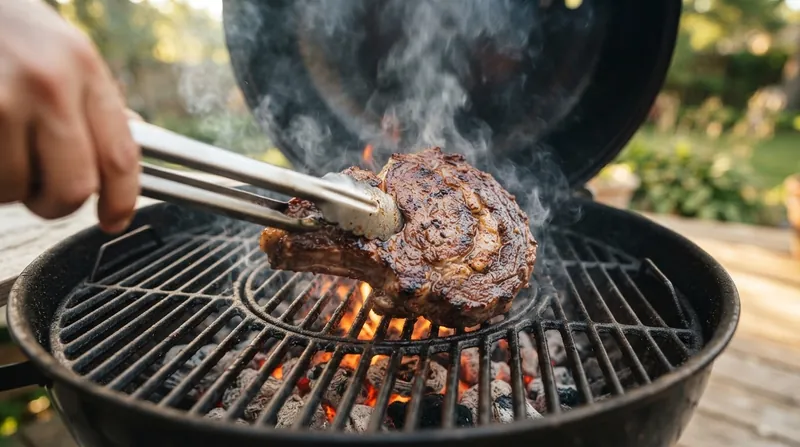
More in Food & Drink
See all →Air Quality
How the EPA's Proposed Air Quality Rules Could Change Wood and Charcoal Grilling
6 sources
Supply Chain
New Global Maritime Rule Classifies Charcoal as 'Dangerous Goods,' Reshaping the BBQ Supply Chain
8 sources

Agricultural Economics
Record Beef Prices Sizzle for Grilling Season as U.S. Cattle Herd Hits 75-Year Low
4 sources
Commodity Markets
How Record Inventories Are Driving Down Propane Prices for the 2026 Grilling Season
5 sources

Comments
Every angle. Every day.
Get Food & Drink stories with full source coverage and perspective breakdowns, free every day.