
The Hidden Cost of the Flame: How Global Deforestation and Geopolitics Are Reshaping the Charcoal Market
As global demand for charcoal surges to fuel both backyard grills and industrial metallurgy, an escalating crisis of deforestation is forcing the multi-billion dollar market to confront its opaque supply chains and embrace sustainable certification.

In short
- The global charcoal market is a multi-billion dollar industry driven by residential grilling and industrial applications.
- A significant percentage of all wood harvested globally is converted into charcoal.
- Traditional, unregulated charcoal production is a major contributor to tropical deforestation and greenhouse gas emissions.
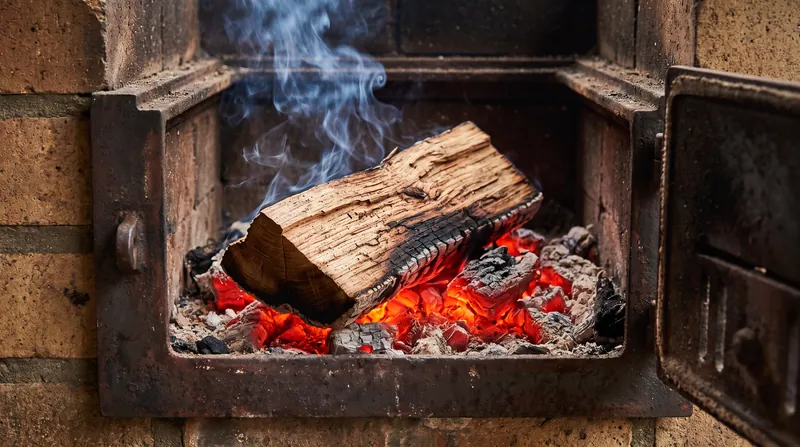
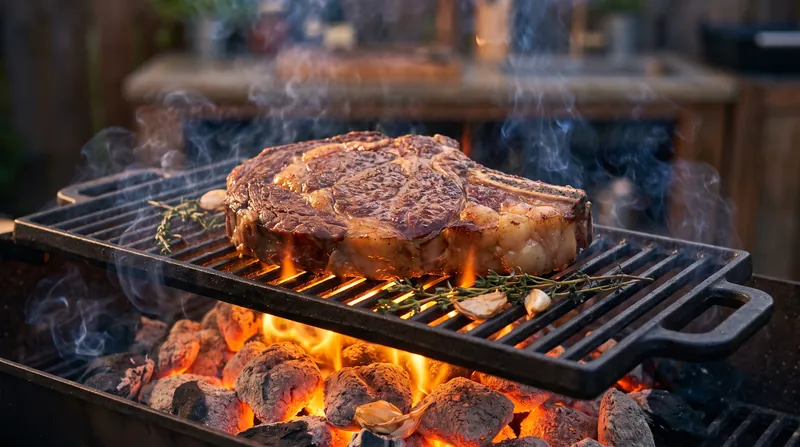
The familiar scent of woodsmoke drifting over a weekend patio is one of the most reliable markers of summer. But beneath the glowing embers of a backyard barbecue lies a complex global supply chain that is currently undergoing a massive upheaval.[1][2]
The short version is this: the world's appetite for charcoal is driving severe deforestation in the tropics, and new international regulations are finally forcing the industry to clean up its act.[1][4]
For decades, the charcoal market operated in the shadows. Consumers bought heavy paper bags of briquettes or lump charcoal without much thought to the origin of the wood.[1]
Charcoal is a lightweight black residue made of carbon, produced by strongly heating wood in minimal oxygen to remove all water and volatile constituents.[2][5]
The sheer scale of global charcoal consumption is staggering. While North Americans and Europeans primarily use it to sear steaks and smoke briskets, charcoal remains a vital daily cooking fuel for hundreds of millions of people across Sub-Saharan Africa and Latin America.[1][2]
Beyond the kitchen, industrial metallurgy, water filtration, and agricultural biochar applications consume massive volumes of the carbon-rich material.[2]
To feed this demand, vast tracts of forest are cleared. Deforestation—the removal and destruction of a forest or stand of trees—is one of the biggest threats to global biodiversity and climate stability.[4][6]
The environmental toll of this harvest has been devastating. In many regions, charcoal production relies on informal, unregulated logging that strips old-growth forests and degrades fragile ecosystems.[4]
The production process itself is often highly inefficient. Traditional earth kilns, where wood is buried and slowly burned with limited oxygen, release massive amounts of greenhouse gases and particulate matter into the atmosphere.[2][5]
Recognizing the crisis, regulators are stepping in. The European Union has tightened sustainability requirements on charcoal via due-diligence and legality measures, mandating that companies prove their products are not linked to recent deforestation.[1]
This requirement has sent shockwaves through the market. Industry analysts report that a significant percentage of global charcoal producers have faced supply chain disruptions as they scramble to meet these new compliance standards.[1]
For consumers who want to grill responsibly, the most reliable marker of sustainable sourcing is the Forest Stewardship Council (FSC) logo.[3]
The FSC is an international non-profit organization established in 1993 that promotes responsible management of the world's forests via timber certification.[3]
FSC certification guarantees that the wood used to make the charcoal was harvested from responsibly managed forests, where trees are replanted, biodiversity is protected, and local workers are paid fairly.[3]
In some cases, sustainable charcoal production actually improves the local environment. In certain savanna ecosystems, FSC-certified charcoal is produced by thinning invasive bush species that choke the native landscape, helping to restore the natural balance.[1][3]
International organizations are also working to modernize the production side. Projects are rolling out across rural communities to help producers transition to high-efficiency retort kilns.[1]
These modern kilns require significantly less raw wood to produce the same volume of charcoal, and they capture much of the harmful smoke that would otherwise pollute the local air.[1][2]
However, the transition to a fully sustainable supply chain faces steep economic hurdles. Small-scale producers in developing nations often lack the capital required to invest in new kiln technology or pay for rigorous certification audits.[1]
Meanwhile, the retail market remains fiercely competitive. Charcoal briquettes, prized for their uniform size and predictable burn time, still account for the majority of global market share.[1][2]
Yet, premium lump charcoal—often marketed with explicit sustainability credentials and natural binders—is rapidly gaining ground among barbecue enthusiasts who are willing to pay a premium for a cleaner burn.[1]
Different angles
The Environmental Imperative
Conservation groups argue that unregulated charcoal production is a leading driver of tropical deforestation and climate change.
Environmental scientists emphasize that traditional earth kilns are not only destroying old-growth forests but also releasing massive amounts of greenhouse gases. They advocate for strict international regulations and the widespread adoption of high-efficiency retort kilns to mitigate the ecological damage caused by the industry.
The Market Reality
Industry analysts highlight the logistical and financial hurdles of enforcing sustainable supply chains.
Market researchers point out that while new international deforestation regulations are well-intentioned, they place an enormous compliance burden on a highly fragmented supply chain. Analysts warn that the cost of certification and modern equipment could price small-scale rural producers out of the global market, consolidating power among a few large corporations.
- Environmental Science & Conservation
- Focuses on halting deforestation, reducing greenhouse gas emissions from inefficient kilns, and enforcing strict supply chain traceability.
- Materials & Industrial Chemistry
- Focuses on the physical properties of charcoal and its critical role in metallurgy and water filtration.
- Market & Supply Chain Analysts
- Focuses on market growth, the logistical challenges of new regulations, and the rising consumer demand for premium, certified products.
Perspectives this story doesn't cover
- Small-scale rural charcoal producers in unregulated markets
- Local policymakers in heavily deforested regions
Sources
Source coverage
6 outlets
3 viewpoints surfaced



- [1]Factlen Editorial TeamMarket & Supply Chain Analysts
Synthesis by Factlen editorial team
Read on Factlen Editorial Team → - [2]Wikipedia - CharcoalMaterials & Industrial Chemistry
Charcoal
Read on Wikipedia - Charcoal → - [3]Wikipedia - FSCEnvironmental Science & Conservation
Forest Stewardship Council
Read on Wikipedia - FSC → - [4]Wikipedia - DeforestationEnvironmental Science & Conservation
Deforestation
Read on Wikipedia - Deforestation → - [5]Britannica - CharcoalMaterials & Industrial Chemistry
Charcoal | Definition, Uses, & Facts
Read on Britannica - Charcoal → - [6]Britannica - DeforestationEnvironmental Science & Conservation
Deforestation | Causes, Effects, & Facts
Read on Britannica - Deforestation →
More in Food & Drink
See all →Cattle Industry
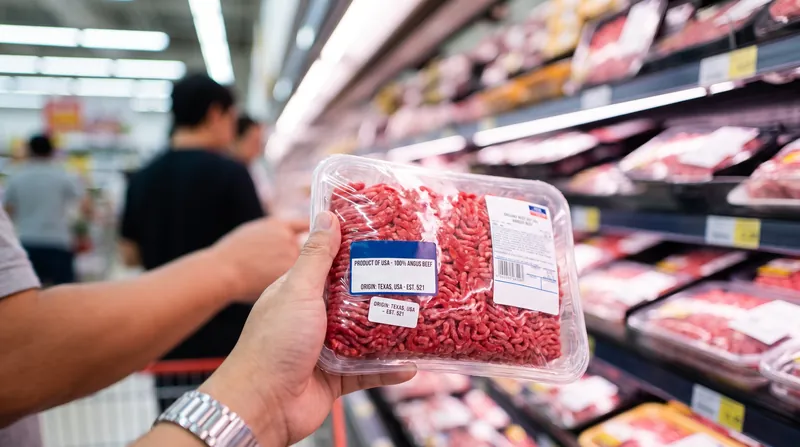
Executive Orders Direct USDA to Review Mandatory Country-of-Origin Labeling for Beef
3 sources
Franchise Law
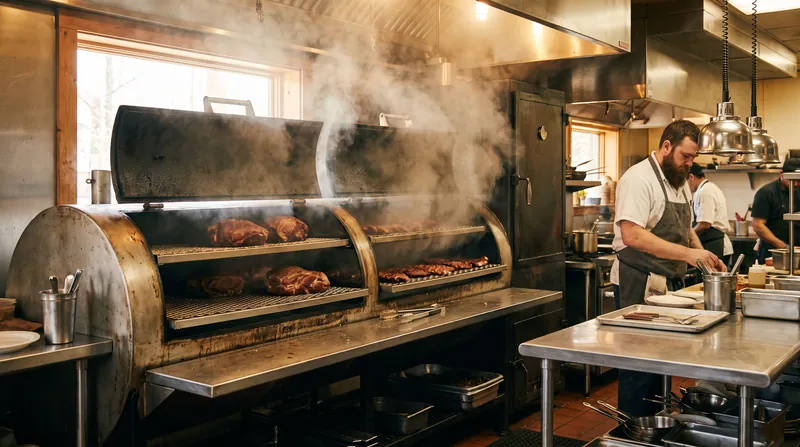
Dickey's Barbecue Pit Fined by California for Underreporting Franchise Closures, Loses $700K Arbitration Case
4 sources
Beef Supply Chain
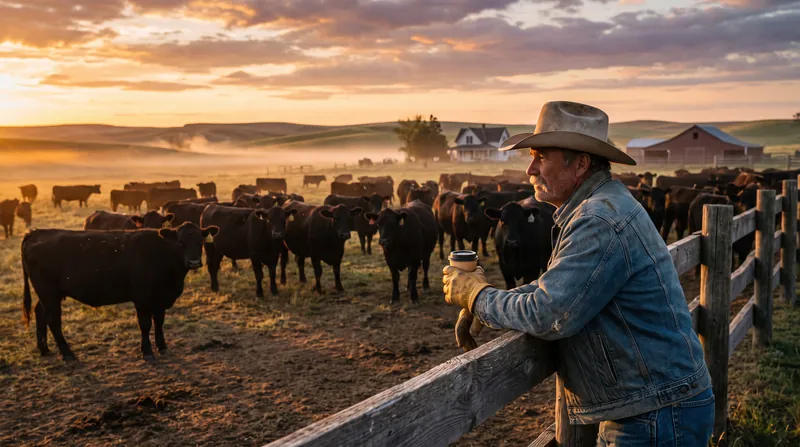
Executive Orders Mandate Packers and Stockyards Act Enforcement to Expand Local Beef Access
6 sources
Thermal Physics
The Radiant Heat Thresholds That Control the Maillard Reaction in Grilling
6 sources
Comments
Every angle. Every day.
Get Food & Drink stories with full source coverage and perspective breakdowns, free every day.