
CATL and Changan Launch World's First Mass-Production Passenger EV Powered by Sodium-Ion Battery
The Changan Nevo A06 marks the commercial debut of sodium-ion battery technology in passenger vehicles, promising to lower EV costs and eliminate cold-weather range anxiety.
By Adrien Caron

Share this story
The electric vehicle revolution has historically been entirely dependent on a single, volatile element: lithium. As automakers raced to electrify their fleets, the global supply chain for lithium, cobalt, and nickel became a geopolitical bottleneck, subject to wild price swings and intense mining constraints. For years, researchers have sought a viable alternative that could democratize battery production and lower the cost of entry-level EVs.
That theoretical alternative has officially arrived on public roads. Changan Automobile, in partnership with global battery giant CATL, has launched the Nevo A06, the world's first mass-produced passenger vehicle powered by a sodium-ion battery. Unveiled at a dedicated strategy event in Inner Mongolia, the vehicle marks the moment sodium chemistry graduates from a laboratory concept to a commercial reality.[1]
Scheduled to reach the consumer market by mid-2026, the compact electric sedan utilizes CATL's newly developed "Naxtra" cells. While early iterations of sodium batteries were restricted to low-speed micro-cars or stationary energy storage, the Nevo A06 is a fully capable passenger vehicle designed to compete directly with mainstream lithium-powered hatchbacks and sedans.
The initial production model features a 45-kilowatt-hour battery pack that delivers a driving range of over 400 kilometers (approximately 249 miles) under China's Light-Duty Vehicle Test Cycle (CLTC). While this figure translates to a slightly lower range under stricter EPA or European WLTP standards, it comfortably covers the daily commuting needs of the vast majority of drivers.
At a fundamental chemical level, sodium-ion batteries operate similarly to their lithium counterparts. Both architectures generate power by shuttling ions back and forth between an anode and a cathode through an electrolyte solution to store and release electrical energy. The manufacturing processes are also highly compatible, allowing battery makers to repurpose existing lithium-ion production lines with minimal retooling.
The crucial difference lies in the ion itself. Sodium ions are physically larger and heavier than lithium ions, which historically made them harder to integrate into high-density structures without degrading the battery's lifespan. However, sodium is over a thousand times more abundant on Earth than lithium. It can be easily extracted from seawater or soda ash, making it virtually immune to the geographic monopolies that define the lithium trade.[2]
Crucially, the Naxtra architecture completely eliminates the need for cobalt and nickel. These two heavily constrained metals have long plagued the traditional lithium-ion supply chain with ethical mining concerns and volatile pricing. By relying on widely available precursors, sodium-ion technology dramatically lowers the raw material entry threshold for battery manufacturing.[2]
While sodium currently trails premium lithium chemistries in absolute energy density, it possesses a massive operational advantage that automakers are eager to exploit: extreme cold-weather resilience. The most persistent complaint among EV owners in northern climates is the severe degradation of battery range and charging speed when temperatures drop below freezing.
Traditional lithium iron phosphate (LFP) batteries—the current standard for affordable EVs—can lose up to half their rated range in frigid conditions. In stark contrast, CATL's sodium cells retain over 90 percent of their capacity at minus 40 degrees Celsius, effectively eliminating winter range anxiety for drivers in colder regions.[1]
Rigorous winter testing conducted in Yakeshi demonstrated that the Nevo A06 can stably discharge power even at minus 50 degrees Celsius. At minus 30 degrees Celsius, the sodium-ion pack delivers nearly triple the discharge power of an equivalent LFP battery, ensuring that the vehicle remains fully responsive and capable of rapid acceleration in environments where lithium batteries struggle to function.
Beyond temperature resilience, the chemistry exhibits remarkable physical stability. During extreme abuse testing mandated by national safety standards—including multi-directional crushing, electric drill penetration, and being completely sawn in half while fully charged—the Naxtra battery produced no smoke or fire, setting a new benchmark for passenger vehicle safety.
Industry leaders are not framing sodium as a total replacement for lithium, but rather as the foundation of a new "dual-chemistry" era. CATL executives have explicitly stated that the two technologies will sit alongside each other to serve different performance and cost requirements across the automotive landscape.[2]
Under this dual-chemistry paradigm, lithium-ion will continue to dominate premium, long-range trucks and luxury SUVs where maximizing energy density is the absolute priority. Sodium-ion, meanwhile, is perfectly positioned to conquer the high-volume, entry-level commuter market, commercial delivery fleets, and urban mobility sectors.[2]
The cost implications of this shift are profound. Because the raw materials are drastically cheaper and more abundant, sodium-ion packs are projected to cost significantly less than LFP batteries once manufacturing scales globally. This structural cost advantage is widely viewed as the key to bringing the sticker price of entry-level EVs below their gasoline-powered equivalents without relying on government subsidies.
CATL has already resolved the core manufacturing bottlenecks that previously held the technology back. The Naxtra cells achieve a gravimetric energy density of 175 watt-hours per kilogram, which nearly matches current LFP batteries and represents the highest density achieved in mass production for sodium chemistry to date.[1]
The battery giant is not stopping at 400 kilometers. CATL's engineering roadmap is actively developing next-generation cell architectures aimed at pushing single-charge ranges to 500 or even 600 kilometers. Achieving this target would place sodium-ion vehicles squarely in competition with mainstream, mid-tier lithium vehicles, vastly expanding the technology's addressable market.[1]
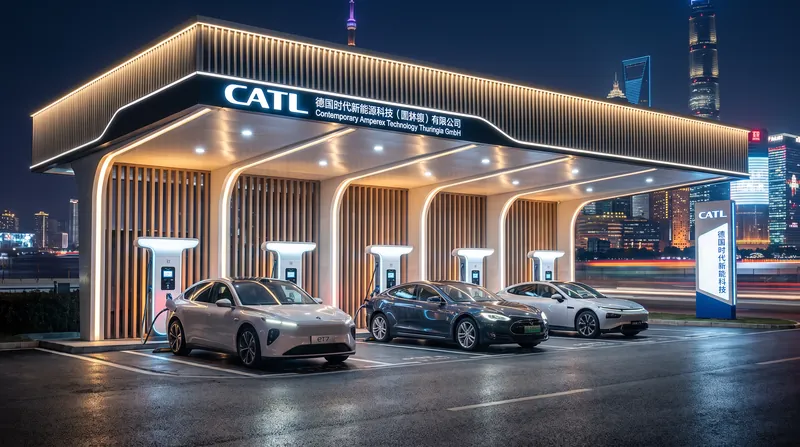
To support the widespread adoption of the chemistry, CATL plans to integrate these batteries into its "Choco-Swap" battery-swapping network. The company intends to open more than 3,000 swap stations across 140 cities in China by the end of 2026, with a specific focus on deploying over 600 stations in colder northern regions where the chemistry's winter advantages are most valuable.[2]
As the Changan Nevo A06 prepares to roll onto public roads, it represents more than just a new car model. It signals a structural shift in how the world builds and scales electric mobility, proving that a post-lithium future is no longer a distant laboratory goal, but a commercial reality arriving today.
Key points
- Changan and CATL have launched the Nevo A06, the first mass-produced passenger EV with a sodium-ion battery.
- The 45-kWh battery delivers over 400 kilometers of range and eliminates the need for expensive lithium, cobalt, and nickel.
- Sodium-ion cells retain over 90% of their capacity at -40°C, solving the severe winter range loss associated with current EVs.
- The technology survived extreme abuse testing, including being sawn in half, without catching fire or smoking.
What we don’t know
- How quickly Western automakers will adopt sodium-ion technology compared to their Chinese counterparts.
- The exact real-world degradation rate of the Naxtra cells over a 10-year vehicle lifespan.
- Whether future iterations of sodium-ion will ever match the absolute energy density of premium nickel-based lithium batteries.
How we got here
2021
CATL unveils its first-generation sodium-ion battery concept, aiming to break the industry's reliance on lithium.
2023
Early iterations of sodium-ion cells begin real-world testing in small, low-speed micro-cars in China.
Feb 2026
Changan and CATL officially unveil the Nevo A06 passenger vehicle and the mass-production Naxtra battery.
Mid-2026
The Changan Nevo A06 is scheduled to reach the consumer market, marking the commercial debut of the technology.
- Battery Manufacturers
- View sodium-ion as a critical tool to secure supply chains, bypass volatile lithium prices, and scale global EV production.
- Automotive OEMs
- Focus on the technology's potential to lower the sticker price of entry-level vehicles and solve winter range anxiety for consumers.
- Technology Analysts
- Emphasize the rapid transition of sodium chemistry from the laboratory to commercial reality and its disruptive market potential.
- Recycling Industry
- Highlight the need for new end-of-life processing standards as a second major battery chemistry enters the automotive salvage stream.
Perspectives this story doesn't cover
- Western Automakers
- Lithium Mining Industry
Sources
Source coverage
2 outlets
4 viewpoints surfaced


- [1]CATLBattery Manufacturers
CHANGAN Automobile and CATL unveil world's first mass-production sodium-ion passenger vehicle
Read on CATL → - [2]Auto Recycling WorldRecycling Industry
CHANGAN And CATL Target Mid-2026 Launch For Sodium-ion Battery Passenger Car
Read on Auto Recycling World →
More in Automotive & Transportation
See all →Battery Tech
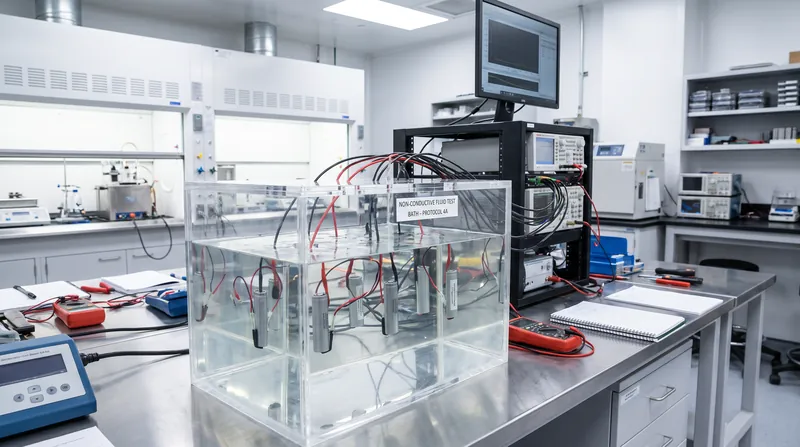
Hyundai Validates US-Developed Sodium-Ion Cell, Proving Non-Flammable EV Battery Safety
5 sources
Battery Tech
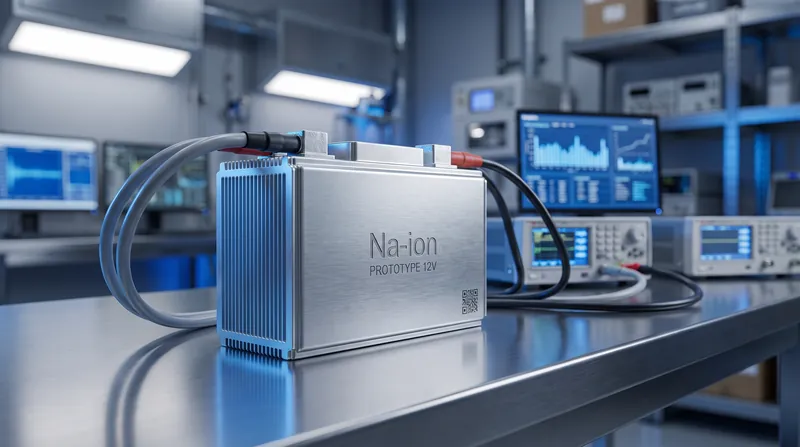
LFP vs. NMC vs. NCA: The Definitive Comparison of EV Battery Chemistries on Cost, Density, and Lifespan
6 sources
AV Regulation
Waymo Deploys Fleet-Wide Software Update After Texas Weather Incident
6 sources
Charging Infrastructure
China's Largest Fuel Retailer Replaces Gas Pumps with 1,500 kW EV Chargers in Major Infrastructure Shift
2 sources
Comments
Every angle. Every day.
Get Automotive & Transportation stories with full source coverage and perspective breakdowns, free every day.