
World's Largest EV Battery Repurposing Facility Opens to Tackle Grid Storage and E-Waste
Moment Energy has opened a Vancouver-area megafactory that converts retired electric vehicle batteries into grid-scale energy storage. The facility aims to produce 1 GWh of storage annually by 2030, providing a crucial buffer for AI data centers while keeping functional batteries out of shredders.
By Adrien Caron

Share this story
The electric vehicle revolution has created a looming logistical challenge: what to do with millions of massive battery packs when they can no longer deliver the range drivers expect. On June 23, a Vancouver-based clean technology company offered the most ambitious answer yet. Moment Energy officially opened Megafactory 1 in Surrey, British Columbia, establishing the world's largest facility dedicated entirely to repurposing retired EV batteries into commercial-scale energy storage.[4]
The facility, which came online just six weeks after its initial announcement, represents a major shift in how the automotive and energy sectors view electronic waste. Backed by a recent $40 million Series B funding round and a $4.9 million investment from the Canadian government, the megafactory is designed to transform used car batteries into rapidly deployable Battery Energy Storage Systems (BESS). By 2030, the plant expects to produce 1 gigawatt-hour (GWh) of storage capacity annually, creating over 100 direct jobs in the process.[2][4]
The opening arrives at a critical intersection of two global trends. On one side, millions of early-generation electric vehicles are reaching the end of their automotive lifespans, creating a massive influx of heavy, complex battery packs. On the other side, the explosive growth of artificial intelligence and expanding data centers is placing unprecedented strain on North American power grids, driving an urgent need for stationary energy storage.[1][4]
When an EV battery is retired—often due to warranty replacements or routine degradation—it is rarely "dead." Most packs removed from vehicles still retain between 70% and 80% of their original capacity. While that degradation might reduce a car's driving range from 300 miles to 220 miles, rendering it frustrating for a commuter, the battery itself remains a highly capable energy reservoir.[1]
In fact, stationary grid storage is a remarkably gentle environment for these robust components. Automotive batteries are engineered to withstand extreme conditions: saltwater spray, intense vibration, freezing temperatures, and the massive electrical surges required to merge onto a highway. Sitting in a climate-controlled shipping container to slowly charge and discharge is, as industry experts describe it, akin to putting a high-performance racehorse out to a pastoral life.[3]
The repurposing process at Megafactory 1 is highly structured. When retired packs arrive from automotive partners like Mercedes-Benz, they undergo rigorous screening to determine their State of Health (SoH). Technicians check for fault codes, physical damage, and cell imbalances. The viable modules are then reconfigured into stationary racks, paired with new inverters, and managed by specialized software designed to safely operate aging cells.
Historically, safety concerns have bottlenecked the second-life battery market, as mixing and matching degraded cells can increase fire risks. Moment Energy recently cleared this hurdle by becoming the first company to achieve UL 60730-1 functional safety certification for a battery management system designed specifically for repurposed EV packs. This certification allows their systems to be legally and safely deployed in critical infrastructure, including hospitals, factories, and dense urban microgrids.[4]
The economic argument for second-life batteries is compelling. Currently, repurposed systems cost 30% to 40% less than purchasing brand-new lithium-iron-phosphate (LFP) cells. For data center operators drawing massive amounts of power 24/7, these battery banks act as a crucial buffer. They charge during off-peak hours when electricity is cheap and discharge during peak demand, shielding the facility from volatile pricing and reducing the overall strain on local utilities.[1]
Moment Energy is not the only player recognizing this potential. In Nevada, Redwood Materials—the battery recycling giant founded by former Tesla CTO JB Straubel—recently launched a dedicated "Redwood Energy" division. Last summer, they deployed a 12-megawatt, 63-megawatt-hour microgrid built entirely from second-life batteries. The system currently powers a modular AI data center operated by Crusoe Energy, maintaining a reported 99.2% operational uptime completely independent of the local transmission grid.[1][3]
Similarly, autonomous vehicle pioneer Waymo recently announced a strategic partnership with B2U Storage Solutions. Instead of sending the battery packs from its retired electric robotaxis straight to the shredder, Waymo is routing them to B2U, which will install them into grid-connected storage systems in California and Texas. These systems will absorb surplus solar energy during midday peaks and dispatch it back to the grid when the sun goes down.
This trend introduces a fascinating tension within the clean energy supply chain: the race between repurposing and direct recycling. Traditional recyclers want to dismantle EV batteries immediately to extract valuable raw materials like lithium, cobalt, and nickel to build new cars. However, repurposing advocates argue that destroying a functional battery pack wastes its remaining utility. By giving the battery a 5-to-10-year "second life" on the grid, the industry extracts maximum economic value before the pack is finally recycled into raw powder.
Despite the momentum, the second-life industry still faces significant scaling challenges. The primary bottleneck is a severe lack of standardization. Every automaker designs their battery packs differently, with unique shapes, cooling systems, and proprietary software. Disassembling and testing these heterogeneous packs is highly labor-intensive, preventing the kind of automated, assembly-line efficiency seen in traditional manufacturing.
Furthermore, the plunging price of virgin lithium-ion batteries is threatening the long-term cost advantage of second-life systems. If new batteries become cheap enough, the labor costs associated with testing and reassembling used packs could render the practice economically unviable. Industry analysts project that second-life systems will need to reach installed costs of $150 to $250 per kilowatt-hour to remain competitive through the end of the decade.
For now, however, the math works, and the environmental benefits are undeniable. By intercepting batteries before they reach the recycling shredder, facilities like Megafactory 1 are solving two of the decade's most pressing infrastructure challenges at once. They are providing the grid stability required to support the AI boom, while simultaneously proving that the electric vehicle transition can be truly circular.[1][4]
Key points
- Moment Energy opened Megafactory 1 in British Columbia, the world's largest facility for repurposing EV batteries.
- The plant aims to produce 1 GWh of battery energy storage systems (BESS) annually by 2030.
- Retired EV batteries typically retain 70% to 80% of their original capacity, making them ideal for stationary grid storage.
- Repurposed systems cost 30% to 40% less than new batteries and are being used to power AI data centers.
What we don’t know
- Whether the plunging cost of brand-new lithium-ion batteries will eventually erase the economic advantage of repurposing used packs.
- How quickly international safety and testing standards can be established to automate the labor-intensive battery screening process.
How we got here
2020
Moment Energy is founded in Vancouver as a university-born startup focused on second-life batteries.
Summer 2025
Redwood Materials deploys a 63 MWh microgrid made of second-life batteries to power a Crusoe Energy data center in Nevada.
May 2026
Moment Energy achieves the world's first UL functional safety certification for a repurposed EV battery management system.
June 2026
Megafactory 1 officially opens in British Columbia, aiming to scale production to 1 GWh by 2030.
- Clean Energy Innovators
- Advocates for maximizing the functional lifespan of manufactured batteries before recycling.
- Grid & Data Center Operators
- Infrastructure managers seeking cost-effective energy storage to buffer massive power demands.
- Battery Recyclers
- Material processors focused on the economics of recovering raw battery metals.
Perspectives this story doesn't cover
- Automakers designing future battery packs
- Local utility regulators
Sources
Source coverage
4 outlets
3 viewpoints surfaced




- [1]ForbesGrid & Data Center Operators
Old EV Batteries Could Help Solve AI’s Exploding Power Problem
Read on Forbes → - [2]Mining.comBattery Recyclers
World's largest EV battery repurposing megafactory opens in British Columbia
Read on Mining.com → - [3]VoltsGrid & Data Center Operators
Can 'second life' EV batteries work as grid-scale energy storage?
Read on Volts → - [4]Recycling Product NewsClean Energy Innovators
Moment Energy officially opens Megafactory 1
Read on Recycling Product News →
More in Automotive & Transportation
See all →Battery Tech
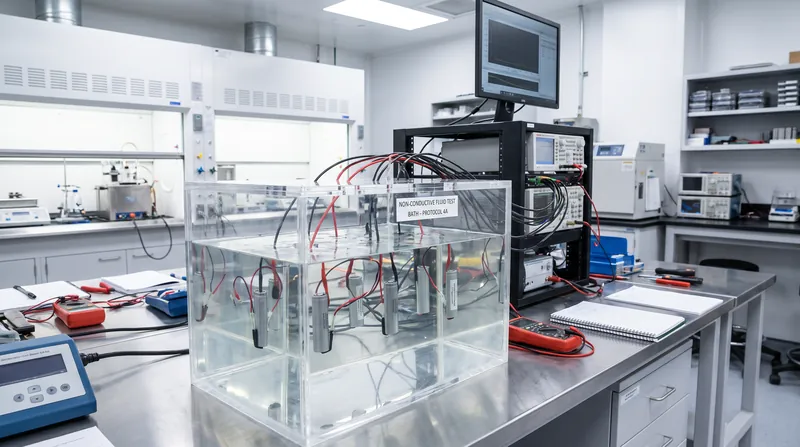
Hyundai Validates US-Developed Sodium-Ion Cell, Proving Non-Flammable EV Battery Safety
5 sources
Battery Tech
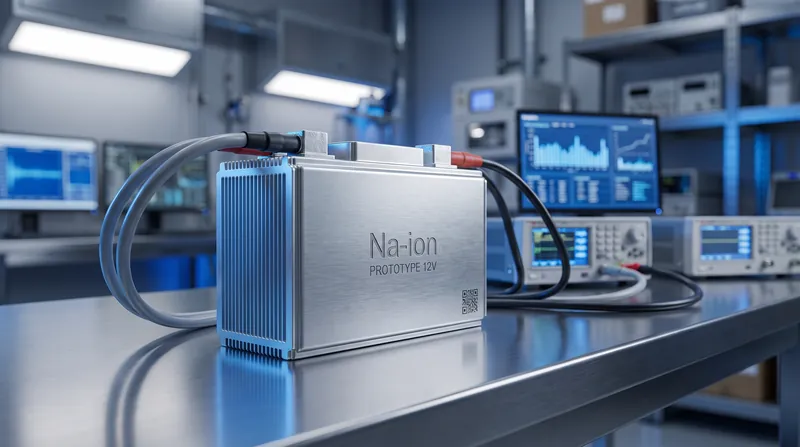
LFP vs. NMC vs. NCA: The Definitive Comparison of EV Battery Chemistries on Cost, Density, and Lifespan
6 sources
EV Economics
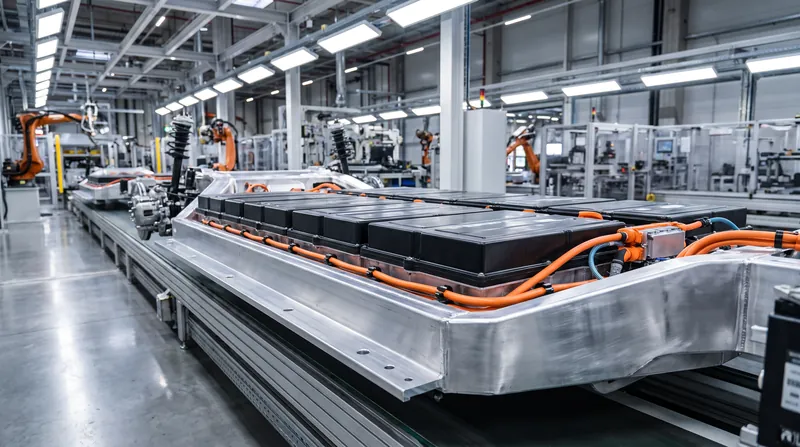
The EV 'Valley of Death': What Lucid's Strategic Review Reveals About the Cost of Building an Automaker
6 sources
Hybrid Adoption
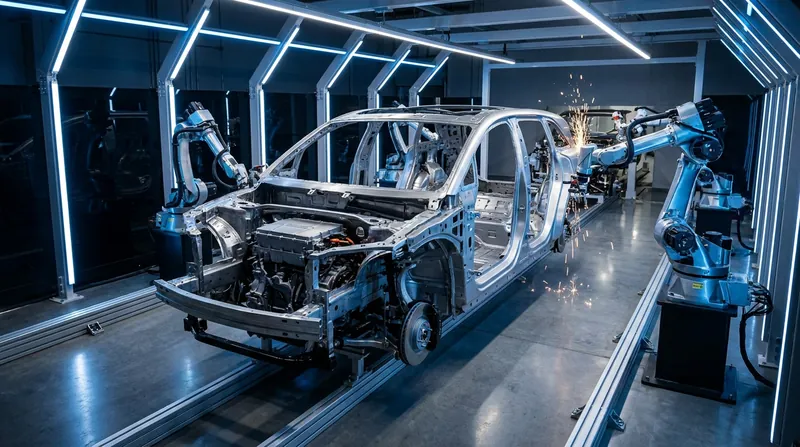
Toyota's Electrified Vehicles Surpass 50% of Quarterly Global Production Volume
5 sources
Comments
Every angle. Every day.
Get Automotive & Transportation stories with full source coverage and perspective breakdowns, free every day.