
BWF Race to Hangzhou: Fierce Intra-Squad Battles Define Women's Singles Standings as World Championships Loom
Strict two-player national limits have sparked intense internal rivalries among Chinese and Thai shuttlers, while Indonesia's Putri Kusuma Wardani surges to World No. 6.
By Ryder James
As the global badminton circuit accelerates toward its season-ending climax, the BWF Women's Singles standings have transformed into a high-stakes battleground. While South Korea's Olympic champion An Se-young continues her commanding reign at World No. 1 with a staggering 117,787 points, the real drama is unfolding just beneath her.
The latest rankings update in August 2026 reveals a fiercely competitive top 10, characterized not just by international rivalries, but by intense intra-squad battles. With the prestigious BWF World Tour Finals in Hangzhou looming on the horizon, players are fighting for every available ranking point to secure their place among the elite.[5]
The tension in the standings is entirely driven by the Badminton World Federation's strict qualification criteria for the season finale. Under BWF regulations, only the top eight players in the year-long Race to Hangzhou standings earn a ticket to the year-end championships.
Crucially, the governing body enforces a hard cap of two entries per member association in each category. This quota system is designed to ensure global representation, preventing any single powerhouse nation from monopolizing the tournament brackets. However, for the athletes representing badminton's deepest rosters, this rule turns teammates into primary adversaries.[1]
Nowhere is this dynamic more pronounced than within the Chinese national team. China currently boasts an astonishing four players in the global top 10: Wang Zhi Yi at No. 2 with 103,000 points, Chen Yu Fei at No. 4 with 92,000 points, Han Yue at No. 5 with 88,000 points, and Gao Fang Jie at No. 10 with 56,000 points.
Despite their elite global status, the mathematics of the BWF quota dictate that at least two of these world-class athletes will be excluded from the Hangzhou finale. For Han and Gao, simply being among the best in the world is not enough; they must outpace their own highly decorated compatriots.[5]
This internal pressure fundamentally alters the competitive landscape of the BWF World Tour. Every Super 500, 750, and 1000 event effectively doubles as a domestic qualifier for the Chinese squad. When Wang Zhi Yi or Chen Yu Fei step onto the court, they are not just playing to win a trophy; they are playing to defend their precarious position against their own training partners. A single early-round exit or unexpected injury could easily result in a massive points swing, dropping a top-five player out of the Hangzhou qualification picture entirely.[1][5]
A remarkably similar narrative is unfolding for the Thai national team, albeit with even tighter margins. Veterans Ratchanok Intanon and Pornpawee Chochuwong currently find themselves deadlocked at 69,000 points, occupying the No. 7 and No. 8 spots globally. Their neck-and-neck race adds a profound layer of tension to their upcoming tournament appearances. With both players hovering right on the qualification bubble, every match they play carries the weight of their year-end fate, knowing that a single deep run by one could effectively eliminate the other from the season finale.[5]
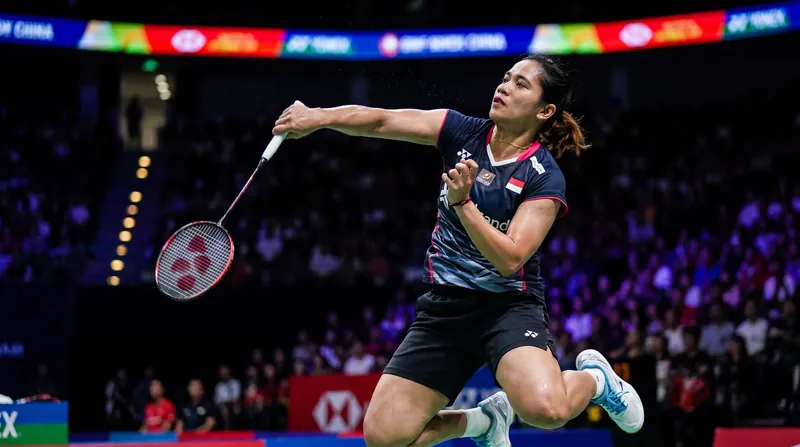
Amidst these fierce national rivalries, Indonesia's Putri Kusuma Wardani has emerged as the standout disruptor of the 2026 season. Surging to a career-high World No. 6 with 73,000 points, Wardani has successfully broken up the East Asian monopoly at the top of the rankings.
Her ascent is a testament to her resilient form and strategic tournament planning throughout the year. By consistently reaching the latter stages of major events, the Indonesian star has secured her position as the highest-ranked player outside the traditional 'Big Three' nations of China, South Korea, and Japan.[5]
Wardani's breakthrough fulfills the promise she articulated at the very beginning of the 2026 campaign. Speaking ahead of the season-opening Malaysia Open, she noted that the new year meant starting from zero, declaring the Race to Hangzhou 'wide open' and emphasizing her intent to capitalize on early momentum. That renewed spirit has clearly translated onto the court, as her steady accumulation of points has given her a comfortable buffer against the chaotic intra-squad battles raging just below her in the standings.[3]
Japan also fields a formidable contingent navigating the complexities of the qualification race. Veteran Akane Yamaguchi holds steady at No. 3 with 93,000 points, keeping her safely within the qualification threshold. However, the rapid rise of 19-year-old prodigy Tomoka Miyazaki, who has climbed to No. 9 with 63,000 points, highlights the next generation's aggressive push to unseat established stars. Miyazaki's presence ensures that even the most secure Japanese veterans cannot afford to become complacent in the final months of the season.[5]
The mechanics of the BWF points system further amplify the late-season drama. Rankings are calculated based on a player's ten highest-scoring tournaments over a 52-week rolling period, with up to 125,000 points theoretically possible. Because players drop points from the previous year as new results are added, maintaining a top-eight position requires relentless consistency. A player cannot simply rest on the laurels of a strong spring campaign; they must continuously defend their points haul against a field of challengers eager to exploit any dip in form.[4]
All eyes now turn to the Indira Gandhi Indoor Stadium in New Delhi, which is set to host the prestigious BWF World Championships starting August 17. As the most significant tournament of the summer, the World Championships offer massive ranking points that could completely reshuffle the Race to Hangzhou landscape.
For the Chinese and Thai players locked in their respective internal battles, a deep run in India is absolutely critical. The results in New Delhi will likely dictate whether current leads are solidified or if late-season upsets will rewrite the guest list for the year-end finale.[2]
Key points
- South Korea's An Se-young maintains a commanding lead atop the BWF Women's Singles standings.
- The BWF's two-player per nation limit has sparked intense intra-squad battles for World Tour Finals qualification.
- China has four players in the top 10, meaning at least two will be excluded from the season finale.
- Thailand's Ratchanok Intanon and Pornpawee Chochuwong are deadlocked at 69,000 points.
- Indonesia's Putri Kusuma Wardani has surged to World No. 6, breaking up East Asian dominance.
- The upcoming BWF World Championships in New Delhi will offer crucial points that could reshuffle the standings.
How we got here
January 2026
The BWF season opens with players starting the Race to Hangzhou standings from zero.
August 2026
Putri Kusuma Wardani surges to World No. 6 following a string of consistent tournament finishes.
August 17, 2026
The BWF World Championships commence in New Delhi, offering massive late-season ranking points.
December 2026
The top eight qualifiers will compete in the BWF World Tour Finals in Hangzhou.
- Dominant Federation Shuttlers
- Athletes from powerhouse nations who view the two-player quota as a grueling internal hurdle that forces them to eliminate their own teammates.
- Emerging Nation Challengers
- Rising stars breaking into the top tier who capitalize on the quota system to secure their place among the sport's traditional elite.
- BWF Officials & Analysts
- Administrators and observers who support the quota system as a necessary mechanism to ensure global representation and diverse tournament brackets.
Perspectives this story doesn't cover
- Lower-ranked players from non-dominant nations who benefit from the quota system.
Sources
Source coverage
5 outlets
3 viewpoints surfaced





- [1]CGTNDominant Federation Shuttlers
World No. 1 Shi Yuqi begins BWF World Tour Finals with win over compatriot Lin Shifeng
Read on CGTN → - [2]India.comBWF Officials & Analysts
BWF World Championships 2026: India ready for Badminton's biggest battle
Read on India.com → - [3]PBSIEmerging Nation Challengers
Malaysia Open 2026: Putri and Alwi target best results
Read on PBSI → - [4]WikipediaBWF Officials & Analysts
BWF World Ranking
Read on Wikipedia → - [5]Badminton UpdatesDominant Federation Shuttlers
BWF World Ranking after R32 DAIHATSU Indonesia Masters 2026
Read on Badminton Updates →
More in Sports
See all →Sports Biomechanics
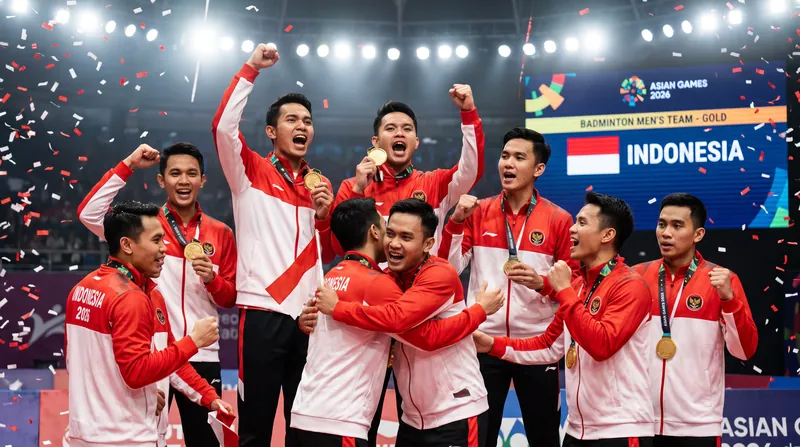
The 400 km/h Illusion: How Aerodynamic Drag Strips the Badminton Smash of Its Power
6 sources
Standings
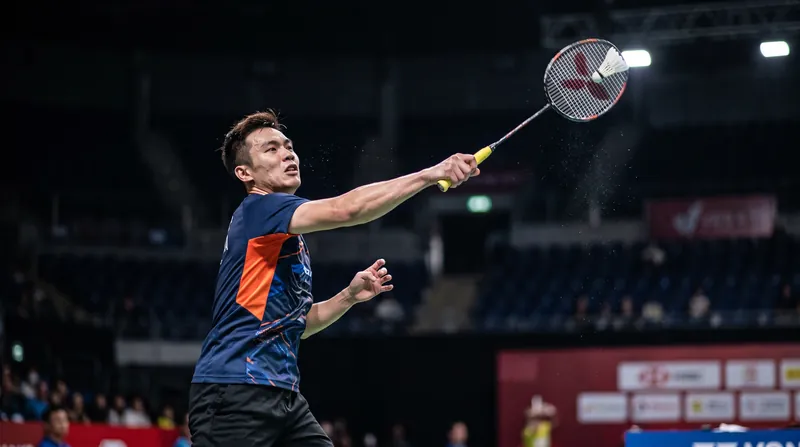
Liu Shengshu and Tan Ning Command BWF Women's Doubles Standings Amid Historic Veteran Reshuffle
6 sources
Standings
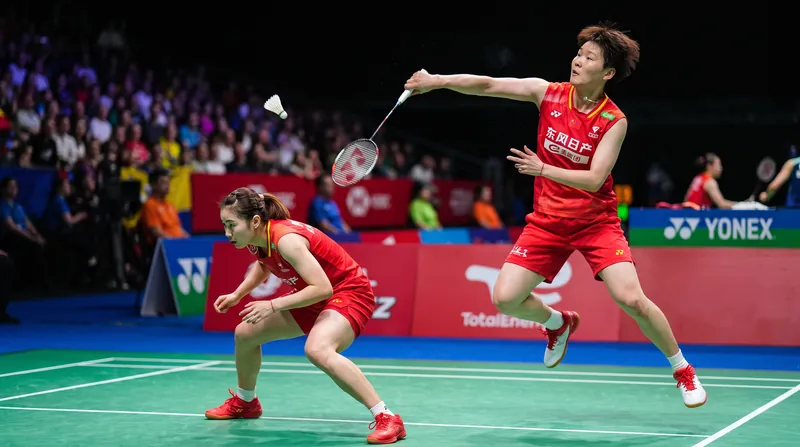
Shi Yuqi and An Se-young Command BWF Standings as Race to Hangzhou Enters High-Stakes World Championships
5 sources

Standings
Historic French Surge Shakes Up BWF Men's Singles Standings as Popov and Lanier Crack Top 10
6 sources
Comments
Every angle. Every day.
Get Sports stories with full source coverage and perspective breakdowns, free every day.