
full timeline
European energy and inflation crisis
Consumer prices in the United Kingdom rose faster than expected last month, driven by escalating household energy bills tied to Middle East instability.
Follow European energy and inflation crisis in the Factlen app and get an alert when there is news. Get the app
Share this story
Latest report
UK Inflation Accelerates to 3.6% in October as Global Energy Costs Surge
Consumer prices in the United Kingdom rose faster than expected last month, driven by escalating household energy bills tied to Middle East instability. The reading complicates the Bank of England's path for future interest rate cuts.
- UK consumer price inflation accelerated to 3.6% in October 2026, up from 3.5% in September.
- The increase was driven almost entirely by a 10% upward adjustment to the regulatory household energy price cap.
- Core inflation remained sticky at 4.1%, while services inflation held firm at 4.9%.
- Financial markets have sharply reduced their expectations for a December interest rate cut by the Bank of England.
British consumer prices rose at an annual rate of 3.6% in October 2026, accelerating from September's 3.5% pace as global energy market volatility reached domestic utility bills. The Office for National Statistics reported the headline figure early Wednesday morning, slightly exceeding the 3.5% consensus forecast among City economists.[2][3]
The acceleration marks a distinct setback for the Bank of England, which has spent the past two years attempting to anchor inflation back to its 2.0% statutory target. Core inflation, which strips out volatile food and energy components, remained stubbornly elevated at 4.1%, indicating that underlying price pressures have not fully dissipated.[1][3]
Energy costs served as the primary catalyst for the October increase, directly reflecting the geopolitical premium currently priced into global oil and gas markets. The ongoing conflict in the Middle East has disrupted regional supply chains, pushing Brent crude prices sharply higher throughout the early autumn months.[2][5]
"The upward pressure on the headline rate was almost entirely driven by the scheduled increase in the regulatory energy price cap," the Office for National Statistics noted in its official release. "Motor fuels also contributed to the upward trend, reversing the deflationary drag we recorded in the transport sector during late summer."[3]
The Energy Price Mechanism
Britain's energy regulator, Ofgem, adjusted its quarterly price cap upward on October 1, 2026, translating wholesale market spikes directly into retail household bills. The typical dual-fuel household now faces an annualized energy cost of £1,717, representing a 10% increase from the £1,568 cap that governed the third quarter.[2][6]
This regulatory adjustment means that millions of consumers are absorbing the financial impact of international conflicts precisely as the domestic heating season begins. Natural gas futures on the UK National Balancing Point hub surged by 18% between August and October, leaving suppliers with little choice but to pass procurement costs forward.[1][4]
The timing of the energy spike complicates the broader economic recovery narrative that the Treasury has attempted to project throughout 2026. While wage growth has finally begun to outpace inflation in real terms, the sudden jump in non-discretionary utility spending threatens to suppress retail sales during the crucial fourth quarter.[1][2]
Financial markets reacted swiftly to the Office for National Statistics data, adjusting their expectations for near-term monetary policy easing. Yields on two-year UK government gilts, which are highly sensitive to interest rate projections, climbed by 8 basis points to 4.32% within an hour of the inflation print.[4][5]
Monetary Policy Implications
Traders have aggressively repriced the probability of a December interest rate cut by the Bank of England's Monetary Policy Committee. Swaps markets now imply only a 15% chance of a 25-basis-point reduction before the end of 2026, down from a 45% probability priced in just one week ago.[1][5]
The central bank's benchmark rate currently sits at 4.75%, following a cautious easing cycle that began earlier in the year. Governor Andrew Bailey has repeatedly warned that the "last mile" of disinflation would prove volatile, particularly given the UK's structural exposure to imported energy and tight domestic labor markets.[1][4]
Services inflation, a metric the Monetary Policy Committee monitors closely as a proxy for domestic wage pressures, held firm at 4.9% in October. This stickiness in the services sector suggests that businesses are still successfully passing higher payroll costs onto consumers, particularly in hospitality and leisure.[3][6]
"We are seeing a clear divergence between goods deflation and services inflation," noted a morning briefing note from the London Stock Exchange's macroeconomic desk. "Until the services component breaks decisively below the 4.0% threshold, the Bank of England simply lacks the mandate to accelerate its easing cycle."[4]
The Household Squeeze
For the average British household, the October data translates into a tangible reduction in purchasing power heading into the winter months. The Resolution Foundation estimates that the poorest fifth of households will spend roughly 12% of their disposable income on energy this winter, compared to just 4% for the wealthiest fifth.[2][6]
Food price inflation, which had been a rare bright spot in recent months, also showed signs of stabilizing rather than continuing its downward trajectory. The annual rate of food and non-alcoholic beverage inflation ticked up slightly to 1.9% in October, breaking a nine-month streak of consecutive decelerations.[3][6]
Retailers warn that the combination of higher energy overheads and new post-Brexit border friction costs could force further price adjustments on supermarket shelves. The British Retail Consortium reported last week that shop price deflation had already begun to narrow, signaling that the era of aggressive discounting may be concluding.[1][2]
The government faces mounting political pressure to address the cost-of-living constraints that continue to define the domestic economy. The Chancellor of the Exchequer acknowledged the difficult reading in a brief statement, emphasizing that global factors remain the primary driver of the current inflationary impulse.[2][4]
Global Context and Trade
Britain is not alone in facing a renewed inflationary headwind from the energy sector, though its reliance on natural gas for electricity generation makes it particularly vulnerable. Eurozone inflation also ticked higher in October, reaching 2.4%, while US consumer prices demonstrated similar resilience against central bank targets.[1][5]
The divergence in inflation rates between the UK and its primary trading partners continues to influence currency valuations. The pound sterling appreciated by 0.4% against the US dollar following the data release, trading at $1.2840 as international investors chased the prospect of "higher for longer" British interest rates.[4][5]
Export-heavy constituents of the FTSE 100 index faced minor headwinds as the stronger currency threatened to make British goods less competitive abroad. However, the broader London equity market remained relatively flat, with energy producers like Shell and BP offsetting losses in the consumer discretionary and homebuilding sectors.[4]
The structural nature of the UK's energy deficit remains a central vulnerability for long-term price stability. Despite significant investments in offshore wind capacity, the national grid still relies on gas-fired power stations to meet roughly a third of its electricity demand, leaving the economy tethered to international fossil fuel markets.[2][6]
Looking Ahead to 2027
Forecasters now anticipate that headline inflation will hover between 3.0% and 3.8% through the first quarter of 2027. The Office for Budget Responsibility recently revised its own projections, warning that the path back to the 2.0% target will likely be delayed until at least the final quarter of next year.[1][3]
Much of this trajectory depends on the geopolitical situation in the Middle East and its subsequent impact on the Strait of Hormuz transit routes. Any further escalation that threatens physical oil infrastructure or liquefied natural gas shipments could easily push the UK's headline inflation rate back above the 4.0% threshold.[2][5]
Domestic policy decisions will also play a crucial role in shaping the inflation curve over the next twelve months. The upcoming implementation of higher minimum wage thresholds in April 2027 is expected to inject additional demand into the economy, potentially reinforcing the stickiness currently observed in the services sector.[1][6]
The Bank of England's Monetary Policy Committee next convenes on December 17, 2026, to vote on the benchmark interest rate. Given the October inflation print and the resilient labor market data released earlier this week, a unanimous vote to hold rates steady appears increasingly likely.[3][4]
Market participants will scrutinize the accompanying meeting minutes for any shifts in the central bank's forward guidance. The critical unknown is whether policymakers view the energy-driven spike as a temporary supply shock to be looked through, or a persistent threat that requires a structurally tighter monetary stance throughout 2027.[1][5]
Sources
- [1]Financial Times — UK inflation accelerated to 3.6% in October Read on Financial Times →
- [2]The Guardian — UK inflation rises to 3.6% as energy prices increase Read on The Guardian →
- [3]Office for National Statistics — Consumer price inflation, UK: October 2026 Read on Office for National Statistics →
- [4]London Stock Exchange — UK inflation rose to 3.6% in October Read on London Stock Exchange →
- [5]Traders Union — UK consumer price inflation accelerates to 3.6% in October Read on Traders Union →
- [6]GOV.UK — Consumer price inflation, UK: October 2026 time series Read on GOV.UK →
What to watch
- The European Central Bank will hold a meeting in December to decide on a potential interest rate hike.
- The Bank of England will make an interest rate decision in December.
- The European Central Bank is monitoring wage negotiations to prevent the energy price spike from triggering structural inflation.
- The global natural gas market faces tightness that the International Energy Agency warns may extend into 2027.
- A decision is pending on the European Central Bank presidency, with Dutch central bank governor Klaas Knot officially nominated by the Netherlands.
Earlier updates
5 updates
Bank of England Raises Key Interest Rate to 4% Amid Persistent Inflation
Key point: The Bank of England has increased its benchmark interest rate to 4 percent in response to surging inflation driven by the ongoing conflict in Iran.
The Bank of England has raised its key interest rate by a quarter of a percentage point to 4 percent, marking its first rate hike in more than three years. The Monetary Policy Committee voted 8-1 in favor of the increase, ending a period of rate holds throughout 2026.
Governor Andrew Bailey stated that the inflationary pressure in the pipeline justified the immediate rate increase. Catherine Mann was the sole dissenting voice on the committee, arguing for a more aggressive half-point hike to 4.25 percent. Bailey cautioned that while this is not necessarily the start of a long sequence of hikes, further increases remain possible unless the geopolitical situation stabilizes.
The decision represents a shift from the central bank's previous defensive posture and comes as the Bank significantly revised its inflation forecasts. Officials now expect UK inflation to peak at around 5 percent by the middle of 2027, a sharp increase from the 3.2 percent projected in July. The move will immediately impact mortgage borrowers and signals a tighter monetary environment ahead.
The rate hike is primarily driven by soaring energy costs stemming from the ongoing war in Iran, which has disrupted global oil and gas supplies through the Strait of Hormuz. Crude oil prices have persistently remained elevated, pushing UK consumer price inflation to an 11-month high of 3.5 percent in September, well above the Bank's 2 percent target.
Bank of England Raises Interest Rates to 4% in First Hike Since 2023
Key point: The Bank of England raised its benchmark interest rate to 4% to combat rising inflation driven by the Middle East conflict, marking its first rate hike since August 2023.
The Bank of England raised its benchmark interest rate by a quarter of a percentage point to 4% on Thursday, marking its first rate hike since August 2023. The Monetary Policy Committee voted 8-1 in favor of the increase, ending a series of rate holds throughout 2026 as policymakers move to counter mounting inflationary pressures.
Eight members of the committee supported the 0.25-point increase, while Catherine L. Mann cast the sole dissenting vote in favor of a larger half-point hike to 4.25%. Bank of England Governor Andrew Bailey noted that the degree of inflationary pressure in the pipeline warranted the immediate increase. He cautioned that while the move does not necessarily signal a prolonged series of hikes, further tightening remains likely unless the ongoing conflict in the Middle East is resolved and energy markets stabilize.
The decision represents a sharp pivot for the central bank, which had previously been expected to cut rates this year before the Iran war disrupted global energy supplies and the Strait of Hormuz. With oil prices persistently elevated, the Bank of England now projects that U.K. inflation will climb from 3.5% in September to approximately 5% by the middle of 2027. This marks a significant upward revision from its July forecast, underscoring the growing economic toll of the geopolitical crisis on domestic prices.
The rate hike will immediately increase borrowing costs for homeowners on variable and tracker mortgages, adding to the financial strain of a broader cost-of-living squeeze. The central bank expects the government's energy price cap to rise significantly in January, further squeezing household budgets. Despite the gloomy outlook, policymakers indicated that recent declines in wholesale energy prices, spurred by shifting U.S. political dynamics following the midterm elections, could temper the need for aggressive future rate increases if sustained.
Bank of England Raises Interest Rate to 4% in First Hike Since 2023
Key point: The Bank of England raised its benchmark interest rate to 4% to combat surging inflation driven by energy shocks from the ongoing Iran war.
The Bank of England raised its benchmark interest rate by a quarter of a percentage point to 4% on Thursday, marking its first rate hike since August 2023. The Monetary Policy Committee voted 8-1 in favor of the increase, ending a series of rate holds throughout the year.
Governor Andrew Bailey stated that the inflationary pressure currently in the pipeline warranted the immediate increase. One committee member, Catherine Mann, dissented by voting for a larger half-point hike to 4.25%. Bailey cautioned that while this does not necessarily begin a long sequence of hikes, further increases are likely unless the ongoing conflict in the Middle East is resolved.
The decision represents a sharp pivot from earlier in the year, when markets had anticipated rate cuts. The central bank now forecasts that UK inflation, which reached 3.5% in September, will peak at around 5% by the middle of 2027. This upward revision abandons previous expectations that inflation would steadily return to the Bank's 2% target.
The primary driver of the renewed inflationary pressure is the nine-month-long Iran war, which has disrupted energy supplies and pushed oil prices persistently above $100 a barrel. The resulting surge in fuel and utility costs has squeezed global supplies, forcing the Bank of England to tighten monetary policy to prevent these higher energy costs from embedding into broader prices and wages.
ECB President Lagarde Flags Potential December Rate Hike as Eurozone Inflation Hits 4%
Key point: ECB President Christine Lagarde indicated that a December interest rate hike is possible following a surge in eurozone inflation to 4%.
European Central Bank President Christine Lagarde has signaled that a December interest rate hike remains a strong possibility after eurozone inflation reached 4% in October. Speaking at a financial literacy conference in Milan on Thursday, Lagarde stated that upcoming economic indicators will determine whether the central bank needs to raise rates next month.
The inflation surge to a three-year high of 4%, up from 3.8% in September, was largely driven by a nearly 21% year-over-year increase in energy prices linked to the ongoing Iran war. While core inflation—which excludes volatile components like food and energy—held steady at 2.5%, Lagarde emphasized the importance of applying monetary tools to prevent inflation expectations from running away and producing second-round economic effects.
Lagarde's remarks firm up market expectations for a rate increase after the ECB opted to hold its key deposit rate steady at 2.5% in late October. Traders are now pricing in a high probability of a 25-basis point hike at the central bank's upcoming December meeting, which would mark a resumption of its tightening cycle. Economists note that the inflation picture remains mixed across the bloc, with Italy's rate jumping to 5.6% while Germany's fell to 2.8% due to fuel tax cuts.
The monetary policy debate unfolds as Lagarde prepares to step down from her post on February 7, 2027, nine months ahead of her mandate's formal conclusion. She noted at the Milan event that her early departure will allow her to participate more freely in public debates outside of monetary policy, while reiterating the ECB's strict independence from political pressure across member states.
Bank of England Raises Interest Rate to 4% and Signals Further Tightening
Key point: The Bank of England raised its benchmark interest rate to 4% for the first time since 2023 to combat inflation, signaling that further hikes are likely if energy prices remain high.
AIThe Bank of England recently raised its benchmark interest rate to 4%, the first increase since August 2023.From: Bank of England Chief Economist Signals Further Rate Hikes Above 4% to Combat Inflation The Bank of England raised its benchmark interest rate by a quarter of a percentage point to 4% on Thursday, marking its first rate hike since August 2023. The Monetary Policy Committee voted 8-1 in favor of the increase, with one member, Catherine Mann, advocating for a larger half-point rise to 4.25%. The decision represents a concerted effort by policymakers to combat persistent inflationary pressures that have kept price growth well above target.
Governor Andrew Bailey stated that the increase was necessary to address the inflationary pipeline driven by rising energy costs, which have been exacerbated by the ongoing conflict in the Middle East. Bailey cautioned that while the move should not be seen as the start of an inevitable long sequence of hikes, further increases remain likely unless the geopolitical situation and its impact on oil prices resolve. He emphasized that the committee will continue to assess the evidence at each meeting to ensure inflation returns to target.
The decision ends a prolonged period of unchanged rates and comes as UK consumer price inflation reached 3.5% in September, up from 3.1% in August. The Bank of England also revised its economic forecasts upward, warning that inflation could peak at around 5% by the middle of 2027 as higher fuel and utility bills feed through to businesses and households. Policymakers noted that while the economy has proved more resilient than expected, the longer energy prices remain elevated, the greater the risk of a permanent price shock.
The rate hike will immediately increase borrowing costs for hundreds of thousands of homeowners on tracker mortgages, adding to the financial strain of the cost-of-living crisis just a week after the government's new budget announcement. The move aligns the Bank of England with other major central banks, such as the US Federal Reserve and the European Central Bank, which have also recently tightened monetary policy in response to global energy shocks.
1 update
IEA Warns Global Natural Gas Market Tightness May Extend Into 2027 Amid Record-Low European Storage
Key point: The IEA warns that decade-low European gas reserves and Middle East supply disruptions could prolong global market tightness into 2027.
European Union natural gas storage facilities are currently 74.1 percent full, trailing the 83.04 percent capacity recorded a year earlier.From: European Gas Surges Near 2022 Peaks as ECB Warns of Energy Price Spillovers The International Energy Agency (IEA) warned on Tuesday that tight conditions in the global natural gas market could persist well into 2027. In its Global Gas Security Review 2026, the agency highlighted that Europe is entering the winter heating season with its lowest natural gas storage levels since 2013, which could drive up competition for flexible liquefied natural gas (LNG) cargoes.
European Union storage facilities were approximately 75% full at the end of October, leaving a smaller buffer against cold snaps or supply shocks. The IEA noted that continued supply disruptions in the Middle East, including restricted LNG flows through the Strait of Hormuz, have already pushed Asian and European prices to their highest levels since the 2022-2023 energy crisis.
The agency projects that global LNG supply will fall by 3% in 2026. If Europe drains its reserves heavily over the winter, storage sites could close the 2026-2027 heating season with record-low inventories, substantially increasing the need to replenish them through the summer and extending market pressure into the following year.
1 update
European Natural Gas Surpasses €100 per Megawatt Hour
Key point: European natural gas prices have topped €100 per megawatt hour for the first time since 2022 amid winter supply fears and geopolitical tensions.
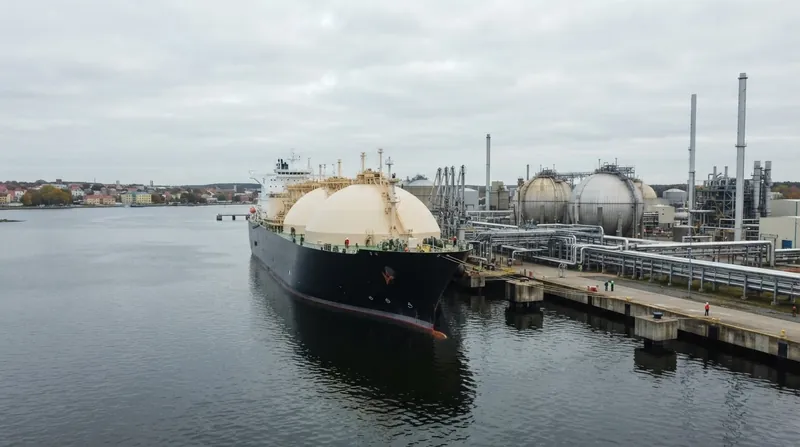
AIIllustration: European natural gas prices have surged as the continent competes for seaborne LNG cargoes to fill winter storage.From: European Natural Gas Tops €90 per Megawatt-Hour Amid Persistent Supply Threats European natural gas prices have surpassed €100 per megawatt hour, marking the first time the benchmark has reached this level since the 2022 energy crisis. The price crossed this psychological threshold as the winter heating season approaches.
The surge is driven by mounting fears over winter supplies, which have been exacerbated by the ongoing war involving Iran. While the European Union maintains it is not worried about overall supplies, its gas storage facilities are currently only 72% full.
Officials have warned households to prepare for a difficult season ahead. Both consumers and industrial sectors are beginning to feel the financial strain of the elevated energy costs.
Charts, maps and images
Timeline
November 2026
UK Inflation Accelerates to 3.6% in October as Global Energy Costs Surge
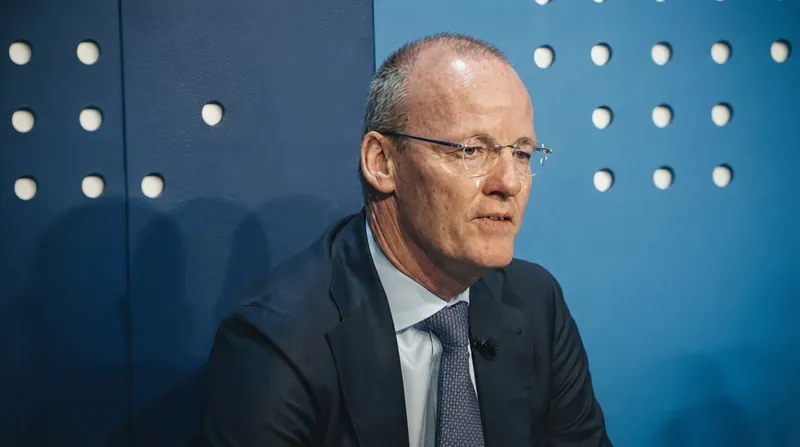
Klaas Knot Rejects ECB Monetary Support for Eurozone Deficit Spending
Bank of England Chief Economist Signals Further Rate Hikes Above 4% to Combat Inflation
AIAIECB Chief Lagarde Affirms Restrictive Policy as Persistent Inflation Lingers
Bank of England Raises Interest Rate to 4% in First Hike Since 2023
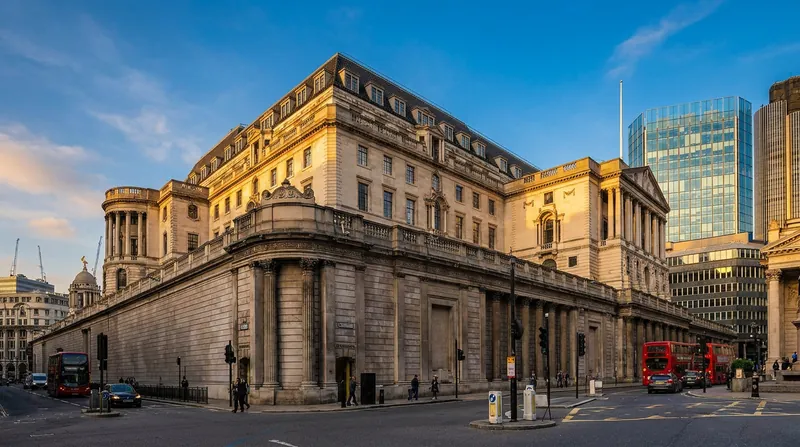
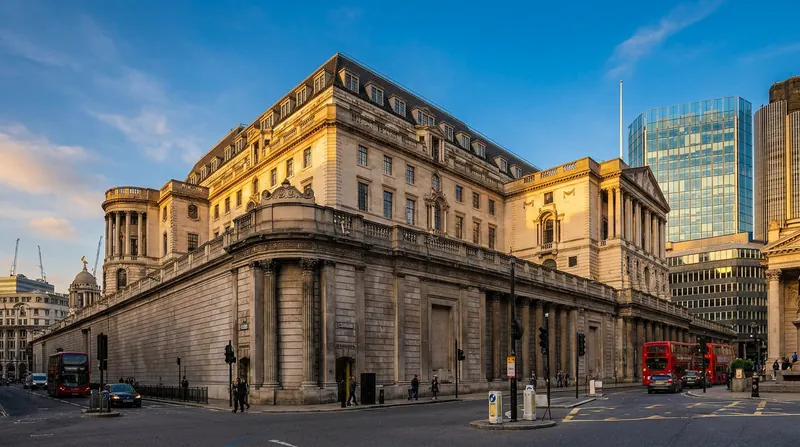
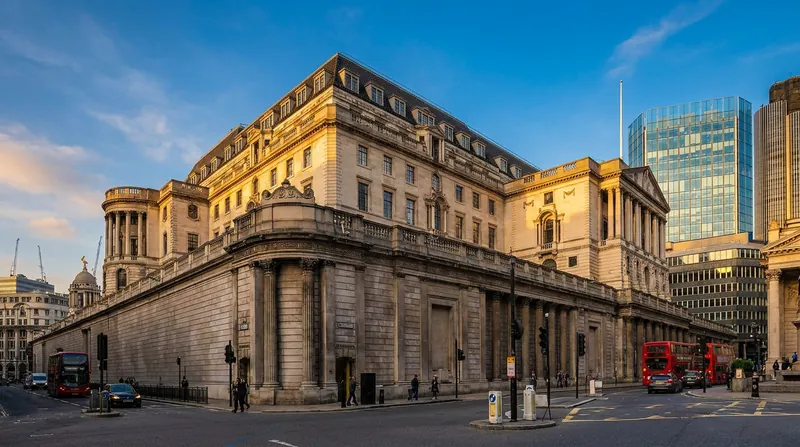
The Bank of England adjusts its benchmark lending rates in an ongoing effort to curb persistent inflation.
AI- Bank of England Raises Key Interest Rate to 4% Amid Persistent InflationKey point: The Bank of England has increased its benchmark interest rate to 4 percent in response to surging inflation driven by the ongoing conflict in Iran.
- Bank of England Raises Interest Rates to 4% in First Hike Since 2023Key point: The Bank of England raised its benchmark interest rate to 4% to combat rising inflation driven by the Middle East conflict, marking its first rate hike since August 2023.
- Bank of England Raises Interest Rate to 4% in First Hike Since 2023Key point: The Bank of England raised its benchmark interest rate to 4% to combat surging inflation driven by energy shocks from the ongoing Iran war.
- ECB President Lagarde Flags Potential December Rate Hike as Eurozone Inflation Hits 4%Key point: ECB President Christine Lagarde indicated that a December interest rate hike is possible following a surge in eurozone inflation to 4%.
- Bank of England Raises Interest Rate to 4% and Signals Further TighteningKey point: The Bank of England raised its benchmark interest rate to 4% for the first time since 2023 to combat inflation, signaling that further hikes are likely if energy prices remain high.
Eurozone Inflation Reaches 4% in October as Energy Costs Surge 21%
IEA Warns Global Natural Gas Market Tightness May Extend Into 2027 Amid Record-Low European Storage
- IEA Warns Global Natural Gas Market Tightness May Extend Into 2027 Amid Record-Low European StorageKey point: The IEA warns that decade-low European gas reserves and Middle East supply disruptions could prolong global market tightness into 2027.



October 2026
European Natural Gas Surpasses €100 per Megawatt Hour
- European Natural Gas Surpasses €100 per Megawatt HourKey point: European natural gas prices have topped €100 per megawatt hour for the first time since 2022 amid winter supply fears and geopolitical tensions.
UK September Inflation Rebounds to 3.5% as Energy and Services Pressures Mount
European Natural Gas Tops €90 per Megawatt-Hour Amid Persistent Supply Threats
European Gas Surges Near 2022 Peaks as ECB Warns of Energy Price Spillovers
Eurozone Inflation Reaches Three-Year High of 3.8% as Energy Markets Fracture

September 2026
Bank of England Holds Rate at 3.75%, Halts Long-Dated Gilt Sales as Inflation Risks Rise
European Central Bank Raises Key Rates by 25 Basis Points as Geopolitical Tensions Fuel Inflation
AI

How the story developed
The crisis escalated on September 6, when Eurozone consumer prices accelerated to a three-year high of 3.3 percent for August, the highest level since September 2023. The surge was driven entirely by a 14.3 percent jump in energy prices amid Middle East hostilities, while core inflation unexpectedly cooled to 2.4 percent. In response, the European Central Bank raised its benchmark deposit rate by 25 basis points to 2.50 percent on September 11. Brent crude oil briefly topped $105 per barrel, and the ECB upgraded its inflation forecasts, expecting prices to average 2.5 percent in 2027 and 2.1 percent in 2028.
Inflation continued to rise, reaching 3.8 percent in September, as recorded on October 3. The increase broke a months-long period of price stabilization and was driven by a 9 percent jump in energy costs, while core inflation remained flat at 2.7 percent. Financial markets rapidly priced in a 60 percent probability of renewed interest rate hikes by the ECB, as European manufacturers and households faced immediate pressure from rising utility tariffs heading into the winter heating season.
Energy markets fractured further in mid-October. On October 19, the Dutch TTF natural gas benchmark surged to €88.1 per megawatt-hour, reaching its highest level since December 2022. European Union gas storage facilities were 74.1 percent full, trailing the 83.04 percent capacity recorded at the same time the previous year. Liquefied natural gas deliveries from the Persian Gulf fell 80 percent year-over-year amid escalating maritime attacks in the Strait of Hormuz. By October 20, the Dutch TTF contract surpassed €90 per megawatt-hour, with storage operating significantly below the 92 percent historical norm for late October. Analysts noted that the affected seaborne LNG represented only a small fraction of total global natural gas supplies.
On October 28, European natural gas prices topped €100 per megawatt-hour for the first time since 2022 amid winter supply fears. The International Energy Agency warned on November 3 that decade-low European gas reserves and Middle East supply disruptions could prolong global market tightness into 2027.
Eurozone consumer prices accelerated to 4.0 percent in October, as recorded on November 4. The increase was driven almost entirely by a 20.8 percent year-over-year surge in energy costs, while core inflation remained stable at 2.5 percent. Following the data release, ECB President Christine Lagarde indicated on November 5 that a December interest rate hike is possible.