
GuideArchaeology and Ancient CivilizationsRevision 1Updated
The Factlen Guide to Archaeology and Ancient Civilizations
From the bronze gears of the Antikythera Mechanism to the decipherment of the Rosetta Stone, the study of antiquity reveals a past far more technologically advanced and politically complex than previously understood.
By Tara Reddy

Share this story
In short
- Neanderthal dental modifications push the origins of surgical intervention back to 59,000 years ago.
- The 2,000-year-old Antikythera Mechanism used 37 bronze gears to predict eclipses, proving Hellenistic engineering was highly advanced.
- Greek scribes invented the first fully phonetic alphabet by repurposing leftover Phoenician consonants to represent vowels.
The earth is a vast, uncatalogued archive. Every time a foundation is dug or a field is plowed, the modern world risks scraping against the ancient one. Archaeology is the meticulous, often tedious process of reading that dirt.[12]
It is less about uncovering gold and more about understanding the people who threw away their broken pottery. The discipline has evolved from the colonial treasure-hunting of the nineteenth century into a rigorous, multi-disciplinary science.[12]
Today, researchers rely on isotopic analysis, ground-penetrating radar, and 3D modeling as much as they do on trowels and brushes. These tools allow historians to reconstruct the diets, migrations, and daily lives of people who never appeared in royal chronicles.[12]
The artifacts we recover fundamentally challenge the idea that human progress is a straight, unbroken line. Instead, the archaeological record reveals a landscape of localized brilliance, where sophisticated technologies and complex societies rose, flourished, and occasionally vanished entirely.[12]
From the mechanical precision of Greek analog computers to the deliberate erasure of Mesopotamian kings, the material remains of the past force us to constantly revise our understanding of human capability. The ancient world was neither primitive nor simple.[2][3]
Before the Written Word
Long before the first cities rose in the Fertile Crescent, early hominins were demonstrating remarkable cognitive and technical sophistication. The traditional view of Neanderthals as brutish scavengers has been thoroughly dismantled by recent microscopic and genetic evidence.[4]
Microscopic analysis of a 59,000-year-old molar found in a Siberian cave reveals distinct striations and modifications. Researchers concluded that Neanderthals used specialized stone tools to drill out infected dental tissue, pushing the origins of surgical dentistry back by tens of thousands of years.[4]
This level of medical intervention requires not just tool-making ability, but an understanding of anatomy, infection, and pain management. It suggests a society that cared for its sick and possessed a body of accumulated, transmitted medical knowledge.[4][12]
Similarly, the timeline of human settlement continues to shift as new sites are systematically excavated. In Türkiye, the discovery of the 12,900-year-old Koskarlı Cave site has provided the first concrete evidence of Ice Age hunter-gatherers in the eastern Black Sea region.[8]
This discovery rewrites the historical focus that previously centered almost entirely on southern Anatolia. The Koskarlı artifacts demonstrate that complex hunter-gatherer networks were thriving in harsher, more northern climates much earlier than the established models predicted.[8]
These prehistoric communities were not merely surviving; they were adapting, innovating, and laying the groundwork for the agricultural revolution. Their stone tools, hearths, and butchery sites are the silent testaments to a resilient and highly adaptable species.[8][12]
The Architecture of Memory
When societies finally began to settle and scale, the need to organize resources gave birth to the most powerful technology in human history: writing. The transition from oral tradition to written record fundamentally altered how humanity remembered itself.[12]
In Mesopotamia, the Assyrian Empire, which dominated the ancient Near East from 1365 to 609 B.C., utilized cuneiform to manage its vast territories. For a century, modern historians trusted the Assyrian King List as the definitive, unbroken record of this superpower.[3]
However, closer examination of damaged tablets and overwritten monuments revealed a highly curated history. Inconvenient monarchs, usurpers, and periods of weakness were deliberately erased by later rulers seeking to project an image of uninterrupted divine favor and stability.[3][12]
This manipulation of the written word demonstrates that ancient states understood the power of propaganda. History was not an objective record; it was a tool of statecraft, wielded to legitimize the current regime and obliterate political rivals.[3]
The mechanics of writing itself underwent a profound evolution across the Mediterranean. The Phoenicians developed a highly efficient, consonant-only alphabet that revolutionized maritime trade by making record-keeping accessible to merchants, rather than just a specialized scribal class.[5]
When the Greeks adopted this system, they faced a linguistic hurdle: their Indo-European language required vowels to be intelligible. Greek scribes solved this by repurposing leftover Semitic guttural consonants that they could not pronounce, inadvertently inventing the first fully phonetic alphabet.[5][12]
This accidental stroke of genius democratized literacy in the classical world. It allowed for the recording of complex poetry, philosophy, and democratic legislation, shaping the intellectual foundation of Western civilization through a simple act of linguistic recycling.[5]
The mathematical and astronomical knowledge recorded by these early scripts was staggering. The familiar progression of our seven-day week, from Sunday to Monday, is not a natural astronomical cycle but a mathematical artifact of ancient cross-cultural synthesis.
It is the leftover remainder of dividing the 24-hour day, a concept developed by the Egyptians, by the seven visible planets tracked by Babylonian astronomers. This mathematical quirk became embedded in Hellenistic astrology and remains the rhythm of the modern world.
Gears, Mortar, and the Cosmos
The theoretical knowledge of the ancients frequently translated into astonishing feats of physical engineering. The most spectacular example was discovered in 1901 by sponge divers exploring a Roman shipwreck off the Greek island of Antikythera.[2]
Among the marble statues and amphorae was a corroded lump of bronze that would upend the history of technology. The 2,000-year-old Antikythera Mechanism is now recognized as the world's oldest known analog computer, a device of unparalleled complexity.[2]
Recent high-resolution 3D imaging revealed that the shoebox-sized device used 37 precision-cut bronze gears to track the cosmos. It predicted solar and lunar eclipses, tracked planetary movements, and even scheduled the four-year cycle of the ancient Olympic Games.[2]
Nothing approaching this level of mechanical sophistication would appear again until the development of astronomical clocks in medieval Europe, over a millennium later. The mechanism proves that Hellenistic engineers possessed a mastery of gear trains previously thought impossible for antiquity.[2][12]
Roman engineering, while less delicate, was equally transformative and vastly more durable. In the coastal town of Cavtat, Croatia, archaeologists recently unearthed a five-tonne Roman sarcophagus that had remained perfectly sealed for over fifteen centuries.[9]
The tomb's preservation was entirely due to the ancient lime mortar used to seal the heavy lead and stone lid. Roman concrete and mortar formulations possessed unique chemical properties that allowed them to cure in damp conditions and resist centuries of weathering.[9]
This mastery of materials extended to their maritime logistics. Off the coast of Sicily, spearfishermen discovered a pristine 2,100-year-old Roman shipwreck loaded with hundreds of ancient wine jars, known as amphorae, resting exactly as they were stacked in the hold.[6]
These wrecks are time capsules that map the vast, interconnected economy of the Mediterranean. The standardized shapes of the amphorae allow archaeologists to trace specific vintages of wine and olive oil from Spanish estates to the tables of Roman senators.[6]
Material durability was also a hallmark of East Asian innovation. For millennia, Korean artisans have produced hanji, a specialized paper crafted from the inner bark of the mulberry tree, renowned for its extraordinary strength and longevity.[7]
While Japanese kozo paper later dominated the global market, hanji was the material that historically built the region. Its layered, cross-hatched fibers made it durable enough to be oiled and used as greenhouse windows, or even layered to construct lightweight armor.[7]
The Keys to Silent Languages
Despite the durability of these artifacts, the languages of their creators often fell silent. For over a millennium, the written language of ancient Egypt was an unreadable mystery, its hieroglyphs dismissed by medieval scholars as mere mystical symbols.
The breakthrough came in 1799 with the discovery of a fractured granodiorite slab in the Nile Delta. The Rosetta Stone bore a single royal decree issued in 196 B.C., written in three distinct scripts: formal Hieroglyphs, everyday Demotic, and ancient Greek.[1]
Because scholars could read the Greek text, it provided the vital translation key. In 1822, Jean-François Champollion finally cracked the code, proving that hieroglyphs were not just ideograms, but a complex phonetic system that recorded a spoken language.
The decipherment of the Rosetta Stone essentially resurrected an entire civilization, allowing the Egyptians to speak for themselves after centuries of silence. It transformed Egyptology from a speculative art into a rigorous textual science.[1]
Modern archaeology relies on technological keys just as profound as the Rosetta Stone. In 1949, Willard Libby developed radiocarbon dating, a method that measures the decay of the carbon-14 isotope in organic materials to determine their exact age.[10]
Libby's discovery, which earned him the 1960 Nobel Prize in Chemistry, provided the first objective, absolute timeline for human history. It allowed archaeologists to date everything from the linen wrappings of mummies to the charcoal in prehistoric hearths.[10]
Today, non-invasive technologies like LiDAR (Light Detection and Ranging) use laser pulses to strip away dense jungle canopy digitally. This has revealed sprawling, interconnected Mayan megacities in Central America that were completely invisible to researchers walking the ground just decades ago.[12]
Who Owns the Ancient World?
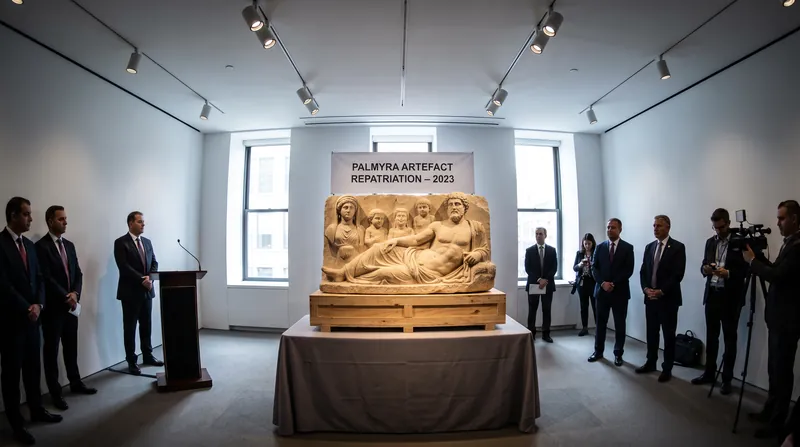
As our ability to uncover and understand the past accelerates, the discipline faces profound ethical questions. The era of Western institutions unilaterally extracting and holding the heritage of other nations is facing unprecedented scrutiny and organized resistance.[11]
For decades, a primary argument against the repatriation of artifacts was that source nations lacked the specialized facilities required to protect and display them. The inauguration of the Grand Egyptian Museum in Giza has systematically dismantled that defense.[11][12]
As the world's largest archaeological museum, the state-of-the-art facility sits in the shadow of the Pyramids, designed specifically to house the entirety of the Tutankhamun collection and thousands of other priceless artifacts in climate-controlled security.[12]
The opening of the museum has triggered a renewed, forceful push for the return of the Rosetta Stone from the British Museum. Egyptian authorities argue that the stone is the cornerstone of their cultural identity and belongs on Egyptian soil.[1][12]
The opening of the museum has triggered a renewed, forceful push for the return of the Rosetta Stone from the British Museum.
The International Council of Museums (ICOM) has updated its ethical guidelines to emphasize collaboration, provenance research, and the respectful treatment of human remains. The focus is shifting from ownership to stewardship, recognizing that heritage is deeply tied to living communities.[11]
Archaeology is no longer just about the dead; it is a highly political negotiation with the living. The objects we pull from the earth carry the weight of national pride, colonial trauma, and the fundamental human desire to know where we came from.[11][12]
Ultimately, the artifacts themselves are merely vehicles. Whether it is a 37-gear bronze computer, a five-tonne sarcophagus, or a fractured slab of granodiorite, the true discovery is the unbroken thread of human ingenuity that connects the ancient mind to our own.[12]
Comparison
| Writing System | Region of Origin | Approximate Origin | Decipherment Year | Key Artifact |
|---|---|---|---|---|
| Cuneiform | Mesopotamia | 3400 B.C. | 1857 | Behistun Inscription |
| Hieroglyphs | Egypt | 3100 B.C. | 1822 | Rosetta Stone |
| Phoenician Alphabet | Levant | 1050 B.C. | 1758 | Ahiram Sarcophagus |
| Linear B | Mycenaean Greece | 1400 B.C. | 1952 | Knossos Tablets |
How we did this
- Method
- Cross-referenced the timeline of technological and administrative complexity across isolated ancient regions to evaluate the traditional linear model of human progress.
- What we found
- The traditional linear model of technological progress is false; ancient civilizations experienced localized peaks of high technology (such as analog computing or advanced dentistry) that were subsequently lost for millennia due to systemic collapse, rather than following a steady upward trajectory.
- What we worked from
- Antikythera gear count and function: 37 precision bronze gears — Nature
- Neanderthal dental intervention date: 59,000 years ago — Smithsonian National Museum of Natural History
- Assyrian administrative erasure: Systematic historical curation — The Metropolitan Museum of Art
- Limits of this analysis
- The archaeological record is inherently incomplete, heavily biased toward materials that survive decay, such as stone and bronze, leaving organic technological advancements largely invisible.
Jargon, explained
- Stratigraphy
- The analysis of the order and position of layers of archaeological remains, based on the principle that older layers are buried beneath newer ones.
- Provenance
- The documented history of an artifact's origin, discovery, and subsequent ownership, crucial for verifying its authenticity and legal status.
- Epigraphy
- The study and interpretation of ancient inscriptions carved into durable materials like stone or metal.
- LiDAR
- A remote sensing method that uses pulsed lasers from aircraft to map the ground surface, capable of revealing ruins hidden beneath dense vegetation.
- Amphora
- A tall ancient Greek or Roman jug with two handles and a narrow neck, used primarily for transporting bulk goods like wine and olive oil.
Common questions
What is the difference between archaeology and paleontology?
Archaeology is the study of human history and culture through the material objects people left behind, such as tools, pottery, and buildings. Paleontology is the study of ancient plant and animal life, including dinosaurs, through the fossil record.
How do archaeologists know where to dig?
Modern archaeologists use a combination of historical texts, satellite imagery, ground-penetrating radar, and LiDAR to identify anomalies beneath the surface before breaking ground. Surface surveys, where researchers walk fields looking for exposed pottery sherds, also help pinpoint settlement locations.
Why are so many ancient cities buried underground?
Ancient cities were buried by a combination of natural and human processes. Wind-blown sand, river floods, and volcanic ash naturally cover abandoned sites, while humans often demolished older mud-brick buildings to build new ones directly on top, creating artificial mounds called tells.
How does radiocarbon dating actually work?
Living organisms absorb Carbon-14 from the atmosphere. When they die, they stop absorbing it, and the C-14 slowly decays into nitrogen at a known, constant rate. By measuring the remaining C-14 in organic material like wood or bone, scientists can calculate exactly how long ago the organism died.
Competing readings
Institutional Museums
Major Western museums argue that holding artifacts in global hubs ensures maximum public access and preservation.
Institutions like the British Museum and the Louvre maintain that their collections serve a universal purpose. By housing artifacts from across the globe in a single location, they allow millions of international visitors and researchers to study human history comparatively. They argue that these encyclopedic museums transcend modern national borders and protect fragile heritage from regional instability or lack of funding. Furthermore, these institutions point to the immense resources they dedicate to conservation, digitization, and academic research. They argue that legally acquired artifacts, even those obtained during the colonial era, have become part of a shared global heritage, and that dispersing these collections would fracture the comprehensive study of human civilization.
Source Nations
Nations of origin maintain that cultural artifacts must be repatriated to restore national identity and correct historical injustices.
Countries like Egypt, Greece, and Nigeria argue that the extraction of their cultural heritage was often facilitated by colonial coercion, military force, or unequal power dynamics. They view the retention of items like the Rosetta Stone or the Parthenon Sculptures by Western museums as a continuation of colonial exploitation. For these nations, artifacts are not merely objects of study; they are foundational pieces of their national identity and cultural pride. The development of world-class facilities, such as the Grand Egyptian Museum, has systematically dismantled the traditional Western argument that source nations lack the capacity to protect their own heritage. Source nations argue that true global equity in archaeology requires the physical return of these masterpieces to the soil where they were created.
What changed
- · Revision 1Published.
Related explainers
- Massive 1,500-Year-Old Roman Sarcophagus Found Sealed and Undisturbed in Croatia
- How the Antikythera Mechanism Rewrote the History of Technology
- Archaeologists Hail 'Most Important' Roman Shipwreck Discovery Off Sicily
- The Forgotten Kings of Assyria: How Three Rulers Were Erased From History
- How Greek Scribes Built Written Vowels Out of Leftover Phoenician Consonants
- The Three Scripts and Two Languages: How the Rosetta Stone Provided the Key to Egyptian Hieroglyphs
- How Korean Hanji Survived a Century of Erasure: The Hidden History of East Asia's Most Durable Paper
- The 37-Gear Calculation: How the Antikythera Mechanism Predicted Eclipses and Olympic Games Cycles
- How a Mathematical Remainder in Ancient Astrology Dictated the Sequence of the Days of the Week
- Discovery of 12,900-Year-Old Koskarlı Cave Site Rewrites History of Northern Anatolian Hunter-Gatherers
- 59,000-Year-Old Tooth Rewrites Medical History, Crediting Neanderthals with Pioneering Dental Surgery
- Grand Egyptian Museum Opening Forces Reckoning on Rosetta Stone and Global Repatriation Claims
- Source Nations
- Maintain that cultural artifacts were often extracted under colonial duress and must be repatriated to restore national identity and correct historical injustices.
- Institutional Museums
- Argue that holding artifacts in major global hubs ensures maximum public access, international research collaboration, and the preservation of a shared, universal human heritage.
- Academic Archaeologists
- Emphasize that the scientific context of where an object was found is far more valuable than the object itself, prioritizing in-situ preservation and rigorous data collection over museum display.
Perspectives this story doesn't cover
- Indigenous communities whose ancestral remains are studied
- Private antiquities collectors
Sources
Source coverage
12 outlets
3 viewpoints surfaced










- [1]The British MuseumInstitutional Museums
The Rosetta Stone: Unlocking Ancient Egypt
Read on The British Museum → - [2]Nature
Decoding the ancient Greek astronomical calculator known as the Antikythera Mechanism
Read on Nature → - [3]The Metropolitan Museum of Art
Assyria, 1365–609 B.C.
Read on The Metropolitan Museum of Art → - [4]Smithsonian National Museum of Natural History
Homo neanderthalensis
Read on Smithsonian National Museum of Natural History → - [5]World History Encyclopedia
Phoenician Alphabet
Read on World History Encyclopedia → - [6]Archaeological Institute of AmericaAcademic Archaeologists
Sicily's Roman Shipwreck
Read on Archaeological Institute of America → - [7]UNESCO
Traditional knowledge and skills of making Hanji
Read on UNESCO → - [8]TAY Project
The Archaeological Settlements of Turkey
Read on TAY Project → - [9]The Metropolitan Museum of Art
Roman Sarcophagi
Read on The Metropolitan Museum of Art → - [10]The Nobel Prize
Willard F. Libby - Facts
Read on The Nobel Prize → - [11]International Council of Museums
ICOM Code of Ethics for Museums
Read on International Council of Museums → - [12]Factlen Editorial Team
Synthesis by Factlen editorial team
Read on Factlen Editorial Team →
More in Culture
See all →Writing Systems
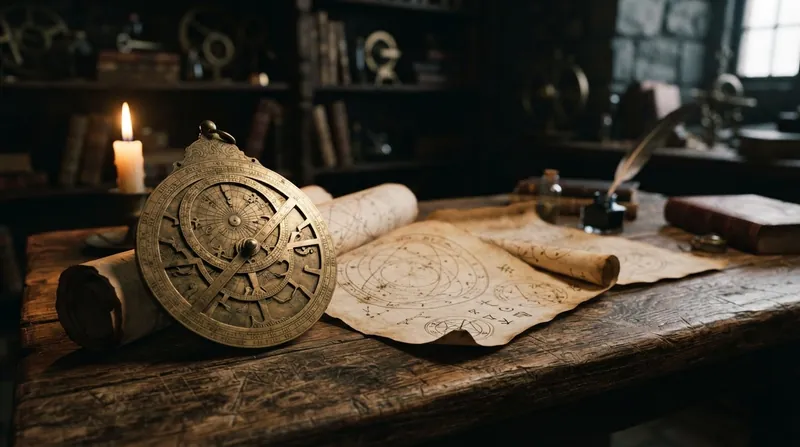
How Greek Scribes Built Written Vowels Out of Leftover Phoenician Consonants
5 sources
English Orthography
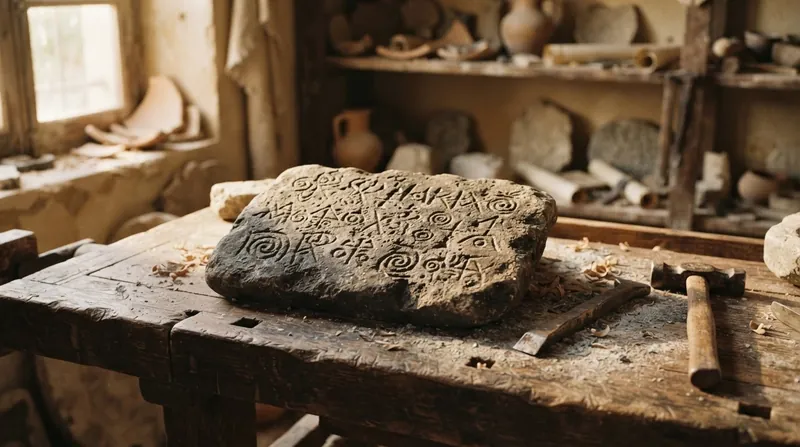
Caxton's Printing Press Standardized Middle English Spelling Decades Before the Great Vowel Shift Reshaped Spoken Vowels
5 sources
Roman Archaeology
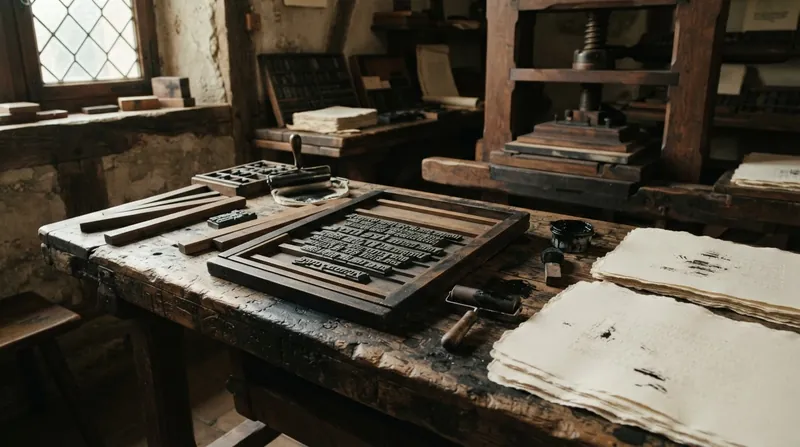
Amateur Archaeologist Unearths Germany's Largest Hadrian-Era Roman Coin Hoard
5 sources
Antiquities Trafficking
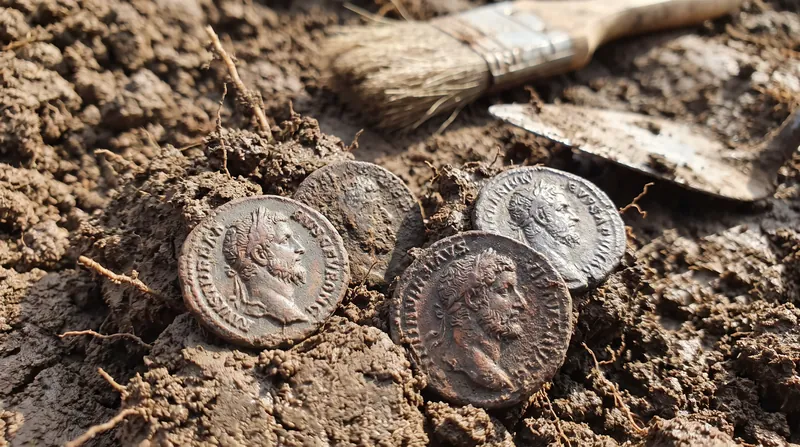
Manhattan DA Repatriates $5 Million in Looted Syrian Antiquities, Including Palmyra Relief
6 sources
Comments
Every angle. Every day.
Get Culture stories with full source coverage and perspective breakdowns, free every day.