
GuideItalian Serie ARevision 1Updated
The Definitive Guide to Italian Serie A
Italy's top football flight blends historic prestige with rigorous modern financial controls. From the FIGC's strict Liquidity Index to the unique Scudetto tiebreaker rules, Serie A operates under a distinct regulatory and competitive framework.

Share this story
Serie A stands as one of the most storied sporting competitions in the world, a league where tactical innovation meets fierce regional rivalries. Governed by the Lega Serie A and the Italian Football Federation (FIGC), the top flight of Italian football represents the pinnacle of the domestic game.[1][2]
Founded in 1898, the Italian Football Championship evolved into the modern round-robin Serie A format in 1929. Since then, it has served as the ultimate proving ground for the world's greatest players, from the defensive masters of the catenaccio era to modern attacking playmakers.[1][6]
For over a century, the pursuit of the Scudetto—the small shield worn on the shirts of the reigning champions—has defined the ambitions of clubs from the industrial north to the passionate south. The league's history is marked by periods of absolute European dominance and eras of necessary reinvention.[1][6]
The historical dominance of the "Seven Sisters"—Juventus, AC Milan, Inter Milan, Roma, Lazio, Napoli, and Fiorentina—created a fiercely competitive ecosystem. These clubs boast massive global fanbases and have collectively won dozens of European trophies, cementing Italy's status as a footballing superpower.[1][6]
Today, Serie A navigates a complex landscape of modern football economics, balancing its rich heritage with the urgent need for financial sustainability. The league operates under some of the strictest domestic financial regulations in Europe, designed to prevent the bankruptcies that have historically plagued Italian clubs.[8][9][15]
While the English Premier League has pulled away in terms of global broadcast revenue, Serie A maintains its competitive edge on the pitch. Italian clubs consistently perform well in continental competitions, securing the league's high ranking in the UEFA country coefficients and ensuring maximum representation in the Champions League.[4][14]
The Structure of the Scudetto
The modern iteration of Serie A features 20 clubs competing in a round-robin format, playing each opponent once at home and once away for a total of 38 matches. The bottom three teams at the end of the season are relegated to Serie B, replaced by three promoted sides.[1][5]
A victory awards three points, a draw earns one, and a defeat yields none. While this points system is standard across global football, Italy employs a unique mechanism for resolving ties at the very top of the table, prioritizing direct competition over cumulative statistics.[2]
In 2022, the FIGC reintroduced the spareggio, a one-off 90-minute playoff match to decide the title if two teams finish level on points. Unlike most European leagues that rely on goal difference to separate tied teams, Article 51 of the FIGC regulations mandates a head-to-head decider for the Scudetto.[2][3]
If the spareggio ends in a draw after 90 minutes, the match proceeds directly to a penalty shootout, bypassing extra time. This rule ensures that the championship is decided by a definitive result on the pitch rather than a mathematical tiebreaker accumulated over the course of nine months.[2]
The spareggio rule also applies to the relegation battle. If two teams are tied on points for the final relegation spot, they must play a playoff match to determine which club drops to Serie B. However, ties for European qualification spots are still resolved using head-to-head records and goal difference.[2][5]
This structural quirk reflects a broader Italian footballing philosophy that values direct confrontation. The league's organizers believe that a championship of such magnitude should not be decided by a team's ability to run up the score against the division's weakest opponents.[1][6]
The Financial Gatekeeper: The Liquidity Index
The central pillar of Italian football's financial regulation is the Liquidity Index, or Indice di Liquidità. Enforced by the FIGC, this metric determines a club's ability to operate in the transfer market and, ultimately, its eligibility to register for the upcoming season.[8][9]
The index is calculated as the ratio between a club's current assets, including available credit lines, and its current liabilities. The FIGC typically sets the minimum required threshold at 0.6, meaning a club must have at least 60 cents in liquid assets for every euro of short-term debt.[9][11]
"The liquidity index is just a reference point to check you, in the short-term, is able to guarantee the company can continue operations and face the full season," said FIGC President Gabriele Gravina. The rule aims to prevent the mid-season bankruptcies that previously saw clubs like Chievo Verona and Parma collapse.[8]
Failure to meet the Liquidity Index threshold triggers immediate and severe consequences. The Covisoc, the supervisory commission for professional football clubs, imposes a transfer market freeze on non-compliant teams, blocking them from registering any new players until their balance sheets are corrected.[8][10]
To lift the embargo, a club's ownership must intervene financially by injecting fresh capital, or the sporting directors must generate immediate cash through player sales. This strict enforcement has caused significant friction between the league's administrators and club owners who rely on debt financing.[10][11]
In 2022, Lazio famously struggled with the index, leaving several new signings training with the squad for weeks without deposited contracts. Lazio coach Maurizio Sarri, a former banker, expressed his frustration, complaining he had "no idea what this thing even is" as the club scrambled to sell players.[8]
The Italian system differs fundamentally from UEFA's Financial Sustainability Regulations, which focus on squad cost ratios and allowable losses over a three-year period. The FIGC's approach is acutely focused on immediate cash flow, meaning a heavily indebted club with good credit could pass, while a debt-free club with poor cash flow might fail.[8][11]
This dual layer of regulation means Italian clubs competing in Europe must satisfy both the FIGC's short-term liquidity checks and UEFA's long-term earnings rules. The combined pressure forces Serie A sporting directors to operate with extreme precision, often relying on creative accounting mechanisms like loan-to-buy obligations.[9][11]
This dual layer of regulation means Italian clubs competing in Europe must satisfy both the FIGC's short-term liquidity checks and UEFA's long-term earnings rules.
The Broadcast Battleground
The financial health of Serie A is inextricably linked to its broadcasting rights, which represent the largest single source of revenue for the majority of its clubs. The domestic market remains the league's economic engine, though it has faced significant headwinds in recent years.[12][14]
For the five-year cycle running from 2024 to 2029, Serie A secured a domestic media rights agreement with incumbent partners DAZN and Sky Italia. The deal is valued at a minimum of €4.5 billion over the five seasons, translating to an average of €900 million per season.[12][13]
DAZN cemented its position as the primary broadcaster of Italian football, paying a reported €700 million per season. The streaming service holds the rights to broadcast all ten Serie A matches each week, with seven of those matches exclusive to its platform.[12][13]
Sky Italia pays a reported €200 million per season to co-broadcast three matches per week. "We have decided to increase our investment in Serie A to offer our subscribers a significantly greater number of top matches," commented Marzio Perrelli, Sport Executive Vice President at Sky Italia.[12][13]
The new Sky package includes a significantly more favorable pick system, ensuring the broadcaster can show at least 30 of the best 76 matches in the league. These fixtures are typically scheduled for the prime Saturday 8:45 p.m., Sunday 6:00 p.m., and Monday 8:45 p.m. slots.[12][13]
While the domestic deal provides stability, the area of greatest strategic focus—and frustration—for Serie A is the international market. The 2021-2024 overseas rights cycle generated approximately €670 million total, or just €223 million per season, a figure that severely lags behind the Premier League.[12][14]
In response, Serie A leadership set a highly ambitious strategic goal to triple its international media rights revenue by 2030. The league targeted revenues of €1.1 billion for the 2024-2027 cycle, aiming to close the financial gap with its leading European peers.[12][14]
The disparity in broadcast revenue directly impacts the Deloitte Football Money League rankings, where Italian clubs frequently trail their English and Spanish counterparts. Without the massive television subsidies enjoyed by Premier League teams, Serie A clubs must overperform in player trading and European competitions to balance their books.[14]
European Standing and the Coefficient
Despite the structural revenue gap, Serie A maintains a formidable presence in continental football. The league's tactical sophistication and competitive depth allow its clubs to consistently reach the latter stages of the Champions League, Europa League, and Conference League.[4][6]
This sustained continental success is reflected in the UEFA country coefficients, the ranking system that determines the number of European qualification spots allocated to each national association. Serie A consistently holds a top-four position, guaranteeing four automatic group-stage berths in the Champions League.[4]
The coefficient is calculated based on the collective performance of a country's clubs in UEFA competitions over a rolling five-year period. Points are awarded for wins, draws, and progression past the group stages, making deep runs by multiple clubs essential for maintaining a high national ranking.[4]
In recent seasons, Italian football has experienced a renaissance in Europe, with clubs from Milan, Rome, and Bergamo reaching major finals. This broad base of competitive teams prevents the league from relying on a single dominant club to carry its coefficient burden.[4][6]
The financial rewards of Champions League participation are critical for Serie A's top clubs. The prize money, broadcast pool, and matchday revenue generated by a deep European run can account for up to a third of a club's total annual income, making qualification an absolute necessity.[14]
Missing out on the Champions League often forces Italian clubs to sell key players to meet the FIGC's Liquidity Index and UEFA's Financial Sustainability Regulations. This creates a high-stakes environment where the battle for a top-four finish is often as intense as the race for the Scudetto itself.[9][11]
Modernizing the League
To secure its long-term future, Serie A is actively pursuing modernization across multiple fronts. The league's administration recognizes that relying solely on heritage and tactical acumen is insufficient in an era of state-backed super clubs and global entertainment conglomerates.[7][12]
A primary focus is the development of club-owned stadiums. Currently, the vast majority of Serie A teams play in aging municipal arenas, which severely limits their ability to generate matchday revenue, corporate hospitality income, and non-matchday commercial returns.[7][14]
Bureaucratic hurdles and complex local politics have historically stalled stadium projects in Italy. However, several top clubs are now advancing plans to build modern, privately-owned venues, viewing infrastructure ownership as the essential catalyst for closing the revenue gap with the rest of Europe.[7]
Technological innovation also plays a crucial role in the league's strategy. Initiatives like the Social Football Summit highlight Serie A's commitment to integrating advanced data analytics, fan engagement platforms, and digital partnerships into its operational model.[7]
The league has been a pioneer in adopting on-pitch technology, being among the first major European competitions to implement Video Assistant Referee (VAR) and Semi-Automated Offside Technology (SAOT). These tools aim to ensure sporting integrity in a league historically scrutinized for refereeing controversies.[7]
Ultimately, Serie A's enduring appeal lies in its unique blend of passion, pressure, and tactical chess. The league demands absolute excellence from its players and managers, punishing mistakes with a ruthlessness rarely seen in other domestic competitions.[1][6]
Questions & answers
What happens if two teams tie for first place in Serie A?
The FIGC mandates a 90-minute playoff match, known as a spareggio, to decide the title. If the match is drawn, it goes straight to a penalty shootout.
What is the Serie A Liquidity Index?
It is a financial metric enforced by the FIGC that measures a club's short-term ability to pay its debts. Clubs failing to meet the 0.6 threshold are blocked from registering new players.
How much does Serie A make from TV rights?
For the 2024-2029 cycle, domestic rights generate €900 million per season, split between DAZN and Sky Italia. International rights are targeted to reach €1.1 billion for the 2024-2027 cycle.
Why do Italian clubs struggle in the Deloitte Money League?
Serie A clubs generate significantly less international broadcast revenue than Premier League teams and suffer from lower matchday income due to playing in aging, municipally-owned stadiums.
What changed
- · Revision 1Published.
- League Administrators
- Prioritize financial stability and strict regulatory compliance to prevent club bankruptcies.
- Club Ownership
- Advocate for increased commercial revenue, modern stadiums, and flexibility in debt financing.
- Broadcasters
- Seek exclusive access to top-tier matches to drive subscription growth in a fragmented media market.
Sources
Source coverage
15 outlets
3 viewpoints surfaced












- [1]Lega Serie ALeague Administrators
History
Read on Lega Serie A → - [2]FIGCLeague Administrators
La storia della Federazione: sintesi
Read on FIGC → - [3]CONILeague Administrators
La storia della FIGC
Read on CONI → - [4]UEFA
Country coefficients
Read on UEFA → - [5]European Leagues
Lega Serie A
Read on European Leagues → - [6]Football History
Italian Serie A
Read on Football History → - [7]Lega Serie ALeague Administrators
SFS26: mattinata tra tecnologia e partnership
Read on Lega Serie A → - [8]Football ItaliaClub Ownership
Liquidity index could cause havoc in Serie A this summer
Read on Football Italia → - [9]The EskClub Ownership
The financial regulation of European professional football
Read on The Esk → - [10]BS Sport Management
The save-sport provision and the liquidity index
Read on BS Sport Management → - [11]Zelador FootballClub Ownership
Serie A: the liquidity index and FIGC licensing, explained
Read on Zelador Football → - [12]World ScreenBroadcasters
DAZN and Sky have secured broadcasting rights for live Serie A matches
Read on World Screen → - [13]ComcastBroadcasters
Sky Acquires 3 Serie A Matches for Each Round and Highlights of All 380 Matches in 2024-2029 Seasons
Read on Comcast → - [14]Deloitte
Deloitte Football Money League 2022
Read on Deloitte → - [15]Factlen Editorial Team
Synthesis by Factlen editorial team
Read on Factlen Editorial Team →
More in Sports
See all →Serie A Finance
The Financial Tripwire That Freezes Serie A Transfers: Inside the Liquidity Index
5 sources
Bologna FC
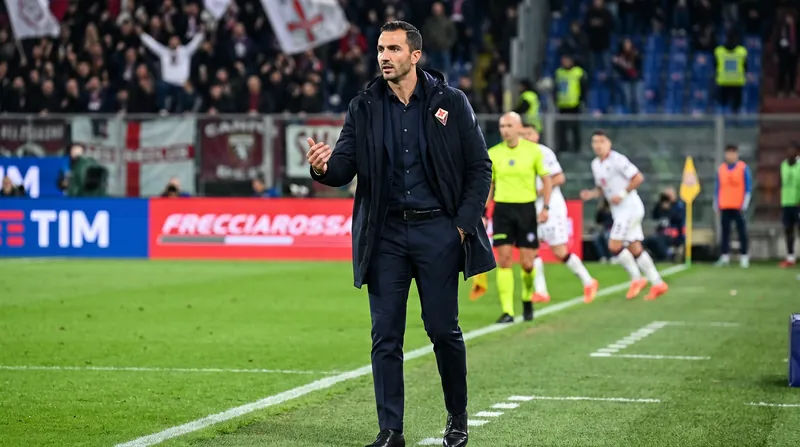
Bologna Appoints Raffaele Palladino as Manager Following Domenico Tedesco's Four-Match Tenure
7 sources
Serie A Title Race
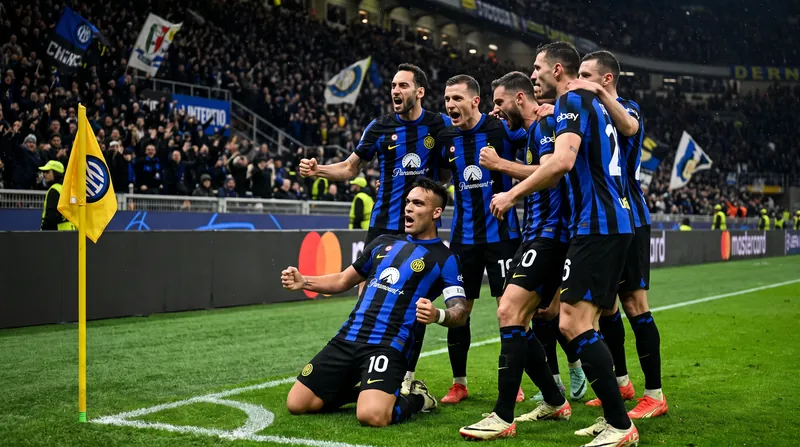
Inter Milan Win 8-Goal Thriller Against Udinese to Maintain Perfect Start
4 sources
Serie A Upset
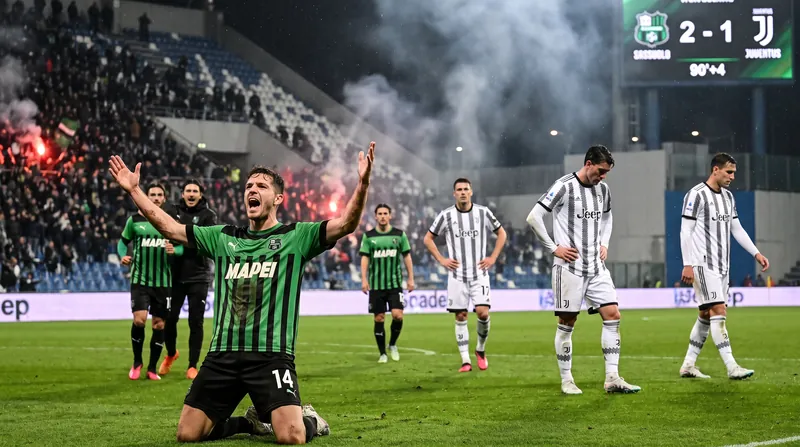
Sassuolo Stun Juventus 3-2 With Stoppage-Time Winner in Matchday 4 Upset
5 sources
Comments
Every angle. Every day.
Get Sports stories with full source coverage and perspective breakdowns, free every day.