full timeline
WHO pandemic agreement negotiations
World Health Organization chief Tedros Adhanom Ghebreyesus opened renewed negotiations in Geneva by calling on member states to finalize the stalled pathogen-sharing annex of the global pandemic…
Follow WHO pandemic agreement negotiations in the Factlen app and get an alert when there is news. Get the app
Share this story
Latest report
WHO Director-General Urges Immediate Conclusion of Global Pandemic Treaty Amid Resurgent Outbreaks
World Health Organization chief Tedros Adhanom Ghebreyesus opened renewed negotiations in Geneva by calling on member states to finalize the stalled pathogen-sharing annex of the global pandemic agreement. The push follows a severe Ebola outbreak in Central Africa and a recent incident where Russia withheld data on a suspected plague death.
- WHO Director-General Tedros Adhanom Ghebreyesus urged negotiators in Geneva to immediately finalize the stalled Pathogen Access and Benefit-Sharing (PABS) annex.
- The push comes as a severe Ebola outbreak in the Democratic Republic of Congo and a recent hantavirus cluster highlight the urgent need for coordinated global responses.
- Pharmaceutical groups warn that overly burdensome database requirements could discourage companies from participating in the pathogen-sharing system.
- A recent incident where Russia withheld data on a suspected plague death in Siberia has amplified calls for a legally binding transparency mechanism.
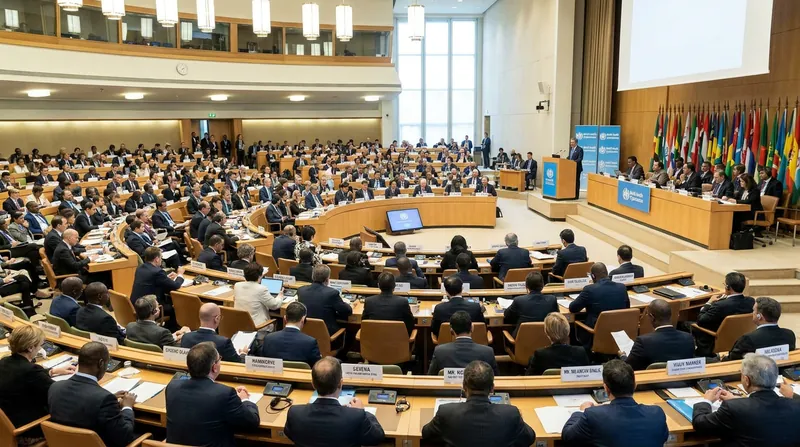
World Health Organization Director-General Tedros Adhanom Ghebreyesus opened the ninth meeting of the Intergovernmental Working Group in Geneva on Monday with a blunt directive to member states. He urged negotiators to immediately conclude the stalled Pathogen Access and Benefit-Sharing annex.[1][2]
"Let us finish the job," Tedros told the assembly. He pointed to a surging Ebola epidemic in the Democratic Republic of Congo and a recent fatal hantavirus outbreak as proof that no country can protect itself by acting alone.[1][3]
The negotiations, which resumed on November 2, 2026, represent a critical juncture. Negotiators originally missed a May 2026 deadline to complete the annex, pushing the timeline into 2027 and leaving the international community without a binding mechanism to share dangerous pathogens and medical countermeasures.[2][3]
The urgency of the Geneva talks is underscored by active outbreaks that threaten to cross borders and overwhelm regional health systems. The ongoing Ebola epidemic in the Democratic Republic of Congo, declared in May, has already claimed nearly 5,000 lives from more than 10,000 infections.[1][3][4]
Tedros cited this escalating crisis, alongside an April hantavirus outbreak that killed three people on a cruise ship, as immediate reminders of the stakes. A pathogen threat anywhere rapidly becomes a global vulnerability.[1][3]
"COVID-19 taught us what happens when pathogen sharing and access to lifesaving tools are not connected," Tedros warned delegates on Monday. He noted that vaccines were developed in record time during the coronavirus pandemic.[1]
The pathogen sharing deadlock
However, many developing nations were left waiting while wealthier countries secured early supplies. The current treaty aims to prevent a repeat of that inequity, but the mechanics of how to enforce sharing without stifling commercial innovation remain deeply contested.[1]
The central dispute in the Pathogen Access and Benefit-Sharing (PABS) annex revolves around reciprocal obligations. Poorer countries are asked to quickly share pathogen samples, while wealthy nations are expected to share the resulting vaccines and treatments.[3][6]
Developing nations want guaranteed, equitable access to medical countermeasures in exchange for providing the biological materials that make those breakthroughs possible. Wealthier countries and their pharmaceutical sectors prefer voluntary sharing arrangements over strict mandates.[3][6]
The pharmaceutical industry has voiced significant concerns about the direction of the current draft. In a statement delivered at the Geneva meeting, the International Federation of Pharmaceutical Manufacturers and Associations (IFPMA) warned that overly burdensome requirements could inadvertently discourage participation. The industry group argued that transforming scientific databases into compliance mechanisms might deter companies.[5]
Industry and advocate divides
"A PABS system cannot deliver rapid access and benefit sharing if key actors choose not to participate or face unnecessary barriers to doing so," the IFPMA stated on Monday.[5]
The organization emphasized that during previous crises, including COVID-19 and Mpox, companies contributed through voluntary collaboration and technology transfers. They urged negotiators to build on that willingness rather than imposing rigid conditions that could stifle research and development.[5]
Public health advocates, however, argue that voluntary systems have already proven insufficient during global emergencies. They point to the historical precedent of researchers being denied access to critical pathogen samples, noting that access has often been allocated by political favor.[6]
For these advocates, a binding annex is the only way to ensure fairness. They argue that countries providing the raw biological data must not be left defenseless when a commercial vaccine is eventually produced and priced for wealthy markets.[6]
The fragility of the current voluntary system was starkly illustrated in October 2026, following the death of a 28-year-old researcher at an anti-plague institute in Siberia. After the worker died of a mysterious respiratory illness, Russian officials quarantined the hospital.[6]
The Siberian plague warning
Authorities also traced approximately 200 contacts, suggesting a highly infectious agent. However, Moscow did not report the incident to the WHO, later claiming the death was caused by pneumonia of an undetermined origin.[6]
Despite repeated requests from the WHO on October 3, 5, 6, and 7, Russian health authorities stonewalled the international body. They refused to share lab results or genetic sequences, highlighting the limitations of existing International Health Regulations that offer no verification mechanisms or sanctions for non-compliance.[6]
Global health experts view the Russian silence as a dangerous precedent and a direct product of rules built without enforcement teeth. If a recalcitrant nation can withhold critical pathogen data during a potential plague outbreak, the global early warning system is broken.[6]
This breakdown has amplified calls in Geneva to finalize a pandemic agreement. Advocates argue the treaty must establish clear, binding obligations for transparency and rapid notification to prevent neighboring countries from being left blind to emerging threats.[6]
"The next pandemic is likely to be something we have never seen before, and whoever first holds the samples will not be us," one commentary noted following the Siberian incident.[6]
If the international community cannot agree on what countries receive in return for sharing those samples, officials should not be surprised when nations are slow to hand them over. The standoff demonstrates that the PABS annex is the linchpin of global biosecurity.[6]
Navigating the diplomatic endgame
Despite entrenched positions, there is political momentum to conclude the agreement. In late September 2026, the United Nations General Assembly adopted a Political Declaration on pandemic prevention. Heads of state explicitly welcomed the broader Pandemic Agreement and called for the rapid conclusion of the PABS negotiations.[1]
Tedros urged delegates to translate that political will into technical compromise, asking them to negotiate with the expectation of concluding and to keep public health as the guiding priority. He acknowledged that while a perfect system may be unattainable, the world urgently needs a functional framework that delivers equity.[1]
The leadership structure guiding the negotiations is now nearly complete, with Ambassador Tovar of Brazil leading the efforts alongside vice-chairs from Eswatini, Oman, Thailand, and France. Tedros called on the Western Pacific Region to nominate a final representative, emphasizing that multilateralism remains the only viable path.[1][7]
The stakes extend beyond the immediate diplomatic text. The selection process for the next WHO Director-General is looming in the background, adding political complexity to the organization's mandate. The current leadership's ability to broker a consensus will likely shape the institution's credibility.[7]
The outcome of the Geneva meetings will determine whether the world faces the next novel pathogen with a coordinated strategy or a voluntary patchwork. With Ebola spreading in Central Africa and the Siberian stonewalling still fresh, negotiators have a narrow window to bridge the gap before the May 2027 deadline.[2][3][6]
Sources
- [1]World Health Organization — WHO Director-General's opening remarks at the Ninth meeting of the Intergovernmental Working Group (IGWG) on the WHO Pandemic Agreement – 2 November 2026 Read on World Health Organization →
- [2]World Health Organization — Ninth meeting of the Intergovernmental Working Group (IGWG) on the WHO Pandemic Agreement Read on World Health Organization →
- [3]The Hindu — Ebola reminder of urgent need to finish pandemic treaty: WHO chief Read on The Hindu →
- [4]The Science Diplomat — Pandemic preparedness — WHO negotiations resume amid major Ebola outbreak Read on The Science Diplomat →
- [5]IFPMA — Statement on PABS Instrument at the ninth meeting of the Intergovernmental Working Group (IGWG 9) on the WHO Pandemic Agreement Read on IFPMA →
- [6]The Guardian — Plague risks in Russia and a dangerous delay on WHO pandemic agreement Read on The Guardian →
- [7]Health Policy Watch — Selecting the Next WHO Director-General: A Job Nobody Has Described (Part II) Read on Health Policy Watch →
Charts, maps and images
Timeline
November 2026
WHO Director-General Urges Immediate Conclusion of Global Pandemic Treaty Amid Resurgent Outbreaks
AI
August 2026
Has the WHO Pandemic Agreement Just Codified a Two-Tiered Global Health Security System?
AI