full timeline
Union Pacific–Norfolk Southern merger review
The Surface Transportation Board has unanimously rejected requests to summarily dismiss the proposed $85 billion merger between Union Pacific and Norfolk Southern.
Follow Union Pacific–Norfolk Southern merger review in the Factlen app and get an alert when there is news. Get the app
Share this story
Latest report
STB Denies Motions to Dismiss Union Pacific-Norfolk Southern Merger, Allowing Review to Proceed
The Surface Transportation Board has unanimously rejected requests to summarily dismiss the proposed $85 billion merger between Union Pacific and Norfolk Southern. The decision allows the regulatory review of America's potential first transcontinental railroad to move forward.
- The STB unanimously denied three motions seeking to summarily dismiss the Union Pacific-Norfolk Southern merger application.
- The decision allows the regulatory review of the $85 billion transaction to proceed to the evidentiary phase.
- Opponents, including competing railroads and agricultural shippers, argue the merger will reduce competition and raise freight rates.
- The applicants project the combined network will remove two million truckloads from highways and create seamless coast-to-coast service.
- Opening comments on the transaction's merits are due by November 18, 2026, with a final decision expected in mid-2027.
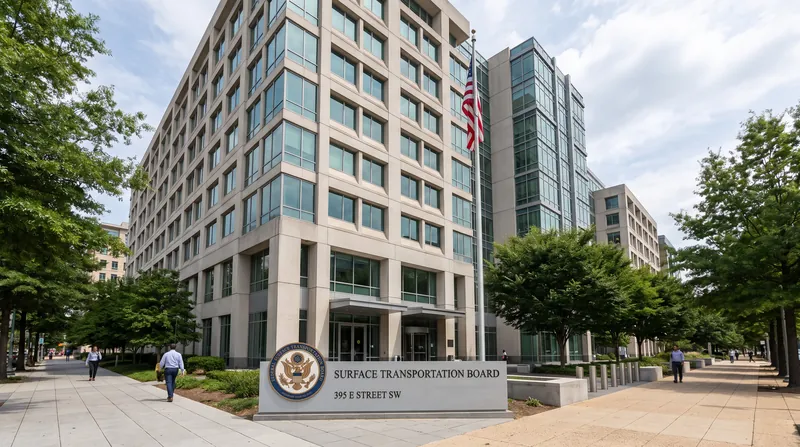
The Surface Transportation Board (STB) controls the fate of the $85 billion merger between Union Pacific and Norfolk Southern, possessing the sole federal authority to approve or block the creation of the first transcontinental U.S. railroad. On September 18, 2026, the regulatory body exercised its discretion to keep the review process alive, unanimously denying three motions that sought to summarily dismiss the revised merger application. The board will now accept opening comments on the transaction's merits until November 18, 2026, with a final decision expected by mid-2027.[1][3][6]
The motions for summary denial were filed on August 6 by a coalition of competitors and shippers, including BNSF Railway, CSX Transportation, and The Fertilizer Institute. They argued that Union Pacific and Norfolk Southern had failed to present a prima facie case that their combination would serve the public interest. By rejecting the dismissal requests, the STB emphasized that its ruling does not constitute an endorsement of the merger's merits, but rather a determination that additional evidence and argument will aid its decision-making in this consequential transaction of first impression.[1][2][3]
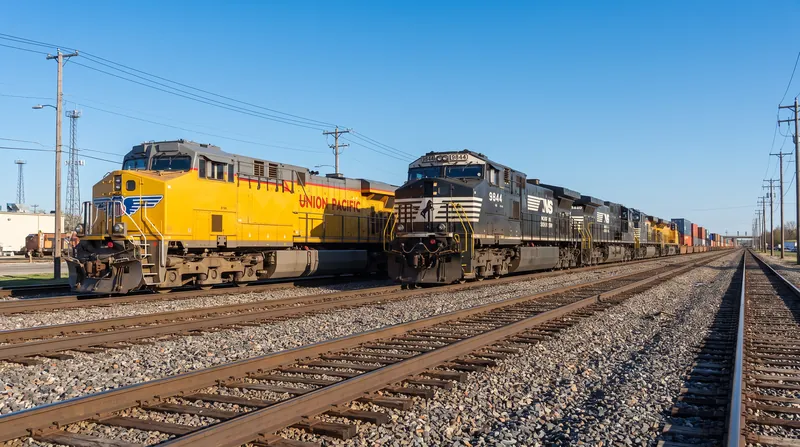
The proposed combination would unite Union Pacific's 23-state western network with Norfolk Southern's 22-state eastern footprint, creating a single entity controlling 50,000 route miles across 43 states. Valued at approximately $85 billion when announced in July 2025, the merged company would handle nearly half of all U.S. rail freight. The sheer scale of the transaction has triggered the most comprehensive merger analysis ever submitted to the federal regulator.[2][4][5][6]
The applicants argue that the end-to-end combination will eliminate time-consuming interchanges at mid-continent gateways, fundamentally restructuring how freight moves across North America. According to their filings, the merger will create seven new premium intermodal lanes and convert 10,000 existing interline routes to single-line service. The railroads project that the seamless coast-to-coast network will remove more than two million truckloads from U.S. highways annually by competing more effectively with long-haul trucking.[4][6]
Union Pacific Chief Executive Officer Jim Vena characterized the STB's procedural ruling as a significant milestone, stating that momentum behind the transaction continues to build. To bolster their case and preempt labor opposition, the companies announced a jobs-for-life agreement with the International Association of Sheet Metal, Air, Rail and Transportation's Railroad Mechanical Department (SMART-MD). Under the terms of the agreement, every union employee working at the time of approval will retain their position indefinitely.[4][6]
Despite the labor agreements and promised efficiencies, agricultural producers and competing freight operators warn that the consolidation will severely restrict market options. The National Farmers Union (NFU) formally announced its opposition on September 24, arguing that the merger would exacerbate the financial pressures already facing family farmers. NFU President Rob Larew stated that decades of mergers have left farmers with fewer options, higher rates, and less reliable service.[5]
The agricultural coalition contends that the proposed Committed Gateway Pricing program—designed by the applicants to preserve competitive rates at interchange points—will affect less than one percent of total traffic. Shippers are urging the STB to enforce stricter antitrust measures, establish reciprocal switching within terminal areas, and authorize maximum rates for captive shippers who have no alternative rail options. The STB's review will heavily weigh these competitive concerns against the projected supply chain efficiencies.[1][2][5]
The regulatory timeline now shifts entirely to the evidentiary phase. Following the November 18 deadline for opening comments, responses will be due by February 16, 2027. The STB will subsequently hold public hearings before final briefs are submitted in May 2027. The board is statutorily required to issue its final decision within 90 days of the record closing, setting up a definitive ruling on the transcontinental network by late summer 2027.[1][2][6]
Until that decision is rendered, the North American freight sector remains in a holding pattern. The STB's refusal to dismiss the application ensures that the debate over market concentration, supply chain velocity, and captive shipping rates will be fully litigated on the public record over the next ten months.[1][3]
Sources
- [1]Surface Transportation Board — STB Denies Motions Seeking Summary Denial of UP-NS Merger Application Read on Surface Transportation Board →
- [2]Feedstuffs — STB rejects requests to dismiss UP-NS merger application Read on Feedstuffs →
- [3]Progressive Railroading — STB denies motions seeking summary denial of UP-NS merger Read on Progressive Railroading →
- [4]Supply Chain Digital — Momentum is increasing for the Norfolk Southern - Union Pacific merger
- [5]National Farmers Union — National Farmers Union Opposes Union Pacific–Norfolk Southern Rail Merger
- [6]Union Pacific — Union Pacific Railroad and Norfolk Southern Combination Gains Additional Momentum
Charts, maps and images
Timeline
September 2026
STB Denies Motions to Dismiss Union Pacific-Norfolk Southern Merger, Allowing Review to Proceed
August 2026
Surface Transportation Board Halts $85 Billion Union Pacific-Norfolk Southern Merger, Citing Market Concentration Risk
AI