
full timeline
Trump hush money case
The Second Circuit Court of Appeals has reinstated Donald Trump’s effort to transfer his New York criminal conviction to federal court.
Follow Trump hush money case in the Factlen app and get an alert when there is news. Get the app
Share this story
Latest report
Federal Appeals Court Revives Trump Bid to Move Hush-Money Case to Federal Jurisdiction
The Second Circuit Court of Appeals has reinstated Donald Trump’s effort to transfer his New York criminal conviction to federal court. The ruling requires a lower judge to reconsider the jurisdictional challenge under recent presidential immunity standards.
- The 2nd Circuit Court of Appeals ordered a lower federal court to reconsider Donald Trump's bid to move his New York hush-money case to federal jurisdiction.
- The appellate panel ruled that the late Judge Alvin Hellerstein erred in dismissing the removal request following Trump's May 2024 conviction.
- Trump's defense argues the state trial violated the Supreme Court's presidential immunity standards by introducing evidence of official White House acts.
- The federal ruling immediately halts Trump's ongoing appeal in the New York state court system while the jurisdictional dispute is resolved.
A federal appeals court has revived President Donald Trump’s effort to transfer his New York state hush-money criminal conviction into the federal judicial system. The decision opens a procedural pathway that could ultimately erase the 34 felony convictions reached against him before his return to the White House.[1][5]
A three-judge panel of the 2nd US Circuit Court of Appeals ruled on Monday that a lower federal court must reconsider Trump’s jurisdictional challenge. The appellate order vacates a previous dismissal and requires a new evidentiary review of the Manhattan trial.[3]
The legal dispute centers on whether the state prosecution violated the Supreme Court’s July 2024 standards for presidential immunity. Trump’s defense team argues that the Manhattan District Attorney’s office improperly introduced protected White House communications as evidence during the trial.[5]
If the case is successfully removed to federal jurisdiction, Trump intends to argue that the entire verdict should be discarded. The former and current president has maintained that the prosecution relied on official acts that are shielded from state-level criminal scrutiny.[1][2]
The appellate panel’s two-page order specifically faulted the late US District Judge Alvin Hellerstein, who had previously rejected the removal request for a third time in August 2026. Hellerstein passed away in October at the age of 92.[4][5]
The Procedural Reversal
The 2nd Circuit judges determined that the lower court had dismissed Trump’s petition prematurely. The panel wrote that Hellerstein “erred in holding that removal is categorically unavailable in a state criminal case” following a jury conviction.[2][5]
The appellate court also found that the district judge was wrong to deny that Trump had good cause to make multiple attempts at moving the case. Trump first sought federal removal in March 2023 shortly after his indictment, and again following his May 2024 conviction.[1][5]
Judges Raymond J. Lohier Jr., John M. Walker Jr., and José A. Cabranes issued the ruling after spending more than an hour questioning attorneys last week. The panel instructed the federal district court in Manhattan to promptly issue a new decision on the jurisdictional question.[3][5]
The appellate order does not guarantee that the case will remain in federal court, nor does it immediately invalidate the jury’s verdict. Instead, it forces a new federal judge to evaluate the specific evidence introduced by state prosecutors under the updated immunity framework.
Immunity and Official Acts
During oral arguments, Trump’s defense attorney Robert Giuffra Jr. contended that the state trial was fundamentally compromised. He argued that prosecutors relied heavily on testimony regarding Trump’s Oval Office conversations, workflow, and social media posts from his first term.[4][5]
Under the Supreme Court’s landmark 2024 ruling, presidents cannot be prosecuted for official acts, and prosecutors are barred from using official acts as evidence to prove that unofficial actions were illegal. The defense claims the Manhattan trial violated this exact evidentiary prohibition.[1][5]
Manhattan prosecutors have consistently countered that Trump’s actions were entirely private and unofficial. They maintain that the conduct in question—reimbursing a personal lawyer for a hush-money payment—had no connection to his presidential duties or the executive branch.
Hellerstein had previously agreed with the state’s assessment. In his August 2026 dismissal, the late judge wrote that paying hush money to an adult film star and engaging in a cover-up of a personal embarrassment are not subsumed in presidential immunity.[4][5]
The 2nd Circuit panel explicitly stated it was expressing no view on how the new district judge should ultimately rule. However, the appellate judges instructed the lower court to closely review the specific evidence that Trump claims was related to his official White House duties.[3][5]
The State Court Freeze
Monday’s federal ruling has immediate consequences for Trump’s parallel efforts in the New York state court system. The 2nd Circuit decision effectively halts the ongoing state-level appeal proceedings while the federal jurisdictional question is resolved.[1][2]
Trump’s legal team had been waging a traditional appeal through the state’s mid-level Appellate Division, which heard oral arguments on November 5, 2026. That state court is now prevented from issuing a ruling indefinitely to preserve the status quo.[4]
Following the federal appellate order, Giuffra sent a formal letter to the state Appellate Division notifying them of the development. The defense requested that no further proceedings occur in the state courts until the federal removal dispute is entirely settled.[3][5]
A spokesperson for Trump’s legal team released a statement celebrating the procedural victory. The campaign representative said the president “appreciates the 2nd Circuit’s prompt and correct ruling” as he continues to fight the New York conviction.[4][5]
The Original Conviction
The underlying criminal case made Trump the first former US president in history to be convicted of felony charges. A Manhattan jury found him guilty in May 2024 on 34 counts of falsifying business records in the first degree.[1][4]
Prosecutors successfully argued that Trump illegally disguised reimbursements to his former personal lawyer, Michael Cohen, as routine legal expenses. The payments were designed to conceal a $130,000 transaction made to adult film performer Stormy Daniels shortly before the 2016 election.[1][5]
The state alleged that the falsified records were part of a broader scheme to covertly influence the 2016 presidential race by suppressing damaging allegations. Trump has consistently denied the affair and maintained that the payments to Cohen were standard legal retainers.
Despite the 34 felony convictions, Trump has not faced any criminal penalties. He received a sentence of unconditional discharge following his victory in the 2024 presidential election, but he has remained steadfast in his efforts to have the criminal record expunged.[4][5]
The Path to Dismissal
If the newly assigned federal district judge determines that the state trial improperly relied on official-act evidence, the consequences for the conviction could be severe. The defense will argue that the evidentiary errors were fatal and require the verdict to be thrown out.[4]
Legal experts note that removing a state criminal conviction to federal court post-verdict is highly unusual. The process relies on a specific federal statute designed to protect federal officers from state-level harassment for actions taken under the color of their office.[3]
The defense contends that the Manhattan District Attorney’s office crossed a constitutional line by prosecuting a former president using materials generated inside the Oval Office. They argue that the Federal Election Campaign Act allegations embedded in the state charges also belong in federal court.[3][5]
The Manhattan District Attorney’s office, led by Alvin Bragg, declined to comment publicly on Monday’s appellate ruling. State prosecutors will now have to defend their trial evidence before a federal judge rather than a state appellate panel.[2][4]
What Happens Next
The case will now be randomly reassigned to a new judge in the US District Court for the Southern District of New York. That judge will be tasked with conducting the detailed evidentiary review mandated by the 2nd Circuit.[3][5]
There is no strict deadline for the district court to issue its ruling, though the appellate panel requested a prompt decision. The timeline will likely depend on whether the new judge requests additional briefing or oral arguments from the parties.
Whatever the district court decides, the losing side is almost certain to appeal the ruling back to the 2nd Circuit. This legal maneuvering ensures that the fight over Trump’s New York conviction will stretch well into his second presidential term.[1][5]
The outcome will test the practical boundaries of the Supreme Court’s presidential immunity doctrine. It remains to be seen exactly how much official-act evidence is required to invalidate a state-level prosecution that primarily targeted private conduct.[2]
Sources
- [1]The Guardian — Federal appeals court hands Trump way out of conviction in hush-money case Read on The Guardian →
- [2]Al Jazeera — Appeals court renews Trump bid for federal jurisdiction in hush-money case Read on Al Jazeera →
- [3]The Washington Post — Federal appeals court gives President Donald Trump a path to erasing hush money conviction Read on The Washington Post →
- [4]Courthouse News Service — Trump effort to toss hush-money conviction gets new life Read on Courthouse News Service →
- [5]PBS News — Federal appeals court gives President Donald Trump a path to erasing hush money conviction Read on PBS News →
What to watch
- A lower federal court is required to reconsider the jurisdictional challenge under recent presidential immunity standards.
- The jurisdictional dispute must be resolved while Trump's ongoing appeal in the New York state court system remains halted.
Timeline
November 2026
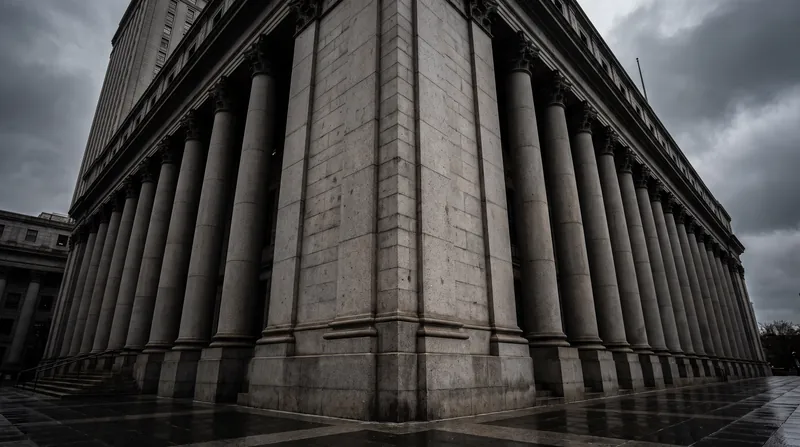
Federal Appeals Court Revives Trump Bid to Move Hush-Money Case to Federal Jurisdiction
August 2026
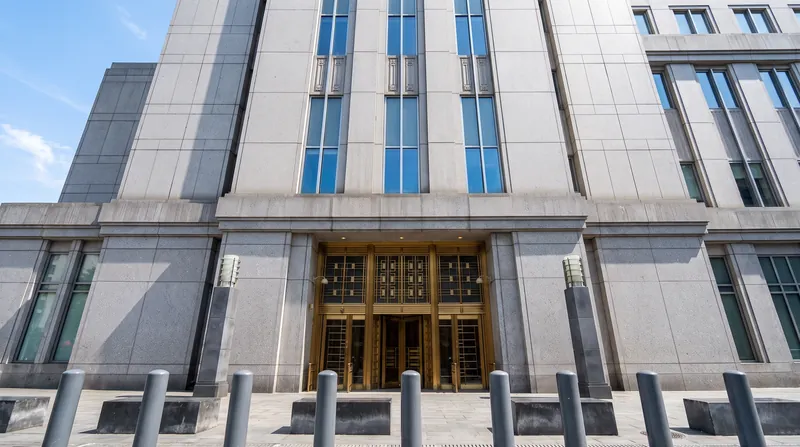
Federal Judge Again Rejects Trump's Bid to Dismiss Hush Money Conviction on Immunity Grounds
How the story developed
In May 2024, Donald Trump was convicted on 34 felony counts in a New York state court. Following the verdict, Trump's legal team waited nearly two months before petitioning to move the state hush money conviction to federal court.
On August 29, U.S. District Judge Alvin K. Hellerstein denied Trump's third attempt to move the conviction to federal court. Hellerstein ruled that covering up an affair is a personal matter and does not qualify as an official presidential act under the Supreme Court's immunity ruling.
In his August 29 decision, Hellerstein also criticized the defense for procedural delays regarding their petition timeline. Trump's legal team immediately filed a notice of appeal in response, describing the judge's decision as "baseless and lawless."
The August ruling initially left Trump's conviction intact as he continued to appeal through the New York state court system. However, the Second Circuit Court of Appeals subsequently intervened on November 24, ruling that Hellerstein had erred in his dismissal of the removal request and ordering a lower judge to reconsider the jurisdictional challenge.