
full timeline
OPEC+ oil production quota negotiations
Baghdad has formally disputed an independent audit capping its oil production capacity at 4.9 million barrels per day.
Follow OPEC+ oil production quota negotiations in the Factlen app and get an alert when there is news. Get the app
Share this story
Latest report
Iraq Rejects OPEC+ Capacity Assessment Ahead of 2027 Quota Negotiations
Baghdad has formally disputed an independent audit capping its oil production capacity at 4.9 million barrels per day. The disagreement threatens cartel cohesion just days before ministers meet to determine 2027 output targets.
- Iraq has formally rejected an independent OPEC+ assessment that capped its sustainable oil production capacity at 4.9 million barrels per day.
- Oil Minister Basim Mohammed Khudair claims the country can reach 5.2 million barrels per day, demanding a higher baseline for 2027 quotas.
- The dispute threatens alliance cohesion ahead of a critical November 29 meeting, following the UAE's departure from the cartel in May 2026.
- A higher quota for Iraq could introduce additional crude into a market that the IEA says is already showing signs of oversupply.
Iraq has formally rejected an independent assessment commissioned by OPEC+ that places its maximum sustainable crude oil production capacity below five million barrels per day. The dispute sets up a high-stakes confrontation ahead of the cartel's November 29 meeting. Ministers are scheduled to use these figures to determine 2027 output quotas.[1][2]
The confidential review, conducted by external consultants including United States-based DeGolyer and MacNaughton, reportedly pegged Iraq's capacity at 4.9 million barrels per day. Baghdad immediately contested the finding. Oil Minister Basim Mohammed Khudair has written to OPEC leadership insisting the country can reach 5.2 million barrels a day.[1][2]
A higher recognized capacity provides a stronger baseline for negotiating a larger production allowance. Iraq currently operates under a quota of 4.431 million barrels per day. Baghdad has long sought to increase its output to fund post-conflict reconstruction, arguing that recent investments in oil infrastructure justify a higher ceiling.[2][3]
The concept of maximum sustainable capacity refers to the daily crude output a country can maintain over the long term under normal conditions. It is distinct from current actual output or the assigned quota. Because OPEC+ plans to use this metric as the foundation for 2027 targets, the assessment has triggered a fierce tug-of-war.[2][3]
The alliance hired outside consulting firms to assess each country's maximum sustainable production capacity. The goal was to provide a uniform technical standard for quota distribution, moving away from self-reported government data. DeGolyer and MacNaughton is conducting the assessment for most participating countries, excluding Russia, Iran, and Venezuela.[2]
Members must formally accept their own figures before the assessments can become binding quota baselines. Because the consultants' findings dictate future revenue potential, the technical review has inevitably become a political flashpoint. Iraq argues that the 4.9 million barrel figure fundamentally understates the results of its recent capacity expansion projects.[2][4]
Iraq is not the only member pushing back against the independent auditors. Kazakhstan has also requested a higher capacity estimate ahead of the Sunday meeting, and Russia may challenge its own figure. The widespread resistance highlights the difficulty of imposing external technical standards on sovereign producers accustomed to self-reporting their capabilities.[2]
Discrepancies in production data
The capacity debate mirrors an ongoing disagreement over how much oil Iraq is currently pumping. Iraq self-reported to OPEC that its October crude production reached a wartime high of 4.888 million barrels per day. That figure sits more than 450,000 barrels above its current agreed limit.[3][4]
However, the secondary sources that OPEC uses to monitor compliance estimated Iraq's October output at a considerably lower 4.491 million barrels per day. The International Energy Agency placed the country's sustainable capacity at 4.87 million barrels per day. Both external estimates fall short of the five million threshold Baghdad wants recognized.[2][5]
The gap of nearly 400,000 barrels per day between Iraq's self-reported figures and independent monitors weakens Baghdad's negotiating position. OPEC+ checks compliance against the average of seven approved secondary sources. If Iraq wins a higher baseline, the extra room will be measured against the barrels those external monitors can verify.[2][3]
Iraqi officials maintain that the country is complying with OPEC+ requirements because its crude exports remain within acceptable limits. However, production quotas cover total crude output, including oil produced for domestic consumption. The ministry has pledged to maintain production despite regional tensions, citing the need to meet government financial obligations.[3][4]
Iraq has resisted production restrictions for ten years as it seeks to maximize revenues. The national economy remains heavily dependent on hydrocarbon exports to fund public sector salaries and essential services. Officials view an expanded quota as a sovereign necessity rather than a mere market adjustment.[2][4]
Looking further ahead, Iraq has set a long-term goal of lifting its output capacity to 10 million barrels per day by 2030. The oil ministry plans to announce a seventh licensing round for undeveloped fields next year. Achieving these targets will require significant foreign investment and major upgrades to export infrastructure.[3][4]
A history of cartel exits
The current dispute carries particular weight following a series of high-profile departures from the oil cartel. The United Arab Emirates withdrew from OPEC and OPEC+ in May 2026 to increase its oil production. Abu Dhabi had argued for years that its quota did not reflect its massive investments in capacity expansion.[2][4]
The United Arab Emirates' departure allowed Abu Dhabi to push its production to record levels, free from cartel restrictions. Angola's earlier exit in January 2024 was similarly driven by a refusal to accept a downgraded capacity assessment. These precedents give Baghdad significant leverage, as OPEC+ cannot afford to lose another major Gulf producer.[2][4]
Earlier this year, Iraq threatened to leave the organization unless the capacity review assigned it a sufficiently high figure. While Baghdad subsequently withdrew the warning, the ultimatum underscored the stakes of the current negotiations. A prolonged confrontation on Sunday could severely undermine market confidence in the alliance's ability to coordinate output.[2]
The capacity dispute coincides with internal efforts to tighten control over Iraq's oil sector. Prime Minister Ali Al-Zaidi recently ordered the temporary suspension of the North Oil Company's director general pending an inquiry into suspected oil smuggling. The federal oil ministry has also been instructed to manage fields in areas under Kurdish security control.[2]
A bigger quota only matters if Iraq can physically export the additional oil. The country exported about 3.5 million barrels a day in October, primarily through its southern terminals. Alternatives to the Strait of Hormuz remain limited, though pumping has reportedly resumed through the federal pipeline from Kirkuk to Ceyhan in Turkey.[2][5]
Global supply and market balance
The quota negotiations arrive at a delicate moment for global energy markets. Global supply rose by 2.3 million barrels a day to 105.4 million in October, easing some immediate pressure on crude prices. The International Energy Agency outlined this shift in its November assessment.[5]
"The oil market is showing tentative signs of rebalancing, with global oil supplies surpassing demand," the International Energy Agency noted in its monthly report. The agency observed that Gulf exports recovered much faster than global consumption despite ongoing maritime security threats.[5]
The agency forecasts that world oil demand will fall by 2.7 million barrels per day in 2026. A higher allocation for Iraq could introduce additional crude into an already well-supplied market. This dynamic makes the cartel's baseline decisions even more critical for price stability.[5]
The IEA report highlighted a striking difference between oil moving at sea and inventories available on land. While observed oil inventories increased by 52 million barrels in October, oil on water surged by 86 million barrels. Meanwhile, onshore stocks in developed economies actually declined during the same period.[5]
This dynamic means that an aggregate stock build does not guarantee immediate relief for consuming regions. Oil in transit must still arrive, unload, and be refined into the specific products that buyers need. These logistical hurdles complicate OPEC's task of matching crude production targets to actual global fuel demand.[5]
OPEC+ commissioned the independent capacity review precisely to manage this balance. By establishing a uniform technical standard for quota distribution, the alliance hoped to move beyond relying on figures provided by governments. The consultants' findings are meant to prevent members from claiming inflated baselines that distort the group's supply management efforts.[2][3]
If the alliance grants Iraq a higher capacity figure, it faces a difficult equation. The group would either have to accept increased oil supply on world markets or reduce the quotas allocated to other member countries to make room. Neither option is politically easy for the coalition's leadership.[2][4]
For now, the severe tightness in product supply, especially for diesel, remains the overriding concern for consumers. While crude availability has improved, refining constraints and route disruptions continue to separate the price of unrefined oil from finished transport fuels. The outcome of Sunday's meeting will dictate the crude baseline for the next phase of market management.[5]
Sources
- [1]Hindustan Times — Iraq rejects OPEC review that puts oil production capacity below 5 million barrels a day Read on Hindustan Times →
- [2]Quartz — Iraq is challenging OPEC+'s assessment of its oil production capacity Read on Quartz →
- [3]Oil & Gas Middle East — Iraq oil capacity: OPEC+ assessment rejected Read on Oil & Gas Middle East →
- [4]Egypt Oil & Gas — Iraq Pushes for Higher Oil Production Capacity Ahead of 2027 OPEC+ Quotas Read on Egypt Oil & Gas →
- [5]International Energy Agency — Oil Market Report - November 2026 Read on International Energy Agency →
What to watch
- OPEC+ ministers are scheduled to meet on November 29 to determine 2027 output targets.
Charts, maps and images
Timeline
November 2026
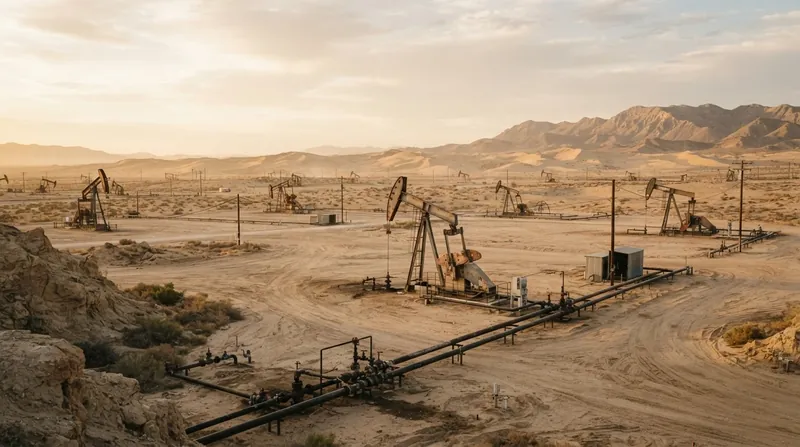
Iraq Rejects OPEC+ Capacity Assessment Ahead of 2027 Quota Negotiations
September 2026
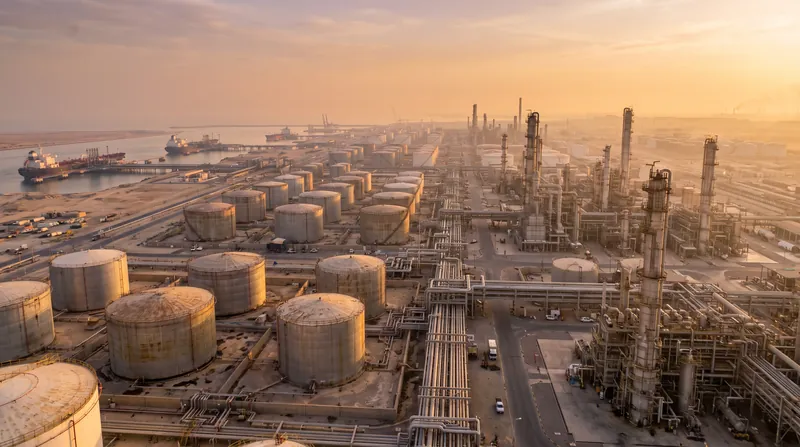
The 40-Point Baseline: How OPEC+ Calculates and Allocates Crude Oil Production Quotas
How the story developed
In May, the United Arab Emirates departed from the OPEC+ cartel. The alliance of 22 member states subsequently began transitioning its production quota system from historical baselines to independently assessed capacity metrics.
The new framework relies on three external consultancies to evaluate the maximum sustainable capacity of all member states. Final capacity assessments were scheduled for mid-2026 to inform the 2027 production allocations.
By 05:20 UTC on September 14, the shift was fundamentally restructuring how market share is distributed among the members. The transition transfers structural market share and quota weight to Gulf producers with active upstream investments.
Conversely, the new capacity metrics penalize states with declining infrastructure and members in structural decline. This restructuring of market share distribution preceded the current disagreements over capacity audits and baseline allocations.