
full timeline
IPCC climate report negotiations
A coalition of fossil fuel-reliant nations is actively lobbying to postpone the next major UN climate science report until 2029.
Follow IPCC climate report negotiations in the Factlen app and get an alert when there is news. Get the app
Share this story
Latest report
Fossil Fuel Exporters Push to Delay IPCC Scientific Assessment Timetable at COP31
A coalition of fossil fuel-reliant nations is actively lobbying to postpone the next major UN climate science report until 2029. The delay would prevent the updated findings from informing the crucial 2028 global stocktake on emissions reductions.
- Fossil fuel-reliant nations, including Saudi Arabia and Russia, are pushing to delay the IPCC's Seventh Assessment Report until 2029.
- The delay would prevent updated climate science from informing the critical 2028 Global Stocktake on emissions reductions.
- IPCC Chair Jim Skea warned at COP31 that the impasse is paralyzing the work of volunteer scientists and threatening the panel's credibility.
- The dispute is exacerbated by a severe funding crunch and growing geopolitical mistrust over unfulfilled climate finance pledges.
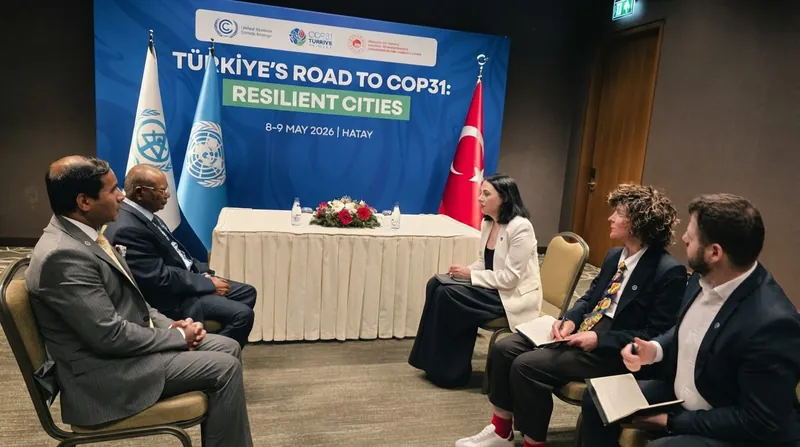
A coalition of major fossil fuel exporters and developing nations is actively maneuvering at the COP31 climate summit in Antalya, Turkey, to delay the publication of the United Nations’ next definitive climate science assessment. The push seeks to postpone the Intergovernmental Panel on Climate Change (IPCC) Seventh Assessment Report (AR7) until 2029.[1][5]
If successful, the delay would prevent the updated scientific findings from informing the critical 2028 Global Stocktake, a mandated review of international progress toward the Paris Agreement targets. European delegates and vulnerable island nations argue the postponement is a deliberate tactic to obscure the widening gap between current emissions and the reductions required to limit global warming to 1.5 degrees Celsius.[2][5]
The standoff has paralyzed the IPCC's administrative functions, forcing the panel to suspend its October plenary session without approving a 2027 budget or a publication schedule. IPCC Chair Jim Skea warned delegates at the COP31 opening ceremony that the impasse is already disrupting the work of volunteer researchers and threatening the organization's credibility.[4]
The 2028 Stocktake Deadline
The core of the dispute centers on the timing of the AR7 synthesis report relative to the United Nations Framework Convention on Climate Change (UNFCCC) schedule. The 2028 Global Stocktake at COP33 is designed to force governments to ratchet up their emissions cuts based on the latest available science.[3][5]
"Climate action without climate science is like a ship without a rudder," Skea told the Antalya plenary on Monday. He emphasized that robust, comprehensive evidence is essential to steer effective climate policies and international negotiations, urging countries to resolve the deadlock when the IPCC resumes its session on December 1.[4]
Without the AR7 report, negotiators in 2028 would be forced to rely on the Sixth Assessment Report, which was finalized between 2021 and 2023. Climate scientists argue that relying on data that will be up to seven years old during a period of rapidly accelerating climate impacts is fundamentally inadequate for setting global policy.[5]
Pierre Friedlingstein, a climate scientist at the University of Exeter and a previous IPCC author, noted that updated figures are crucial for driving political decisions forward. "Presenting new evidence can help drive political decisions forward," he said, adding that the prospect of fresh data clearly "does not suit certain countries" who would prefer to maintain the status quo.[5]
The European Union has drawn a hard line on the issue, demanding that the scientific timeline align with the diplomatic one. "We will fight for this outcome to be there," senior EU climate official Diana Acconcia told reporters, explicitly accusing some parties of trying to undermine the science to avoid taking necessary climate action.[5]
The Push for a 2029 Delay
The campaign to push the publication to 2029 is being led by Saudi Arabia and Russia, with strong backing from India and China under the umbrella of the Like-Minded Developing Countries bloc. These nations argue that the accelerated timeline places an undue burden on researchers and policymakers in the Global South.[2][5]
Proponents of the delay contend that developing countries need more time to properly digest the thousands of pages of technical findings. They also argue that a rushed process inevitably favors well-funded research institutions in the United States and Europe, marginalizing scientists from emerging economies who lack similar resources.[2][5]
Davide Faranda, a climate scientist at the French National Center for Scientific Research, acknowledged the need for broader representation. "We cannot have the deliberations driven only again by European and British and American scientists," Faranda said, noting that the process must respect the rapidly shifting geopolitical equilibria and give developing nations a stronger voice.[2]
However, critics view the equity argument as a convenient shield for fossil fuel interests seeking to delay the transition away from coal, oil, and gas. The previous Global Stocktake at COP28 included a landmark commitment to transition away from fossil fuels, a mandate that oil-producing nations fiercely resisted and are now attempting to slow-walk.[5]
"It's extremely concerning the way the structural issue of equity is being weaponised by some big developing countries," one European negotiator noted during the October IPCC meetings. The negotiator argued that while integrated assessment models carry inherent biases, granting the panel an extra year will not fundamentally resolve the structural disparities in global climate research.[5]
Disruptions to Scientific Work
The political gridlock is already having tangible impacts on the scientific community tasked with drafting the reports. The IPCC relies on hundreds of volunteer scientists who dedicate significant portions of their careers to reviewing and synthesizing thousands of peer-reviewed studies, often without direct compensation.[2][4]
Because governments have yet to agree on a schedule for the three working group reports that comprise AR7, these researchers are currently operating in a vacuum. Skea noted that volunteer authors still do not know what specific work will be expected of them in early 2027, making it nearly impossible to plan around their primary academic and personal commitments.[4]
Carl Schleussner, a climate scientist with Climate Analytics, emphasized that the lack of a timeline directly hinders the panel's ability to track whether countries are meeting their Paris Agreement pledges. Without a clear schedule, the intricate machinery of global climate assessment simply grinds to a halt.[2]
The administrative crisis is compounded by a severe funding crunch. The IPCC operates on an annual budget of approximately $9.7 million, funded by voluntary contributions from member states. The suspension of the October plenary meant that the panel failed to approve its budget for the upcoming year, leaving its near-term operations in financial limbo.[2][3]
The United States historically provided up to one-third of the IPCC's funding, but recent political shifts and the looming withdrawal of the U.S. from the UNFCCC in February 2027 have severely destabilized the panel's financial foundation. This volatility has left the organization highly vulnerable to pressure from member states willing to leverage their contributions.[2]
Geopolitical Tensions and Trust
The fight over the AR7 timeline is unfolding against a backdrop of deteriorating international cooperation and eroding trust between the Global North and South. Developing nations are increasingly frustrated by the failure of wealthy countries to meet their climate finance obligations, a dynamic that bleeds into every facet of the COP31 negotiations.[2][3]
Germany recently announced a reduction in its international climate finance spending from €6.1 billion in 2024 to €4.75 billion in 2025. Combined with the anticipated retreat of the United States from global climate diplomacy, these cuts have hardened the negotiating positions of developing countries, making consensus on scientific timelines far more difficult to achieve.[3]
There are growing fears that the breakdown in collaboration could lead to climate data being hoarded or manipulated. Faranda warned that if the IPCC fails to provide timely, universally accepted knowledge, major powers might attempt to keep their own climate assessments private to gain strategic advantages in agriculture and national security.[2]
"Having a report that is transparent and accepted worldwide is important," Faranda stated. He cautioned that as climate change hits the entire world "like a hammer," the absence of a unified scientific baseline will only accelerate the fragmentation of the global response.[2]
The presence of fossil fuel lobbyists at COP31 has further inflamed tensions. Observers note that the very countries pushing to delay the IPCC report are simultaneously expanding their domestic oil and gas production, creating a glaring contradiction between their stated commitment to the UN process and their economic priorities.[1][5]
Next Steps in Antalya
The immediate focus now shifts to the resumption of the IPCC's suspended plenary session, scheduled for December 1. Governments will have another opportunity to agree on the assessment timetable and the related budget for 2027, though observers remain deeply skeptical that the fundamental disagreements can be resolved quickly.[4]
In the interim, Skea has urged delegates at COP31 to focus on implementation, noting that governments already possess sufficient scientific evidence to put their existing climate pledges into practice. The expert review for the emissions reduction report opens on November 16, while the impacts and adaptation review closes on December 4.[4]
The outcome of the December plenary will determine whether the international community faces the 2028 Global Stocktake armed with the latest data on a rapidly warming planet, or whether it enters the critical review relying on outdated science. For vulnerable nations already facing existential threats, a delayed report is viewed as a delayed survival.[1][5]
Sources
- [1]Bangkok Post — Fight over climate science intensifies at COP31 Read on Bangkok Post →
- [2]Inside Climate News — Global Science Panel Hits Roadblocks Ahead of COP31 Climate Summit Read on Inside Climate News →
- [3]Hindustan Times — Ahead of COP31, an impasse over when the next big climate warning comes and who pays for it Read on Hindustan Times →
- [4]The Climate Watch — IPCC chief urges COP31 delegates to break deadlock over climate reports Read on The Climate Watch →
- [5]The Guardian — IPCC is under pressure to delay publication of key global climate report Read on The Guardian →
What to watch
- The timeline and budget for the Seventh Assessment Report remain pending.
- The UN Global Stocktake on emissions reductions is scheduled for 2028.
Charts, maps and images
Timeline
November 2026
Fossil Fuel Exporters Push to Delay IPCC Scientific Assessment Timetable at COP31
October 2026
UN Climate Panel Chair Pushes for Urgent Resumption Following Stalemate Over Core Scientific Report
Diplomatic Standoff at IPCC Addis Ababa Session Threatens to Delay 2028 Climate Assessment
How the story developed
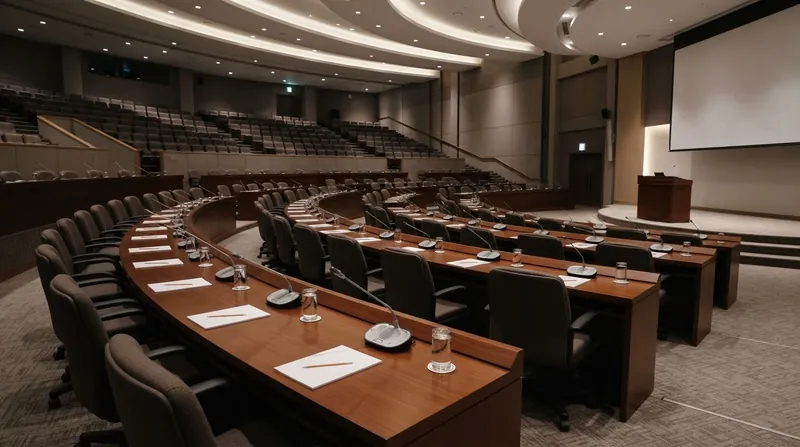
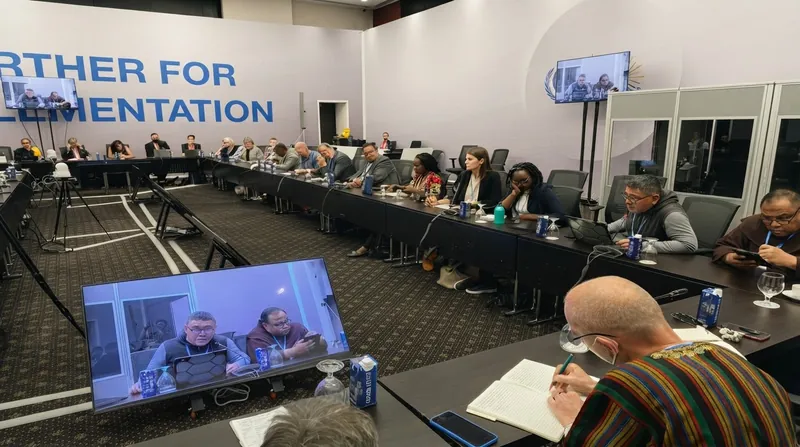
On October 12, the Intergovernmental Panel on Climate Change met in Addis Ababa, Ethiopia, to finalize the schedule for its Seventh Assessment Report. During the session, a coalition of nations began pushing to delay the publication of the assessment until 2029.
The proposed delay threatened to leave the 2028 UN Global Stocktake without an updated scientific consensus. Member states remained deadlocked over both the timeline and the budget for the Seventh Assessment Report.
Discussions in Addis Ababa eventually ran past their scheduled conclusion. Delegates from vulnerable nations were forced to leave the meeting to catch their flights home.
On October 19, IPCC Chair Jim Skea suspended the 65th Plenary Session to protect the panel's consensus rules following the departure of those delegates. Following the stalemate, nearly 120 IPCC authors pledged to continue their scientific reviews in an effort to meet the 2028 UN Global Stocktake deadline.