full timeline
Global helium supply crisis
The Department of Energy has officially added helium to the federal critical materials list, unlocking new funding and regulatory support.
Follow Global helium supply crisis in the Factlen app and get an alert when there is news. Get the app
Share this story
Latest report
US Designates Helium as a Critical Material to Secure Semiconductor Supply Chains
The Department of Energy has officially added helium to the federal critical materials list, unlocking new funding and regulatory support. The move aims to stabilize domestic supply lines for semiconductor manufacturers amid global shortages and the privatization of the federal reserve.
- The Department of Energy officially added helium to the federal critical materials list on October 27, 2026.
- The designation aims to secure the domestic supply chain for semiconductor manufacturers, who rely on the gas for cooling and etching silicon wafers.
- Federal recognition unlocks potential tax incentives and targeted investments for new extraction and recycling infrastructure.
- The policy shift follows the recent privatization of the Federal Helium Reserve, which had historically stabilized the global market.
The United States government officially added helium to its critical materials list on October 27, 2026, fundamentally shifting how the federal government treats the inert gas. The designation by the Department of Energy unlocks new federal backing for domestic production and recycling infrastructure.
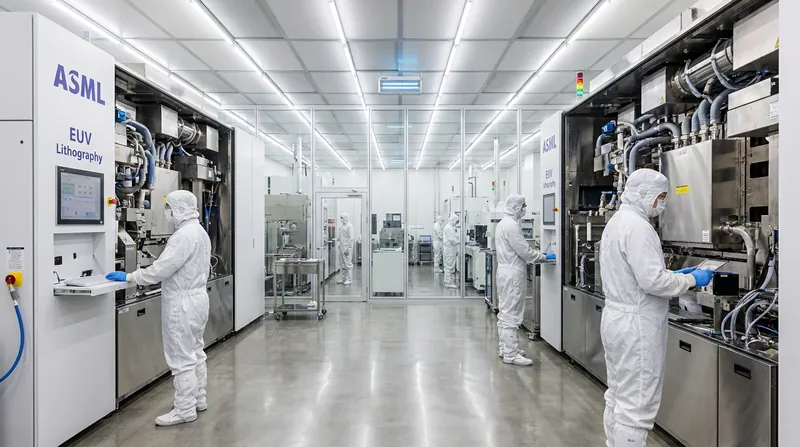
The policy change arrives as the global semiconductor industry faces mounting pressure to secure reliable supply chains for advanced chipmaking. Helium is an irreplaceable component in semiconductor fabrication, used to cool silicon wafers and create the ultra-pure environments required for etching microscopic circuits.[1][5]
Without a steady flow of the gas, the multibillion-dollar fabrication plants currently under construction across Texas, Ohio, and Arizona cannot operate. The new federal designation formally recognizes this vulnerability, placing helium alongside lithium and cobalt as a resource essential to national economic security.[6]
"This final rule establishes helium as a critical material for energy under the Energy Act of 2020," the Department of Energy stated in the Federal Register notice published on Tuesday.
"The addition reflects the reality that modern electronics manufacturing simply stops without reliable access to this specific molecule," noted industry analysts at The Oregon Group in their assessment of the federal shift.[6]
Reversing a decades-long policy
For nearly a century, the United States dominated the global helium market through the Federal Helium Reserve in Amarillo, Texas. Established in 1925 to supply military airships, the facility eventually stored roughly a third of the world's crude helium supply in a massive underground geological formation.[4]
However, Congress passed legislation in 1996 mandating the privatization of the reserve to pay off the facility's accumulated debt. That decades-long selloff concluded earlier this year, transferring the remaining federal assets to private industrial gas companies.[2][3]
The final sale effectively ended the government's role as the market's primary stabilizer and buffer against supply shocks. The transition to a fully private market immediately introduced new price volatility for industrial consumers across multiple high-tech sectors.[1][4]
Semiconductor manufacturers, who require "six nines" or 99.9999% pure helium for their processes, found themselves competing with medical imaging providers and aerospace contractors. This competition for a constrained global supply quickly elevated the gas to a strategic bottleneck.[1][5]
The semiconductor supply squeeze
The Department of Energy's intervention responds directly to these tightening market conditions and the massive capital deployed under the CHIPS and Science Act. Global helium production remains highly concentrated, with the United States, Qatar, and Algeria historically accounting for the vast majority of commercial extraction.[3][6]
Recent geopolitical disruptions have further complicated the logistics of moving the gas from extraction sites to fabrication plants. Helium must be transported in specialized cryogenic containers at minus 452 degrees Fahrenheit, making the supply chain exceptionally vulnerable to shipping delays and route alterations.[4][5]
"The designation is a necessary step to ensure that the billions of dollars invested in domestic semiconductor manufacturing are not stranded by a lack of basic industrial gases," reported Electronics For You.[5]
By placing helium on the critical materials list, the federal government can now direct targeted investments toward new extraction projects. The designation also opens the door for tax incentives under the Inflation Reduction Act to support companies developing advanced helium recycling technologies.[2]
Building domestic resilience
Major semiconductor fabrication facilities are already adapting to the new reality by installing massive recovery systems. These closed-loop networks capture the gas after it passes over the silicon wafers, purify it on-site, and return it directly to the manufacturing line.[1][5]
Modern recovery systems can recapture up to 95% of the helium used in a fabrication plant, drastically reducing the facility's reliance on external deliveries. However, the initial capital expenditure for these purification plants runs into the tens of millions of dollars per facility.[4]
The new federal designation is expected to help offset these massive infrastructure costs through grants and accelerated depreciation schedules. Industry advocates argue that subsidizing recovery systems is far cheaper than suffering a production halt due to a missed gas delivery.[1][6]
Beyond recycling, the critical material designation is expected to spur new domestic exploration. Unlike most minerals, helium is a byproduct of natural gas extraction, trapped in specific geological formations where radioactive decay produces the element over millions of years.[3][6]
Market reaction and next steps
Independent exploration companies operating in regions like the Four Corners area and the Canadian province of Saskatchewan have reported increased interest from institutional investors. The Department of Energy's announcement provides the regulatory certainty required to fund multi-year drilling campaigns.[2][6]
"We are seeing a fundamental repricing of helium assets in North America as the market digests the implications of federal support," noted analysts at MINING.COM following the initial policy signals.[3]
The ultimate success of the policy shift will depend on how quickly federal agencies can deploy the newly unlocked funding mechanisms. For the semiconductor industry, the critical material designation provides a crucial regulatory foundation, but the physical infrastructure required to secure the supply chain will still take years to build.[1]
Sources
- [1]Quartz — The U.S. designated helium as a critical material for semiconductor supply chains Read on Quartz →
- [2]The Northern Miner — US Energy Department adds helium to critical list Read on The Northern Miner →
- [3]MINING.COM — US Department of Energy names helium to critical materials list Read on MINING.COM →
- [4]gasworld — US designates helium a critical material amid supply concerns Read on gasworld →
- [5]Electronics For You — US Designates Helium as Critical Semiconductor Material Amid Global Supply Risks Read on Electronics For You →
- [6]The Oregon Group — US adds helium to critical materials list Read on The Oregon Group →
Charts, maps and images
Timeline
October 2026
US Designates Helium as a Critical Material to Secure Semiconductor Supply Chains
July 2026
The End of Just-in-Time AI: How the Geopolitical Helium Crisis Rewrites the Global Semiconductor Supply Chain
AI