
full timeline
Gaza ceasefire and post-war transition
Israeli armored units crossed the designated demarcation boundary into central Gaza, severing the main north-south highway and triggering civilian evacuations.
Follow Gaza ceasefire and post-war transition in the Factlen app and get an alert when there is news. Get the app
Share this story
Latest report
Israeli Forces Mount Ground Incursion Beyond Gaza Ceasefire Yellow Line
Israeli armored units crossed the designated demarcation boundary into central Gaza, severing the main north-south highway and triggering civilian evacuations. The advance marks the most significant military maneuver since the truce began eleven months ago.
- Israeli armored units crossed the Yellow Line into central Gaza, marking the largest military maneuver in eleven months.
- The advance severed the Salah al-Din road, halting all commercial and humanitarian transit between the northern and southern sectors.
- Thousands of civilians fled central refugee camps as military forces issued evacuation orders and approached residential districts.
- Hamas condemned the operation as a flagrant violation of the ceasefire, while international mediators scrambled to prevent further escalation.
On November 18, 2026, Israeli armored columns crossed the designated "Yellow Line" in central Gaza, initiating a ground offensive into territory previously restricted under the existing ceasefire framework. The dawn advance marks the most significant and heavily mechanized military maneuver in the enclave since the truce took effect eleven months ago.[1][3]
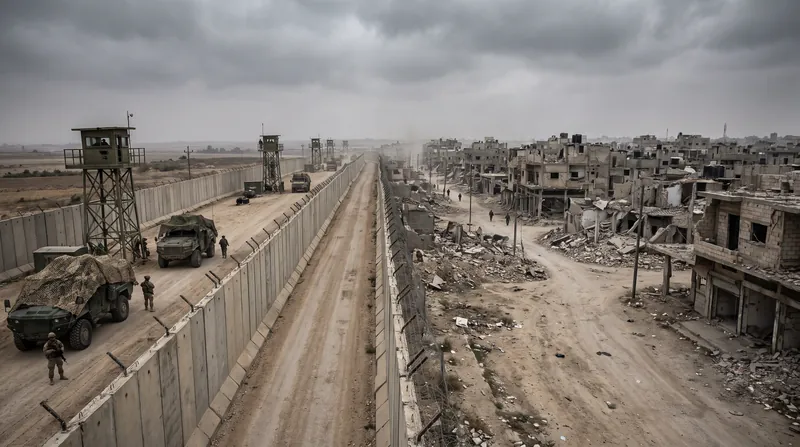
The operation began just before sunrise, with Israeli tanks, armored bulldozers, and infantry units pushing aggressively past the established buffer zones. These military forces effectively severed the Salah al-Din road, the primary north-south transport artery that runs the entire length of the Gaza Strip.[6][7]
This sudden severing of the highway immediately halted the movement of commercial goods, medical supplies, and humanitarian transit between the northern and southern sectors. Local municipal authorities reported that the armored deployment effectively split the central governorate into two completely isolated and inaccessible zones.[7]
The Israeli military described the maneuver as a rare, highly targeted operation necessary to address emerging security threats that had materialized near the boundary. Evacuation orders were broadcast to civilians in the immediate path of the advancing units, directing them to clear the residential areas immediately.[1]
Fleeing the central camps
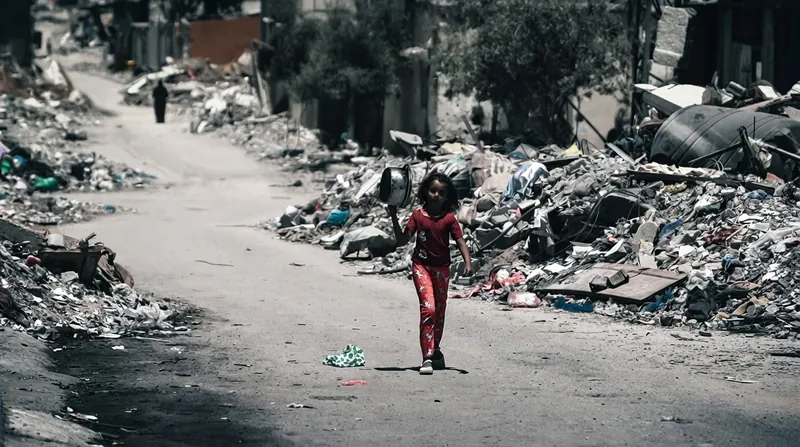
The incursion triggered an immediate and chaotic civilian exodus from several densely populated refugee camps located in central Gaza. Thousands of residents gathered their remaining portable possessions and fled on foot as heavy armored vehicles approached the perimeter of their residential districts.[2]
Witnesses on the ground described scenes of widespread panic as families attempted to navigate away from the advancing military columns amid the sound of heavy machinery. The sudden displacement compounds an already severe housing and sanitation crisis for populations that have been displaced multiple times since 2023.[2][4]
Artillery fire and localized infantry assaults targeted specific residential areas during the initial, most intense phase of the military advance. Medical facilities operating in the central sector reported receiving multiple casualties, though exact figures remained difficult to verify amid the severed communication lines and restricted ambulance access.[4]
The "Yellow Line" was established as a strict, internationally monitored demarcation boundary during the phased transition agreements that paused major combat operations. Crossing this specific line represents a fundamental shift in the operational posture that has governed the coastal enclave for nearly a full year.[1][6]
Ceasefire framework under strain
Hamas officials immediately denounced the armored advance, issuing a formal statement of protest through established regional mediators in the Gulf. The group condemned the Israeli army offensive as a "flagrant violation" of the ceasefire terms that both parties had previously accepted and pledged to uphold.[5]
The Palestinian leadership warned that the ground operation threatens to completely collapse the fragile security architecture that has maintained relative quiet across the territory. They demanded an immediate, unconditional withdrawal of all Israeli forces back to their previous staging positions behind the agreed-upon demarcation boundary.[5]
Diplomatic tensions flared rapidly across the region as news of the central Gaza operation reached international capitals and foreign ministries. European and regional mediators scrambled to establish emergency contact with both Israeli and Palestinian command centers to prevent a broader, uncontrollable escalation of hostilities.[6]
The ceasefire, while imperfect and occasionally tested by minor skirmishes, had largely succeeded in preventing large-scale ground maneuvers since late 2025. This new, mechanized deployment severely tests the limits of the phased transition agreement and the enforcement mechanisms designed to keep the warring parties separated.[3][6]
Strategic control of the corridor
By physically cutting off the Salah al-Din road, Israeli forces have reasserted direct tactical control over the central transit corridor. This commanding positioning allows the military to monitor, filter, and restrict all vehicular and pedestrian movement between Gaza City in the north and Khan Younis in the south.[7]
Military analysts suggest the operation aims to systematically dismantle newly established infrastructure that Israeli intelligence identified just beyond the buffer zone. The deployment of heavy armor and earth-moving equipment indicates a clear willingness to hold the newly captured positions for an extended, indefinite duration.[1][6]
The operation also severely complicates the ongoing international efforts to transition Gaza toward a stabilized, functional civilian administration. Various international reconstruction projects operating in the central sector have been forced to immediately suspend their activities due to the sudden, overwhelming presence of military forces.[3][4]
Residents who remained trapped in the affected residential areas reported that Israeli troops had established temporary, fortified checkpoints along the severed highway. These checkpoints are currently turning back all civilian traffic attempting to cross the newly established military perimeter, effectively locking down the surrounding neighborhoods.[4][7]
International diplomatic response
European officials expressed deep, public concern over the deteriorating security situation and the high potential for a renewed cycle of widespread violence. Diplomats warned that the incursion actively jeopardizes months of delicate, behind-the-scenes negotiations aimed at solidifying the permanent truce and rebuilding the shattered infrastructure.[3][6]
The United Nations and various humanitarian agencies are currently assessing the severe impact of the severed transport routes on their fragile supply chains. The inability to move aid along the Salah al-Din road threatens to disrupt critical food distribution networks that serve hundreds of thousands of vulnerable people.[7]
Regional powers that guaranteed the initial ceasefire framework have initiated urgent emergency consultations to address the sudden border breach. These governments are heavily pressuring Israeli authorities to publicly clarify the exact scope, military objectives, and intended duration of the operation beyond the Yellow Line.[5][6]
The Israeli defense establishment has not publicly detailed the specific intelligence or imminent threat that prompted the rare, large-scale maneuver. However, military spokespeople maintain that the operation is strictly limited in scope and designed solely to neutralize immediate threats rather than permanently reoccupy the territory.[1]
The path forward
The coming days will dictate the scale of this incursion, testing if it remains a localized tactical maneuver or expands into a broader, sustained military campaign. Much depends on whether Palestinian armed factions choose to directly engage the advancing Israeli armor or maintain their current defensive, observational posture.[2][5]
Civilian populations in central Gaza remain precariously caught in the middle of the rapidly shifting military boundaries and zones of control. Those who fled the refugee camps are currently seeking shelter in already overcrowded facilities in the southern governorates, anxiously awaiting clarity on when they might return.[2]
The deliberate breach of the Yellow Line sets a dangerous new precedent for military engagement during this supposedly transitional phase. It clearly demonstrates that the established buffer zones are highly permeable and that the entire ceasefire framework remains extremely vulnerable to sudden, unilateral tactical shifts.[1][6]
International mediators are now working frantically to establish a localized de-escalation mechanism to allow trapped civilians to safely navigate the contested areas. The absolute immediate priority is restoring vital humanitarian access along the Salah al-Din road before the localized supply shortages become a critical emergency.[6][7]
Assessing the operational scale
The November 18 deployment involved at least two full armored battalions, according to initial visual evidence and satellite imagery from the central sector. These mechanized units advanced approximately three kilometers past the Yellow Line, establishing a new, fortified forward operating perimeter well before sunrise.[1][6]
This specific demarcation boundary was formally codified in the December 2025 security protocols, which strictly dictated the phased withdrawal of heavy armor. Until this week, both sides had largely respected the three-kilometer buffer zone that separates the military staging areas from the dense civilian centers.[1][3]
The sudden disruption to the Salah al-Din artery affects an estimated 400 commercial and aid trucks that typically transit the route daily. Logistics coordinators warn that a prolonged closure will completely deplete the southern sector's remaining fuel and essential medical reserves within just 72 hours.[7]
The immediate focus for international observers centers on the withdrawal timeline for the Israeli units once their stated tactical objectives are fully met. If the armored columns remain entrenched in their advanced positions, the entire 11-month ceasefire architecture will require a complete, fraught renegotiation.[3][6]
Sources
- [1]The Times of Israel — IDF launches rare operation beyond 'Yellow Line' in central Gaza Read on The Times of Israel →
- [2]Al Jazeera — Palestinians flee refugee camp as Israel begins operation in central Gaza Read on Al Jazeera →
- [3]Deutsche Welle — Israel launches new ground operation in Gaza Read on Deutsche Welle →
- [4]Middle East Eye — Israel launches assault targeting residential areas in Gaza despite ceasefire Read on Middle East Eye →
- [5]Anadolu Agency — Hamas condemns Israeli army offensive in central Gaza as 'flagrant violation' of ceasefire Read on Anadolu Agency →
- [6]Euronews — Israeli tanks advance into central Gaza as ceasefire tensions flare Read on Euronews →
- [7]WAFA — Israeli forces cut off Salah al- Read on WAFA →
What to watch
- The outcome of efforts by international mediators to de-escalate the situation following the November 18 Israeli incursion.
- The future of the UN-backed 'Board of Peace' plan for a phased Israeli withdrawal and transfer of authority to a civilian group.
- Whether Israeli forces will remain beyond the Yellow Line demarcation boundary in central Gaza.
- When or if the Salah al-Din road, Gaza's main north-south highway, will be reopened to commercial and humanitarian transit.
Timeline
November 2026
Israeli Forces Mount Ground Incursion Beyond Gaza Ceasefire Yellow Line
September 2026
Eleven Months After the Ceasefire, Gaza Is Still Caught Between Phased Transition and Military Control
AI
How the story developed
A ceasefire in October 2025 halted major combat operations between Israel and Hamas, but the framework for Gaza's future remained contested. In the months that followed, two competing visions emerged for the territory's security and governance.
An internationally brokered plan, backed by a UN entity called the Board of Peace, mandated a phased Israeli withdrawal from Gaza and the transfer of authority to a civilian group. This diplomatic track was countered by Israel's military, which insisted on maintaining indefinite operational control over the territory for security reasons.
The eleven months following the ceasefire were marked by this deadlock. The tension was punctuated by security incidents, including an Israeli raid on September 1, 2026, that captured a Hamas security chief. That same month, Israeli Prime Minister Benjamin Netanyahu publicly rejected the diplomatic timeline for a phased withdrawal, stating that Israeli forces would not retreat from their positions.
The ongoing impasse had a severe humanitarian impact. By September 2026, 1,338 fatalities had been recorded since the ceasefire began, and the delivery of humanitarian aid into Gaza was severely restricted.
The situation escalated significantly on November 18, 2026, when Israeli armored units mounted a ground incursion that crossed the 'Yellow Line,' a designated demarcation boundary established after the ceasefire. The maneuver was the largest of its kind in eleven months and pushed into central Gaza.
The advance severed the Salah al-Din road, the main artery for all commercial and humanitarian transit between north and south Gaza. As Israeli forces approached residential districts, the military issued evacuation orders for central refugee camps, causing thousands of civilians to flee. Hamas described the operation as a 'flagrant violation of the ceasefire,' and international mediators scrambled to prevent a further escalation of the conflict.