full timeline
European nuclear deterrence talks
Royal Air Force Typhoons participated in a French nuclear deterrence exercise, marking the first time British aircraft have joined France's airborne strike simulations.
Follow European nuclear deterrence talks in the Factlen app and get an alert when there is news. Get the app
Share this story
Latest report
British Warplanes Join French Nuclear Strike Drill for the First Time
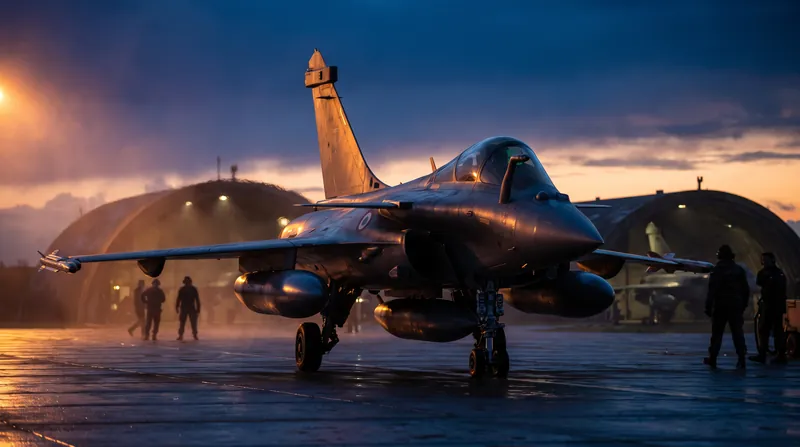
Royal Air Force Typhoons participated in a French nuclear deterrence exercise, marking the first time British aircraft have joined France's airborne strike simulations. The joint drill signals deepening defense integration between Europe's two nuclear powers amid ongoing tensions with Russia.
- British RAF Typhoons participated in a French airborne nuclear strike simulation for the first time.
- The joint exercise demonstrates the ability to integrate British conventional fighters with French nuclear delivery systems.
- The drill occurs amid ongoing discussions about extending the French nuclear umbrella to European allies.
- The public acknowledgment of the exercise serves as a strategic signal amid heightened tensions with Russia.
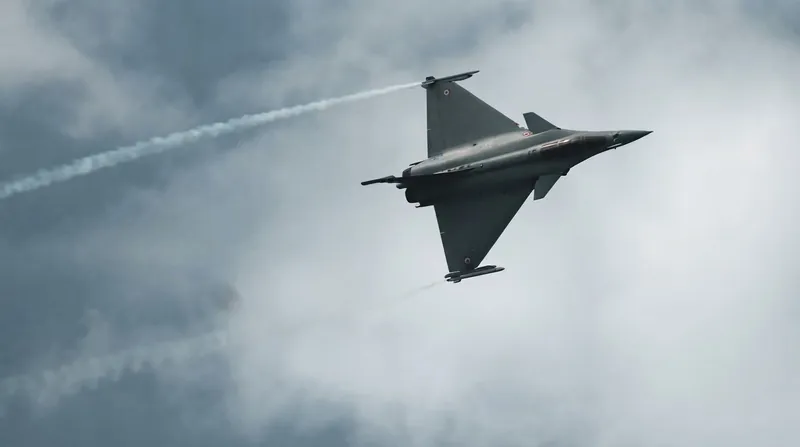
British warplanes have participated in a French nuclear strike simulation for the first time, integrating the Royal Air Force into the airborne deterrence exercises of Europe’s only other nuclear-armed state. The joint drill marks a structural shift in how London and Paris coordinate their strategic forces.[1][2]
The exercise involved RAF Typhoon fighter jets flying alongside French aircraft in a simulated nuclear mission. While Britain maintains its own independent nuclear deterrent entirely at sea via Vanguard-class submarines, France operates a dual-capable force that includes both submarine-launched missiles and air-dropped weapons.[1][3]
By bringing British conventional fighters into a French nuclear drill, the two militaries demonstrated the capacity to operate a combined strike package. The Typhoons functioned in a supporting role, simulating the escort and defense of French aircraft carrying the simulated nuclear payloads.[3][7]
Strategic Integration
The integration of British aircraft into the French exercise represents a concrete step in the bilateral defense relationship. It follows months of discussions between Paris and its European allies regarding the extension of the French nuclear umbrella, a debate accelerated by uncertainty over the United States' long-term commitment to NATO.[2][4]
France has increasingly positioned its nuclear arsenal as a European asset, though it remains under strict national control. The joint exercise with the UK, which also commits its nuclear forces to the defense of NATO, operationalizes the political alignment between the two capitals.[5][6]
The timing of the drill coincides with sustained tensions between NATO and Russia. Moscow has repeatedly conducted its own nuclear exercises and altered its stated nuclear doctrine over the past year, prompting Western capitals to reinforce the credibility of their own deterrents.[1][2]
While neither London nor Paris explicitly linked the exercise to a specific threat, the public acknowledgment of the joint drill serves as a clear signal. The ability to seamlessly integrate conventional escorts from one nation with the nuclear delivery systems of another complicates the defensive calculus for any adversary.[2][8]
Future Interoperability
The exercise establishes a precedent for future interoperability between the two air forces. As European nations reassess their security architectures, the practical demonstration of a combined Anglo-French nuclear strike capability adds a new dimension to the continent's strategic posture.[4][5]
Sources
- [1]The Independent — RAF holds first ever joint nuclear drill with France in warning shot to Putin Read on The Independent →
- [2]The News International — UK, France hold first-ever joint nuclear exercise amid Russia tensions Read on The News International →
- [3]UA.News — British Typhoons join French nuclear exercise for first time Read on UA.News →
- [4]The Times of Israel — UK, French air forces stage first ever simulation of joint nuclear strike Read on The Times of Israel →
- [5]Morningstar — France and Britain stage first joint nuclear air strike simulation Read on Morningstar →
- [6]EUalive — France and Britain conducted first-ever joint nuclear exercise Read on EUalive →
- [7]The Economic Times — British jets join French nuclear exercise for first time, France says Read on The Economic Times →
- [8]Roya News — Britain and France conduct first joint airborne nuclear exercise Read on Roya News →
Charts, maps and images
Timeline
October 2026
British Warplanes Join French Nuclear Strike Drill for the First Time
August 2026
France Advances Talks to Extend Nuclear Deterrent to European Allies Amid US-NATO Uncertainty
AI