
full timeline
Eastern DR Congo conflict
A military tribunal in North Kivu convicted the troops of mutiny and cowardice after they abandoned their positions during clashes with the M23-aligned FRN rebel coalition.
Follow Eastern DR Congo conflict in the Factlen app and get an alert when there is news. Get the app
Share this story
Latest report
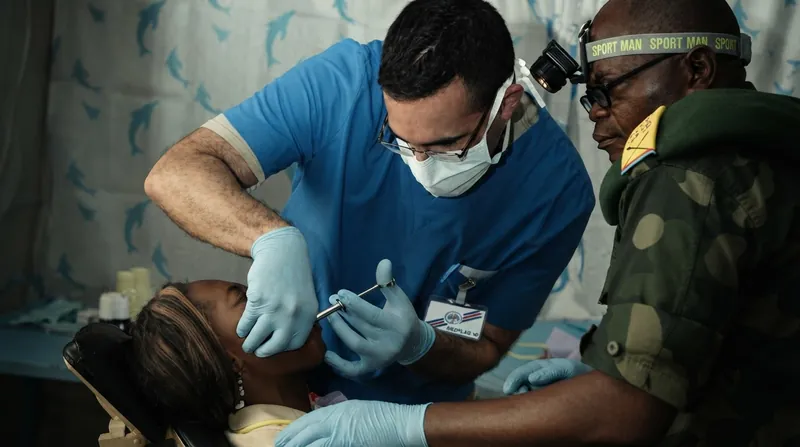
DR Congo Military Court Sentences 66 Soldiers to Death for Fleeing Rebel Advance
A military tribunal in North Kivu convicted the troops of mutiny and cowardice after they abandoned their positions during clashes with the M23-aligned FRN rebel coalition. The ruling marks the latest mass sentencing as the Congolese army struggles to maintain discipline amid rapid insurgent gains.
- A military court in North Kivu sentenced 66 Congolese soldiers to death for cowardice and mutiny after they fled clashes with FRN rebels.
- The trial is part of a broader crackdown on military discipline, following the government's March 2024 decision to lift a 20-year moratorium on capital punishment.
- The convictions coincide with rapid territorial gains by the Joseph Kabila-led FRN coalition, which recently captured the strategic town of Bunyakiri Centre.
- The Congolese military continues to struggle with systemic logistical failures, poor pay, and inadequate equipment, contributing to widespread frontline desertions.
A military court in the Democratic Republic of Congo has sentenced 66 soldiers to death after convicting them of cowardice, mutiny, and disobeying orders. The mass conviction highlights the severe disciplinary measures being deployed by the armed forces as they struggle to contain a rapidly expanding rebellion in the country's eastern provinces.[1][2][4][5]
The Goma Garrison Military Court, sitting in Walikale Centre in North Kivu Province, delivered the verdicts following a 12-day trial. The proceedings centered on accusations that the troops abandoned their defensive positions and fled during fierce clashes with insurgent forces in late October.[1][2][5]
The ruling marks the latest in a series of mass death sentences handed down to Congolese troops this year. As government forces lose ground to the Front for the Refoundation of the Nation (FRN) rebel coalition, military authorities have increasingly turned to capital punishment in an attempt to halt battlefield desertions.[4][5]
The Court's Verdict
The trial involved 71 soldiers belonging to the 3415th regiment of the Armed Forces of the Democratic Republic of Congo (FARDC). The troops were arrested on October 20 after allegedly fleeing an enemy advance in the Waloa Uroba Groupement, located within the Wanianga Sector of Walikale Territory.[1][2]
Major Dieudonné Kasereka, the communications officer for the FARDC's 34th Military Region, stated that the defendants faced three primary charges. Military prosecutors accused the soldiers of cowardice in the face of the enemy, military mutiny, and a direct refusal to obey operational orders.[2][5]
Prosecutors had initially sought the death penalty for 70 of the 71 defendants, alongside a 10-year prison sentence for a military intelligence officer. Following the hearings, the tribunal ultimately condemned 66 soldiers to death, determining that their retreat constituted a severe breach of military law.[2][5]
The court did grant significant mitigating circumstances to one unnamed sergeant, who was sentenced to 10 years of hard labor instead of execution. Four other soldiers were acquitted entirely, including a captain who served as the head of intelligence for the 3415th regiment.[1][2][5]
Reinstating the Death Penalty
The Walikale verdicts are part of a broader, systemic crackdown on military discipline orchestrated by the government in Kinshasa. In March 2024, the Democratic Republic of Congo officially lifted a two-decade moratorium on the death penalty, restoring capital punishment to its legal framework.[4]
At the time, the Congolese government argued that the resumption of executions was a necessary deterrent. Authorities claimed that tougher penalties were required to root out traitors, punish treason, and maintain order within the military as the security situation in the east deteriorated.[4]
Since the moratorium was lifted, military tribunals have repeatedly utilized the ultimate penalty. Just weeks prior to the Walikale trial, a separate military court sentenced 27 Congolese soldiers to death for allegedly retreating from the frontline during engagements with FRN fighters.[1][4]
Similar rulings have been documented over the past two years. In July 2024, 25 FARDC soldiers were sentenced to death after fleeing a rapid rebel advance in Lubero Territory. In March 2025, another 55 soldiers received death sentences for fleeing the enemy and looting in North Kivu.[2]
Human rights organizations have consistently condemned the government's reliance on capital punishment, warning that the trials often lack due process. Despite the surge in convictions, no executions have been officially reported or carried out since the moratorium was lifted.[4]
The Rebel Advance
The military's internal crisis coincides with significant territorial gains by the FRN, a powerful umbrella group that absorbed the March 23 Movement (M23) and the Alliance River Congo (AFC). The coalition has steadily expanded its control across North and South Kivu.[2][5]
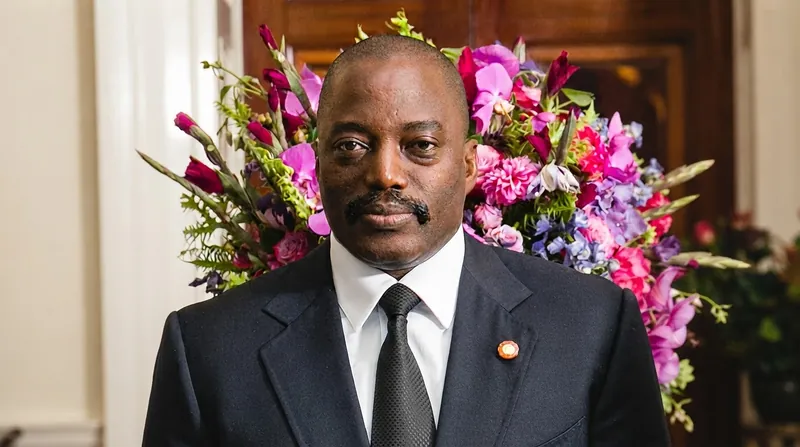
The FRN operates under the leadership of former DR Congo President Joseph Kabila. After being politically marginalized by current President Felix Tshisekedi, Kabila entered self-imposed exile and aligned himself with the rebel factions operating in the eastern borderlands.[5]
The insurgents have maintained a relentless operational tempo. On November 8, FRN fighters successfully advanced and took control of Bunyakiri Centre in Kalehe Territory, South Kivu, dislodging FARDC soldiers and their allied Wazalendo militia fighters.[2]
The capture of Bunyakiri represents a significant strategic victory for the rebels. The town is located along National Road 3, and its fall threatens to disrupt the supply of essential ammunition and food to government forces operating on the surrounding front lines.[2]
Following the seizure of Bunyakiri, the rebels claimed to have advanced further, capturing Bulambika Centre, located approximately three kilometers away. Videos shared by residents and insurgents showed FRN fighters patrolling the newly captured towns.[2]
Systemic Military Failures
The FARDC's battlefield struggles are compounded by deep-rooted institutional failures. The Congolese military has long faced intense domestic and international criticism for poor organization, inadequate equipment, and chronically low pay for its frontline personnel.[4]
Soldiers deployed to the volatile eastern provinces frequently operate without reliable logistical support. Troops often lack sufficient ammunition, rations, and medical supplies to sustain prolonged engagements against well-armed and highly coordinated insurgent groups.[4]
These systemic shortfalls frequently lead to collapsed morale among the rank and file. When confronted by aggressive rebel offensives, under-equipped units have repeatedly abandoned their posts, prompting the military command to respond with severe judicial punishments rather than logistical reforms.[4]
The government in Kinshasa maintains that the military's difficulties are exacerbated by foreign interference. Congolese officials have repeatedly accused neighboring Rwanda of funding, arming, and directing the M23 and FRN forces, allegations that Kigali consistently denies.[2][5]
Humanitarian Consequences
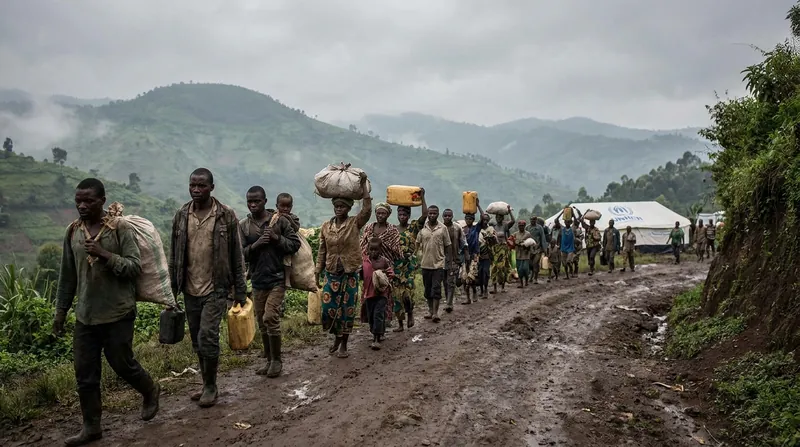
The escalating conflict between the FARDC and the FRN has triggered a massive humanitarian crisis. The recent fighting in Walikale and Kalehe territories has displaced thousands of civilians, adding to the millions already uprooted by decades of violence in the region.[2][4]
The civilian population remains caught in the crossfire of a war characterized by severe human rights abuses. The United Nations has explicitly condemned the conduct of the rebel forces operating across the eastern provinces.[5]
"Murder, torture and other ill-treatment, corporal punishment, forced unlawful recruitment and abusive labor, and use of child soldiers," the United Nations stated earlier this year, detailing the abuses committed by the FRN and allied Rwandan soldiers.[5]
The conflict is further complicated by the presence of numerous other armed factions operating in the security vacuum. Groups such as the FDLR, an ethnic Rwandan Hutu militia active in South Kivu, continue to launch attacks and exploit local resources.[5]
Regional Diplomatic Deadlock
International efforts to mediate the crisis have repeatedly faltered. A 2025 peace deal brokered by the United States failed to produce a lasting resolution, with critics arguing the agreement prioritized external economic interests over the region's deep-seated ethnic and political grievances.[5]
The involvement of neighboring states continues to fuel the violence. While Rwandan President Paul Kagame denies any involvement in the conflict, the international community and UN experts have repeatedly cited clear evidence of Rwandan military support for the FRN.[2][5]
As the FRN consolidates its territorial gains and the FARDC resorts to prosecuting its own soldiers to maintain the frontline, the prospect of a negotiated settlement appears increasingly remote. The mass death sentences in Walikale underscore a military apparatus stretched to its breaking point.[2][5]
Sources
- [1]Anadolu Agency — DR Congo court sentences 66 soldiers to death: Report Read on Anadolu Agency →
- [2]The Observer — DRC: 66 soldiers sentenced to death for cowardice Read on The Observer →
- [3]BBC News — DR Congo court sentences 66 soldiers to death for 'cowardice' Read on BBC News →
- [4]Africanews — DR Congo sentences 66 soldiers to death for fleeing rebel fighting Read on Africanews →
- [5]allAfrica — DR Congo Sentences 66 Soldiers to Death for Cowardice Read on allAfrica →
What to watch
- The formal case filed by the Democratic Republic of Congo against Rwanda at the International Court of Justice over the territorial capture.
Charts, maps and images
Timeline
November 2026
DR Congo Military Court Sentences 66 Soldiers to Death for Fleeing Rebel Advance
October 2026
Former DR Congo President Joseph Kabila Launches Coalition With M23 Rebels to Oust Tshisekedi
July 2026
Rwandan-Backed Proxies De Facto Annex Two Major Provinces in Eastern DR Congo, Escalating Regional Conflict
AI
How the story developed
By July 2, the Rwandan-backed M23 rebel coalition established parallel administrative structures across the North and South Kivu provinces. The move effectively partitioned the Democratic Republic of Congo and secured rebel control over critical global mineral supplies, including the Rubaya mine, which supplies an estimated 15 percent of the world's tantalum.
Human Rights Watch and United Nations experts classified Rwanda's involvement as a belligerent occupation due to its effective control of the region. The Democratic Republic of Congo filed a formal case against Rwanda at the International Court of Justice over the territorial capture. Diplomatic efforts, including the United States-brokered Washington Accords, failed to halt the violence or the rebel advance.
On October 13, former Democratic Republic of Congo President Joseph Kabila formally allied with the M23 rebels to launch the FRN, a new political-military front. The coalition's stated objective is the removal of President Félix Tshisekedi, shifting the M23's goals from regional autonomy to national regime change.
The Congolese government condemned the move as high treason, claiming it proves Kabila has been orchestrating the eastern destabilization. Regional diplomats warned that the alliance effectively kills the Luanda peace process and raises the risk of a wider war in the Great Lakes region.