full timeline
China export controls
Starting November 18, China will require explicit state permits to export tunnel boring machines, dredgers, and high-end drone components to sensitive destinations.
Follow China export controls in the Factlen app and get an alert when there is news. Get the app
Share this story
Latest report
China Imposes Export Controls on Heavy Industrial Machinery and Specialized Drone Components
Starting November 18, China will require explicit state permits to export tunnel boring machines, dredgers, and high-end drone components to sensitive destinations. The Ministry of Commerce cited national security interests for the expanded dual-use restrictions, which tighten supply chains for global infrastructure and defense projects.
- China will require explicit state licenses to export tunnel boring machines, dredgers, and specialized drone components starting November 18.
- The Ministry of Commerce cited national security and the prevention of dual-use technology proliferation as the primary drivers.
- Exports to sensitive destinations are strictly prohibited without authorization, while other markets face stringent non-diversion pledges.
- The mandate targets critical drone subcomponents, including autopilots, engines, and encrypted radios, threatening global aerospace supply chains.
Starting November 18, global construction and defense supply chains face a hard cutoff for Chinese-made heavy infrastructure equipment and specialized drone components unless buyers secure explicit state permits. The expanded export restrictions mark a significant escalation in Beijing's control over dual-use technologies, shifting the focus from raw materials to finished industrial hardware.[2][4]
China's Ministry of Commerce and the General Administration of Customs published the revised export control lists on Monday. The new regulatory framework systematically tightens the outbound flow of high-end engineering machinery, alongside critical subassemblies like autopilots, engines, and encrypted radios used extensively in unmanned aerial vehicles.[2][6]
The mandate requires exporters to rigorously prove the end-user and end-use of the equipment before shipping. Regulators cited national security interests and the prevention of proliferation to sensitive destinations as the primary drivers for the expanded dual-use restrictions, framing the move as a necessary safeguard for domestic technology.[4][5]
Under the differentiated rules, exports to countries with which China has ongoing disputes are strictly prohibited without a formal, heavily vetted license. Shipments to non-sensitive markets may proceed through a streamlined registration procedure, provided buyers sign binding pledges not to divert the goods to restricted regions.[2][5]
Heavy Machinery Enters the Fray
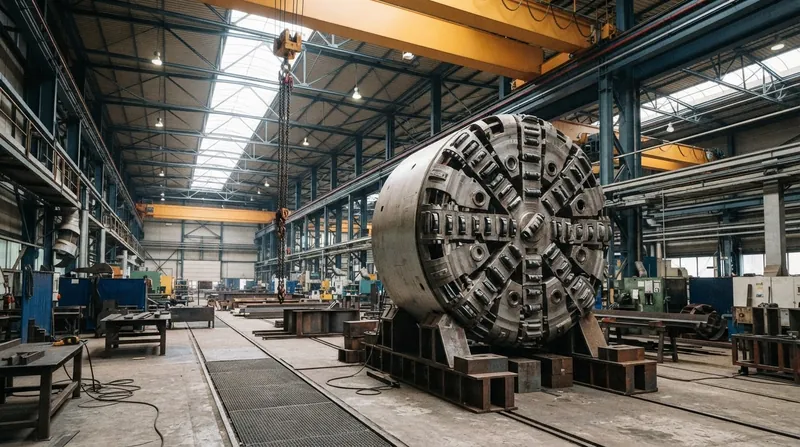
The most significant addition to the control list is the inclusion of full-face tunnel boring machines. Chinese manufacturers currently produce approximately 70 percent of the heavy tunneling equipment used globally, dominating the market for subway, railway, and deep-shaft mining excavation across multiple continents.[1][3]
Before the 2000s, China imported nearly all of its tunneling equipment from specialized European manufacturers. Following a massive state-funded localization push, domestic firms absorbed the core technologies and scaled production, eventually building thousands of units to support the country's rapid municipal transit expansion.[1][3]
The new regulations cover earth-pressure-balance machines, slurry-shield equipment, and open-type rock tunnel boring hardware. For the past decade, Chinese firms have aggressively captured international market share by offering customized, highly automated excavation machines at significantly lower price points than their traditional Western competitors.[1][5]
The restrictions also target specialized maritime and heavy construction hardware. Key components for high-end dredgers—specifically slurry pumps, dragheads, and cutterheads—now require explicit export authorization. These massive tools are critical for port expansion, land reclamation, and deep-water channel maintenance in global shipping hubs.[5]
Walking excavators and high-altitude wet shotcrete machines round out the heavy equipment additions to the control list. By controlling these specific industrial assets, Beijing gains substantial geopolitical leverage over large-scale civil engineering and infrastructure projects operating far outside its own borders.[1][5]
The Drone Component Squeeze
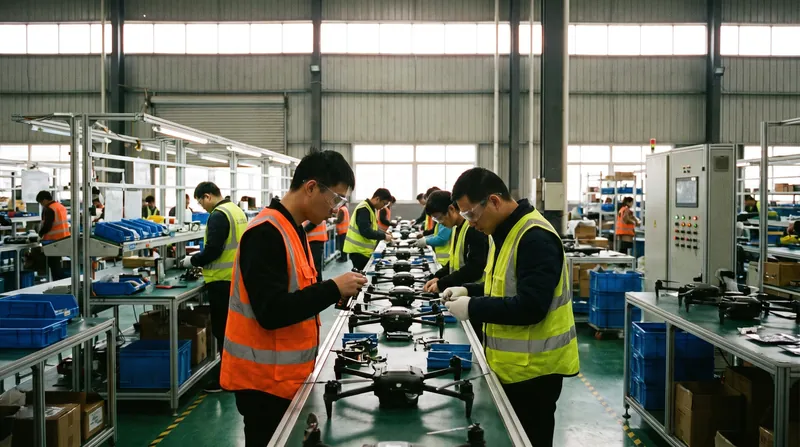
The November 18 mandate simultaneously deepens China's grip on the global drone supply chain. The updated framework targets dual-use unmanned aerial vehicles capable of autonomous flight with a maximum endurance ranging from 30 minutes to three hours, capturing a wide swath of commercial models.[2][6]
Regulators specifically flagged drones with a minimum range of 300 kilometers and those equipped with high-capacity aerosol dispensing systems. Crucially, the restrictions extend beyond fully assembled units to cover the critical subcomponents that foreign manufacturers rely on to build their own independent fleets.[4][6]
Export licenses are now mandatory for specialized drone engines, motors, propellers, and advanced flight-control technology. This component-level squeeze directly impacts international aerospace companies that source affordable, high-performance parts from Chinese suppliers for both commercial surveying and tactical defense applications.[2][6]
The component-level controls are particularly disruptive because they target the foundational hardware of modern autonomous flight. Even if a foreign aerospace company designs its own airframe and software architecture, sourcing the physical propulsion and control mechanisms outside of China remains economically and logistically challenging.[4][6]
This move represents a new chapter in an ongoing trade retaliation cycle between global superpowers. It follows previous drone export controls and Beijing's recent decision to blacklist several US certification firms, signaling a broader strategy to weaponize its manufacturing dominance in highly strategic sectors.[4]
Supply Chain Realignments
The immediate consequence for international contractors is a sudden injection of bureaucratic friction into their procurement pipelines. Regulators have established a 15-working-day deadline to complete a determination on dual-use items, but the actual approval rate for sensitive destinations remains entirely untested.[2][5]
Infrastructure developers relying on Chinese tunneling machines for transit projects must now navigate these compliance hurdles or seek alternative suppliers. However, pivoting back to European or Japanese manufacturers often entails significantly higher capital costs and extended procurement lead times that can derail project schedules.[1][3]
For the drone industry, the component restrictions threaten to disrupt production schedules for agricultural, surveying, and tactical fleets worldwide. Manufacturers outside China may be forced to rapidly accelerate the development of domestic supply chains for motors and flight controllers to avoid crippling production bottlenecks.[4][6]
The registration-and-filing procedure for non-sensitive markets offers a theoretical fast track, but the required non-diversion pledges carry significant legal weight. Exporters face severe penalties if their equipment is later found operating in restricted zones, forcing them to aggressively police their own downstream buyers.[2][5]
The dual-use designation gives Beijing broad discretion to deny shipments based on shifting geopolitical considerations. By linking commercial machinery to national security, the government can effectively throttle infrastructure development in rival nations while maintaining a steady supply of heavy equipment to allied markets.[2][4]
The November Deadline
Exporters have less than a month to align their internal compliance programs with the new Ministry of Commerce directives. Companies must gather extensive documentation on their international clients, including binding legal commitments against unauthorized third-party transfers or military end-use applications.[5][6]
The rollout of these controls highlights a structural vulnerability in the global industrial base. While Western economies have focused heavily on securing semiconductor and critical mineral supply chains, the deep reliance on Chinese heavy machinery and aerospace components has received comparatively less strategic attention.[1][5]
As the November 18 enforcement date approaches, global markets will closely monitor how strictly Chinese customs officials apply the new licensing requirements. The initial wave of permit approvals or denials will provide the first concrete measure of how aggressively Beijing intends to wield this new trade weapon.[2][6]
Sources
- [1]Global Times — China to impose export controls on tunnel boring machines from Nov 18 Read on Global Times →
- [2]Anadolu Agency — China to require permits for key drone exports, restrict machinery sales to sensitive destinations Read on Anadolu Agency →
- [3]Free Malaysia Today — China imposes export controls on tunnel boring machines Read on Free Malaysia Today →
- [4]Yeni Şafak — Beijing announced revised export controls on drones and construction machinery bound for sensitive destinations, citing national security interests with measures effective Nov. 18 Read on Yeni Şafak →
- [5]BigGo Finance — China Tightens Export Controls on High-End Equipment: Tunnel Boring Machines, Dredgers, Drones Require Licenses to Leave the Country Read on BigGo Finance →
- [6]Newsquawk — China's MOFCOM announces the tightening of export controls on specific drones, autopilots, engines, radios and related technologies, effective November 18 Read on Newsquawk →
Charts, maps and images
Timeline
October 2026
China Imposes Export Controls on Heavy Industrial Machinery and Specialized Drone Components
August 2026
China Imposes New Drone Export Controls, Blacklists US Certification Firms in Trade Retaliation