
full timeline
Central bank gold diversification
The Monetary Authority of Singapore has launched a 500-tonne capacity gold vaulting service and introduced tax waivers to strengthen its position as a global precious metals trading hub.
Follow Central bank gold diversification in the Factlen app and get an alert when there is news. Get the app
Share this story
Latest report
Singapore Opens National Currency Vaults to Foreign Central Banks for Sovereign Gold Storage
The Monetary Authority of Singapore has launched a 500-tonne capacity gold vaulting service and introduced tax waivers to strengthen its position as a global precious metals trading hub.
- The Monetary Authority of Singapore has opened a 500-tonne capacity gold vaulting service specifically for foreign central banks and sovereign entities.
- An enhanced tax framework will waive the Goods and Services Tax on wholesale gold services, including refining and vaulting, starting in April 2027.
- A new over-the-counter gold clearing system, backed by SGX and six major banks, is scheduled to begin live market operations in early 2027.
- The infrastructure push coincides with a historic surge in official sector gold buying, with central banks acquiring 321 tonnes in the third quarter.
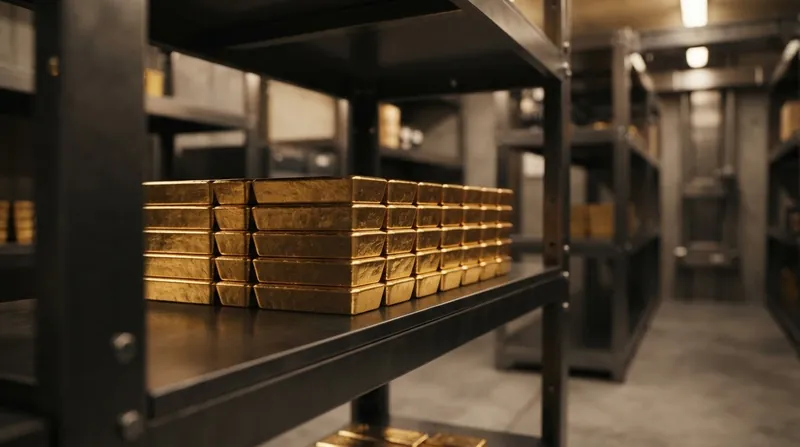
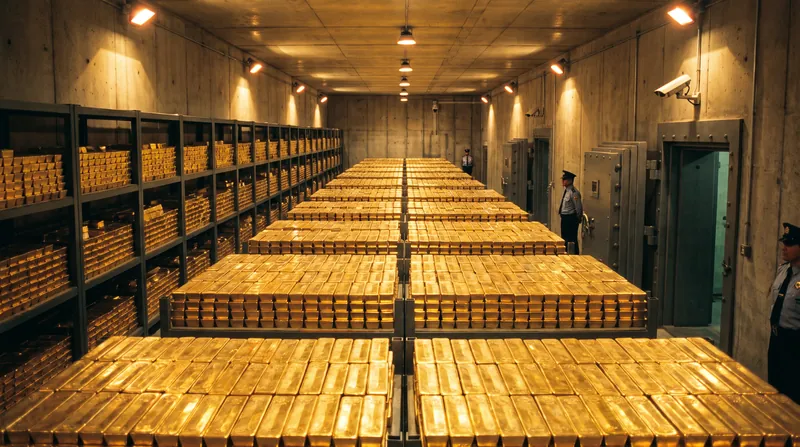
The Monetary Authority of Singapore (MAS) opened its national currency vaults to foreign central banks on November 10, launching a sovereign gold storage service with a 500-tonne capacity. The initiative provides an alternative custody option for official reserves as global demand for the precious metal accelerates.[1][2]
Alongside the physical storage, Singapore will waive its Goods and Services Tax (GST) on wholesale gold services starting in April 2027. The coordinated push aims to shift more global precious metals clearing and settlement activity into Asian trading hours.[1][3]
The launch represents a deliberate expansion of Singapore’s financial infrastructure, integrating sovereign custody with local trading mechanisms. It arrives as central banks globally reassess where they hold their physical reserves amid rising geopolitical uncertainty and shifting trade alliances.[4]
Expanding Sovereign Custody
The new vaulting service allows foreign central banks, sovereign wealth funds, and multilateral financial institutions to hold bullion directly within Singapore’s national currency vault. The facility currently supports up to 500 tonnes of physical gold, with architectural provisions to expand as institutional demand dictates.[1][2]
To facilitate trading, MAS will extend gold custody accounts to a select group of Singapore-based bullion banks. These designated institutions will provide the necessary market liquidity and gold-related servicing for the foreign central banks storing their reserves in the city-state.[1][2]
Deputy Prime Minister and MAS Chairman Gan Kim Yong framed the facility as a response to shifting global risk profiles. “Given an increasingly uncertain external environment, demand for gold as an asset class is rising as investors and central banks look for resilience and diversification,” Gan told reporters.[3]
The sovereign facility sits entirely separate from Singapore’s existing commercial vaulting infrastructure. The commercial sector already provides more than 2,000 tonnes of storage capacity, catering primarily to private bullion banks, institutional investors, and high-net-worth individuals.[2]
Tax Waivers for Wholesale Trade
To complement the physical infrastructure, the Ministry of Finance will introduce an enhanced GST framework targeting the wholesale investment precious metals market. The new rules will entirely waive the tax on specified services conducted between eligible institutional participants.[1][3]
Covered activities under the April 2027 waiver include vaulting, refining, recasting, assaying, and broking services. By removing these tax burdens, Singapore aims to lower the friction costs of processing and trading bullion within its borders, making the jurisdiction more competitive globally.[1]
Gan emphasized that the tax relief is strictly ring-fenced for the wholesale sector, specifically the Loco Singapore gold market where bullion is not intended for domestic consumption. “I have to emphasise that this is a transaction between institutions and the wholesale trade, and it's not targeted at the consumer retail market,” he noted.[3]
The upcoming waivers build upon Singapore's existing Approved Refiner and Consolidator Scheme. That framework already exempts the import and local supply of investment precious metals from GST, easing cash flow and compliance burdens for approved domestic refiners.[1][3]
Building Local Clearing Infrastructure
Physical storage and tax incentives represent only two pillars of Singapore’s broader precious metals strategy. The third component is a dedicated over-the-counter gold clearing system, developed by the Singapore Exchange Group in partnership with six founding clearing banks.[3]
Industry testing for the clearing platform has already concluded, and the final rulebook is nearing completion. The system is scheduled to begin live market operations in the first quarter of 2027, supporting the settlement of large 400-ounce bars and standard kilobars.
The founding consortium includes DBS, Deutsche Bank, ICBC Standard Bank, JPMorgan, OCBC, and UOB. By settling trades locally, the consortium aims to bridge the historical gap where Asian markets generate the majority of consumer demand but rely on London and New York for price discovery.
The Loco Singapore standard aims to create a regional equivalent to the dominant Loco London benchmark. By standardizing the physical delivery and settlement parameters within the city-state, market participants can execute large-scale institutional trades without the friction of cross-border transfers.[1][3]
Currently, the London bullion market maintains a near-monopoly on institutional settlement and price discovery. Singapore’s infrastructure aims to capture the trades that occur before London opens, providing a regulated environment for Asian institutions to settle physical metal in real time.[2][4]
Nikolas Kavalis, a founding partner at Metals Focus, cautioned that physical infrastructure alone does not guarantee market dominance. He noted that while storage is necessary, generating sufficient trading liquidity to genuinely compete with the London bullion market remains a much steeper challenge for Asian hubs.[4]
The Central Bank Buying Spree
Singapore’s infrastructure investments align directly with a historic surge in official sector gold purchases. Central banks acquired 321 tonnes of gold during the third quarter of 2026, pushing volumes well above the five-year quarterly average of 227 tonnes.[4]
This sustained buying pressure reflects a broader diversification strategy among reserve managers. A recent World Gold Council survey indicated that a record 45 percent of central banks plan to increase their gold allocations, driven by concerns over inflation and the weaponization of fiat currency reserves.[4]
The survey also revealed that reserve managers are increasingly prioritizing the physical location of their holdings. Following recent geopolitical sanctions that froze sovereign assets in Western jurisdictions, several central banks have actively repatriated their gold or diversified their storage across multiple neutral financial centers.[4]
By offering a neutral, highly rated jurisdiction for sovereign storage, Singapore is positioning itself to capture a portion of these newly acquired reserves. The World Gold Council’s global head of central banks, Shaokai Fan, described the MAS vaulting initiative as a highly significant development for the official sector.[2]
Regional Competition Heats Up
Singapore is not the only Asian financial hub racing to capture the expanding bullion trade. Hong Kong recently unveiled an aggressive strategy to elevate its own operational gold storage capacity to more than 2,000 tonnes by 2030.
Hong Kong’s blueprint, outlined by Chief Executive John Lee, includes establishing a central gold clearing system and deepening financial connectivity with mainland China. The territory has already signed a cooperation agreement with the Shanghai Gold Exchange to facilitate cross-border precious metals settlement.
Hong Kong's push also includes targeted tax incentives for qualified gold trading entities and refiners. InvestHK has been actively courting international precious metals consortiums, such as Switzerland's MKS PAMP, to establish regional headquarters and operational footprints within the territory.[5]
Despite the parallel initiatives, Singaporean officials maintain that their sovereign vaulting service is not designed to monopolize the market. “Singapore does not aim to replace other gold centres and gold vaulting services,” Gan stated. “We are an additional option that is offered to the central banks.”[6]
The Path to Live Operations
The success of both hubs will depend on their ability to attract active trading volumes rather than just dormant reserves. If central banks begin utilizing their stored bullion for active swaps and leasing arrangements, it could provide the critical liquidity needed to anchor an Asian pricing benchmark.[4]
For now, the market awaits the formal rollout of Singapore’s enhanced tax framework. The Ministry of Finance is expected to publish the finalized regulatory details and eligibility criteria during the Budget 2027 presentation early next year.[1][3]
The immediate next step for the Singapore Exchange consortium is finalizing the rulebook for the over-the-counter clearing platform. Once live trading commences in the first quarter of 2027, the market will see whether the combination of sovereign storage and tax relief can successfully pull institutional liquidity eastward.[3]
Sources
- [1]Monetary Authority of Singapore — MAS Launches Central Bank Gold Vaulting Service and Announces Enhanced Tax Framework for Wholesale Gold Activities in Singapore Read on Monetary Authority of Singapore →
- [2]Channel NewsAsia — MAS launches gold vaulting service with 500-tonne capacity, extends GST waiver to some gold services Read on Channel NewsAsia →
- [3]The Edge Singapore — MAS launches central bank gold vaulting service and enhanced GST framework Read on The Edge Singapore →
- [4]BeInCrypto — Why Singapore Built a Gold Vault for Central Banks Read on BeInCrypto →
- [5]South China Morning Post — Hong Kong unveils incentives to attract gold refiners and boost global hub plan Read on South China Morning Post →
- [6]Business Today — Singapore Opens 500-Tonne Gold Vault To Attract Central Bank Reserves Read on Business Today →
What to watch
- Singapore's planned over-the-counter gold clearing system is expected to begin live market operations in the first quarter of 2027.
- The Monetary Authority of Singapore and the Ministry of Finance will introduce an enhanced tax framework in April 2027, waiving the Goods and Services Tax on wholesale gold services between institutional participants.
- Hong Kong plans to expand its bullion storage capacity to over 2,000 tonnes by 2030.
Charts, maps and images
Timeline
November 2026
Singapore Opens National Currency Vaults to Foreign Central Banks for Sovereign Gold Storage
Central Banks Purchase 321 Tonnes of Gold in Third Quarter as Diversification Accelerates

August 2026
Central Banks Accelerate Gold Purchases and Diversify Custodianship Away From US and UK
How the story developed
On August 27, global central banks were aggressively repatriating their gold reserves from traditional storage hubs in New York and London to domestic vaults. The shift was driven by geopolitical risks and the fear of dollar-denominated assets being frozen by foreign sanctions. Physical gold held domestically carries no counterparty risk, unlike digital reserves or foreign government bonds.
Institutions also executed quality arbitrage to upgrade their gold reserves while moving them closer to home. Amid this shift, gold surpassed United States Treasuries as the world's largest reserve asset by value.
The pace of accumulation was maintained through the autumn. By November 3, global central banks had acquired 321 tonnes of gold during the third quarter of 2026, pushing year-to-date sovereign gold purchases 6 percent higher than the first nine months of 2025.
The sustained buying was primarily driven by emerging market institutions seeking to diversify reserves away from the United States dollar. Analysts noted that this price-agnostic demand fundamentally altered the gold market, weakening its traditional inverse relationship with real interest rates.