full timeline
Bulgarian presidential election
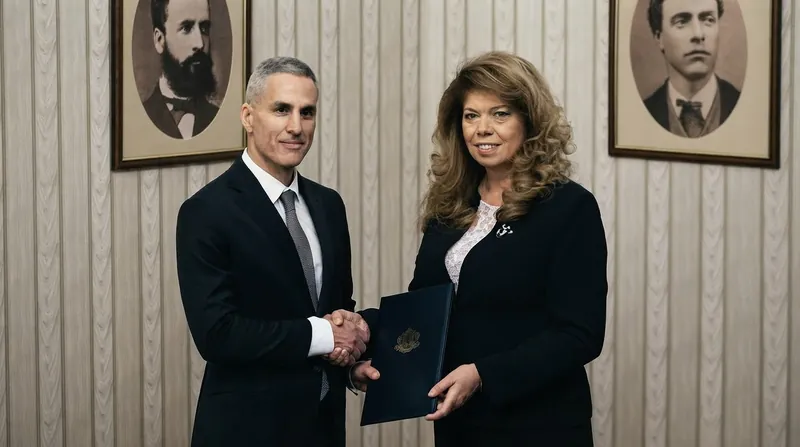
Acting President Iliana Iotova secured 57.66% of the vote in the November 1 runoff, becoming Bulgaria's first elected female head of state.
Follow Bulgarian presidential election in the Factlen app and get an alert when there is news. Get the app
Share this story
Latest report
Iliana Iotova Wins Runoff to Become Bulgaria's First Elected Female President
Acting President Iliana Iotova secured 57.66% of the vote in the November 1 runoff, becoming Bulgaria's first elected female head of state. Her victory cements the political dominance of the faction aligned with her predecessor amid record-low voter turnout.
- Acting President Iliana Iotova won the November 1 runoff with 57.66% of the vote, becoming Bulgaria's first elected female president.
- Her victory cements the political dominance of the faction aligned with her predecessor, Rumen Radev, ensuring continuity in the executive branch.
- The election concluded a cycle marked by severe voter fatigue and record-low turnout across the country.
- European observers are closely monitoring the administration's foreign policy, given its historical reluctance to provide direct military aid to Ukraine.
Acting President Iliana Iotova secured a decisive victory in Bulgaria’s November 1 presidential runoff, capturing 57.66% of the vote to become the country’s first elected female head of state. The result elevates a seasoned political figure to the presidency during a period of entrenched parliamentary gridlock.[2][5]
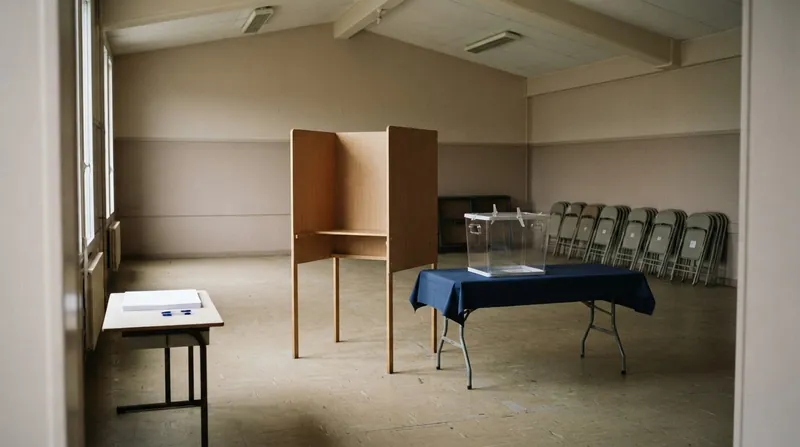
The unofficial count confirmed her insurmountable lead late Sunday evening, concluding an electoral cycle defined by severe voter fatigue. Iotova defeated her challenger following a campaign marked by widespread apathy and record-low turnout in the initial round of voting.[1][2]
As Bulgaria’s seventh democratically elected president, Iotova steps into a role that is largely ceremonial but wields critical influence over foreign policy and the formation of caretaker governments. Her election cements the political dominance of the faction aligned with her predecessor, Rumen Radev.[3][7]
Radev, who recently consolidated his own political power, previously served alongside Iotova when she was his vice president. Analysts suggest her victory ensures continuity in Sofia’s executive branch, maintaining a leadership style that has frequently clashed with pro-Western parliamentary coalitions.[7]
Consolidating Executive Power
The outcome carries immediate implications for Bulgaria’s foreign policy orientation amid the ongoing war in Ukraine. European observers have characterized Iotova as a "Russia-friendly" leader, signaling potential friction with NATO and European Union allies over military aid and sanctions.[7]
Securing 57.66% of the ballots cast, Iotova managed to mobilize her core socialist and nationalist base effectively. Her opponent struggled to bridge the gap, failing to unite the fragmented center-right and liberal voting blocs that had dominated recent parliamentary contests.[5]
The runoff vote concluded an electoral cycle defined by severe voter fatigue, as Bulgarians navigated their latest trip to the ballot box following years of fractured parliaments and snap elections. Turnout figures remained depressed, reflecting deep public disillusionment with the political establishment.[1][6]
Bulgaria has endured a prolonged political crisis, cycling through multiple caretaker governments appointed by the presidency after successive parliaments failed to form stable coalitions. Iotova’s transition from acting president to an elected mandate provides a rare moment of executive stability for the nation of 6.4 million people.[4][8]
The Bulgarian presidency holds a five-year term and serves as the commander-in-chief of the armed forces. While the prime minister drives domestic legislation, the president represents the nation abroad and holds the power to veto parliamentary bills, forcing lawmakers to reconsider contentious laws.[3]
Shattering the Glass Ceiling
Iotova’s political career spans decades, including a prominent tenure as a Member of the European Parliament before returning to Sofia to serve as vice president. Her elevation to the top office shatters a long-standing glass ceiling in the Balkan nation’s traditionally male-dominated political landscape.[3][4]
The "Russia-friendly" label attached to the incoming administration stems from the presidency's historical reluctance to provide direct military assistance to Kyiv. This stance has consistently placed the executive branch at odds with Bulgaria's pro-European parliamentary majority, which favors deeper integration with Western defense initiatives.[7]
Exit polls released immediately after the 8:00 p.m. voting deadline projected a comfortable margin for Iotova, which was later validated by the central electoral commission's preliminary tallies. The swift resolution of the runoff averted a protracted legal challenge, allowing the transition process to begin immediately.[1][2]
Regional neighbors and European Union officials are closely monitoring the transition, given Bulgaria's strategic position on the Black Sea and its role as an external border for the bloc. Sofia's internal stability directly impacts broader European efforts to secure energy independence and manage migration routes.[4][7]
Despite the historic nature of her election, Iotova faces the immediate challenge of governing a deeply polarized electorate. The record-low participation rate indicates a profound disconnect between the political elite and the general public, complicating efforts to build a broad national consensus.[6][8]
Navigating Structural Gridlock
The consolidation of power by Radev's allies raises questions about the balance of power in Sofia. Critics argue that the presidency has amassed disproportionate influence through the repeated appointment of caretaker cabinets, bypassing the traditional parliamentary oversight mechanisms established when Bulgaria joined the EU in 2007.[7]
Iotova will officially inaugurate her new five-year term in a swearing-in ceremony before the National Assembly. Her first major test will involve navigating the ongoing budget negotiations and addressing the persistent inflation that has strained household finances across the country.[3][5]
As the first woman to hold the office, Iotova's victory has been celebrated by advocacy groups as a milestone for gender representation among the 27 European Union member states. However, her campaign focused primarily on national security and economic stability rather than identity politics or social reform.[3][4]
The coming months will reveal whether Iotova intends to maintain the combative relationship with parliament that characterized the previous administration or seek a more conciliatory approach. Her mandate provides the political capital necessary to shape the national discourse, but structural gridlock remains a formidable obstacle.[7][8]
Bulgaria’s integration into Western institutions, including its 2004 accession to NATO, remains a cornerstone of its security architecture despite the executive branch's nuanced rhetoric. Iotova must balance the expectations of her domestic base with the binding commitments Sofia has made to its international partners.[4][7]
The Road Ahead
The 57.66% mandate gives Iotova a clear directive, yet the roughly 42.34% of voters who backed her opponent represent a substantial opposition bloc. Bridging this divide will require significant political maneuvering in a capital accustomed to zero-sum partisan warfare.[5]
International markets and foreign investors will look to the new presidency for signals of predictability following years of institutional volatility. A stable executive branch could facilitate the implementation of delayed infrastructure projects and unlock over €5 billion in European recovery funds.[4][8]
Sources
- [1]South China Morning Post — Iliana Iotova wins Bulgaria's presidential run-off election Read on South China Morning Post →
- [2]Los Angeles Times — Yotova wins runoff to become Bulgaria's first elected female president, unofficial count shows Read on Los Angeles Times →
- [3]Bulgarian National Radio — Iliana Iotova is Bulgaria's 7th president and first woman elected to the post Read on Bulgarian National Radio →
- [4]Brussels Signal — Bulgaria elects Iotova as its first woman president Read on Brussels Signal →
- [5]Ukrainska Pravda — Iliana Iotova wins Bulgaria's presidential election with 57.66% of the vote Read on Ukrainska Pravda →
- [6]TVP World — Iotova leads Bulgaria's presidential vote Read on TVP World →
- [7]EU Today — Bulgaria Elects Russia-Friendly President as Radev Consolidates Political Power Read on EU Today →
- [8]REFORM — (untitled) Read on REFORM →
Charts, maps and images
Timeline
November 2026
Iliana Iotova Wins Runoff to Become Bulgaria's First Elected Female President
October 2026
Bulgaria Presidential Election Heads to November 1 Runoff Amid Record Low Turnout