
World Team Claims Inaugural Shanghai Sprints Trophy on 500-Meter Urban Course
A composite World Team captured the overall title at the first-ever World Rowing Shanghai Sprints, navigating a tight 500-meter urban course on Suzhou Creek. The knockout-format event tested elite crews with a staggered start and a mid-course bend, marking a dramatic shift from traditional straight-line endurance racing.

Share this story
The traditional 2,000-meter rowing regatta is a test of sustained, lung-burning endurance on a flat, straight lake. But on Suzhou Creek late last month, World Rowing threw out the playbook. The inaugural Shanghai Sprints condensed the sport into a 500-meter, two-lane urban street fight, complete with a staggered start and a mid-course bend.[1][7]
Eight elite squads, including seven national teams and a composite "World Team," descended on the Huangpu River Bund in late September for the knockout-format competition. With a reported $5 million budget and significant prize money on the line, the stakes were immediate. There was no room to settle into a rhythm or recover from a slow catch.[1][8]
"In rowing, we have an old saying: Anyone can go fast over 500 meters," said World Rowing Competition Commission member Chris Perry. "And that means the racing will be very close and exciting, so we won't know the champion until the last race."[2]
The course itself became the primary antagonist. Navigating a laser-measured bend required tactical steering that traditional straight-line racing rarely demands. Crews had to balance raw power with precise boat handling, knowing a single steering error could end their weekend in the unforgiving knockout rounds.[1][3]
That exact scenario played out in the women's double sculls final. Reigning world champions Zoe Hyde and Mags Cremen of Ireland found themselves locked in a dead heat with the Dutch duo of Roos de Jong and Benthe Boonstra. The boats remained overlapped through the 250-meter mark before the tight margins took their toll.[3][6]
The Netherlands drifted slightly off their line, striking a buoy near the finish. Hyde and Cremen stayed clean, powering through the line in 1:40.47 to claim the gold medal. The Irish crew capitalized on the exact boat-handling demands the new format was designed to test.[3]
"It's nothing like we've experienced before," Cremen said after the victory. "Five hundred metres, it's such a fast race, so there's no time for mistakes. The bend in the racecourse makes it interesting, and I suppose you love it when it goes your way!"[4]
The women's single sculls delivered a similar tactical battle. Germany's Alexandra Foester, known for her devastating closing speed over 2,000 meters, had to adapt her race plan for the sprint distance. She trailed the Netherlands' Linn van Aanholt early but unleashed a massive surge in the final 100 meters to win in 1:49.73.[3]
"I'm pretty delighted that I made it to the semi-final because it's a different boat and a different type of racing, and the bends in the race course," Foester admitted. "It's really a new thing, and we don't have any experience with it."[3]
While traditional powerhouses found success in individual boats, the overall team trophy went to the composite squad. The "World Team"—featuring athletes from France, Greece, Lithuania, New Zealand, Serbia, and Switzerland—dominated the men's and mixed events to top the weekend standings.[4][5]
The composite roster claimed gold in the men's single sculls behind Greece's Stefanos Ntouskos, and added another title in the men's double sculls with Martin Mackovic and Nikolaj Pimenov. Pimenov then doubled up, partnering with Viktorija Senkute to edge out the Netherlands in a thrilling mixed double sculls final.[3][5]
Germany prevented a complete World Team sweep on Sunday by capturing the mixed eights championship. Starting from the inside lane, the German crew trailed early but used the course's geometry to reel in the composite squad, securing the gold as they passed under the final bridge.[5]
Key points
- The inaugural World Rowing Shanghai Sprints traded traditional 2,000-meter lakes for a 500-meter urban course on Suzhou Creek.
- A composite 'World Team' claimed the overall trophy with victories in three boat classes, including the mixed double sculls.
- Ireland's Zoe Hyde and Mags Cremen added the sprint title to their world championship honors after their Dutch rivals struck a buoy.
- The condensed format, featuring a staggered start and a mid-course bend, forced athletes to prioritize boat handling and tactical steering over raw endurance.
How we got here
Sept 26
Germany's Alexandra Foester surges in the final 100 meters to claim the women's single sculls title.
Sept 26
Ireland's Zoe Hyde and Mags Cremen win the women's double sculls after the Netherlands drift off course.
Sept 27
Germany secures the mixed eights championship, utilizing the inside lane to overtake the World Team.
Sept 27
The World Team claims the mixed double sculls and lifts the overall inaugural Shanghai Sprints trophy.
- Event Organizers
- View the condensed 500-meter urban format as a necessary innovation to attract new fans and broadcast audiences.
- Competing Athletes
- Embrace the high-stakes knockout racing and prize money, while adapting to the unique tactical demands of steering a bend.
- Rowing Analysts
- Note that the sprint distance and staggered start shift the sport's requirements from raw endurance to precise boat handling.
Perspectives this story doesn't cover
- Local Shanghai residents affected by the event closures
- Rowers who failed to qualify for the exclusive eight-team field
Sources
Source coverage
8 outlets
3 viewpoints surfaced





- [1]Rowing NewsRowing Analysts
2026 World Rowing Shanghai Sprints
Read on Rowing News → - [2]Meet in ShanghaiEvent Organizers
Shanghai to Launch New Rowing Competition in September
Read on Meet in Shanghai → - [3]World RowingEvent Organizers
First-ever World Rowing Shanghai Sprints winners crowned
Read on World Rowing → - [4]World RowingEvent Organizers
Team World tops standings at inaugural Shanghai Sprints
Read on World Rowing → - [5]World RowingEvent Organizers
World Team Wins Inaugural Mixed Double Sculls Title
Read on World Rowing → - [6]Rowing IrelandCompeting Athletes
Shanghai Sprints: 26-27 September 2026
Read on Rowing Ireland → - [7]Row360Rowing Analysts
2026 World Rowing Shanghai Sprints
Read on Row360 → - [8]Shanghai Municipal People's GovernmentEvent Organizers
Top-tier rowing competitions to be held in September
Read on Shanghai Municipal People's Government →
More in Sports
See all →Sports Governance
USRowing Appoints USA Swimming Executive Joel Shinofield as Chief Executive Ahead of LA28
6 sources
Rowing Mechanics
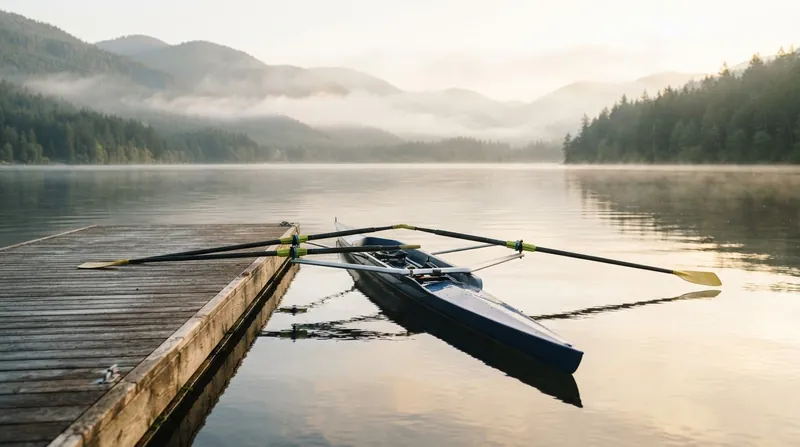
The 4-Degree Pitch and the Outboard-to-Inboard Ratio That Define Oar Gearing
4 sources
Power ranking
The Post-Amsterdam Rowing Power Rankings: Who Rules the Water After the 2026 World Championships
5 sources
Injury
Amsterdam Injury Report: Kennedy-Leverett Withdraws, Salmons and McIntyre Complete Long-Awaited Returns
5 sources
Comments
Every angle. Every day.
Get Sports stories with full source coverage and perspective breakdowns, free every day.