
White House Removes Data Centers, AR from Critical Tech List; Adds Post-Quantum and Integrated Photonics
The U.S. government has updated its Critical and Emerging Technologies list, dropping mature commercial sectors like data centers and augmented reality to focus federal resources on post-quantum cryptography and integrated photonics.
By Lila Morgan

The White House has rewritten its Critical and Emerging Technologies (CET) list for the first time since February 2024, shrinking the federal priority framework from 18 categories down to 14. Published as an appendix to the newly updated National Security Science and Technology Strategy, the revision drops several high-profile sectors—including data centers, advanced cloud services, batteries, and augmented reality—from the government's top-tier focus.
In their place, the administration has elevated post-quantum cryptography, integrated photonics, and high-entropy alloys. The reshuffle marks a deliberate pivot in Washington's approach to technological dominance, shifting federal attention away from booming commercial markets and toward nascent, highly specialized capabilities that lack immediate private-sector funding.[1][4][6]
While the CET list does not directly enact new laws or instantly rewrite regulations, it serves as the foundational signaling document for the entire federal apparatus. Agencies use these categories to determine which research and development grants get funded, which exports face strict controls, and which foreign investments trigger national security reviews by the Committee on Foreign Investment in the United States (CFIUS).
Inclusion on the list guarantees a sector will receive sustained bureaucratic tailwinds, while removal suggests the government is stepping back. Because the list shapes the trajectory of federal procurement and international trade policy, additions and deletions carry immense weight for the technology industry.[1][3][4]
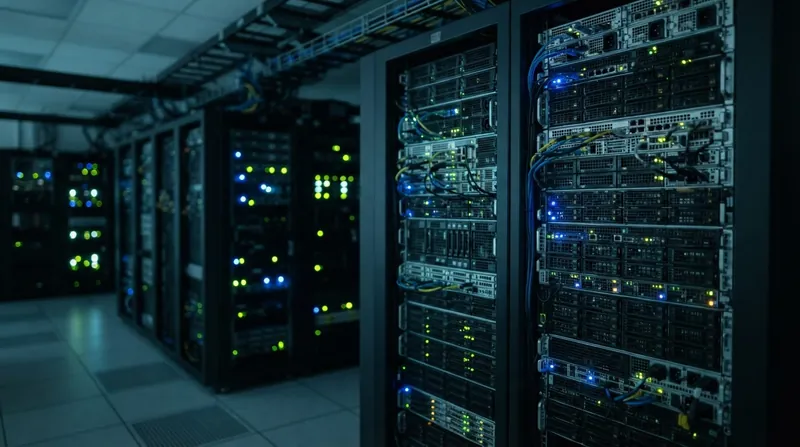
The decision to drop data centers and high-performance data storage in the middle of the largest infrastructure buildout in tech history initially reads as a paradox. However, the removal is an acknowledgment of market reality rather than a strategic downgrade. The updated strategy explicitly directs federal agencies to complement rather than compete with private-sector investment. With hyperscalers and private equity firms already committing hundreds of billions of dollars to build out AI compute capacity, Washington no longer views data centers as a fragile ecosystem requiring federal research subsidies.[1][4][6]
The commercial market has thoroughly solved the funding equation for cloud infrastructure, allowing the government to reallocate its limited R&D budget toward foundational technologies that are still too experimental or risky to attract massive venture capital. By removing these mature sectors, the White House is signaling that the private sector is fully capable of driving later-stage development in AI infrastructure. This precision approach forces allied nations and private investors to align their own strategic spending with a narrower, more defined set of imperatives that the government cannot achieve alone.[4][5]
The additions to the list highlight where the government believes the next genuine security vulnerabilities lie. Post-quantum cryptography has been elevated to a standalone priority, moving beyond the theoretical hype of quantum computing to address the immediate, practical threat of "harvest now, decrypt later" cyberattacks. The administration is signaling that the capability to secure current communications against future quantum decryption is no longer a distant research goal, but a critical national security imperative that requires immediate standardization and deployment across federal and commercial networks.[1][2][3]
Hardware priorities have also shifted to address the physical limits of current architectures. The semiconductor category was updated to specifically include integrated photonics and 2D materials. This points directly to the power and heat bottlenecks crippling modern compute clusters; moving data via light rather than electrical signals is increasingly viewed as the only viable path to scaling next-generation AI systems. By naming integrated photonics, the government is placing a heavy bet on optical interconnects as the successor to traditional copper-based silicon designs.[1][3][5]
Other notable cuts reflect a similar clearing of the deck regarding consumer-driven tech. Augmented reality, virtual reality, and human-machine interfaces were entirely removed as top-level categories, suggesting that the spatial computing market is no longer viewed as a distinct defense priority requiring federal incubation.
Advanced gas turbine engine technologies were also dropped, and the broad "clean energy generation and storage" category was replaced by a strictly nuclear-focused mandate covering advanced fission, fusion, and space nuclear power. The advanced computing category was rebranded as "future computing technologies," shedding its focus on data processing in favor of edge computing for tactical environments and neuromorphic architectures.[1][2][3]
Ultimately, the 2026 CET update forces a tighter alignment between federal spending and actual strategic gaps. By stripping away mature commercial technologies, the White House is attempting to build supply chain resilience and accelerate innovation in areas where the United States cannot afford to lose a future arms race.
Companies developing post-quantum encryption, hardened consumer operating systems, or novel alloys can expect increased government support and procurement interest. Meanwhile, the data center and cloud industries will continue their massive expansion entirely on the back of private capital, free from the specific federal research mandates that govern the nation's most critical emerging tech.[4][5][6]
Key points
- The White House reduced its Critical and Emerging Technologies list from 18 to 14 categories in its 2026 update.
- Data centers, cloud services, batteries, and augmented reality were removed from the priority framework.
- Post-quantum cryptography, integrated photonics, and high-entropy alloys were added as new critical priorities.
- The strategy directs federal agencies to complement rather than compete with massive private-sector investments in mature tech infrastructure.
- Federal Policy Strategists
- Argues that government R&D should focus on nascent technologies rather than subsidizing heavily funded commercial markets.
- Cybersecurity & Quantum Analysts
- Emphasizes the immediate national security imperative of deploying post-quantum cryptography before current encryption is broken.
- Infrastructure & Hardware Industry
- Views the removal of data centers as a logical acknowledgment of the trillions already being invested by private hyperscalers.
Perspectives this story doesn't cover
- Hyperscaler Cloud Providers
- Augmented Reality Developers
- Clean Energy Advocates
Sources
Source coverage
7 outlets
3 viewpoints surfaced







- [1]Tom's HardwareInfrastructure & Hardware Industry
White House cuts data centers, batteries, and AR from the US critical technology list
Read on Tom's Hardware → - [2]MLQ.aiInfrastructure & Hardware Industry
White House narrows critical-technology list, elevating post-quantum security and nuclear power
Read on MLQ.ai → - [3]CadeProjectCybersecurity & Quantum Analysts
White House revises US critical technology priorities for national security
Read on CadeProject → - [4]GlanceFederal Policy Strategists
The White House Office of Science and Technology Policy has updated its National Security Science & Technology Strategy
Read on Glance → - [5]TechCapsulesCybersecurity & Quantum Analysts
White House revises US critical technology priorities for national security
Read on TechCapsules → - [6]Remio.aiInfrastructure & Hardware Industry
Its revised Critical and Emerging Technologies list contains 14 categories
Read on Remio.ai → - [7]The White HouseFederal Policy Strategists
National Security Science and Technology Strategy
Read on The White House →
More in Technology
See all →Enterprise Security
Citrix Confirms Two Unpatched Zero-Day Vulnerabilities in NetScaler Under Active Exploitation
5 sources

OAuth 2.0
The Six Steps of the OAuth 2.0 Authorization Code Flow with PKCE
4 sources

Core Vulnerability
WordPress Patches Critical Core Vulnerability as Attackers Exploit Flaw Within Hours
5 sources

Zero-Day Exploits
Chinese State-Linked Hackers Exploit Chrome-Windows Zero-Day Chain to Deploy CLEANGULP Malware
4 sources

Comments
Every angle. Every day.
Get Technology stories with full source coverage and perspective breakdowns, free every day.