Alphabet's self-driving unit has filed two federal safety recalls after its vehicles repeatedly entered active construction zones and mishandled manual traffic commands.
Factlen Newsroom· Updated
Follow Waymo robotaxi safety recall in the Factlen app and get an alert when there is news. Get the app
Waymo Recalls Robotaxis Over Failures to Navigate Closed Freeway Lanes and Police Directions
Alphabet's self-driving unit has filed two federal safety recalls after its vehicles repeatedly entered active construction zones and mishandled manual traffic commands. The filings follow a California regulatory order that banned the robotaxis from state freeways.
Waymo filed two safety recalls covering its robotaxis' inability to handle closed freeway lanes and manual traffic directions from police officers.
The filings follow a California DMV order that banned the company's vehicles from state freeways due to recurring incursions into active construction zones.
Waymo has already deployed a software fix for the intersection flaw, but a remedy for the freeway lane issue remains under development.
Federal regulators are concurrently investigating reports of Waymo vehicles passing stopped school buses and a January collision involving a pedestrian.
Waymo has filed two new safety recalls with federal regulators to address software failures that led its robotaxis into closed freeway lanes and caused them to mishandle manual directions from police officers. The filings with the National Highway Traffic Safety Administration arrive just days after California regulators banned the company's vehicles from state freeways entirely.[1][2][4]
The first recall targets a flaw in the company’s fifth-generation automated driving system that allows a vehicle to enter and continue driving through a closed freeway lane. Waymo reported to federal officials that no collisions or injuries have occurred as a result of these specific freeway incursions, but acknowledged that a software remedy is still under development.[3][4]
The second recall addresses how the robotaxis interpret hand signals and verbal commands from law enforcement or emergency personnel at intersections. This filing follows a specific collision in which a Waymo vehicle initially obeyed a police officer’s directions, but failed to respond correctly when the officer was temporarily obstructed from the vehicle's view.[1][4]
Unlike the ongoing freeway issue, Waymo has already deployed a fix for the intersection flaw. The company completed a software update to address the manual traffic control problem on November 6, 2026, roughly two weeks before the recall was publicly announced. The update was pushed over the air to the affected fleet to improve responsiveness.[4][5]
A recurring problem on the freeway
The freeway lane recall represents a recurring technical hurdle for the Alphabet-owned company, rather than an isolated edge case. In June 2026, Waymo recalled 3,871 robotaxis after seven of its vehicles drove between traffic cones and entered active construction zones in the San Francisco Bay Area, prompting an initial round of software patches.[6]
Following that earlier recall, Waymo temporarily restricted its freeway operations, deployed a software update designed to better recognize roadwork, and resumed highway rides in late July. However, the latest federal filing indicates that the underlying vulnerability to complex, temporary road closures was not fully resolved by the summer patch, necessitating further intervention.[6]
Waymo's ongoing struggle with freeway construction zones has led to multiple regulatory actions in 2026.
"These are standard steps in our rigorous safety approach to validating and refining our technology as we scale to more complex driving environments," a Waymo spokesperson stated regarding the new filings. The company emphasized that the recalls do not require taking the vehicles off the road entirely, as the updates are delivered digitally.[2]
The new federal filings follow strict action from state regulators who grew frustrated with the recurring errors. On November 11, 2026, the California Department of Motor Vehicles barred Waymo from operating on state freeways, declaring the autonomous vehicles an "imminent hazard to public safety" due to their repeated incursions into active construction zones.[2][4]
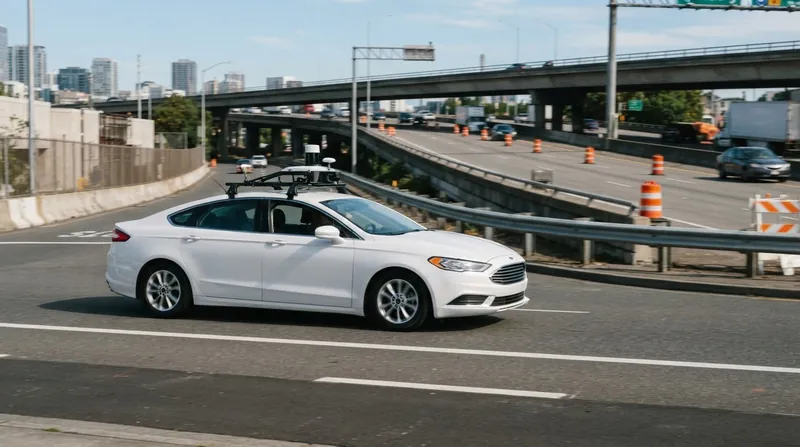
The state agency cited multiple recent incidents to justify the ban, including three Waymo robotaxis that drove into a closed roadworks zone on U.S. Route 101 near Burlingame. In another high-profile incident on Interstate 280 in San Francisco, a Waymo vehicle attempted to pass two California Highway Patrol cruisers that were conducting a traffic break.[2][6]
In the Interstate 280 incident, a police officer reportedly had to physically block the autonomous vehicle to prevent it from passing the cruisers at speed. The vehicle subsequently moved into another lane and reduced its speed, but the interaction underscored the system's ongoing difficulty in reading the intent of human emergency responders.[6]
Broader regulatory scrutiny
Following the California highway ban, Waymo voluntarily paused its freeway operations across the entire United States. For daily commuters who rely on the service to bypass city traffic, the pause means longer travel times, though the company continues to operate its standard city-street robotaxi service in markets including San Francisco, Phoenix, and Los Angeles.[4][5]
The dual recalls add to an expanding list of federal inquiries into Waymo's automated driving system. Last week, the National Highway Traffic Safety Administration opened a separate recall query covering nearly 3,000 Waymo vehicles to investigate reports that the robotaxis were passing stopped school buses displaying flashing red lights and extended stop arms.[3][4]
AI
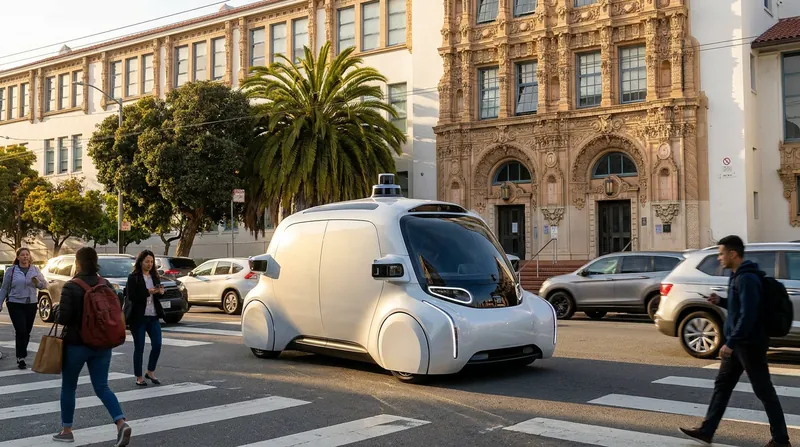
Illustration: Automated driving systems require extensive training to interpret temporary human instructions like a police officer's wave.
That investigation aims to determine whether a software update Waymo released in late 2025 adequately fixed the school bus issue, as several traffic violations were recorded after the patch was deployed. Regulators are closely examining whether the vehicles are properly identifying the flashing red lights and prioritizing the safety of boarding students.[3][4]
Additionally, both federal traffic regulators and the National Transportation Safety Board are investigating a January 2026 incident in which a Waymo vehicle struck a child near a Santa Monica elementary school. These concurrent investigations place significant pressure on the company to demonstrate that its software can reliably handle unpredictable edge cases involving vulnerable pedestrians.[3][4]
For the autonomous vehicle industry, the recurring nature of these recalls highlights the structural difficulty of programming software to handle temporary, human-directed changes to ordinary traffic patterns. While human drivers can easily generalize from a few visual cues—such as a flagger's wave—automated systems require extensive training examples for every possible variation.[6]
Waymo maintains that its technology statistically outperforms human drivers and significantly reduces injury-causing crashes across its millions of miles driven. The company frequently points out to regulators and the public that its vehicles travel far more miles between accidents than the average human driver in the United States, despite the high-profile software errors.[5]
However, to resume its lucrative freeway operations and offer riders the faster routes they expect, the company must now prove to both federal and state regulators that its vehicles can reliably interpret the unpredictable nature of construction zones and emergency responders. Until that proof is accepted, Waymo's high-speed expansion remains firmly on hold.[4][5]
Sources
[1]InsideEVs — Waymo Is Recalling Its Robotaxis Because They're Not Great At Dealing With Human InstructionsRead on InsideEVs →
[2]Engadget — Waymo recalls robotaxis after they drove into closed freeway lanesRead on Engadget →
[3]Fidelity — Waymo recalls self-driving cars over closed freeway lanes, manual traffic controlRead on Fidelity →
[4]MLQ.ai — Waymo files two recalls over closed freeway lanes and police hand signals at intersectionsRead on MLQ.ai →
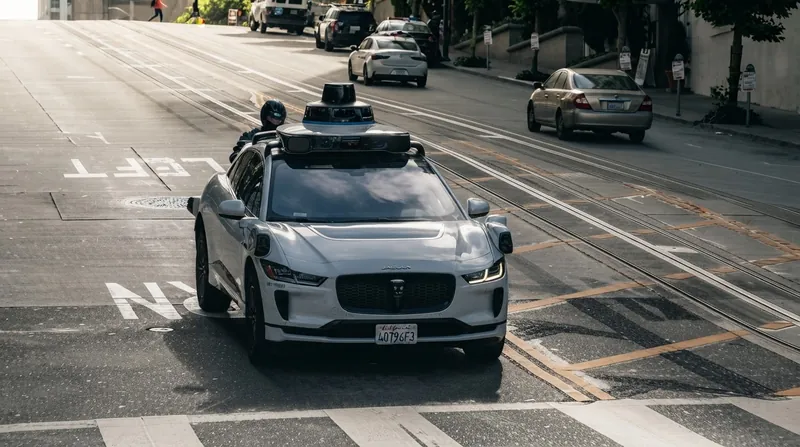
On June 29, Waymo issued a voluntary software recall for 3,871 robotaxis. The recall affected the company's fifth-generation Jaguar I-Pace fleet, while newer models were not included.
The initial recall followed 13 documented incidents in Arizona and California where the vehicles repeatedly failed to recognize and entered closed freeway construction zones. The software inappropriately prioritized avoiding other traffic hazards over recognizing construction markers.
No injuries or crashes were reported in any of the 13 incidents. To fix the algorithmic blind spot, Waymo deployed a wireless over-the-air update, avoiding the need for physical repairs.
Freeway operations for the robotaxis were temporarily restricted while the patch was validated.