
full timeline
Deep-sea mining regulations debate
The federal government secured $6 million in winning bids for its first-ever offshore critical minerals lease sale near American Samoa.
Follow Deep-sea mining regulations debate in the Factlen app and get an alert when there is news. Get the app
Share this story
Latest report
US Auctions 31.5 Million Acres of Pacific Seabed for Deep-Sea Mining Despite Court Ruling
The federal government secured $6 million in winning bids for its first-ever offshore critical minerals lease sale near American Samoa. The auction proceeded over strong local opposition and a federal judge's ruling that invalidated the project's environmental review.
- The U.S. government auctioned 31.5 million acres of Pacific seabed for $6 million, marking the nation's first commercial deep-sea mining lease sale.
- The 20-year leases grant exclusive rights to explore for polymetallic nodules containing critical minerals like nickel, cobalt, and copper.
- A federal judge invalidated the auction's environmental review days before the sale, ruling that regulators illegally ignored the eventual impacts of extraction.
- Local leaders and environmental groups in American Samoa strongly opposed the auction, warning of irreversible damage to marine ecosystems and the tuna fishery.
The United States has officially opened its ocean floor to commercial mineral exploration, auctioning 31.5 million acres of Pacific seabed to deep-sea mining interests. The historic lease sale, finalized on Thursday by the Marine Minerals Administration, secured $6 million in winning bids for two vast tracts located east of American Samoa.[1][4]
The auction marks the first time the federal government has leased offshore territory specifically for the extraction of critical minerals. The targeted zones, situated in waters plunging up to 20,100 feet deep, hold dense concentrations of polymetallic nodules. These potato-sized rocks contain high grades of nickel, cobalt, copper, and manganese.[1][3]
"This is the first time the United States has held an offshore critical minerals lease sale in the Pacific and a historic step for America's energy and mineral security," said Secretary of the Interior Doug Burgum. The move is designed to build a domestic supply chain for materials essential to electric vehicle batteries and advanced defense systems.[2]
While the auction grants exclusive 20-year rights to the winning bidders, it does not authorize immediate commercial extraction. The initial phase permits only preliminary activities, such as high-resolution mapping and environmental sampling. Any deployment of heavy collection machinery will require a subsequent, multi-stage regulatory review.[1][4]
The sale proceeded despite a significant legal hurdle that emerged just days prior. On Monday, U.S. District Judge Jill Otake in Hawaii invalidated a federal environmental review that had cleared the auction. She ruled that the National Marine Fisheries Service violated the Endangered Species Act by assessing only the impacts of the lease sale itself.[2][5]
Legal and local resistance
The court determined that regulators illegally ignored the eventual consequences of full-scale mining operations. "Limiting the agency action here to the lease sale and preliminary activities ignores the reality that the purpose of the leases being sold is eventually to conduct deep-sea mining," Judge Otake wrote in her 41-page decision.[5]
Despite the ruling, the administration pressed forward with the auction, arguing that the immediate leasing phase poses no threat to protected marine life. The two parcels, spanning 16.3 million and 15.2 million acres respectively, sit adjacent to the Rose Atoll Marine National Monument, a critical habitat for humpback whales and sea turtles.[1]
The federal push has encountered unified resistance from the government of American Samoa. Governor Pulaali'i Nikolao Pula has publicly opposed the extraction of minerals from the territory's surrounding waters. In 2024, the local government enacted a moratorium on deep-sea mining within its three-nautical-mile jurisdiction, but it lacks authority over the federal waters where the auction occurred.[1][3]
Local environmental advocates argue the industry threatens the region's ecological balance and its foundational tuna fishery. Sabrina Suluai-Mahuka, founder of the environmental group Finafinau, traveled to California to protest the auction directly. "If these people are going to be selling our ocean, they're going to see our faces when they do these bids," she said.
Suluai-Mahuka emphasized that the ocean is inseparable from the Samoan way of life. She dismissed promises of corporate profit-sharing and local job creation as insufficient compensation for potential ecological damage. "We would be giving up a piece of ourselves that we cannot get back," she warned.
The mechanics of extraction
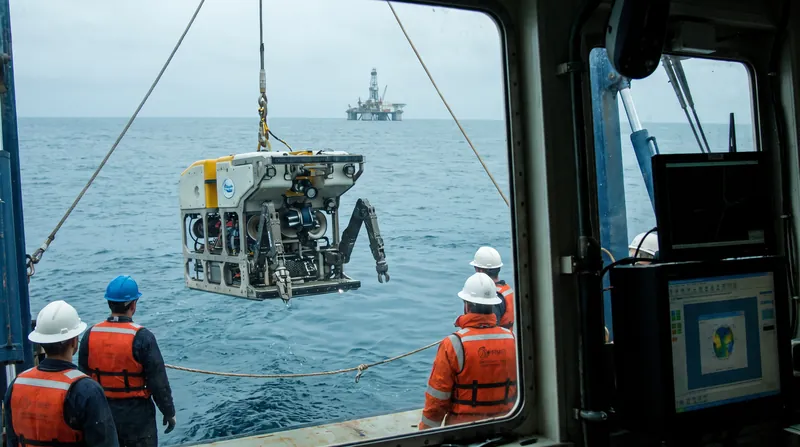
The deep-sea mining industry intends to harvest the seabed using remotely operated, tractor-sized vehicles. These machines are designed to crawl along the abyssal plain, vacuuming up the mineral-rich nodules and pumping them to a surface support vessel. The rocks are then separated from the sediment, and the wastewater is discharged back into the ocean.[3]
Marine biologists caution that this process will inevitably generate massive sediment plumes that could drift for hundreds of miles. These suspended particles threaten to choke slow-growing, filter-feeding organisms on the seafloor. The noise and light pollution from continuous industrial operations could also disrupt the migratory patterns of deep-diving marine mammals.[1][6]
Proponents of the industry counter that harvesting nodules from the dark, barren abyssal plain is far less destructive than terrestrial mining. They argue that land-based extraction of nickel and cobalt often involves clearing rainforests, displacing indigenous communities, and generating toxic tailings. Deep-sea operations, they claim, offer a cleaner path to a decarbonized economy.[3]
The specific metals targeted by these leases are currently dominated by foreign supply chains, primarily controlled by China. The U.S. Department of Defense has repeatedly warned that this reliance creates a severe strategic vulnerability. Securing an independent source of cobalt and manganese is viewed as a national security imperative.[1][4]
The financial terms of the new U.S. leases reflect an effort to incentivize this unproven industry. The winning companies secured the rights at the minimum asking price of $3 million per parcel. If commercial production eventually begins, the operators will pay a 2% royalty on the extracted minerals for the first five years.[1]
Expanding the Pacific footprint
After the initial five-year production period, the federal royalty rate will increase to 5%. The startup Impossible Metals, one of the companies that previously expressed interest in the American Samoa region, has also pledged to share 1% of its future profits directly with the local community to build regional support.[1][3]
The capital requirements for launching a deep-sea mining operation remain staggering. Industry estimates suggest that deploying a full-scale collection fleet and constructing the necessary onshore processing facilities will cost upward of $10 billion. The $6 million spent on the initial leases represents only a fraction of the required investment.[1][4]
The American Samoa auction is only the first phase of a broader federal strategy to secure ocean-floor minerals. The Marine Minerals Administration has already proposed a second, significantly larger lease sale scheduled for December 16, 2026. That auction will target 67 million acres of seabed surrounding the Northern Mariana Islands.[3]
The Northern Marianas proposal has generated a similarly complex local response. While some territorial leaders have cited the need for new revenue streams amid a severe fiscal crisis, others fear the environmental toll. The federal government recently doubled the proposed leasing area to include waters both east and west of the islands.[3]
"If we don't look for some kind of manufacturing process, something that people will buy, we're going to be destitute," said John Wasko, executive director of the American Samoa Economic Development Council. He represents a faction that views the emerging industry as a necessary economic lifeline for isolated island territories facing shrinking populations.[3]
Unresolved ecological questions
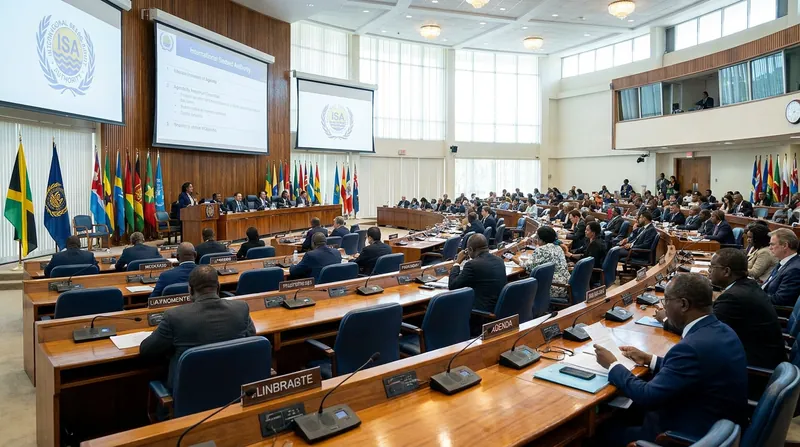
The U.S. initiative runs parallel to a stalled international effort to regulate the deep ocean. The International Seabed Authority, a United Nations-affiliated body, has spent years attempting to draft a binding mining code for international waters. Because the United States has never ratified the UN Convention on the Law of the Sea, it operates outside that framework.[4]
By leasing its own exclusive economic zone, the U.S. is bypassing the international gridlock and establishing its own regulatory precedents. The move positions American companies to begin securing critical mineral reserves without waiting for a global consensus on environmental safeguards or profit-sharing with developing nations.[4]
The long-term viability of the American Samoa leases now depends on the upcoming environmental reviews. The companies must submit detailed exploration plans that demonstrate how they will map the seafloor without causing significant harm. The fisheries service will be forced to conduct the comprehensive species assessment that Judge Otake mandated.[5]
The scientific community remains deeply divided on whether deep-sea mining can ever be conducted sustainably. Recent discoveries, such as the finding that polymetallic nodules may generate "dark oxygen" through natural electrolysis, have underscored how little is known about abyssal ecosystems. Researchers warn that mining could destroy biological processes before they are fully understood.[6]
The regulatory timeline means that actual extraction is still years away. The winning bidders must first complete extensive baseline surveys to document the existing marine life in their lease areas. These surveys will form the foundation of the environmental impact statements required before any commercial mining permits are issued.[1][5]
Testing legal boundaries
The legal vulnerability of the newly issued leases also remains untested. Environmental organizations are expected to file further challenges demanding that the auction be reversed based on the flawed initial review. "The administration is selling off an ocean we barely understand," said Taryn Kiekow Heimer of the Natural Resources Defense Council.[6]
For now, the $6 million transaction stands as a definitive shift in U.S. resource policy. The federal government has formally recognized the deep ocean as a commercial mining frontier. The next decade will determine whether the technological reality of seabed extraction can overcome the mounting legal and ecological resistance.[1][4]
Sources
- [1]gCaptain — U.S. Holds Historic Deep-Sea Mining Lease Sale Read on gCaptain →
- [2]Agence France-Presse — US auctions first ever deep-sea mining leases, despite court ruling Read on Agence France-Presse →
- [3]Associated Press — Deep-sea mining auctions spark environmental concerns in American Samoa and Northern Mariana Islands Read on Associated Press →
- [4]The New York Times — U.S. Auctions 31.5 Million Acres of Pacific Ocean to Deep Sea Mining Company Read on The New York Times →
- [5]Courthouse News Service — Judge tosses environmental review ahead of deep-sea mining lease sale Read on Courthouse News Service →
- [6]Natural Resources Defense Council — Trump Administration Issues Final Notice for First U.S. Deep-Sea Mining Lease Sale Read on Natural Resources Defense Council →
What to watch
- Industry frontrunners are pushing to begin commercial extraction by 2027.
- China, Russia, and environmental coalitions are moving to challenge the United States' domestic permitting of deep-sea mining in international waters.
Charts, maps and images
Timeline
November 2026
US Auctions 31.5 Million Acres of Pacific Seabed for Deep-Sea Mining Despite Court Ruling
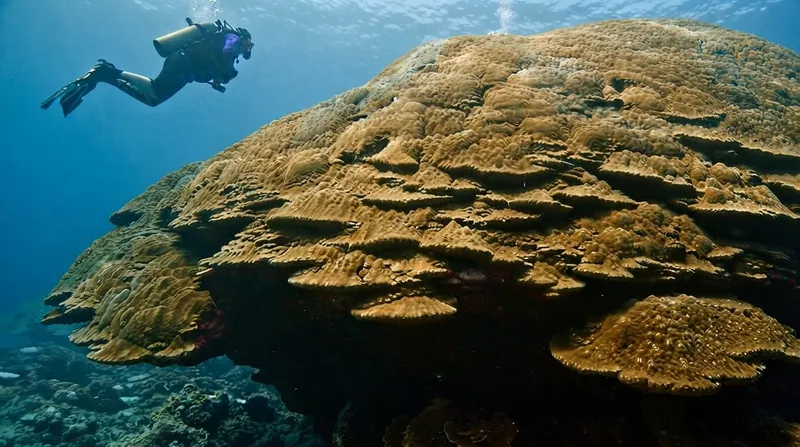
August 2026
Is the US's fast-track deep-sea mining rule the final nail in the coffin for the 'common heritage of mankind'?
AIUN Seabed Authority Vote Looms: The Global Debate Over Mining the Deep Ocean Floor
AIAI
How the story developed
The debate over deep-sea mining centers on the Clarion-Clipperton Zone, a Pacific abyssal plain holding vast reserves of cobalt, nickel, and copper. Industry frontrunners, including The Metals Company, have pushed to begin extraction, citing an urgent need for electric vehicle battery materials. Meanwhile, a five-year scientific study documented a 37 percent decline in animal numbers in areas disturbed by mining equipment.
On August 6, the 31st assembly of the International Seabed Authority concluded without finalizing the regulatory Mining Code for commercial extraction. The conclusion of the assembly intensified a standoff between mining companies and a growing coalition of 46 nations supporting a precautionary pause or moratorium to protect fragile deep-sea ecosystems.
Following the assembly's conclusion, geopolitical tensions rose as companies attempted to bypass the United Nations framework by applying for United States domestic exploration permits. China, Russia, and environmental coalitions moved to challenge the United States' domestic permitting of deep-sea mining in international waters, setting up a legal confrontation.
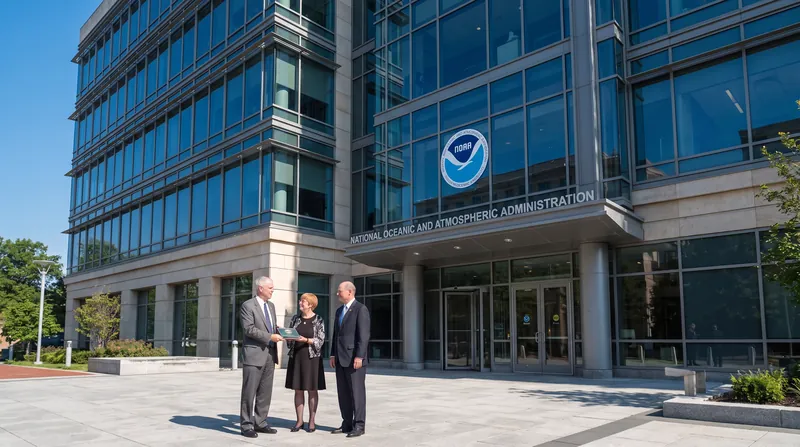
On August 13, details emerged regarding a National Oceanic and Atmospheric Administration rule that fast-tracks deep-sea mining permits for United States companies in international waters. The rule consolidates exploration and commercial recovery applications into a single process. The United States bypassed the International Seabed Authority, citing its non-participation in the United Nations Convention on the Law of the Sea.
The unilateral permitting by the United States bypasses the United Nations framework that designates the ocean floor as the common heritage of mankind. Legal scholars expressed fear that the action will fracture this principle, while environmentalists warned that the move skips crucial ecological baselines in fragile deep-sea habitats.