
UN Forum Approves First Global Safety Regulations for Fully Autonomous Driving Systems
The United Nations has adopted the world's first unified regulatory framework for Level 4 autonomous vehicles, establishing a shared international baseline for how self-driving systems are validated and monitored.
By Adrien Caron

- Global Harmonization Advocates
- Prioritize unified international standards to prevent a fragmented regulatory landscape.
- Implementation-First Proponents
- Emphasize rapid real-world deployment and data accumulation over rigid pre-approval processes.
- Domestic Regulators
- Focus on adapting global benchmarks into localized traffic laws and enforcement mechanisms.
- Neutral Analysts
- Evaluate the regulatory shift's impact on market dynamics and technological deployment timelines.
Perspectives this story doesn't cover
- Municipal transit authorities
- Automotive insurance underwriters
Summary
- The UN WP.29 forum has adopted the world's first global regulatory framework for Level 4 Automated Driving Systems.
- The rules mandate a 'safety case' approach, requiring automakers to prove their systems are as safe as a competent human driver.
- Over 90 legacy UN vehicle regulations were amended to accommodate vehicles built without steering wheels or pedals.
- EU and Japan will grant mutual recognition for approved vehicles, while the US and Canada will adapt the standards domestically.
- The framework aims to replace a fragmented patchwork of state laws with a unified international baseline.
For nearly a decade, the promise of fully autonomous vehicles has been bottlenecked not just by software limitations, but by a fractured global regulatory landscape. That structural barrier shifted dramatically on June 24, 2026, when the United Nations Economic Commission for Europe (UNECE) adopted the world's first unified regulatory framework for fully driverless Automated Driving Systems (ADS).[2][3]
Approved by the UNECE’s World Forum for Harmonization of Vehicle Regulations—commonly known as WP.29—the new rules establish a shared international baseline for how self-driving systems are defined, validated, and monitored. The framework specifically targets Level 4 automation, where a vehicle is capable of performing the entire dynamic driving task without any human intervention within a specific operational design domain.[2][5]
The adoption marks a pivot from theoretical guidelines to binding international law. Backed by major automotive markets including the European Union, Japan, the United States, China, and Canada, the regulation aims to replace a patchwork of state and national laws with a cohesive standard, offering manufacturers a clearer pathway to scale robotaxi and autonomous freight networks globally.[2][6]
At the core of the new UN framework is a shift in how vehicle safety is proven. Traditional automotive regulation relies heavily on physical crash testing and standardized hardware requirements. The ADS regulation introduces a "safety case" approach, fundamentally changing the burden of proof.[2]
Under this mechanism, manufacturers cannot simply pass a static test; they must provide structured, audited evidence that their automated systems pose no unreasonable safety risk across their entire lifecycle. This requires the implementation of a comprehensive Safety Management System that governs the software's development, deployment, and continuous updates.[2]
The benchmark set by the UNECE is explicit: an automated driving system must achieve a level of safety that meets or exceeds the performance of a competent human driver. Because the software handles all tactical and operational driving tasks—from accelerating and braking to signaling and navigating complex urban environments—the validation process must be equally comprehensive.[2][3]
To prove this competence, automakers must utilize a multi-pillar testing strategy. This includes highly validated virtual toolchains and simulations, closed-track proving-ground tests, and extensive real-world public road trials. The framework mandates that these virtual testing environments meet strict credibility criteria, ensuring that simulated miles accurately reflect real-world physics and edge cases.[2]
However, the regulatory oversight does not end once a vehicle is sold or deployed. The UN framework mandates continuous in-service monitoring and reporting. Vehicles must be equipped with Data Storage Systems for Automated Driving (DSSAD), essentially a "black box" that logs safety-relevant data and system decisions.[2][3]
However, the regulatory oversight does not end once a vehicle is sold or deployed.
This continuous feedback loop is designed to ensure that safety authorities can assess the real-world performance of automated vehicles over time, detecting potential software flaws or operational risks early in the deployment phase. If an ADS encounters a scenario it cannot handle, the system must execute a failsafe response, bringing the vehicle to a minimal risk condition.[2]
Accommodating fully driverless vehicles also required a massive overhaul of legacy automotive rules. For decades, international vehicle standards implicitly assumed the presence of a human driver, mandating hardware like steering wheels, brake pedals, and mirrors.[2]
Alongside the new ADS regulation, WP.29 adopted amendments to approximately 90 existing UN vehicle regulations. These updates clarify how traditional safety standards apply to novel vehicle architectures, legally clearing the way for purpose-built robotaxis that lack traditional driver controls entirely.[2]
The geopolitical mechanics of the UN adoption reveal how this global standard will actually be implemented. The identical regulatory text was adopted twice in separate votes to fold it into two distinct international treaties: the 1958 Agreement and the 1998 Agreement.[1]
More than 60 countries party to the 1958 Agreement—including the European Union and Japan—backed the rules unanimously. Under this treaty, a vehicle approved under the ADS regulation in one member country is granted mutual recognition, meaning it can be sold and operated in all other member countries without redundant safety checks.[1]
Conversely, countries like the United States, China, and Canada operate under the companion 1998 Agreement. While these nations voted to adopt the shared technical standards, the 1998 treaty does not carry automatic cross-border sales recognition. Instead, these countries commit to using the UN framework as the foundation for their own sovereign domestic rule-making.[1]
For example, while Canada has signed on to the global benchmarks, Transport Canada will now spend the next few years building domestic regulations that align with the UN text but fit within Canadian traffic laws. Similarly, the U.S. National Highway Traffic Safety Administration (NHTSA) will integrate these performance standards into its Federal Motor Vehicle Safety Standards (FMVSS).[1][4]
Despite the historic nature of the WP.29 agreement, significant uncertainties remain regarding the pace of global deployment. Industry analysts note a persistent tension between the "normative-first" approach championed by Europe and the "implementation-first" strategy seen in the United States.[4]
The European model, now codified in the UNECE framework, demands exhaustive safety proofs and regulatory approval before widespread deployment. In contrast, the U.S. has historically relied on decentralized, state-level authorizations—allowing companies to accumulate millions of real-world miles and iterate rapidly, even as federal standards lagged.[4]
The ultimate test of the UN’s new framework will be whether it can bridge this gap. If the safety case requirements prove too rigid, they could inadvertently slow innovation in regions bound by the 1958 Agreement. Conversely, if the globally harmonized rules provide the regulatory certainty that automakers have been begging for, the industry may finally see the scaled, cross-border rollout of autonomous vehicles that was promised a decade ago.[4][6]
Definitions
- Automated Driving Systems (ADS)
- The hardware and software complex capable of performing the entire dynamic driving task on a sustained basis.
- WP.29
- The UNECE World Forum for Harmonization of Vehicle Regulations, the UN body responsible for creating global automotive standards.
- Safety Case
- A structured argument, supported by evidence, demonstrating that a system is safe for a specific application in a specific environment.
- Operational Design Domain (ODD)
- The specific operating conditions—such as weather, time of day, or geographic boundaries—under which an automated driving system is designed to function.
- Data Storage Systems for Automated Driving (DSSAD)
- An in-vehicle 'black box' that continuously logs safety-relevant data and system decisions to monitor the real-world performance of an autonomous vehicle.
Analysis by camp
Global Harmonization Advocates
Prioritize unified international standards to prevent a fragmented regulatory landscape.
This camp, led by international bodies like the UNECE and supported by major automakers, argues that a patchwork of state and national laws is the primary bottleneck to scaling autonomous vehicles. By establishing a unified 'safety case' framework and mutual recognition under the 1958 Agreement, they believe manufacturers can finally design a single vehicle architecture for the global market, reducing development costs and ensuring a baseline of public trust.
Implementation-First Proponents
Emphasize rapid real-world deployment and data accumulation over rigid pre-approval processes.
Industry analysts and tech-forward regulators in this camp warn against overly rigid 'normative' frameworks that require exhaustive simulation and pre-approval before a vehicle ever touches a public road. They point to the United States' decentralized model—where companies like Waymo have accumulated millions of real-world miles under state-level exemptions—as proof that rapid iteration and real-world data collection are faster paths to achieving superhuman safety than static international standards.
Sovereign Domestic Regulators
Focus on adapting global benchmarks into localized traffic laws and enforcement mechanisms.
For countries operating under the 1998 UN Agreement, such as Canada and the United States, global standards are viewed as a foundation rather than a finished product. This perspective emphasizes that while the technical benchmarks for an automated driving system can be universal, the actual deployment must be governed by sovereign domestic laws. These regulators are tasked with the complex job of translating UN performance metrics into national motor vehicle safety standards and local traffic enforcement protocols.
Significance
For a decade, the rollout of fully driverless cars has been stalled by a fractured patchwork of local laws. This first-of-its-kind global treaty establishes a unified safety standard, allowing automakers to design a single robotaxi architecture for the world market and accelerating the timeline for autonomous transit.
Sources
Source coverage
6 outlets
4 viewpoints surfaced




- [1]Electric Autonomy CanadaDomestic Regulators
Canada signs on, but must develop its own domestic rules for self-driving technology within the new framework
Read on Electric Autonomy Canada → - [2]UNECEGlobal Harmonization Advocates
UNECE adopts first-ever global rules allowing fully autonomous vehicles
Read on UNECE → - [3]United NationsGlobal Harmonization Advocates
UN vehicle standards forum approves first global regulations for fully autonomous driving systems
Read on United Nations → - [4]MarkLinesImplementation-First Proponents
2026 Global Trends in Autonomous Driving Regulations
Read on MarkLines → - [5]TomTomImplementation-First Proponents
A new global technical regulation for Level 4 Automated Driving Systems (ADS)
Read on TomTom → - [6]Factlen Editorial TeamNeutral Analysts
Synthesis by Factlen editorial team
Read on Factlen Editorial Team →
Comments

More in Automotive & Transportation
See all →Aerodynamics
Lift, Weight, Thrust, and Drag: How the Four Forces Must Balance for Sustained Flight
6 sources

Vehicle Recalls
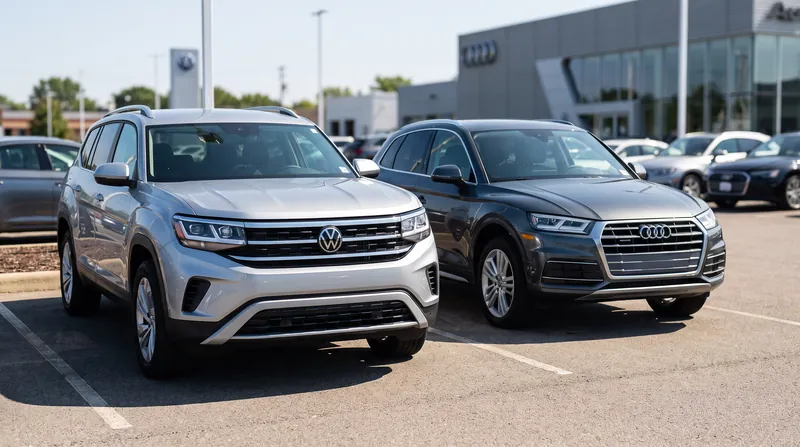
Volkswagen and Audi Recall 208,000 SUVs Over Corroding Steering Rack Bolts
7 sources
EV Safety Recalls
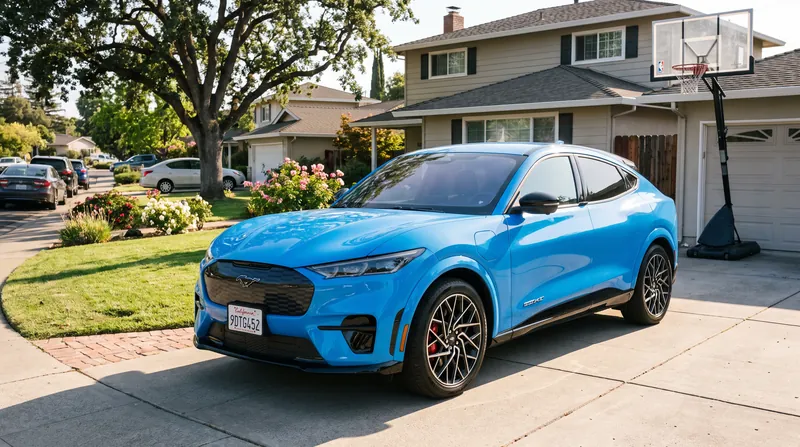
Ford Recalls 86 Mustang Mach-E EVs Over Battery Software Fire Risk
6 sources
Auto Industry
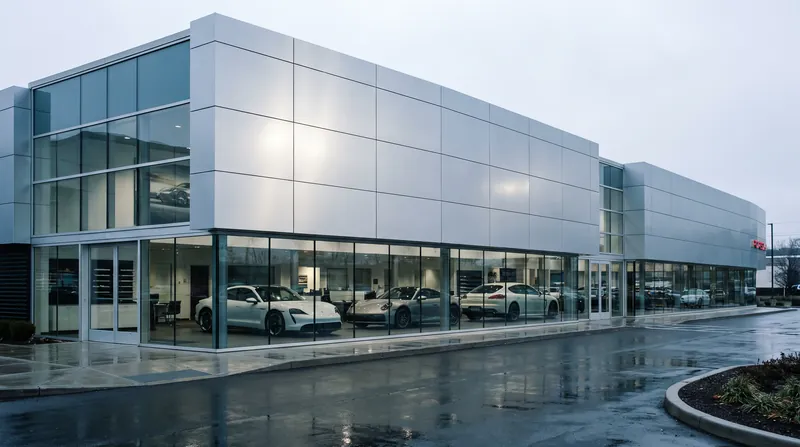
Volkswagen Takes €6 Billion Writedown on Porsche Stake Amid Sales and Margin Declines
4 sources
Every angle. Every day.
Get Automotive & Transportation stories with full source coverage and perspective breakdowns delivered to your inbox.