
Trump and Putin Discuss Framework to End Ukraine War Ahead of NATO Summit
U.S. President Donald Trump and Russian President Vladimir Putin held a 90-minute phone call to discuss potential frameworks for a ceasefire in Ukraine. The conversation, described by the Kremlin as highly constructive, has triggered intense diplomatic maneuvering days before the annual NATO Summit.
By Adel Khoury
- U.S. Administration
- Frames the call as decisive leadership aimed at ending a costly war and stabilizing global markets.
- Ukrainian Government
- Insists that any peace deal must not compromise its sovereignty or occur without its direct participation.
- European Allies
- Expresses anxiety over bilateral U.S.-Russia deals that might bypass NATO and validate territorial aggression.
- Russian Leadership
- Views the dialogue as a constructive step toward a settlement that recognizes its security demands and territorial realities.
Perspectives this story doesn't cover
- Frontline Ukrainian civilians
- Global South nations impacted by grain and energy disruptions
U.S. President Donald Trump and Russian President Vladimir Putin engaged in a nearly 90-minute telephone conversation on Sunday, focusing heavily on potential frameworks to end the war in Ukraine. The call marks the most direct and substantive engagement between Washington and Moscow regarding the conflict's resolution this year.[1][2]
Described by Kremlin aide Yury Ushakov as "highly constructive," the dialogue centered on a U.S. offer to mediate an end to the hostilities. The timing of the discussion is highly consequential, occurring just days before leaders from 32 nations convene for the annual NATO Summit.[1][6]
According to readouts from Moscow and selective confirmations from U.S. officials, Trump explicitly presented a broad outline for a ceasefire. The proposed mechanism reportedly involves freezing the conflict along the current Line of Contact—the heavily fortified front line where Russian and Ukrainian forces are currently entrenched.[1][3][4]
Freezing the conflict would likely require the establishment of a Demilitarized Zone (DMZ) monitored by third-party peacekeepers. However, the composition of such a force, and whether U.S. or European troops would participate, remains a major point of uncertainty in the proposed framework.[4][6]
Evidence of the call's substance comes primarily from Russian state media and background briefings from U.S. officials, creating a fragmented picture of the exact concessions discussed. Ushakov noted that Putin reiterated Russia's core security demands, which historically include Ukrainian neutrality.[4]
U.S. officials aligned with the administration emphasize that the President is taking decisive action on the world stage to halt the bloodshed, stabilize global energy markets, and pivot American strategic focus toward other pressing national security priorities.[3]
However, the prospect of a bilateral U.S.-Russia agreement has triggered acute anxiety among European allies. Diplomats across the continent fear Washington might bypass NATO's collective decision-making processes and present a fait accompli at the upcoming summit.[5][6]
However, the prospect of a bilateral U.S.-Russia agreement has triggered acute anxiety among European allies.
European leaders are particularly concerned that any deal freezing the current battle lines would effectively validate Russia's territorial gains. Currently, Russian forces occupy roughly 20% of Ukraine's internationally recognized territory, including the Crimean Peninsula and significant portions of the Donbas region.[2][5]
In Kyiv, the reaction has been swift and cautious. The Ukrainian government has long maintained a strict "nothing about us without us" policy regarding peace negotiations, insisting that any settlement must be led by Ukrainian terms.
Ukrainian President Volodymyr Zelensky recently warned against accepting "peace at any cost." He emphasized that any ceasefire must include robust, legally binding security guarantees to prevent future Russian offensives once forces have regrouped.
A central sticking point in any proposed framework is Ukraine's prospective membership in NATO. Moscow has consistently demanded that Kyiv formally abandon its aspirations to join the military alliance as a precondition for lasting peace.[2]
It remains unclear whether the U.S. administration signaled any willingness to pause, delay, or veto Ukraine's NATO integration as part of a broader settlement. Such a move would face fierce opposition from Eastern European member states who view Ukraine's accession as vital to regional stability.[4][5]
The upcoming NATO Summit will now serve as a critical stress test for the alliance. Member states are expected to demand clarity from Washington on its long-term strategy for European security and its commitment to the principle of collective defense.[6]
Furthermore, any comprehensive peace deal would require navigating a complex web of international sanctions currently imposed on the Russian economy. Moscow has indicated that sanctions relief is a necessary component of any normalization of relations.[2]
Lifting these sanctions would require significant political capital in Washington, including potential congressional approval. Lawmakers from both parties have previously expressed reluctance to dismantle the sanctions architecture without significant, verifiable concessions from the Kremlin.[4]
Ultimately, while the 90-minute call represents a significant diplomatic opening, the distance between a "constructive" conversation and a durable, enforceable peace treaty remains vast. The coming days at the NATO Summit will reveal whether this dialogue can translate into a viable diplomatic process.[2][6]
Key points
- President Trump and President Putin held a 90-minute call to discuss ending the war in Ukraine.
- The Kremlin described the conversation as 'highly constructive.'
- The proposed framework reportedly involves freezing the conflict along current battle lines.
- European allies are anxious the U.S. may bypass NATO's collective decision-making.
- Ukraine maintains that no peace negotiations should occur without its direct involvement.
- The diplomatic maneuvering comes just days before the annual NATO Summit.
Viewpoints in depth
The White House's View
Focuses on decisive leadership to end the conflict and stabilize the global economy.
U.S. officials aligned with the administration argue that the current trajectory of the war is unsustainable and drains Western resources. From this perspective, direct engagement with Moscow is a necessary step to halt the bloodshed, stabilize global energy and agricultural markets, and allow the United States to pivot its strategic focus toward other pressing national security challenges. They view the proposed framework as a pragmatic acknowledgment of battlefield realities.
The Kremlin's View
Sees the dialogue as validation of its security demands and territorial gains.
Moscow views the direct U.S. engagement as a diplomatic victory, validating its long-standing assertion that the conflict is fundamentally a proxy war with Washington. The Kremlin insists that any durable peace must recognize the 'new territorial realities'—meaning the integration of occupied Ukrainian regions into Russia—and include ironclad guarantees that Ukraine will never join NATO. The call is seen as a sign that Western resolve may be fracturing.
Kyiv's View
Rejects any settlement negotiated without its participation or that compromises its sovereignty.
The Ukrainian government views bilateral U.S.-Russia talks with deep suspicion. Kyiv's core argument is that freezing the conflict without robust security guarantees merely gives Russian forces time to rearm for a future offensive. Ukrainian officials insist that any peace deal must involve the restoration of its territorial integrity and hold Moscow accountable for war damages, warning that 'peace at any cost' is a recipe for future instability.
European Allies' View
Fears a bilateral deal could undermine NATO and embolden future Russian aggression.
European capitals, particularly in Eastern Europe and the Baltics, are highly anxious about the prospect of Washington negotiating over their heads. They argue that conceding Ukrainian territory to achieve a ceasefire sets a dangerous precedent that undermines the post-World War II security architecture. These allies stress that European security requires a unified NATO front and that any concessions to Moscow will only invite further aggression against other neighboring states.
Why this matters
A bilateral agreement between Washington and Moscow could fundamentally alter the trajectory of the largest European conflict since World War II. For global markets, European security, and millions of displaced Ukrainians, the terms of any potential ceasefire will dictate the geopolitical reality of the next decade.
Sources
Source coverage
6 outlets
4 viewpoints surfaced






- [1]Al JazeeraRussian Leadership
Trump offers to help end Russia-Ukraine war in Putin call, Kremlin says
Read on Al Jazeera → - [2]ReutersU.S. Administration
Trump, Putin hold 'constructive' 90-minute call on Ukraine ceasefire ahead of NATO summit
Read on Reuters → - [3]Fox NewsU.S. Administration
Trump enters final NATO summit day as Ukraine, defense spending take center stage
Read on Fox News → - [4]The New York TimesEuropean Allies
In Call With Putin, Trump Signals Shift in U.S. Strategy on Ukraine
Read on The New York Times → - [5]BBC NewsEuropean Allies
Why European backlash over Trump intervention won't worry Infantino
Read on BBC News → - [6]PoliticoEuropean Allies
Inside the Trump-Putin call: What it means for the upcoming NATO summit
Read on Politico →
Comments
More in News & Politics
See all →Trade Dispute Resolution
Bypassing the Appellate Body: How 53 WTO Members Use the MPIA to Settle Trade Disputes
7 sources
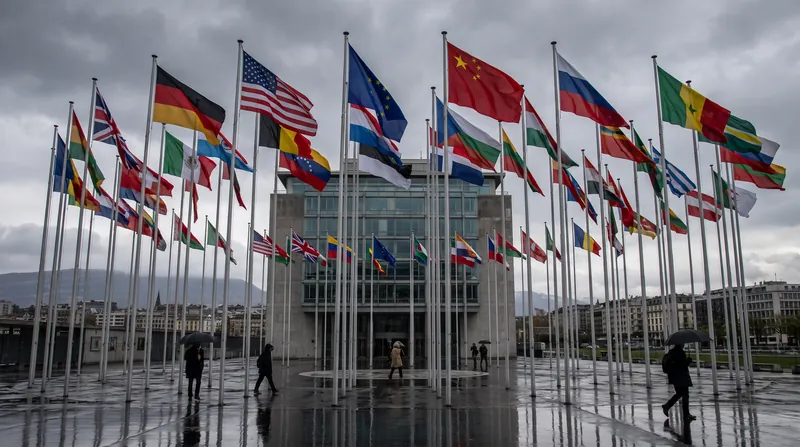
International Court of Justice
Germany Asks ICJ to Dismiss Nicaragua's Case Over Arms Exports to Israel
7 sources
IMF Quotas
The Four Variables That Dictate Voting Power Inside the International Monetary Fund
7 sources

Saxony-Anhalt Election
AfD Secures Historic Plurality in Saxony-Anhalt State Election as CDU Support Collapses
6 sources
Every angle. Every day.
Get News & Politics stories with full source coverage and perspective breakdowns delivered to your inbox.