
US Offers $20 Million Bounty for Intelligence on Iranian Nuclear Network
The US Central Command has announced a reward of up to $20 million and possible relocation for information regarding Iran's nuclear facilities and scientific personnel. The initiative reflects ongoing efforts to monitor Tehran's nuclear capabilities amid a breakdown in international oversight.

Share this story
The United States military has launched a major intelligence-gathering initiative targeting Tehran's nuclear infrastructure, offering a $20 million bounty for actionable information. The US Central Command announced the reward on Friday, seeking details on Iranian nuclear facilities, equipment, and scientific personnel.[1][4]
The initiative is being administered through the State Department's Rewards for Justice program. Beyond the financial compensation, the US government is offering possible relocation for informants who provide critical intelligence regarding the movement of nuclear assets or the identities of key researchers.[2][3]
The public appeal for intelligence highlights ongoing concerns within Washington regarding the opacity of Iran's nuclear advancements. The State Department explicitly cited a breakdown in international monitoring as the primary driver for the multi-million-dollar bounty, pointing to a lack of compliance with international safeguards.[4][5]
According to the State Department, Iran's failure to cooperate with the International Atomic Energy Agency has resulted in a severe intelligence gap. The agency has suffered a loss of "continuity of knowledge" regarding Tehran's production and inventory of critical components, particularly advanced centrifuges.[4]
The Intelligence Gap
The breakdown in international oversight has steadily worsened since the collapse of previous nuclear agreements. International inspectors have been systematically denied access to key manufacturing sites, leaving Western intelligence agencies highly dependent on fragmented data and human sources to track the program's expansion.[1][4]
"Rewards for Justice is offering a reward of up to $20 million and possible relocation for information about Iran's nuclear program," CENTCOM stated in its announcement on the social media platform X. The command shared secure links for individuals to submit tips anonymously.[3][4]
The intelligence push follows alarming assessments from international nuclear watchdogs over the past year. In 2025, the IAEA reported that Iranian facilities were enriching uranium to 60 percent purity, a concentration that lacks credible civilian justification and represents a short technical step from the 90 percent threshold required for a weapon.[4]
Iran remains the only non-nuclear-weapon state globally that is producing highly enriched uranium at the 60 percent level. Nonproliferation experts and international monitors have warned that Tehran's current stockpile could be sufficient to produce several nuclear devices if enriched further.[4][5]
Financial Incentives and Relocation
The Rewards for Justice program, established in 1984 under the State Department, serves as a cornerstone of American national security intelligence gathering. The initiative was designed to offer substantial financial incentives for information that protects American lives, interests, and geopolitical stability.[2][4]
Since its inception, the program has paid out hundreds of millions of dollars to individuals worldwide who provided actionable intelligence. The program currently accepts tips in multiple languages through encrypted communication channels, including secure messaging applications and the Tor browser, to protect the identities of informants.[2][4]
The $20 million figure places the Iranian nuclear network among the highest-valued targets in the US intelligence apparatus. The inclusion of "possible relocation" is a critical component of the strategy for high-risk environments like Iran, where informants providing data on state-level nuclear secrets face extreme peril.[1][2]
The promise of a safe extraction and a new identity is often just as valuable as the monetary reward. Financial compensation alone is rarely sufficient to convince individuals to risk the severe penalties, including execution, imposed by the Iranian state for espionage and treason.[2][5]
Military Strikes and Rhetoric
The timing of the bounty announcement contrasts sharply with recent political rhetoric from the White House. President Donald Trump has repeatedly claimed during recent public appearances that US military forces had effectively "obliterated" Iran's nuclear program during recent engagements.[4]
"If they had nuclear, they would have used nuclear. They would have obliterated the Middle East," Trump told reporters in Florida on Friday. Despite these declarations of military success, the $20 million intelligence bounty suggests that the Pentagon and the State Department continue to view the Iranian nuclear network as an active threat.[4]
The intelligence solicitation arrives amid a volatile security environment in the Persian Gulf and the broader Middle East. The US military recently conducted limited tactical strikes against Iranian anti-aircraft installations on Qeshm Island, an operation Trump described as a minor, 15-minute engagement.[4]
Iranian state media confirmed the strikes in the Suza area of Qeshm, while the Iranian military claimed its air defenses successfully intercepted a US MQ-9 drone over the island. A CENTCOM official subsequently described the immediate aftermath in the region as "relatively calm."[4]
These localized military exchanges highlight the dual-track approach Washington is currently employing. While maintaining a readiness to execute tactical strikes against conventional military targets, the US is simultaneously deploying vast financial resources to map out the heavily fortified and dispersed nuclear infrastructure.[1][4]
Centrifuge Production Concerns
The renewed focus on human intelligence gathering reflects the limitations of satellite reconnaissance and remote monitoring. While overhead imagery can track the construction of surface facilities, identifying the movement of specific scientists, centrifuge components, and underground research requires sources on the ground.[2][3]
By explicitly targeting the scientific community, the US is attempting to exploit potential vulnerabilities or dissatisfaction within Iran's highly compartmentalized nuclear establishment. The intelligence gap regarding centrifuge production is particularly alarming to nonproliferation experts, as advanced machines allow for the rapid enrichment of uranium.[4][5]
Without a clear accounting of how many centrifuges Iran has manufactured and hidden, estimating the "breakout time" for a nuclear weapon becomes highly speculative. The US government has not specified the exact parameters or the specific pieces of information that would trigger the full $20 million payout.[3][4]
The diplomatic backdrop to the intelligence bounty remains complex, with ongoing back-channel efforts to prevent a wider regional conflict. Mediators have been working to secure a deal to end the broader hostilities that have engulfed the region over the past eight months.[4]
Diplomatic Complications
Trump asserted on Friday that Tehran is eager to reach a diplomatic resolution, claiming that the Iranian economy and military infrastructure have sustained severe damage. "We're dealing with them now. They want to make a deal very badly," the president stated following the US midterm elections.[4]
However, the structural realities of Iran's nuclear program complicate any potential diplomatic off-ramp. The loss of IAEA monitoring means that even if a new political agreement were reached, establishing a verifiable baseline of Iran's current nuclear inventory would require unprecedented access and cooperation.[4][5]
The intelligence gathered through the Rewards for Justice program could prove vital in establishing that baseline or identifying undeclared sites. Regional allies have long advocated for a more aggressive posture, warning that Tehran is using regional proxy conflicts as a smokescreen to advance its weaponization research.[1][4]
The US bounty effectively crowdsources the intelligence effort, broadcasting the financial incentive across the Middle East. By publicizing the reward on social media platforms and translating the appeal into local languages, CENTCOM aims to reach individuals operating at the periphery of the nuclear program.[2][3]
The success of the initiative will depend entirely on the US intelligence community's ability to securely extract informants and verify their claims. The Iranian intelligence services maintain a pervasive surveillance apparatus designed specifically to prevent the defection of nuclear scientists and technicians.[2][5]
The success of the initiative will depend entirely on the US intelligence community's ability to securely extract informants and verify their claims.
As the geopolitical standoff continues, the $20 million bounty stands as a stark indicator of Washington's priorities. Until international inspectors regain full access to Iran's nuclear facilities, the US will likely continue to rely on financial incentives and human intelligence to monitor the program's progress.[4][5]
Key points
- The US Central Command announced a $20 million reward for actionable intelligence regarding Iran's nuclear facilities, equipment, and scientific personnel.
- The State Department cited a critical loss of "continuity of knowledge" by international inspectors tracking Tehran's centrifuge production.
- The Rewards for Justice program is offering relocation assistance to informants, acknowledging the extreme risks of espionage within Iran.
- The intelligence push follows 2025 assessments that Iranian facilities were enriching uranium to 60 percent purity, nearing weapons-grade levels.
What we don’t know
- It remains unclear what specific pieces of intelligence or documentation are required to trigger the maximum $20 million payout.
- The exact number of advanced centrifuges Iran has manufactured since international inspectors lost full access is unknown.
- It is not public knowledge how many informants have successfully been relocated from Iran under the Rewards for Justice program.
How we got here
1984
The US State Department establishes the Rewards for Justice program to gather national security intelligence.
2025
The International Atomic Energy Agency reports that Iran is enriching uranium to 60 percent purity.
Nov. 6, 2026
US Central Command announces a $20 million bounty for information on Iran's nuclear network.
- US Defense Establishment
- The Pentagon and State Department view the Iranian nuclear program as an active threat requiring aggressive human intelligence gathering.
- International Nuclear Watchdogs
- The IAEA and nonproliferation experts emphasize the severe risks posed by the loss of continuity of knowledge regarding Iran's centrifuge production.
- Iranian State Apparatus
- Tehran maintains a strict security posture, intercepting foreign surveillance and imposing severe penalties on espionage to protect its nuclear advancements.
Perspectives this story doesn't cover
- Iranian nuclear scientists
- European diplomatic mediators
Sources
Source coverage
5 outlets
3 viewpoints surfaced





- [1]South China Morning PostInternational Nuclear Watchdogs
Iran's nuclear programme: US offers US$20 million reward for information
Read on South China Morning Post → - [2]WIONUS Defense Establishment
US announces $20 million bounty, offers possible relocation for details on Iran's nuclear sites, scientists
Read on WION → - [3]The Economic TimesInternational Nuclear Watchdogs
US offers $20 mn reward for info on 'Iran's nuclear program': CENTCOM
Read on The Economic Times → - [4]The HinduUS Defense Establishment
United States offers $20 million reward for information on 'Iran's nuclear program': CENTCOM
Read on The Hindu → - [5]Middle East EyeIranian State Apparatus
US offers $20 million reward for info on Iran's nuclear programme
Read on Middle East Eye →

More in News & Politics
See all →Arctic Security
Greenland Parliament Ratifies US Security Pact, Authorizing Two New American Military Bases
5 sources

Tech War
China Urges US to Withdraw Proposed Limits on Outbound Tech Investment
4 sources

Sino-Korean Relations
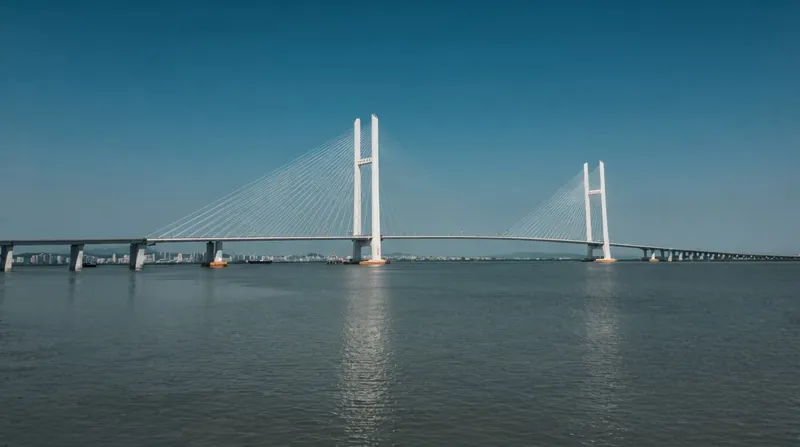
North Korean Leader Kim Jong Un Arrives in China via Newly Opened Border Bridge
7 sources
Diplomatic Expulsions
Austria Expels Four Russian Diplomats Over Alleged Espionage Activities
3 sources

Comments
Every angle. Every day.
Get News & Politics stories with full source coverage and perspective breakdowns, free every day.