
The Science of Pesticide Residues in Tea: How Maximum Residue Limits Work and Why They Matter
Because tea leaves are harvested and processed directly for consumption without peeling, managing agricultural residues is uniquely challenging. Understanding how Maximum Residue Limits are set and how processing degrades chemicals reveals the complex science behind ensuring a safe cup of tea.

In short
- Tea leaves are uniquely vulnerable to chemical residues because they are harvested and processed directly for consumption without protective peels.
- Maximum Residue Limits (MRLs) establish the legal ceiling for agricultural chemicals, though these standards vary significantly between different countries.
- Natural elements during the Pre-Harvest Interval and high heat during factory processing break down a large percentage of synthetic compounds.
You cup your hands around a warm mug of morning tea, breathing in the earthy, roasted aroma. It feels like the ultimate natural remedy—a pure infusion of leaves and water. Yet, behind that comforting ritual lies a quiet, high-stakes scientific battle.
Tea is grown in some of the world’s warmest, most humid climates, environments that are as hospitable to aggressive pests as they are to the tea plant itself. The tension is clear: how do growers protect their delicate crops from being devoured without leaving harmful chemical traces in your cup?
Resolving this tension requires a deep dive into the science of agricultural degradation and international food safety. Unlike bananas or oranges, which come with thick, protective peels, tea leaves are exposed to the elements throughout their entire growth cycle. When they are harvested, they are processed directly for consumption, often with minimal washing. This direct exposure pathway makes residue management one of the most critical, and heavily regulated, aspects of global agriculture.[1]
The cornerstone of this safety system is a metric known as the Maximum Residue Limit. This limit represents the legal ceiling for how much of a specific agricultural compound can remain on the tea leaf when it reaches the market. Set by regulatory bodies based on rigorous toxicological assessments, these limits are expressed in milligrams of residue per kilogram of dried tea. They act as a strict boundary, ensuring that even if you drink multiple cups a day, your exposure remains well below any threshold of health concern.[1][2]
However, these limits are not universal. The Codex Alimentarius Commission, a joint body of the World Health Organization and the Food and Agriculture Organization, establishes baseline international standards. Yet, individual countries frequently enforce their own, often stricter, rules.
The European Union, for instance, maintains some of the lowest limits in the world, while countries like the United States and Japan have different thresholds based on their own dietary models and agricultural practices. This patchwork of regulations means a batch of tea perfectly legal in one country might be rejected at the border of another.[2][3]
To meet these exacting standards, tea estates rely on a crucial window of time known as the Pre-Harvest Interval. This is the mandatory waiting period between the final field application and the moment the leaves are plucked. During this interval, the natural world does the heavy lifting. Sunlight drives photodegradation, while ambient temperature, rainfall, and the plant’s own biological activity break down the chemical compounds into harmless byproducts.[1]
The science of residue dissipation does not stop in the field; it continues into the factory. Once the fresh shoots are plucked, they undergo a series of transformations—withering, rolling, oxidation, and drying. Research indicates that the thermal decomposition during these high-temperature manufacturing steps can degrade remaining residues by thirty to seventy percent. The intense heat of the drying ovens literally bakes away many volatile compounds.[4][5]
Yet, processing introduces a fascinating scientific paradox. While the absolute amount of agricultural compounds decreases during manufacturing, the leaves also lose the vast majority of their water weight. Because the final product is so much lighter and denser than the fresh leaf, the concentration of certain stable residues can actually appear to increase in the dried tea. This is why regulatory testing is always conducted on the final, manufactured black or green tea, rather than the fresh leaf in the field.[4]
When a shipment of tea is ready for export, it faces the scrutiny of advanced analytical chemistry. Third-party laboratories employ techniques like Liquid Chromatography-Tandem Mass Spectrometry to test the batches. These highly sensitive instruments can detect chemical traces down to parts per billion—the equivalent of finding a single drop of water in an Olympic-sized swimming pool. If a batch exceeds the destination country's limit, it is rejected, resulting in massive financial losses for the producer.[6]
It is important to understand what a failed test actually means. According to food safety authorities, exceeding a limit is primarily an indicator of a failure in Good Agricultural Practice. It signals that a farmer applied too much of a compound, sprayed too close to harvest, or used an unapproved input. It does not automatically mean the tea is acutely toxic to drink. The limits are set with massive safety margins, designed to protect consumers over a lifetime of daily consumption.[2][5]
Furthermore, the legal limit is measured on the dry leaf, but you do not eat dry tea leaves—you drink the liquor. The final barrier between any remaining residue and your body is the brewing process itself. The transfer rate of a chemical from the leaf into the hot water depends entirely on its water solubility.[4]
Studies show that highly water-soluble compounds transfer easily into the brew, while fat-soluble compounds largely remain trapped in the discarded wet leaves. For many modern agricultural inputs, only a small fraction of the residue actually makes it into the cup. This means the actual dietary exposure for a tea drinker is often significantly lower than what the dry-leaf metric might suggest.[4]
Despite these built-in safety buffers, the global tea industry is actively working to reduce its reliance on synthetic inputs altogether. Driven by both consumer demand for cleaner products and the financial risk of border rejections, estates are increasingly turning to integrated pest management. This includes deploying biological controls, introducing natural predators like ladybugs, and utilizing botanical extracts to keep pests at bay.[7]
The journey of a tea leaf from a misty hillside to your morning mug is a marvel of agricultural science and regulatory oversight. The next time you steep your favorite blend, you can appreciate not just the complex flavors, but the invisible, rigorous system of testing, degradation, and limits that ensures every sip is as safe as it is soothing.
Terms to know
- Maximum Residue Limit (MRL)
- The highest concentration of a pesticide residue legally permitted in or on food when chemicals are applied correctly.
- Good Agricultural Practice (GAP)
- A collection of principles applied to farming that ensures products are safe, sustainable, and legally compliant.
- Pre-Harvest Interval (PHI)
- The mandatory waiting period between the final pesticide application and the harvesting of the crop, allowing chemicals to degrade naturally.
- Liquid Chromatography-Mass Spectrometry (LC-MS/MS)
- An advanced analytical chemistry technique used by laboratories to detect trace amounts of chemicals down to parts per billion.
- Codex Alimentarius
- A collection of internationally recognized standards and guidelines relating to food safety, established by the WHO and FAO.
Questions readers ask
Does brewing tea destroy pesticide residues?
Brewing does not necessarily destroy residues, but it limits your exposure. The amount of chemical that transfers from the dry leaf into your cup depends on its water solubility; many modern compounds are fat-soluble and remain trapped in the discarded leaves.
Are Maximum Residue Limits the same worldwide?
No. While the Codex Alimentarius provides international baseline guidelines, individual countries set their own limits. The European Union typically enforces the strictest MRLs, while limits in the US and Japan may differ based on local agricultural practices.
What happens if a tea shipment exceeds the MRL?
If third-party testing reveals residues above the destination country's legal limit, the shipment is typically rejected at customs. It cannot be legally sold in that market, resulting in significant financial losses for the exporter.
Is tea with residues above the MRL immediately toxic?
Generally, no. Regulators state that an MRL violation is primarily a failure of Good Agricultural Practice rather than an acute health threat. Limits are set with massive safety margins to protect consumers over a lifetime of exposure.
Different angles
Regulatory Authorities
Focus on enforcing strict Maximum Residue Limits to protect consumer health and standardize international trade.
Food safety agencies view Maximum Residue Limits as the ultimate safeguard for public health. Organizations like the FAO and regional bodies emphasize that these limits are not arbitrary; they are calculated based on acceptable daily intake metrics and toxicological data. For regulators, strict enforcement at the border ensures that imported goods meet domestic safety standards, even if it creates friction in international trade. They maintain that exceeding an MRL is a clear violation of Good Agricultural Practice that warrants immediate rejection.
Agricultural Scientists
Emphasize the biochemical processes of pesticide degradation and the importance of Good Agricultural Practice.
Researchers focus on the lifecycle of the chemical compounds themselves. They study how sunlight, rainfall, and the tea plant's metabolism break down synthetic inputs during the Pre-Harvest Interval. Scientists point out that while thermal processing destroys a significant percentage of residues, the loss of water weight can artificially inflate the concentration in the final dry leaf. Their goal is to optimize application timelines and develop bio-pesticides that degrade completely before harvest.
Tea Producers & Testers
Focus on the practical challenges of pest management and the rigorous testing required for export compliance.
For the estates growing the tea and the laboratories testing it, residue management is a complex logistical hurdle. Producers must balance the immediate threat of crop-destroying pests against the financial risk of failing an export test. Testing firms highlight the necessity of advanced mass spectrometry to detect trace elements, noting that navigating the patchwork of different international MRLs requires constant vigilance. For them, compliance is a moving target dictated by the strictest destination market.
- Regulatory Authorities
- Focus on enforcing strict Maximum Residue Limits to protect consumer health and standardize international trade.
- Agricultural Scientists
- Emphasize the biochemical processes of pesticide degradation and the importance of Good Agricultural Practice.
- Tea Producers & Testers
- Focus on the practical challenges of pest management and the rigorous testing required for export compliance.
Perspectives this story doesn't cover
- Organic Certification Bodies
- Tea Importers and Customs Brokers
Sources
Source coverage
7 outlets
3 viewpoints surfaced







- [1]Agriculture InstituteAgricultural Scientists
Understanding maximum residue levels (MRLs) in tea
Read on Agriculture Institute → - [2]Centre for Food Safety (Hong Kong)Regulatory Authorities
Regulation of Pesticide Residues in Tea Products
Read on Centre for Food Safety (Hong Kong) → - [3]Food and Agriculture Organization (FAO)Regulatory Authorities
Maximum Residue Levels (MRLs) on tea trade
Read on Food and Agriculture Organization (FAO) → - [4]MDPIAgricultural Scientists
Residue Dissipation of Difenoconazole in Fresh Tea Leaves
Read on MDPI → - [5]Tea ScienceAgricultural Scientists
Pesticide Residues in Tea: The Issues and Concerns
Read on Tea Science → - [6]SGS DigicomplyTea Producers & Testers
Global Limits for Glyphosate in Tea
Read on SGS Digicomply → - [7]Factlen Editorial TeamTea Producers & Testers
Synthesis by Factlen editorial team
Read on Factlen Editorial Team →

More in Food & Drink
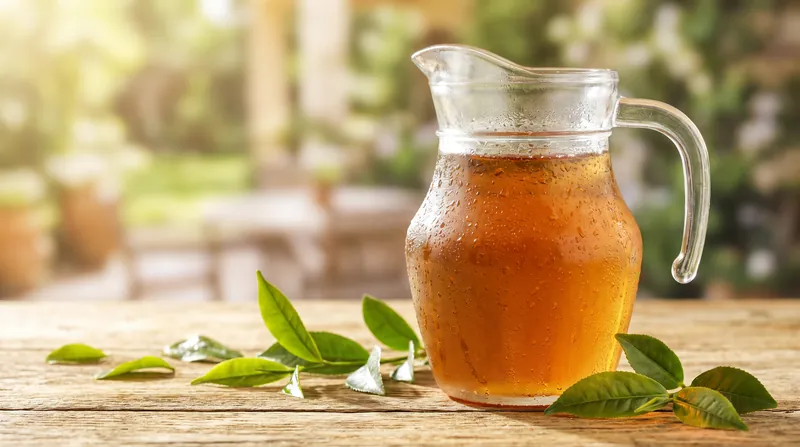
See all →Cold Extraction
The 4°C Extraction Gap: Why Cold-Steeping Tea Leaves Behind Bitter Catechins While Preserving Sweet Amino Acids
4 sources
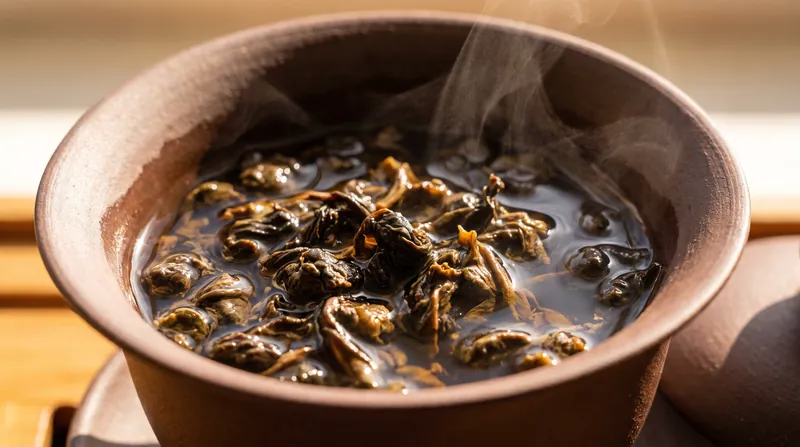
GABA Processing
The Nitrogen Threshold: How Anaerobic Fermentation Converts Glutamic Acid into GABA in Oolong Tea
4 sources
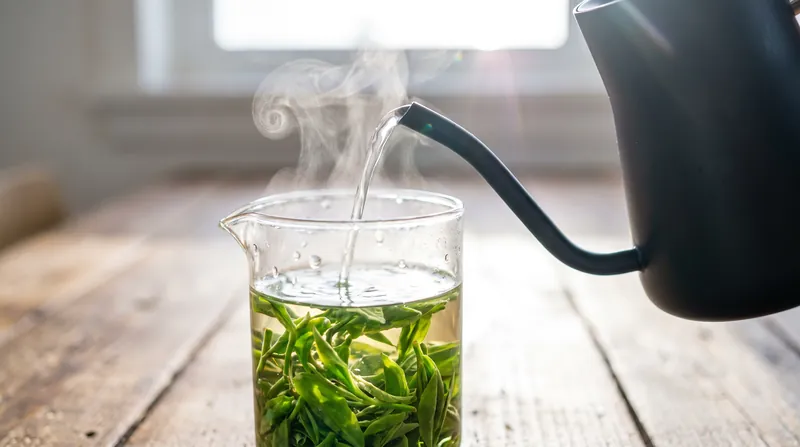
Water Chemistry
The 120 ppm Threshold: How Calcium and Bicarbonate Dictate Tea Flavor and Antioxidant Extraction
5 sources
Tea Chemistry
The Chemistry of Tea: How Catechins, L-Theanine, and Volatile Compounds Create Flavor and Health Effects
11 sources

Comments
Every angle. Every day.
Get Food & Drink stories with full source coverage and perspective breakdowns, free every day.