
The Science of Connection: What a 135,000-Person Study Reveals About Combating Loneliness
A landmark study of over 135,000 adults reveals that one in six experience persistent loneliness, prompting experts to call for community-level public health interventions rather than just individual therapy.

In short
- A major study of over 135,000 adults in England found that nearly one in six experience persistent loneliness.
- The COVID-19 pandemic had a lasting impact, with 44 percent of respondents reporting permanently increased feelings of isolation.
- Major health organizations equate the mortality risk of chronic loneliness to smoking 15 cigarettes a day.
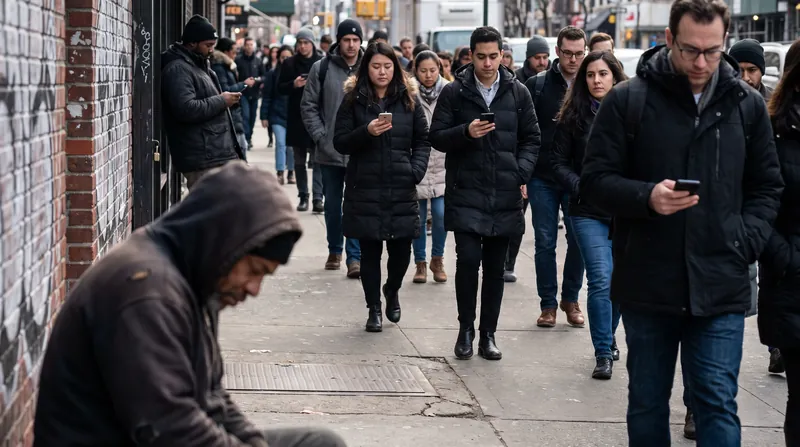
In a bustling neighborhood in London, or a densely packed apartment complex in Manchester, thousands of people are surrounded by neighbors yet completely isolated. A sweeping new study of over 135,000 adults across England has quantified this modern paradox, revealing that nearly one in six people experience persistent loneliness. The sheer scale of the data provides a sobering look at the reality of modern social disconnection, moving the conversation from anecdotal observations to hard, population-level statistics that demand immediate attention.[1][2]
The INTERACT study, led by researchers at Imperial College London and published in the journal BMC Global and Public Health in August 2026, offers one of the most detailed snapshots of social isolation ever recorded. Rather than treating loneliness as a private emotional struggle or a personal failing, the researchers argue that the findings demand a fundamental shift in perspective. Loneliness, they assert, is a structural public health challenge that requires robust, community-level interventions rather than just individual coping strategies or self-help advice.[1][5]
Beyond the 16 percent of adults who reported feeling lonely 'often or always,' the study uncovered broader patterns of social fragmentation. More than one in five respondents reported frequently lacking companionship or feeling left out of social circles. The data also confirms what many health professionals have observed in their clinics: the lingering shadow of the COVID-19 pandemic continues to suppress social engagement. Nearly 44 percent of participants noted that the pandemic permanently increased their feelings of isolation, suggesting that the social habits lost during lockdowns have not fully returned.[1][2]
The impact of this widespread disconnection extends far beyond emotional discomfort or fleeting sadness. Major medical bodies, including the World Health Organization and the American Psychological Association, have elevated loneliness to the level of a global health crisis. Chronic isolation triggers a biological stress response in the human body, elevating cortisol levels and increasing systemic inflammation. Over time, this constant state of physiological high alert wears down the immune system, accelerates cellular aging, and leaves individuals highly vulnerable to a host of chronic diseases.[3][4]
According to the WHO's Commission on Social Connection, the mortality impact of severe loneliness is staggering. The organization equates the health risks of chronic isolation to smoking up to 15 cigarettes a day, contributing to an estimated 871,000 deaths annually worldwide. It significantly raises the risk of cardiovascular disease, stroke, and cognitive decline. By framing loneliness through the lens of mortality and chronic disease, public health officials are attempting to strip away the stigma and treat it with the same urgency as obesity or substance abuse.[4]
One of the most surprising insights from the INTERACT data is the phenomenon known as the 'urban paradox.' Researchers found that some of the highest concentrations of loneliness exist in major metropolitan centers, including London, Birmingham, and Manchester. Living in a densely populated city provides extensive economic and cultural opportunities, but the sheer volume of people does not automatically translate into meaningful social bonds. In fact, the fast-paced anonymity of city life can sometimes exacerbate feelings of invisibility and profound disconnection.[1][2]
This geographic clustering suggests that the built environment plays a crucial role in either fostering or hindering human connection. When neighborhoods lack accessible 'third places'—such as public parks, community centers, or local cafes where people can gather without the pressure of spending money—residents are far more likely to retreat into their homes. Urban planners and community advocates are increasingly pointing to these infrastructural deficits as a root cause of the loneliness epidemic, arguing that we must design cities for connection.[1][5]
Demographically, the face of loneliness is also shifting in unexpected ways. While isolation among older adults remains a critical concern due to factors like retirement and reduced mobility, recent data highlights that young adults are experiencing some of the highest rates of emotional disconnection. The 2025 Stress in America survey revealed that societal division, economic pressure, and digital overload are leaving younger generations feeling profoundly alienated from their peers and communities, challenging the stereotype that loneliness is strictly an issue of old age.[3]
This generational shift changes the calculus for public health officials and policymakers worldwide. If loneliness affects people across all stages of adulthood, interventions cannot be limited to senior centers or retirement communities. They must encompass schools, universities, workplaces, and digital platforms. Creating holistic strategies that integrate social health into everyday life is now seen as essential for building resilient, connected societies where individuals feel supported and valued regardless of their age or life stage.[4][5]
In response to these findings, proposed solutions are moving away from purely clinical treatments. While cognitive behavioral therapy and counseling can help individuals manage the anxiety and depression associated with isolation, experts argue that we cannot simply medicate or therapy our way out of a structural deficit. Rebuilding the social fabric requires creating opportunities for organic, low-pressure interactions that allow people to form relationships naturally over time, rather than placing the entire burden of connection on the isolated individual.[1][5]
Instead, the medical community is increasingly turning toward a model known as 'social prescribing.' This innovative approach allows general practitioners to direct patients toward local, non-clinical community services. A doctor might prescribe joining a local walking group, participating in a community garden, or volunteering at an animal shelter. These activities provide a shared sense of purpose, which psychological research shows is often much more effective at forging genuine bonds than forced social mixers or traditional networking events.[1][4]
Ultimately, the science of connection reveals a deeply hopeful truth: while loneliness is widespread and biologically damaging, it is highly treatable through collective action. By recognizing the profound human need for community and investing in the spaces and programs that bring people together, societies have the power to reverse the trend. The cure for the loneliness epidemic does not lie in a pill, but in the deliberate, joyful rebuilding of our local neighborhoods and the intentional nurturing of our shared humanity.[1][5]
Jargon, explained
- Social Isolation
- The objective, measurable lack of social contacts and interactions with other people.
- Loneliness
- The subjective, distressing feeling that arises when a person's desired level of social connection does not match their actual experience.
- Social Prescribing
- A healthcare approach where medical professionals refer patients to local, non-clinical community services and activities to improve their wellbeing.
- Third Place
- A social environment distinct from the home (first place) and the workplace (second place) where people can gather, such as a park, library, or cafe.
- Urban Paradox
- The phenomenon where individuals living in densely populated cities experience higher rates of loneliness despite being surrounded by people.
Common questions
Is loneliness the same as being alone?
No. Being alone is a physical state that can be restorative for many people. Loneliness is the distressing emotional gap between the connections you want and the connections you actually have.
Why are young adults experiencing high rates of loneliness?
Research indicates that digital overload, societal division, and a lack of accessible community spaces have heavily impacted younger generations, making it harder to form deep, in-person bonds.
How does loneliness affect physical health?
Chronic loneliness triggers a biological stress response that increases inflammation and cortisol levels, elevating the risk of cardiovascular disease, stroke, and cognitive decline.
What is the best way to combat loneliness?
Experts suggest engaging in shared activities with a common purpose—such as volunteering, joining a club, or participating in community gardens—rather than just attending forced social mixers.
Competing readings
Public Health Officials
Viewing loneliness as a systemic health crisis requiring population-level interventions.
For public health leaders, the focus has shifted from individual therapy to structural solutions. Organizations like the WHO argue that loneliness carries mortality risks comparable to smoking or obesity. Consequently, they advocate for integrating 'social health' into national policies, funding community infrastructure, and utilizing social prescribing to connect patients with local resources.
Urban Planners & Community Advocates
Emphasizing the role of the built environment in fostering or hindering human connection.
This camp points to the 'urban paradox'—the high rates of isolation in densely populated cities—as evidence that proximity alone does not create community. They argue for the revitalization of 'third places' like public parks, libraries, and accessible recreation centers. By designing neighborhoods that naturally encourage spontaneous interaction, they believe society can organically reduce isolation.
Mental Health Clinicians
Addressing the psychological barriers that prevent individuals from seeking connection.
While acknowledging the need for community spaces, clinicians highlight that chronic loneliness often alters a person's threat perception, making them hyper-vigilant to social rejection. They emphasize the importance of trauma-informed care and cognitive behavioral approaches to help individuals rebuild the emotional regulation and trust necessary to re-engage with their communities.
- Public Health Officials
- Viewing loneliness as a systemic health crisis requiring population-level interventions.
- Mental Health Clinicians
- Addressing the psychological barriers that prevent individuals from seeking connection.
- Community Advocates
- Emphasizing the role of the built environment in fostering human connection.
Perspectives this story doesn't cover
- Individuals living in rural areas with limited access to community infrastructure
- Marginalized groups facing systemic barriers to social participation
Sources
Source coverage
5 outlets
3 viewpoints surfaced





- [1]BMC Global and Public HealthPublic Health Officials
Measuring loneliness at a national scale: The measuring loneliness in England (INTERACT) study's approach and initial findings
Read on BMC Global and Public Health → - [2]WFINCommunity Advocates
A study of over 135,000 adults found that a surprising number of individuals feel lonely often
Read on WFIN → - [3]American Psychological AssociationMental Health Clinicians
Stress in America™ 2025: A crisis of connection
Read on American Psychological Association → - [4]World Health OrganizationPublic Health Officials
WHO launches commission to foster social connection
Read on World Health Organization → - [5]Factlen Editorial TeamCommunity Advocates
Synthesis by Factlen editorial team
Read on Factlen Editorial Team →

More in Lifestyle
See all →Behavioral Economics
How the Sunk Cost Fallacy Causes Irrational Escalation of Commitment
10 sources

Behavioral Psychology
Diffusion of Responsibility and Pluralistic Ignorance: The Two Psychological Mechanisms That Drive the Bystander Effect
7 sources
Social Psychology
The Science of 'Weak Ties': How Micro-Interactions with Strangers Boost Daily Happiness
4 sources

Credit Scoring
The Mechanics of Credit Scores: Comparing FICO and VantageScore, and the Factors That Matter Most
6 sources

Comments
Every angle. Every day.
Get Lifestyle stories with full source coverage and perspective breakdowns, free every day.