
The Ratio That Defines the Internet's Energy Footprint: How Power Usage Effectiveness (PUE) Works
Power Usage Effectiveness (PUE) is the global standard for measuring data center efficiency, revealing how much electricity is wasted on cooling and infrastructure. While the metric has driven massive energy savings, the rise of AI and the physical limits of air cooling are exposing its blind spots.

- Efficiency Standard Creators
- Organizations focused on defining strict, measurable boundaries for facility power to ensure global comparability.
- Data Center Operators & Vendors
- Industry players focused on implementing efficiency standards practically to lower operational costs and meet regulatory demands.
- Independent Analysts & Researchers
- Observers focused on the historical context, limitations of the metric, and the broader environmental impact of data centers.
Perspectives this story doesn't cover
- Local utility companies managing the grid strain
- Hardware manufacturers designing the internal server power supplies
Why it matters
As artificial intelligence and cloud computing demand massive amounts of electricity, understanding PUE is essential for evaluating whether tech companies are genuinely building sustainable infrastructure or simply masking their massive power consumption behind clever marketing.
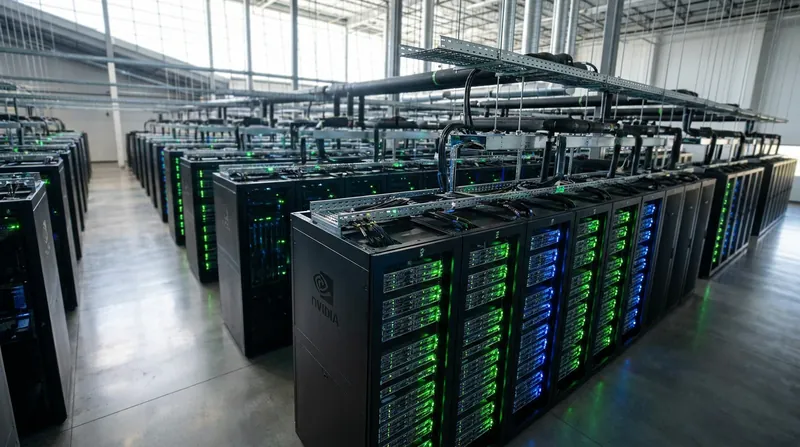
Cloud providers and hardware vendors frequently market their new artificial intelligence data centers as perfectly optimized engines of computation, claiming that their facilities channel nearly all drawn electricity directly into processing power. The physical reality of electrical engineering, as measured by the industry's foundational efficiency standard, contradicts this marketing. According to the Power Usage Effectiveness (PUE) metric established by The Green Grid, a massive fraction of the electricity entering a server farm never performs a single calculation. Instead, it is consumed by the industrial chillers, computer room air conditioners, and power distribution units required to keep the hardware from melting down. By dividing the total facility power by the power actually delivered to the IT equipment, the PUE standard reveals that the average enterprise data center spends hundreds of kilowatts of overhead for every megawatt of useful compute.[1][2][4]
The mechanism behind PUE is a straightforward mathematical ratio, but it serves as the definitive baseline for data center sustainability. As defined by its foundational documentation, "PUE is the ratio of the total amount of energy used by a computer data center facility to the energy delivered to computing equipment". If a facility draws 2.0 megawatts of total power from the utility grid and delivers 1.0 megawatt to its server racks, its PUE is 2.0. The theoretical ideal is 1.0, representing a facility where absolutely no power is lost to cooling, lighting, or transmission. In 2016, the International Organization for Standardization (ISO) and the International Electrotechnical Commission (IEC) codified this metric under the ISO/IEC 30134-2 standard, cementing it as the global benchmark for infrastructure efficiency.[1][2][4]
This standardization forced operators to stop hiding their cooling costs and provided a unified lens for evaluating the true energy footprint of the digital economy. Before PUE became the industry standard, data center efficiency was largely opaque, with operators relying on proprietary, unverifiable claims about their environmental impact. The Green Grid's publication of the metric provided a vendor-neutral framework that allowed facilities to be benchmarked against one another, sparking a competitive drive to reduce overhead and optimize mechanical systems across the entire sector.[1][3]
According to Wikipedia's historical documentation, "PUE was introduced in 2006 and promoted by The Green Grid (a non-profit organization of IT professionals) in 2007, and has become the most commonly used metric for reporting the energy efficiency of data centres". When the metric was first introduced, the industry average PUE hovered around 2.5, meaning that for every watt of computing power, an additional 1.5 watts were wasted on infrastructure. Over the next decade, operators achieved rapid gains by optimizing airflow, implementing hot-aisle containment, and upgrading uninterruptible power supplies (UPS). These relatively simple mechanical adjustments eliminated the most egregious inefficiencies in legacy server rooms, bringing the global average down significantly.[1][3][4]
However, the global average has since plateaued, revealing the physical limits of traditional air-cooled infrastructure. Recent data indicates that the average enterprise PUE remains stubbornly stuck around 1.57. At this level, exactly 36.3 percent of all electricity entering a typical data center is consumed by non-computational overhead. While hyperscale operators have pushed their bespoke facilities closer to a PUE of 1.10 through advanced liquid cooling and artificial intelligence-driven environmental controls, the broader enterprise market continues to struggle with aging legacy infrastructure.[4][5]
Despite its universal adoption, PUE contains a critical blind spot that hardware marketers often exploit when promoting their new facilities. The metric strictly measures the efficiency of the building's infrastructure, not the efficiency of the computing equipment itself. In the PUE calculation, any power that crosses the threshold into the server chassis is categorized as "IT equipment power" and treated as useful work. This means that the metric inherently assumes the servers are utilizing the power perfectly, which is never the case in real-world deployments.[1][2]
This boundary definition ignores the substantial energy lost during the alternating current (AC) to direct current (DC) conversion within the server's own power supply, as well as the power consumed by internal server fans. A facility could theoretically achieve an outstanding PUE by running highly inefficient, power-hungry servers that generate massive heat, provided the building's cooling system handles that heat efficiently. This paradox means that a lower PUE does not automatically guarantee a lower total carbon footprint if the underlying hardware is wasteful.[1][4][5]
This paradox means that a lower PUE does not automatically guarantee a lower total carbon footprint if the underlying hardware is wasteful.
To address these limitations, standards bodies and industry consortiums are developing more granular metrics to complement PUE and provide a more holistic view of facility performance. The British Standards Institution (BSI) and other regulatory groups have continually refined the measurement boundaries to prevent operators from gaming the ratio through creative accounting. New frameworks are emerging that measure partial PUE (pPUE) for specific subsystems, allowing engineers to isolate the efficiency of a single chiller, transformer, or server hall rather than blending it into the facility's overall average.[1][2]
Another complementary metric is Data Center Infrastructure Efficiency (DCiE), which expresses the exact same data as PUE but formats it as a percentage rather than a ratio. A PUE of 1.25 translates to a DCiE of 80 percent, making it easier for non-technical stakeholders to grasp the proportion of power reaching the servers. However, PUE remains the dominant language of data center power contracts, service level agreements, and environmental reporting.[3][4]
The recent explosion of generative artificial intelligence has fundamentally altered the power dynamics that PUE measures, introducing unprecedented thermal challenges. AI workloads require high-density server racks that draw significantly more power and generate highly concentrated thermal loads. This density is forcing a rapid transition from traditional air cooling to direct-to-chip liquid cooling and immersion cooling architectures, as air simply cannot absorb and transport heat fast enough to keep modern processors from failing. These advanced cooling designs represent a massive shift in how data centers are constructed and operated, requiring entirely new plumbing and fluid management systems.[5]
While these advanced cooling systems require significant upfront capital expenditure, they operate much more efficiently than traditional air chillers, driving the facility's PUE closer to the 1.0 ideal. Yet, the skeptical observer must note that a lower PUE in an AI factory does not necessarily mean the facility uses less power overall. It simply means a higher percentage of its massive, multi-gigawatt power draw is reaching the graphics processing units (GPUs). The absolute energy consumption of these facilities continues to skyrocket, even as their infrastructure efficiency ratios improve.[4][5]
Governments and regulatory bodies are increasingly weaponizing the PUE metric to enforce climate goals and manage the strain on local electrical grids. Rather than relying on voluntary corporate sustainability reports, jurisdictions are writing specific PUE thresholds directly into law. For instance, new commercial building codes and municipal zoning regulations frequently mandate a maximum design PUE for any newly constructed data center, effectively banning the construction of inefficient legacy designs. This shift transforms PUE from a helpful engineering benchmark into a strict legal compliance hurdle.[3]
This regulatory pressure ensures that the metric is no longer just an internal benchmarking tool, but a legal requirement for operating in the modern digital economy. Facilities that fail to meet these stringent efficiency standards face heavy fines, denial of construction permits, or exclusion from lucrative government cloud computing contracts. Consequently, data center operators must now design their cooling and power distribution systems with regulatory compliance as the primary objective, rather than just operational cost savings. The standardization provided by ISO/IEC 30134-2 gives regulators the precise definitions they need to enforce these rules uniformly.[2]
The Power Usage Effectiveness ratio remains the most vital tool for understanding the physical cost of the internet and the infrastructure that supports it. It strips away the abstract marketing of "the cloud" and grounds digital infrastructure in the hard realities of thermodynamics and electrical engineering. While it cannot measure the computational value of the software running on the servers, it provides an unsparing accounting of the energy required to keep those servers alive and functioning. Without this metric, the industry would have no standardized way to track its progress or identify its most wasteful facilities.[1][4]
As the global demand for computing power accelerates, driving the PUE as close to 1.0 as the laws of physics allow will be absolutely essential. The metric ensures that as the digital economy expands, the physical power grid is not overwhelmed by the parasitic load of industrial air conditioning and inefficient power distribution. By forcing operators to account for every watt of overhead, PUE guarantees that the future of computing remains tethered to the physical limits of energy generation and thermal management.[5]
What to know
- Power Usage Effectiveness (PUE) is the global standard metric for measuring data center infrastructure efficiency.
- The metric is calculated by dividing the total power entering the facility by the power delivered to the computing equipment.
- While the theoretical ideal PUE is 1.0, the global industry average remains plateaued around 1.57.
- PUE strictly measures infrastructure overhead, ignoring the internal electrical efficiency of the servers themselves.
- The rise of high-density artificial intelligence workloads is forcing facilities to adopt liquid cooling to improve their PUE.
Key terms
- Power Usage Effectiveness (PUE)
- The ratio of total facility power to the power delivered directly to IT equipment.
- IT Equipment Power
- The electricity consumed by servers, storage arrays, and network switches, excluding cooling and lighting.
- Uninterruptible Power Supply (UPS)
- A battery backup system that provides emergency power to a data center during grid outages, which itself consumes some overhead power.
- Data Center Infrastructure Efficiency (DCiE)
- The inverse of PUE, expressing the percentage of total facility power that reaches the IT equipment.
- Liquid Cooling
- A thermal management technique that uses liquid coolants rather than air to remove heat from high-density server racks.
Reader questions
What is a good PUE for a data center?
A PUE of 1.0 is the theoretical perfect score. Modern hyperscale data centers aim for 1.10 to 1.20, while the global industry average sits around 1.57.
How is Data Center Infrastructure Efficiency (DCiE) different from PUE?
DCiE uses the exact same data as PUE but expresses it as a percentage rather than a ratio. For example, a PUE of 1.25 equals a DCiE of 80 percent.
Does a low PUE mean a data center is environmentally friendly?
Not necessarily. PUE only measures infrastructure efficiency. A facility with a low PUE could still be powered entirely by fossil fuels and use highly inefficient servers.
Why is it impossible to achieve a PUE of exactly 1.0?
A PUE of 1.0 would mean zero power is lost to cooling, lighting, or electrical transmission, which violates the laws of thermodynamics as all electrical equipment generates some heat.
Sources
Source coverage
5 outlets
3 viewpoints surfaced





- [1]The Green GridEfficiency Standard Creators
WP#49 - PUE: A Comprehensive Examination of the Metric
Read on The Green Grid → - [2]BSIEfficiency Standard Creators
BS ISO/IEC 30134-2:2016+A1:2018. Information technology. Data centres. Key performance indicators - Power usage effectiveness (PUE)
Read on BSI → - [3]BeldenData Center Operators & Vendors
PUE Standards for Energy Efficient Data Centers on the Horizon
Read on Belden → - [4]WikipediaIndependent Analysts & Researchers
Power usage effectiveness
Read on Wikipedia → - [5]Factlen Editorial TeamIndependent Analysts & Researchers
Synthesis by Factlen editorial team
Read on Factlen Editorial Team →
Comments

More in Technology
See all →AI Hardware
Nvidia Forecasts Doubled 2027 Chip Sales as Analysis Shows Firm Locking Up 37% of Global HBM Supply
5 sources
DMDC Breach
Pentagon Data Breach Exposes Social Security Numbers of 4 Million Military Personnel
3 sources

Health Tech
Midjourney Pivots to Hardware With 60-Second Full-Body Ultrasound Scanner
4 sources

AppSec Innovation
The Evidence Behind AI-Driven Code Remediation: Can LLMs Actually Fix Vulnerabilities?
4 sources

Every angle. Every day.
Get Technology stories with full source coverage and perspective breakdowns delivered to your inbox.