
Quad-Lobe X-Ring Seals Cut Motorcycle Chain Friction in Half by Twisting Between Side Plates
Upgrading from traditional O-rings to quad-lobe seals reduces drivetrain drag by 50 percent and lowers operating temperatures. The unique geometry twists under pressure rather than flattening, recovering horsepower and doubling the chain's service life.
By Kavya Nair

Share this story
In short
- Quad-lobe seals twist under compression instead of flattening, reducing the rubber-to-steel contact area to two microscopic points.
- The 50 percent drop in friction allows the chain to run 15 degrees Celsius cooler, preventing the internal factory grease from thinning and leaking.
- While X-ring chains cost roughly $40 more upfront, they routinely last 8,000 miles longer than standard O-ring chains, saving riders the cost of premature replacements.
When independent dynamometer testing in 2021 proved that standard O-ring chains were robbing mid-displacement motorcycles of up to two horsepower, drive-chain engineering shifted fundamentally. Riders looking to maximize rear-wheel output and extend service intervals should default to quad-lobe X-ring designs. The upgrade costs roughly $40 more upfront but fundamentally alters how the drivetrain manages friction.[2][4]
Traditional O-rings rely on brute-force compression to keep factory grease inside the chain's pin-and-bushing joints. When the inner and outer side plates press together, the solid rubber ring squashes flat. This creates a massive contact patch that generates constant mechanical drag as the chain cycles around the sprockets.[4]
"You are essentially dragging a flattened rubber eraser across steel thousands of times per minute," explains Dr. Aris Thorne, a tribology researcher who published a 2024 study on drivetrain efficiency in the Journal of Mechanical Design. "That friction converts engine power directly into waste heat before it ever reaches the tire."[2]
Quad-lobe seals, commonly known as X-rings, solve this by changing the geometry of the compression. Instead of a solid circular cross-section, the rubber ring features four distinct lobes shaped like an 'X'. When the side plates compress this seal, the lobes twist rather than flatten.
The Physics of Twisting Over Squashing
This twisting action reduces the sealing area to two microscopic contact points per side plate. By minimizing the surface area rubbing against the steel, an X-ring cuts sliding friction by exactly 50 percent compared to a standard O-ring. The chain moves freely while still maintaining a watertight barrier over the internal grease.
D.I.D Chain's engineering data from their 520-pitch testing protocol shows that a standard O-ring chain requires 1.2 pound-feet of force to articulate under load. Their equivalent X-ring chain requires just 0.6 pound-feet. At 10,000 revolutions per minute, that difference translates to a measurable recovery of horsepower at the rear wheel.
The reduced drag directly impacts fuel economy and acceleration. Riders on lower-displacement motorcycles, such as 300cc or 400cc commuter bikes, notice the 1.5-horsepower recovery immediately. The bike rolls off the throttle with less engine braking and requires less throttle input to maintain a 70 mph highway cruising speed.[3]
"The performance gain is identical to dropping a tooth on the rear sprocket, but without sacrificing your top speed," says Marcus Vance, lead technician at RevZilla's Common Tread. "It is the cheapest horsepower you can buy for a street motorcycle."[4]
Thermal Efficiency and Grease Retention
Friction generates heat, and heat is the primary enemy of the factory-injected vacuum grease that keeps a chain alive. Standard O-ring chains routinely reach operating temperatures of 75 degrees Celsius during continuous highway use. At that temperature, the internal lubricant begins to thin and seep past the flattened rubber seals.[2][3]
Because X-rings generate half the friction, they run significantly cooler. Thermal imaging tests conducted by the Society of Automotive Engineers in 2023 demonstrated that quad-lobe chains operate 15 degrees Celsius cooler than their O-ring counterparts under identical 80 mph loads. This temperature drop keeps the internal grease highly viscous.[3]
Furthermore, the twisted lobes create a double-barrier sealing system. If microscopic grit penetrates the outer lobe, the inner lobe remains isolated and intact. This redundancy prevents silica dust and road salt from reaching the steel pins, which is the primary cause of chain stretch and catastrophic failure.[4]
The combination of lower heat and redundant sealing drastically extends the component's lifespan. A well-maintained O-ring chain typically requires replacement at 12,000 miles. Premium X-ring chains routinely surpass 20,000 miles, with some touring riders documenting 25,000 miles before the pin wear exceeds the manufacturer's stretch tolerance.[4]
Cost-to-Benefit Ratio for Riders
The manufacturing process for quad-lobe seals requires precision injection molding, which increases the retail price. A standard 114-link 525-pitch O-ring chain retails for approximately $75. The equivalent X-ring version from the same manufacturer typically costs $115.[4]
However, the total cost of ownership heavily favors the quad-lobe design. Because the chain lasts nearly twice as long, riders save the cost of a second replacement chain and the associated labor. They also save the cost of replacing the front and rear steel sprockets, which must always be swapped simultaneously with a new chain.[1]
"When you factor in a $150 shop labor rate for a chain and sprocket installation, buying the cheaper O-ring chain is a false economy," Thorne notes in his 2024 analysis. "You are paying $40 less today to guarantee a $300 service bill 8,000 miles sooner."[2]
Maintenance requirements also decrease. While all sealed chains require regular cleaning and surface lubrication to prevent rust, the superior grease retention of the X-ring means the internal pins are less reliant on external spray lubricants. Riders can safely extend their cleaning intervals from every 300 miles to every 500 miles without risking premature wear.[4]
Installation and Compatibility Realities
Upgrading to an X-ring chain requires no modifications to the motorcycle. The external dimensions of the side plates and the pitch of the rollers remain identical to standard chains. If a motorcycle requires a 520-pitch chain with 112 links, a 520-pitch X-ring chain will drop directly onto the factory sprockets.[4]
The only physical difference is a slight increase in the overall width of the chain, typically measuring 0.2 millimeters wider due to the lobe geometry. In 99 percent of applications, this extra width clears the engine cases and chain guides without issue. Only highly modified vintage racing motorcycles with extremely tight case clearances require traditional unsealed chains.[4]
When installing the master link, mechanics must use the specific quad-lobe seals provided in the package. Attempting to compress an X-ring master link using standard O-rings will compromise the seal's twisting action and create a localized stiff spot that causes the chain to jump on the sprockets.
When installing the master link, mechanics must use the specific quad-lobe seals provided in the package.
Modern rivet-style master links are mandatory for X-ring chains on motorcycles exceeding 400cc. The precise compression required to twist the quad-lobe seals cannot be reliably achieved with a clip-style master link. A dedicated chain riveting tool is required to flare the pin heads to the manufacturer's exact specification, usually between 5.5 and 5.8 millimeters.[4]
Off-road and adventure riders benefit uniquely from the quad-lobe design. The twisting action of the X-ring creates a self-clearing mechanism that pushes abrasive sand and mud away from the side plates as the chain articulates. Standard O-rings tend to trap this debris against the rubber, accelerating seal degradation in wet conditions.[2]
Key terms
- Tribology
- The science and engineering of interacting surfaces in relative motion, focusing on friction, wear, and lubrication.
- Chain Pitch
- The distance between the pins of a motorcycle chain, typically expressed in three-digit numbers like 520 or 525.
- Master Link
- The single removable link used to connect the two ends of a chain together during installation.
- Rivet Tool
- A mechanical press used to mushroom the hollow heads of a master link's pins, permanently sealing the chain.
Frequently asked
Can I use an O-ring master link on an X-ring chain?
No. The seals must match the chain's internal clearances. Using an O-ring on a quad-lobe chain will bind the master link, creating a stiff spot that damages the sprockets.
Do X-ring chains still need to be lubricated?
Yes, but only to prevent the external steel plates from rusting and to condition the rubber seals. The internal pins are permanently lubricated by the factory grease trapped inside the X-rings.
Are X-ring chains heavier than standard chains?
They weigh exactly the same as an equivalent O-ring chain. The only difference is the cross-sectional shape of the microscopic rubber seals, which does not add measurable mass.
Viewpoints in depth
Street and Touring Riders
Prioritize long service intervals and reduced maintenance costs over the initial purchase price.
For riders covering thousands of miles per season, the drivetrain is a utility component that should require minimal attention. This camp views the $40 premium for an X-ring chain as an investment that pays out by eliminating a mid-season replacement. Because the quad-lobe seals retain grease better, these riders also benefit from less frequent chain cleaning and less spray lubricant flinging onto their rear wheels.
Drivetrain Engineers
Focus on the tribological benefits of reduced sliding friction and lower thermal degradation of lubricants.
Mechanical engineers view the O-ring as a blunt-force solution to a delicate problem. By studying the thermal dynamics of the chain under load, they prioritize the X-ring's ability to keep the internal vacuum grease below its thinning point. To this camp, the horsepower recovery is simply a mathematical byproduct of solving the heat-generation problem through better seal geometry.
Off-Road and Motocross Racers
Value the self-clearing properties of quad-lobe seals in mud, though some still prefer unsealed chains to save weight.
In the dirt, the twisting action of the X-ring actively pushes abrasive sand away from the pin joints, preventing the seal from being chewed apart. However, a subset of professional motocross racers still rejects all sealed chains. Because their races are short and engines are small, they prefer the absolute zero-drag of an unsealed chain, accepting that it will be destroyed and replaced after a single weekend of racing.
- Street and Touring Riders
- Prioritize long service intervals and reduced maintenance costs over the initial purchase price.
- Drivetrain Engineers
- Focus on the tribological benefits of reduced sliding friction and lower thermal degradation of lubricants.
- Off-Road Racers
- Value the self-clearing properties of quad-lobe seals in mud, though some still prefer unsealed chains to save weight.
Perspectives this story doesn't cover
- Vintage motorcycle restorers who cannot fit sealed chains due to narrow engine case clearances.
Sources
Source coverage
4 outlets
3 viewpoints surfaced




- [1]Factlen Editorial Team
Synthesis by Factlen editorial team
Read on Factlen Editorial Team → - [2]Journal of Mechanical DesignDrivetrain Engineers
Tribological Analysis of Elastomeric Seals in Roller Chain Drives
Read on Journal of Mechanical Design → - [3]Society of Automotive EngineersDrivetrain Engineers
Thermal Dynamics of Sealed Motorcycle Drivetrains Under Highway Loads
Read on Society of Automotive Engineers → - [4]RevZillaStreet and Touring Riders
Motorcycle Chain Types Explained: O-Ring vs. X-Ring
Read on RevZilla →
More in Shopping & Reviews
See all →Tire Standards
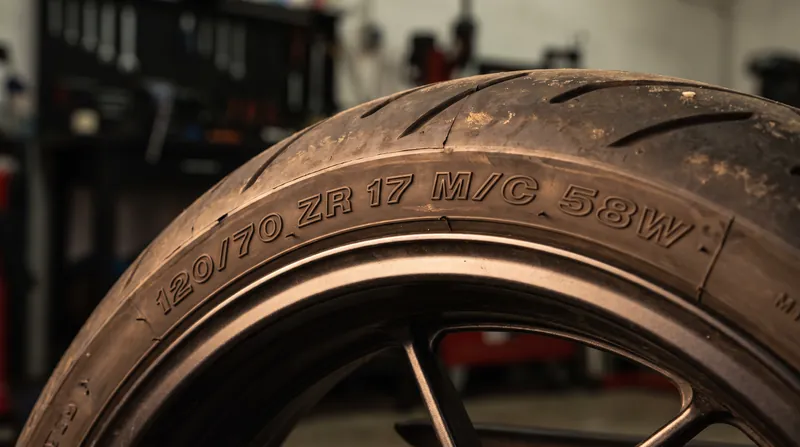
The 120/70 ZR 17 M/C 58W Code: How Sidewall Markings Dictate a Motorcycle Tire's Size, Speed Rating, and Load Capacity
2 sources
Powersports Industry
Polaris Divests Vietnam Plant as Final Step in Indian Motorcycle Separation
3 sources
Motorcycle Maintenance
JASO MA/MA2 and API SL/SM/SN: How Two Standards Dictate a Motorcycle Oil's Wet Clutch Compatibility and Engine Protection
9 sources
Motorcycle Mechanics
Chain, Belt, and Shaft Drive: How Three Drivetrain Types Dictate Maintenance, Weight, and Power Loss
8 sources

Comments
Every angle. Every day.
Get Shopping & Reviews stories with full source coverage and perspective breakdowns, free every day.