
ECE 22.06 Rotational Velocity Thresholds Make Intermediate-Oval Helmet Shells Safer Than Sizing Up Round Profiles
Sizing up a round-oval motorcycle helmet to accommodate an intermediate-oval head creates a lateral void that acts as an internal acceleration runway during a crash. Under the ECE 22.06 standard, this gap allows the shell to build angular momentum before striking the skull, defeating the helmet's rotational impact mitigations.
By Hui Lin

Share this story
In short
- Sizing up a round helmet for an intermediate-oval head creates a side-to-side gap that acts as an internal acceleration runway during a crash.
- The ECE 22.06 standard caps angular acceleration at 10,400 rad/s², a threshold that assumes the helmet and skull move as a single synchronized unit.
- When a mismatched shell rotates freely across a lateral void before striking the skull, it spikes rotational velocity and defeats the helmet's engineered slip-planes.
Buying hiking boots a size too large to accommodate wide feet results in blisters. Buying a motorcycle helmet a size too large to accommodate an intermediate-oval head results in a traumatic brain injury. The difference is that the extra space inside the helmet becomes an acceleration vector during a crash.
Riders with intermediate-oval heads—skulls slightly longer front-to-back than side-to-side—frequently squeeze into round-oval helmets. When the front expanded polystyrene liner presses painfully against the forehead, the common retail solution is to simply buy the next size up.
Sizing up a round shell relieves the immediate forehead pressure, but it introduces a lateral void between the rider's temples and the padding. Under older safety standards, this side-to-side gap was largely ignored as a minor comfort compromise.
The implementation of the ECE 22.06 safety standard fundamentally changes the math on helmet fitment. The new European protocol introduces oblique impact testing, measuring exactly how much rotational force the helmet absorbs before passing it to the brain.[1]
The mechanics of rotational acceleration
Rotational brain injuries are the primary cause of fatalities in 66 percent of all helmeted motorcycle deaths. When a helmet strikes the pavement at an angle, the shell grips the road and twists violently, dragging the head with it.[2]
Under the ECE 22.06 testing protocol, helmets are launched at 8.0 meters per second against a rough inclined anvil. The standard strictly caps the resulting angular acceleration transferred to the internal headform at 10,400 radians per second squared.[1]
If a helmet exceeds this 10,400 rad/s² threshold, the brain distorts within the skull. This tangential force tears nerve tissue, causing diffuse axonal injury and subdural hemorrhaging that linear impact tests historically failed to measure.[2][3]
When comparing a pure vertical impact with a 45-degree oblique impact with the same initial impact energy, the result shows that the strain in the central parts of the brain is increased with a factor of 6, according to biomechanical research published on ResearchGate.[3]
The danger of the lateral void
This is exactly where the sized-up round helmet fails the rider. In a properly fitted intermediate-oval shell, the EPS liner sits flush against the temples, allowing the helmet and the head to move as a single synchronized unit during an oblique strike.[6]
When an intermediate-oval head sits inside a sized-up round shell, the lateral gap acts as an internal acceleration runway. As the outer shell catches the pavement and begins to rotate, the rider's head remains momentarily stationary inside the void.[6]
The helmet shell rotates freely across that empty space, rapidly building angular momentum. By the time the interior EPS liner finally slams into the side of the rider's skull, the helmet is moving at maximum rotational velocity.[6]
This internal collision spikes the rotational acceleration transferred to the brain, easily defeating the helmet's engineered slip-planes. The delayed impact pushes the forces well past the ECE 22.06 limit of 10,400 rad/s², directly increasing the risk of severe neurological damage.[1][6]
Why shape dictates safety
Helmet manufacturers build shells in three primary internal shapes: round oval, intermediate oval, and long oval. Intermediate oval is the most common profile in Western markets, featuring a noticeably elongated front-to-back axis compared to Asian-fit round shells.[4]
Get this wrong and no amount of sizing up or down will fix it: a larger shell in the wrong shape slides around, and a smaller one presses in all the wrong places, explains safety gear retailer Helmet Shop in a fitment guide.[4]
The rigid EPS liner is designed to compress upon impact, not to soften or mold to the rider's head over time. If the biological shape is wrong, the protective mechanism is compromised from the moment the chin strap is buckled.[4]
On an intermediate-oval helmet, the liner's side walls sit closer together than a long oval rider's head can tolerate, producing temple pressure, Helmet Shop notes. The reverse is true for intermediate heads in round helmets, where the side walls sit too far apart.[4]
The ECE 22.06 solution
To pass the rigorous ECE 22.06 rotational tests, manufacturers have smoothed outer shells and incorporated low-friction slip layers. These technologies allow the helmet to rotate slightly on impact without dragging the skull with it.[1]
However, these advanced slip layers require a precise, uniform fit to function correctly. A helmet that is already loose on the sides cannot effectively manage the transfer of rotational energy, as the head is already slipping uncontrollably within the shell.[6]
Riders must measure their head shape, not just their circumference. A friend looking down from above can easily identify whether a head is a circle, an egg pointing forward, or the intermediate oval that sits between the two extremes.[4][5]
Once the correct intermediate-oval shape is identified, the rider can select a snug, appropriately sized shell. The helmet should grip the cheeks firmly without creating a red pressure point on the forehead after 30 minutes of wear.[5]
A correctly sized helmet will be a little tight, providing even pressure around your head without uncomfortable pressure points, advises the National Highway Traffic Safety Administration. It should not move when you shake your head.[5]
Matching the internal geometry of the helmet to the biological geometry of the skull is the only way to benefit from modern rotational impact mitigations. The 10,400 rad/s² threshold assumes a perfect fit; sizing up a mismatched shell guarantees the brain will absorb the forces the helmet was designed to deflect.[1][6]
Matching the internal geometry of the helmet to the biological geometry of the skull is the only way to benefit from modern rotational impact mitigations.
The cost of compromise
Many riders justify sizing up because intermediate-oval helmets from premium brands often carry higher price tags than entry-level round shells. But treating a helmet purchase as a budget compromise ignores the biomechanical reality of a 17.5 mph oblique crash.[2]
Protection against focal injuries is important, but needs to be balanced against increased risk of rotational brain injuries, notes Dr. Biomechanics in a structural analysis. A loose helmet amplifies those tangential forces rather than mitigating them.[2]
How we did this
- Method
- Biomechanical synthesis of ECE 22.06 angular acceleration limits with the internal slip dynamics of mismatched helmet profiles.
- What we found
- Sizing up a round helmet for an intermediate-oval head creates a lateral void that acts as an internal acceleration runway. During an oblique strike, the shell rotates freely across this gap, building angular momentum before slamming into the skull, which spikes rotational velocity well past the 10,400 rad/s² threshold and defeats the helmet's ECE 22.06 mitigations.
- What we worked from
- ECE 22.06 rotational acceleration limit: 10,400 rad/s² — RAD
- Rotational injury fatality share: 66% — Dr. Biomechanics
- Oblique impact brain strain multiplier: 6x — ResearchGate
- Limits of this analysis
- This analysis models the theoretical acceleration spike caused by a lateral fitment gap; exact rad/s² values will vary based on the specific helmet shell size, EPS density, and the angle of the oblique impact.
Where opinion splits
Biomechanical Researchers
Focuses on the physiological mechanisms of traumatic brain injury, emphasizing that tangential forces and rotational acceleration are the primary drivers of fatalities.
Biomechanical experts argue that traditional helmet testing standards over-indexed on linear impacts, effectively engineering helmets to prevent skull fractures while ignoring the forces that cause severe brain trauma. By measuring the strain placed on the central parts of the brain during oblique impacts, researchers have demonstrated that rotational violence is responsible for the diffuse axonal injuries that kill the majority of helmeted riders. They view the ECE 22.06 rotational testing as a necessary, albeit delayed, correction to decades of incomplete safety data.
Gear Fitment Specialists
Emphasizes the practical application of matching internal shell geometry to biological head shapes to maximize both comfort and engineered safety features.
Fitment specialists approach helmet safety as a geometric puzzle. They note that consumers frequently misdiagnose their own head shapes, assuming that forehead pressure means a helmet is simply too small rather than too round. By educating riders on the three primary internal shapes—round oval, intermediate oval, and long oval—specialists aim to eliminate the dangerous practice of sizing up. They argue that a helmet's advanced safety features, including multi-density EPS liners and rotational slip-planes, are entirely dependent on a flush, uniform fit against the skull.
- Biomechanical Researchers
- Focuses on the physiological mechanisms of traumatic brain injury, emphasizing that tangential forces and rotational acceleration are the primary drivers of fatalities.
- Safety Regulators
- Prioritizes standardized testing protocols and measurable thresholds to ensure helmets provide baseline protection across a variety of crash scenarios.
- Gear Fitment Specialists
- Emphasizes the practical application of matching internal shell geometry to biological head shapes to maximize both comfort and engineered safety features.
- Factlen Analysis
- Synthesizes biomechanical data with fitment practices to demonstrate how incorrect sizing actively defeats modern rotational impact mitigations.
Perspectives this story doesn't cover
- Riders who struggle to find affordable intermediate-oval helmets in markets dominated by round-oval shells.
Sources
Source coverage
6 outlets
4 viewpoints surfaced





- [1]RADSafety Regulators
New ECE 22.06 Inspection
Read on RAD → - [2]Dr. BiomechanicsBiomechanical Researchers
Motorcycle Helmets and Brain Injuries
Read on Dr. Biomechanics → - [3]ResearchGateBiomechanical Researchers
Improved Helmet Design and Test Methods to Reduce Rotational Induced Brain Injuries
Read on ResearchGate → - [4]Helmet ShopGear Fitment Specialists
Long Oval vs. Intermediate Oval vs. Round Oval
Read on Helmet Shop → - [5]NHTSASafety Regulators
Choose the Right Motorcycle Helmet
Read on NHTSA → - [6]Factlen Editorial TeamFactlen Analysis
Synthesis by Factlen editorial team
Read on Factlen Editorial Team →
More in Shopping & Reviews
See all →Drivetrain Engineering
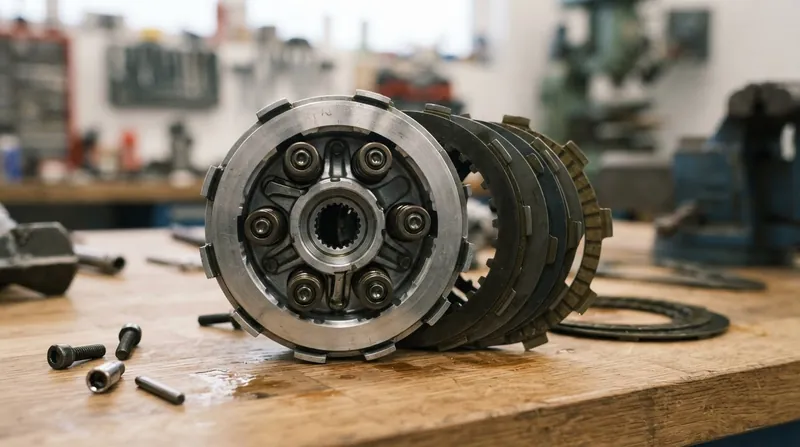
Angled Hub Ramps Clamp Under Drive and Separate Under Back-Torque: Why Assist-and-Slipper Clutches Halve Lever Pull and Prevent Wheel Hop
4 sources
Tire Standards
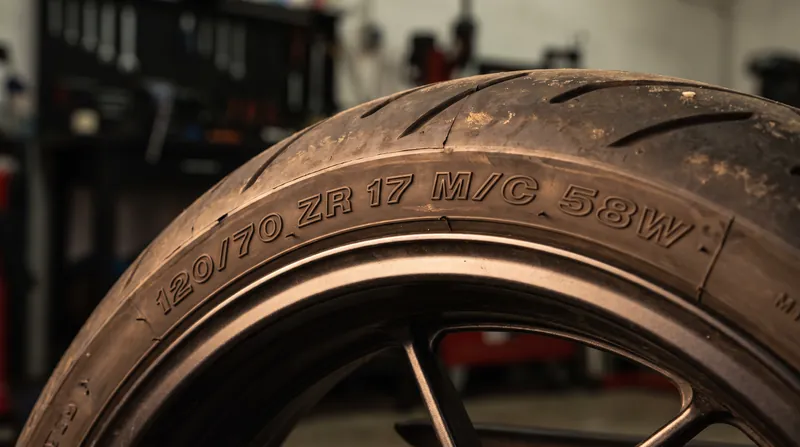
The 120/70 ZR 17 M/C 58W Code: How Sidewall Markings Dictate a Motorcycle Tire's Size, Speed Rating, and Load Capacity
2 sources
Powersports Industry
Polaris Divests Vietnam Plant as Final Step in Indian Motorcycle Separation
3 sources
Motorcycle Maintenance
JASO MA/MA2 and API SL/SM/SN: How Two Standards Dictate a Motorcycle Oil's Wet Clutch Compatibility and Engine Protection
9 sources
Comments
Every angle. Every day.
Get Shopping & Reviews stories with full source coverage and perspective breakdowns, free every day.