
Premier League Power Rankings: Arsenal Favored in Season Defined by Unprecedented Managerial Turnover
As the 2026-27 Premier League season kicks off, defending champions Arsenal hold the top spot in power rankings while rival clubs navigate a record nine managerial changes.

The 2026-27 Premier League season kicks off on Friday, August 21, as defending champions Arsenal host newly promoted Coventry City at the Emirates Stadium. After ending a grueling 22-year title drought last season, Mikel Arteta's squad enters the new campaign in unfamiliar territory: they are now the hunted rather than the hunters.
For over two decades, the North London club chased the shadows of Manchester United, Chelsea, and Manchester City, but they now sit comfortably atop preseason power rankings across the soccer world. With a settled squad, a proven tactical system, and the addition of key reinforcements like Ezri Konsa to an already formidable defense, Arsenal’s primary weapon this season is their continuity.[3][5]
While Arsenal rely on stability, the rest of England's top flight has undergone an unprecedented summer of upheaval. The English Premier League never truly stops, but this off-season served as a massive structural reset for the division. A record nine clubs are starting the 2026-27 season with new managers, representing nearly half the league.
The landscape has been fundamentally altered by the departure of legendary figures, most notably Pep Guardiola leaving Manchester City after a decade of dominance, alongside the exits of Eddie Howe from Newcastle and Marco Silva from Fulham. This sheer volume of turnover has created a vacuum of certainty, forcing pundits and analysts to re-evaluate the traditional hierarchy of the 'Big Six.'[1][2]
The massive tactical shifts across the league have made forecasting the season exceptionally difficult, but statistical models are leaning heavily into Arsenal's established baseline. The Opta supercomputer, which runs thousands of match simulations based on underlying metrics and power rankings, currently gives Arsenal a 38 percent probability of retaining their crown.
That figure reflects the immense difficulty of going back-to-back—a feat only Manchester City has accomplished since 2009—but it also underscores the deep uncertainty surrounding Arsenal's primary challengers. In a season where so many elite squads are learning new systems from scratch, Arsenal's ability to hit the ground running is viewed as a decisive mathematical advantage.[2][3]
Manchester City enters a daunting new era under Enzo Maresca, who has been tasked with the near-impossible job of replacing Guardiola. During Guardiola's tenure, City won six league titles and fundamentally changed how soccer is played in England. Even in his final season, City finished second and won both domestic cups, though a leaky defense ultimately cost them the title race during the spring run-in.
Despite the managerial transition, Opta still rates Maresca's side as Arsenal's stiffest competition, giving them a 20.5 percent chance of reclaiming the trophy. However, some analysts argue that the sheer unpredictability of the other rebuilding giants makes teams like Tottenham or a revitalized Chelsea just as dangerous to Arsenal's title hopes as a Guardiola-less City.[1][3][4]
If City's transition is daunting, Liverpool's borders on chaotic. The Merseyside club sacked Arne Slot on the day of the Champions League final following a disappointing fifth-place finish in the league. With the long Mohamed Salah era officially over, and key veterans like Ibrahima Konaté and Andy Robertson departing on free transfers, Liverpool have turned to former Bournemouth manager Andoni Iraola.
Iraola is expected to implement his frenetic, man-to-man pressing style at Anfield—a system that wins the ball high up the pitch but often leaves the defense vulnerable to high-quality counterattacks. Whether that aggressive, high-risk style can scale up to the demands of an elite club is one of the season's most compelling tactical subplots.[1]
Elsewhere in the upper echelons of the table, Tottenham Hotspur have executed an aggressive rebuild under new manager Roberto De Zerbi. Following a shocking relegation scare last season, Spurs shattered their transfer record to bring in Sandro Tonali and spent heavily on Mateus Fernandes and Jan Paul van Hecke to fit De Zerbi's precise, bait-and-press philosophy.
Newcastle United have taken the opposite approach; rather than reloading, they dismantled the core that was supposed to make them a Champions League mainstay. With Eddie Howe gone, Newcastle are rebuilding from the ground up, placing their faith in younger, unproven prospects like Aladji Bamba and Bazoumana Touré to navigate the grueling English calendar.[1]
At the other end of the table, the newly promoted sides present a fascinating contrast in styles and underlying metrics. Coventry City arrive as Championship winners, having dominated the second division by 11 points and scoring more goals than any team in the top four tiers of English soccer. Their youthful midfield dynamism and assertive style make them a strong candidate to survive the drop.
Ipswich Town return immediately after finishing second, bolstering their squad with experienced Premier League veterans to avoid the late-game variance and dropped points that doomed their previous top-flight campaign. By signing established forwards and midfielders, Ipswich hopes to replace the lost production of departed stars by committee, relying on dressing-room trust and tactical clarity to secure safety.[1][2]
Then there is Hull City, who earned promotion through the playoffs despite underlying numbers that suggest they were incredibly fortunate to even be in the conversation. Advanced metrics show Hull had a minus-20 expected goal difference in the Championship last season—the second-worst mark in the entire second division.
Statistical models indicate they performed more like a League One side, routinely giving up high-quality chances while converting low-probability shots at an unsustainable rate. Consequently, supercomputers and human analysts alike have made Hull City the overwhelming favorites for immediate relegation, with some questioning if they could challenge Derby County's infamous 11-point record from 2007-08.[1][3]
The middle of the pack features its own compelling narratives, particularly the trajectory of Sunderland. The Black Cats were the undeniable story of last season, massively exceeding expectations to finish seventh and qualify for the Europa League in their first year back in the top flight. However, repeating that success will be a monumental challenge.
The emotional lift of being a newly promoted underdog has been replaced by the heavy burden of expectation, and Premier League opponents have now had a full year to dissect and adapt to their high-energy organization. With only minimal additions to the squad, Sunderland must prove that their collective belief and tactical discipline can compensate for a lack of top-level depth, especially as the Thursday-Sunday rhythm of European competition begins to test their physical limits.[2][3]
Beyond the sweeping personnel changes, the league itself is operating under new constraints and a highly unusual calendar. The expanded 48-team FIFA World Cup in North America pushed the start of the Premier League season back, leaving just 33 days between the World Cup final and Friday's kickoff.
To accommodate the compressed schedule and provide players with adequate recovery time, the traditional five international breaks have been consolidated into four, including a novel three-week pause between late September and early October. This condensed timeline will heavily test the squad depth of teams competing on multiple fronts. Managers will be forced to rotate their starting XIs more frequently than ever before, placing a premium on sports science departments and academy graduates to fill the gaps during the grueling winter months.[2][5]
Fans will also notice significant changes to the visual and regulatory landscape of the sport this year. The 2026-27 season marks the implementation of a league-wide ban on gambling sponsors appearing on the front of match-day shirts, a landmark initiative designed to reduce the visibility of betting brands following years of public pressure.
On the pitch, the Premier League has opted not to adopt several optional IFAB rules seen at the summer World Cup, maintaining its own distinct thresholds for fouls and choosing not to expand the scope of VAR interventions for incorrectly awarded corners. The league's officiating framework, developed in consultation with clubs and fans, continues to prioritize the flow of the game, meaning the English top flight will retain its characteristic physicality compared to European and international competitions.[5][6]
As the whistle blows on a new campaign, the defining theme of the 2026-27 Premier League season is profound uncertainty. Arsenal's hard-won stability gives them a clear early advantage, but they are navigating a league where nearly half the teams are adjusting to entirely new tactical philosophies.
As the whistle blows on a new campaign, the defining theme of the 2026-27 Premier League season is profound uncertainty.
With the physical toll of a summer World Cup looming over the sport's biggest stars, and massive structural resets occurring at traditional powerhouses like Manchester City and Liverpool, the title race promises to be a grueling battle of attrition, rapid adaptation, and sheer squad resilience. Whether the Gunners can capitalize on the chaos to build a dynasty, or whether a newly rebuilt giant can instantly click into gear, will determine the balance of power in the world's most watched soccer league.[1][2]
Key points
- Arsenal enters the season as heavy favorites to retain the Premier League title, boasting a 38% probability according to statistical models.
- An unprecedented nine clubs are starting the season with new managers, including Manchester City, Liverpool, and Tottenham.
- The season features a delayed start and a compressed schedule due to the expanded 2026 FIFA World Cup.
- Newly promoted Hull City faces overwhelming odds of relegation due to historically poor underlying expected-goal metrics.
- A league-wide ban on front-of-shirt gambling sponsors takes effect this season.
How we got here
May 2026
Arsenal secures their first Premier League title in 22 years, ending Manchester City's dominance.
June 2026
Arne Slot is sacked by Liverpool on the day of the Champions League final, triggering a massive rebuild.
July 19, 2026
The expanded 48-team FIFA World Cup concludes in North America, leaving a compressed 33-day off-season.
August 21, 2026
The 2026-27 Premier League season kicks off with Arsenal hosting Coventry City.
- Data Analysts
- Rely on supercomputer simulations and underlying expected-goals metrics to forecast the season.
- Neutral Pundits
- Emphasize the unprecedented managerial turnover and the unpredictability of the resulting tactical shifts.
- League Administration
- Focus on structural changes, schedule compression, and new sponsorship regulations.
Perspectives this story doesn't cover
- Players' Union representatives regarding the physical toll of the compressed 33-day off-season.
- Supporters' trusts from the relegated clubs adjusting to life in the Championship.
Sources
Source coverage
6 outlets
3 viewpoints surfaced





- [1]The RingerNeutral Pundits
The 2026-27 Premier League Power Rankings
Read on The Ringer → - [2]365ScoresNeutral Pundits
Premier League Power Rankings: All 20 Teams Ranked and Their Season Predicted
Read on 365Scores → - [3]SI.comData Analysts
Supercomputer Predicts 2026–27 Premier League Title Race
Read on SI.com → - [4]Ground NewsNeutral Pundits
Premier League Power Rankings: Arsenal's Biggest Threat Is Not Man City
Read on Ground News → - [5]WikipediaLeague Administration
2026–27 Premier League
Read on Wikipedia → - [6]Premier LeagueLeague Administration
How the Laws of the Game are changing in 2026/27 Premier League
Read on Premier League →
More in Sports
See all →Nations League
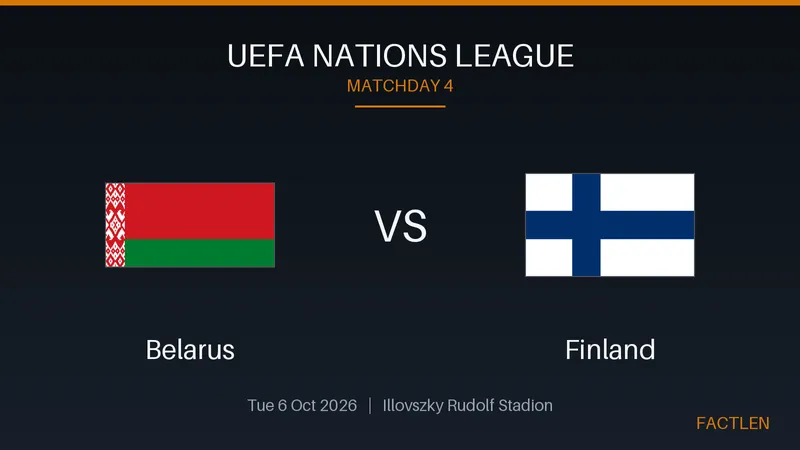
Finland Seeks to Extend Group Lead Against Belarus in Neutral-Venue Clash
6 sources
UEFA Nations League
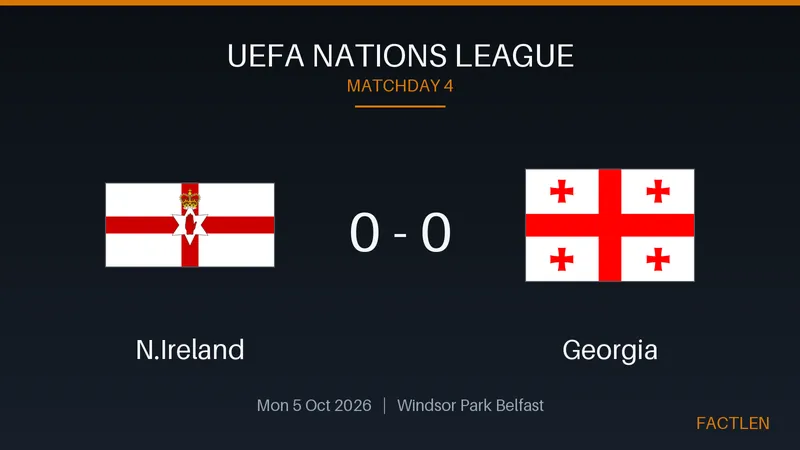
Northern Ireland Held to 0-0 Draw by Georgia as Mamardashvili Saves Late Penalty
2 sources
Standings
MLS Playoff Bubble Boils Over: Three-Way Tie in the East as Decision Day Looms
3 sources

UEFA Nations League
Northern Ireland Chases Nations League Promotion Against Struggling Georgia
6 sources
Comments
Every angle. Every day.
Get Sports stories with full source coverage and perspective breakdowns, free every day.