
full timeline
OpenAI IPO plans
OpenAI has secured $11 billion in a reduced funding round that values the company at $1.25 trillion, reflecting growing investor caution over AI infrastructure costs.
Follow OpenAI IPO plans in the Factlen app and get an alert when there is news. Get the app
Share this story
Latest report
OpenAI Raises $11 Billion at $1.25 Trillion Valuation in Scaled-Back Funding Round
OpenAI has secured $11 billion in a reduced funding round that values the company at $1.25 trillion, reflecting growing investor caution over AI infrastructure costs.
- OpenAI has closed an $11 billion initial segment of a funding round that values the company at $1.25 trillion, down from a $1.4 trillion target.
- A consortium of United Arab Emirates investors is participating in the round, pairing traditional equity with guaranteed access to Gulf data center capacity.
- The scaled-back raise reflects growing institutional caution over the sector's massive infrastructure costs and OpenAI's projected $280 billion cash burn through 2030.
- The company plans to raise the remaining $9 billion of its revised $20 billion target by opening the round to high-net-worth individuals.
OpenAI has closed the first $11 billion segment of a new funding round, securing a $1.25 trillion valuation as the artificial intelligence pioneer adjusts to a more cautious investment climate. The funds were transferred on Friday, marking the initial tranche of a raise that the company expects to cap at $20 billion in the coming weeks.[1][5]
The figures represent a significant step down from the company's initial ambitions. OpenAI had spent the past month seeking $30 billion or more at a $1.4 trillion valuation. The $150 billion reduction in its target price reflects a broader cooling of market sentiment toward the capital-intensive artificial intelligence sector.[1][4]
Despite the reduced targets, the $1.25 trillion valuation remains a substantial 47 percent premium over the $852 billion price tag OpenAI achieved during its $122 billion funding round in March 2026. The company has delayed its planned initial public offering until 2027, opting to rely on private markets to fund its immediate requirements.[1][3]
Pairing Capital With Compute
A consortium of investors from the United Arab Emirates is expected to be the largest participant in the ongoing round. The group prominently includes MGX, the Abu Dhabi-based global technology investment fund whose founding partners are the state-backed entities Mubadala and G42.[2]
The structure of the United Arab Emirates investment marks a shift in how artificial intelligence companies secure resources. The deal reportedly includes an option for OpenAI to lease newly built computing capacity in the Gulf region, pairing traditional equity with guaranteed access to physical infrastructure.[2]
"For most of the past decade, Gulf capital entered American technology as minority equity, with returns measured in valuation and little connection to the physical systems behind the software," notes Forbes energy and geopolitics analyst Güney Yıldız.[2]
"The option reported in this round connects the two," Yıldız writes. For OpenAI, flexible access to offshore data center capacity is increasingly as valuable as cash, especially as the company plans to spend up to $600 billion on computing infrastructure by 2030.[2]
The arrangement mirrors the long-term off-take contracts that once made liquefied natural gas projects bankable. By securing guaranteed compute capacity alongside capital, OpenAI is attempting to bypass the domestic bottlenecks that have slowed data center construction across the United States.[2]
The ultimate limits of the United Arab Emirates partnership will be set in Washington. The Commerce Department tightly regulates the export of advanced artificial intelligence chips to the Middle East, and the current license-free authorization for Emirati firms like G42 expires in April 2027.[2]
A Shifting Market Landscape
The scaled-back raise follows a brutal stretch for public technology stocks, which recently suffered their worst single-day session since 2020. The sell-off was driven by weaker-than-expected quarterly results from hyperscalers like Alphabet, Amazon, and Intel, prompting a reassessment of sector valuations.[4]
Institutional investors are increasingly scrutinizing the massive infrastructure spending required to train and run frontier models. The initial enthusiasm that funded the generative artificial intelligence boom is giving way to demands for clearer paths to profitability and sustainable, predictable revenue growth.[1][4]
The pullback in artificial intelligence valuations is becoming a broader market trend. Australian infrastructure firm Firmus recently withdrew its initial public offering, while prominent investors including Citadel founder Ken Griffin and Bridgewater's Ray Dalio have publicly warned of a potential sector bubble.[3]
Political and regulatory hurdles are also complicating the capital equation. Following the November midterm elections, investors have expressed growing concern about local voter opposition to new data center construction and the severe strain these massive facilities place on regional power grids.[1]
OpenAI's chief financial officer recently stated that the company will continue to invest heavily in physical infrastructure despite the rising political pushback. However, the domestic constraints make the offshore compute capacity offered by the United Arab Emirates consortium increasingly vital to the company's roadmap.[1][2]
Financial Metrics and Cash Burn
OpenAI's own financial metrics have contributed to the hesitation among major backers. The company's annualized revenue is currently running below $50 billion, missing the $70 billion target that Wall Street analysts had expected for this stage of its commercial growth.[3]
At the same time, the costs of maintaining its technological edge are accelerating rapidly. Internal estimates project that OpenAI's cash burn could exceed $280 billion through 2030, a staggering figure that requires continuous, massive capital injections from private markets to sustain operations.[3]
The delay of OpenAI's initial public offering from this year to 2027 has also altered the calculus for investors. While management cited safety concerns for the postponement, analysts suggest the company feared that a public listing under current market conditions would trigger a sharp sell-off.[3][4]
Rivals Erode Market Share
As OpenAI navigates its funding challenges, competition is steadily eroding the company's early dominance. ChatGPT's market share recently dropped below 50 percent for the first time, signaling that enterprise clients and everyday users are increasingly willing to explore alternative platforms.[3]
Anthropic, OpenAI's most direct competitor, has become one of the fastest-growing players in the industry. The company's Claude model has captured significant enterprise market share, and Anthropic reported that its revenue soared to over $16.8 billion in the first half of the year.[3]
Anthropic is reportedly eyeing a $2 trillion valuation for its own upcoming initial public offering, potentially as early as November. A successful public listing could leave Anthropic with well over $100 billion in capital, providing a massive war chest to weather any industry downturn.[3]
The competitive threat extends beyond Anthropic to established tech giants and international challengers. Google's Gemini recently hit one billion monthly users, while Meta's open-weight Muse model and Moonshot's Kimi are aggressively capturing market segments that OpenAI previously dominated without contest.[3]
In response to the mounting pressure, OpenAI has been forced to adjust its commercial strategy. The company has slashed prices for its application programming interfaces, introduced advertising to its platforms, and accelerated the release of more efficient models to hold its ground.[3][4]
Looking to Retail Investors
To close the remaining $9 billion of its revised $20 billion target, OpenAI is pivoting away from the institutional giants that balked at its initial valuation. The company now plans to open the round to family offices and high-net-worth individuals.[4]
This retail-focused strategy will test whether smaller, wealthy investors are willing to absorb the risk that major venture capital firms have begun to cap. It represents a rare opportunity for private wealth to access a top-tier artificial intelligence developer before a public listing.[4]
The success of the final close will dictate OpenAI's operational flexibility over the next year. Securing the full $20 billion is critical for funding the next generation of model training and maintaining the aggressive talent acquisition required to compete with Google and Meta.[3][4]
Even at the reduced $1.25 trillion valuation, OpenAI remains one of the most valuable private companies in history. The current funding round, while smaller than intended, still represents a massive transfer of wealth into the artificial intelligence sector and underscores the technology's perceived potential.[1]
Sources
- [1]Investing.com — OpenAI closes $11 billion funding at $1.25 trillion valuation - report Read on Investing.com →
- [2]Forbes — OpenAI Cuts Round To $20 Billion As UAE Investors Pair Capital With Compute Capacity Read on Forbes →
- [3]Benzinga — OpenAI Raises Just $11 Billion as AI Bubble Fears Rise, Valuation Hits $1.25 Trillion Read on Benzinga →
- [4]The Decoder — OpenAI raises just $11 billion of its $30 billion target as big investors lose their AI appetite Read on The Decoder →
- [5]Channel NewsAsia — OpenAI secures $11 billion funding at $1.25 trillion valuation, Bloomberg News reports Read on Channel NewsAsia →
What to watch
- The initial segment of the recent funding round may grow to $20 billion in the coming weeks.
Earlier updates
1 update
OpenAI Targets 2027 IPO as Enterprise Revenue Surpasses Consumer Sales
Key point: OpenAI President Greg Brockman indicated the company could be ready for a 2027 IPO, driven by enterprise sales overtaking consumer revenue.
Enterprise adoption has driven OpenAI's revenue run rate past $68 billion.From: OpenAI Seeks $30 Billion Bridge Round at $1.4 Trillion Valuation After Postponing IPO OpenAI is targeting an initial public offering in 2027 as its enterprise business becomes the primary driver of its income. The shift marks a significant milestone for the artificial intelligence company as corporate adoption of its tools accelerates.
OpenAI President and co-founder Greg Brockman stated that the company could be ready to make its stock market debut by 2027. He pointed to a turnaround in the business and accelerating enterprise revenue, which has now overtaken consumer sales to form the majority of the company's overall revenue.
The surge in corporate sales reverses OpenAI's earlier goal of maintaining parity between its enterprise and consumer revenue streams. The rapid growth in business-to-business sales highlights a broader industry trend where companies are increasingly integrating generative AI into their daily operations.
Charts, maps and images
Timeline
November 2026
OpenAI Raises $11 Billion at $1.25 Trillion Valuation in Scaled-Back Funding Round
OpenAI Targets 2027 IPO as Enterprise Revenue Surpasses Consumer Sales
- OpenAI Targets 2027 IPO as Enterprise Revenue Surpasses Consumer SalesKey point: OpenAI President Greg Brockman indicated the company could be ready for a 2027 IPO, driven by enterprise sales overtaking consumer revenue.

October 2026
OpenAI Pursues $30 Billion Funding Round at $1.25 Trillion Valuation
- OpenAI Pursues $30 Billion Funding Round at $1.25 Trillion ValuationKey point: OpenAI is nearing a $30 billion funding round led by UAE investors that would value the AI firm at $1.25 trillion.
OpenAI Seeks $30 Billion Bridge Round at $1.4 Trillion Valuation After Postponing IPO

September 2026
OpenAI Rules Out 2026 IPO as Sam Altman Cites Safety and Timing Concerns

June 2026
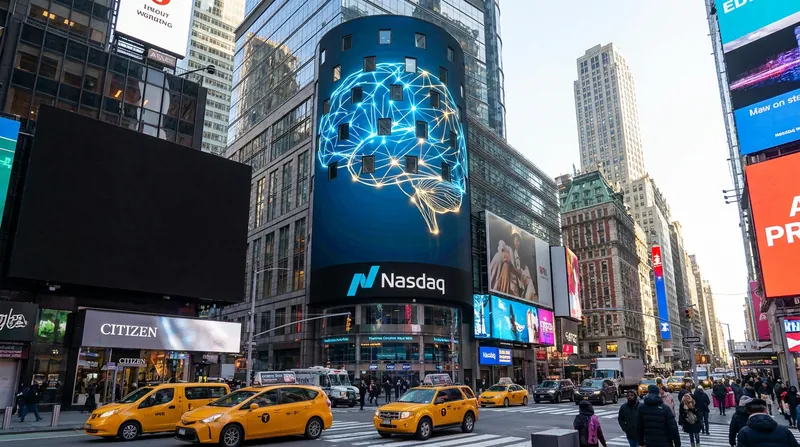
OpenAI Files Confidentially for Blockbuster IPO, Targeting $1 Trillion Valuation in Nasdaq Debut
How the story developed
On June 27, OpenAI confidentially submitted a draft S-1 registration statement with the Securities and Exchange Commission for a proposed initial public offering on the Nasdaq. The company targeted a valuation of up to $1 trillion. Annualized revenue had surpassed $30 billion, driven by 900 million weekly active users of ChatGPT and enterprise API adoption, though OpenAI was projected to lose $14 billion in 2026 due to the infrastructure costs of training frontier models.
The public listing plans were halted on September 13 when Chief Executive Officer Sam Altman confirmed OpenAI would not pursue an initial public offering in 2026. Altman described a near-term public listing as "ill-advised" due to escalating artificial intelligence safety concerns, noting that remaining private shields the company from quarterly earnings pressure while developing frontier models.
Following the postponement, OpenAI shifted to seeking private capital to fund its computing infrastructure through 2027 and keep its financial mechanics and model alignment protocols shielded from public market scrutiny. By October 3, the company sought at least $30 billion in private bridge financing at a $1.4 trillion pre-money valuation. At that time, annualized revenue had surged past $68 billion, driven largely by enterprise adoption outpacing consumer subscriptions.
The private funding efforts progressed through October 22, when the company neared a $30 billion round. Prior to these autumn fundraising efforts, OpenAI had raised $122 billion in a March funding round that valued the company at $852 billion.