
full timeline
Norse Atlantic Airways bankruptcy
The Norwegian budget long-haul carrier declared bankruptcy on Friday, grounding its fleet of Boeing 787s and halting all ticket sales.
Follow Norse Atlantic Airways bankruptcy in the Factlen app and get an alert when there is news. Get the app
Share this story
Latest report
Norse Atlantic Airways Files for Bankruptcy and Halts All Flights Amid Soaring Fuel Costs
The Norwegian budget long-haul carrier declared bankruptcy on Friday, grounding its fleet of Boeing 787s and halting all ticket sales. The collapse follows lease terminations and severe financial pressure from escalating jet fuel prices linked to Middle East conflicts.
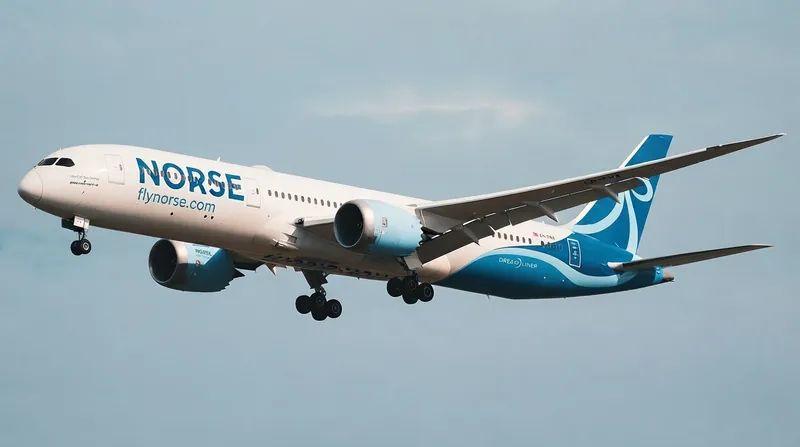
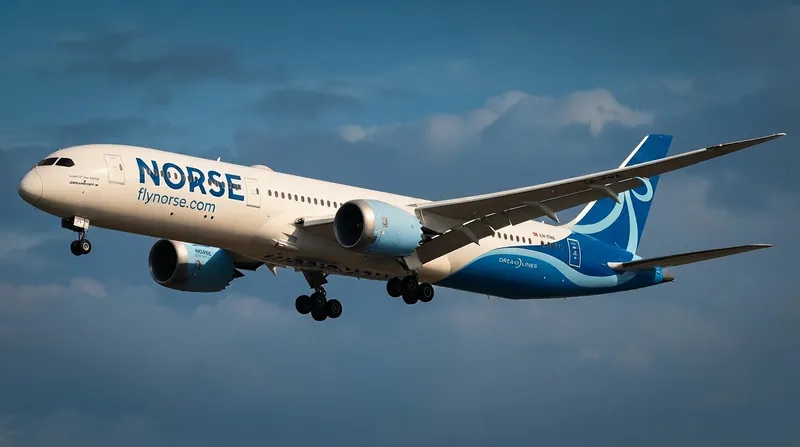
- Norse Atlantic Airways filed for bankruptcy on November 27, 2026, grounding its entire fleet of 12 Boeing 787s.
- The collapse was triggered by a sudden spike in global jet fuel costs linked to escalating conflicts in the Middle East.
- Aircraft lessors terminated all leases simultaneously, leaving the Norwegian operating subsidiary with no viable path forward.
- Thousands of transatlantic passengers are stranded, with the airline confirming it lacks the liquidity to process direct refunds.
Norse Atlantic Airways officially filed for bankruptcy on November 27, 2026, immediately halting all operations and grounding its entire fleet. The Norwegian budget long-haul carrier canceled all future flights and suspended ticket sales across its global network. The sudden cessation leaves thousands of transatlantic passengers stranded ahead of the winter holiday season.[1][2]
The collapse centers on the airline’s Norwegian operating subsidiary, Norse Atlantic Airways AS, which submitted the bankruptcy petition in Oslo. Parent company Norse Atlantic ASA confirmed the filing through a regulatory disclosure to the Oslo Børs on Friday morning. The announcement triggered an immediate halt in the trading of the company's shares.[3][6]
Management cited insurmountable financial pressures, primarily driven by a severe spike in global jet fuel costs. Energy markets have faced intense volatility in recent weeks, with the escalating conflict involving Iran sending crude oil prices sharply higher. For a budget carrier operating on razor-thin margins, the fuel price shock proved fatal.[7]
The final catalyst for the bankruptcy was the termination of aircraft leases covering the airline's entire operating fleet. Lessors moved to reclaim all 12 of Norse Atlantic’s Boeing 787 Dreamliners after the carrier failed to meet its financial obligations. Without aircraft, the operating subsidiary had no viable path to continue scheduled services.[8]
Immediate Passenger Fallout
The abrupt grounding has triggered chaos at major international hubs, including London Gatwick, New York JFK, and Oslo Gardermoen. Passengers arriving for scheduled departures on Friday found empty check-in desks and grounded aircraft. The airline has directed customers not to travel to airports, confirming that no alternative flights will be provided.[1][4]
Stranded travelers are now forced to seek repatriation on rival carriers at last-minute walk-up fares. Consumer protection agencies in the United Kingdom and Norway have advised affected passengers to contact their credit card providers to initiate chargebacks for unfulfilled tickets. Travel insurance policies may cover some consequential losses, though coverage varies widely.[2][4]
The situation mirrors the chaotic scenes witnessed during previous budget airline collapses, leaving aviation regulators scrambling to coordinate relief efforts. While some legacy carriers occasionally offer rescue fares for stranded passengers, no formal repatriation program has been announced. The sheer volume of displaced transatlantic travelers complicates immediate rebooking efforts.[4][5]
Norse Atlantic's website has been stripped of its booking engine, replaced by a static legal notice confirming the bankruptcy filing. The notice explicitly states that the company lacks the liquidity to process direct refunds. Customers holding forward bookings for the 2026 and 2027 seasons are now unsecured creditors in the liquidation process.[2][6]
The Low-Cost Long-Haul Challenge
Founded in March 2021 by aviation entrepreneur Bjørn Tore Larsen, Norse Atlantic was built to fill the void left by Norwegian Air Shuttle. The business model relied on securing favorable lease rates on Boeing 787s during the pandemic downturn. The strategy aimed to connect European cities with US destinations at discounted fares.[5][8]
Despite strong initial demand, the low-cost long-haul model has historically proven exceptionally difficult to sustain. Unlike short-haul budget carriers that can turn aircraft around in 45 minutes, long-haul operations require complex crew scheduling and face strict utilization limits. When delays occur, the cascading effects across a small fleet are financially devastating.[1][5]
The airline struggled to achieve consistent profitability across its network of over 15 destinations during the slower winter months. To mitigate seasonal losses, Norse Atlantic attempted to pivot toward wet-leasing its aircraft to other airlines during the off-season. However, this secondary revenue stream was insufficient to offset the massive fixed costs.[3][8]
The bankruptcy of Norse Atlantic adds another chapter to the troubled history of budget transatlantic aviation. Predecessors including WOW Air, Primera Air, and Norwegian’s long-haul division all ultimately succumbed to similar economic pressures. Aviation analysts have repeatedly questioned whether the model can ever generate sufficient yield to survive macroeconomic shocks.[5][7]
Fuel Shocks and Geopolitics
The fatal blow to Norse Atlantic’s balance sheet came from external geopolitical factors far beyond the airline's control. The widening conflict in the Middle East, specifically the involvement of Iran, has severely disrupted global energy markets. Jet fuel, which typically accounts for 25 to 30 percent of an airline's operating expenses, saw prices surge dramatically.[7]
Legacy carriers often utilize complex financial hedging strategies to lock in fuel prices months or years in advance, insulating them from sudden market spikes. Budget airlines, operating with limited capital reserves, frequently lack the credit facilities required to maintain extensive hedging portfolios. Consequently, Norse Atlantic was fully exposed to the spot market.[5][7]
The geopolitical instability also forced airlines to reroute flights to avoid contested airspace, adding flight time and further increasing fuel consumption. While Norse Atlantic’s primary routes were transatlantic, the broader market panic elevated fuel costs globally. The combination of higher consumption and surging unit prices rapidly depleted the carrier's remaining cash reserves.[7]
The Oslo Børs filing indicates that the board of directors concluded there was no realistic prospect of securing emergency bridge financing. With capital markets tightening and investors wary of the aviation sector's exposure to energy volatility, the company could not raise the necessary funds to survive the winter season.[6]
Fleet Liquidation and Lessors
The immediate termination of the Boeing 787 leases highlights the aggressive posture taken by aircraft lessors in the current market. Demand for widebody aircraft remains robust globally, driven by supply chain delays at major manufacturers. Lessors recognized that they could likely redeploy the Dreamliners to more financially stable carriers at higher lease rates.[8]
By reclaiming all 12 aircraft simultaneously, the leasing companies effectively forced the Norwegian subsidiary into immediate liquidation. The 787-9 variants operated by Norse are highly sought-after assets, particularly for airlines looking to expand long-haul capacity without waiting years for new deliveries. The grounded fleet is expected to find new operators relatively quickly.[8]
The bankruptcy process will now shift to the Norwegian courts, where a court-appointed administrator will oversee the liquidation of Norse Atlantic Airways AS. The administrator's primary responsibility will be to maximize returns for creditors. Unsecured creditors, including passengers and suppliers, typically recover only a fraction of their claims in such proceedings.[3][6]
Parent company Norse Atlantic ASA remains a separate legal entity, but its value was intrinsically tied to the operating subsidiary. Shares had already plummeted by more than 80 percent year-to-date before the trading halt. Shareholders who invested in the airline's vision of affordable transatlantic travel are expected to face a total loss of their equity.[3][6]
Broader Industry Implications
The collapse of Norse Atlantic removes significant capacity from the transatlantic market, which could lead to upward pressure on ticket prices. Legacy carriers operating within major alliances now face one less competitor on key routes between Europe and North America. The consolidation of pricing power generally favors established airlines.[1][5]
The failure also serves as a stark warning to other highly leveraged operators in the aviation sector. As interest rates remain elevated and fuel costs show no signs of stabilizing, airlines with weak balance sheets are increasingly vulnerable. Industry observers anticipate further consolidation if the geopolitical situation continues to disrupt energy supplies.[7]
For the Norwegian aviation sector, the loss of Norse Atlantic is a significant blow to the country's ambitions as a hub for innovative airline models. Employing approximately 1,200 staff globally, the workforce now faces immediate unemployment. Labor unions are expected to engage with the bankruptcy administrator to secure unpaid wages and severance packages.[3][6]
The Norse Atlantic bankruptcy reinforces the harsh realities of the commercial aviation industry. While the promise of cheap long-haul travel remains highly attractive to consumers, the underlying economics require flawless execution and a stable macroeconomic environment. When fuel prices spike and lessors lose patience, the margin for error disappears entirely.[1][8]
None of the initial regulatory filings or news reports provided a direct quotation from the executive team or the board of directors. The company's official communications were limited to the statutory bankruptcy disclosures. This lack of public commentary leaves the exact internal deliberations leading up to the Friday morning filing undisclosed.[6]
Sources
- [1]The Guardian — Norse Atlantic Airways files for bankruptcy and cancels all future flights Read on The Guardian →
- [2]Al Jazeera — Norse Atlantic files for bankruptcy, halts flights and ticket sales Read on Al Jazeera →
- [3]CNA — Airline Norse Atlantic's Norwegian operating unit declares bankruptcy Read on CNA →
- [4]TheStreet — Norse Atlantic files for bankruptcy protection, passengers left stranded Read on TheStreet →
- [5]Newsday — Norwegian budget airline Norse Atlantic Airways files for bankruptcy Read on Newsday →
- [6]Oslo Børs NewsWeb — Norse Atlantic ASA: Norse Atlantic Airways AS to file for bankruptcy Read on Oslo Børs NewsWeb →
- [7]Arab News — Norse Atlantic's Norwegian unit files for bankruptcy as Iran war jolts airlines Read on Arab News →
- [8]AviNews — Norse Atlantic's Norwegian Subsidiary Files for Bankruptcy After Lease Terminations on All 12 Boeing 787s Read on AviNews →
Charts, maps and images
Timeline
November 2026
Norse Atlantic Airways Files for Bankruptcy and Halts All Flights Amid Soaring Fuel Costs
Norse Atlantic Halts All Flights as Long-Haul Budget Carrier Faces Bankruptcy
How the story developed
The financial collapse began to unfold on November 26, when Norse Atlantic suspended all flights and declared its financial situation critical. The airline warned it would face an imminent bankruptcy filing unless it could secure emergency short-term financing.
The carrier attributed its severe financial pressure to a sudden spike in global jet fuel costs, which it linked to escalating conflicts in the Middle East. Because these surging fuel costs were unhedged, the airline's shares plummeted 85 percent following the announcement.
The immediate halt in operations on November 26 caused widespread disruption beyond Norse Atlantic's own network. Pakistan International Airlines, which utilized Norse aircraft through a wet-lease agreement, was forced to cancel flights while passengers were already preparing to board.
Prior to the final collapse, Norse Atlantic had been in takeover discussions with undisclosed investors in an attempt to save the company. However, the simultaneous termination of aircraft leases the following day ended these efforts, resulting in the November 27 bankruptcy declaration.