
full timeline
US–Iran Gulf Crisis
Saudi air defenses intercepted a ballistic missile fired by Yemen's Houthi rebels toward the kingdom's western Red Sea coast early Sunday.
Follow US–Iran Gulf Crisis in the Factlen app and get an alert when there is news. Get the app
Share this story
Latest report
Saudi Coalition Intercepts Houthi Ballistic Missile Over Western Industrial Corridor
Saudi air defenses intercepted a ballistic missile fired by Yemen's Houthi rebels toward the kingdom's western Red Sea coast early Sunday. The attack, which triggered civil defense alerts in the Mecca region, targets a corridor housing critical energy infrastructure and follows a sharp escalation in cross-border strikes.
- Saudi air defenses intercepted a Houthi ballistic missile targeting the kingdom's western region early Sunday, triggering alerts in Mecca.
- The targeted corridor houses critical energy infrastructure, including the Yanbu South Terminal and the Jazan refinery.
- The interception follows a weekend of intense hostilities, including multiple missile strikes on Riyadh and coalition retaliatory bombings in Yemen.
- The Houthis have increasingly focused their attacks on Saudi Arabia's economic symbols, recently damaging the Public Investment Fund tower.
The Saudi-led coalition intercepted and destroyed a ballistic missile launched by Yemen's Iran-aligned Houthi militia toward Saudi Arabia's western region early Sunday. "Air defence intercepted and destroyed a ballistic missile launched by the terrorist Houthi militia toward the western region," coalition spokesperson Maj. Gen. Turki al-Malki said in a statement. The strike marks the latest in a rapid sequence of cross-border attacks.[2][3]
The attack triggered immediate security protocols across the kingdom's western seaboard. Saudi Civil Defense issued an urgent alert warning of potential danger across the Mecca region, urging residents to remain indoors. Authorities later declared the area clear, confirming that no casualties or structural damage resulted from the intercepted debris falling over populated zones.[1][4]
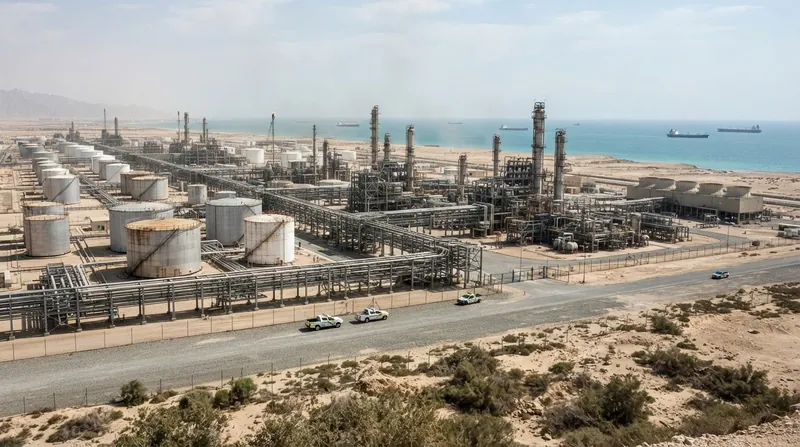
The targeted western corridor serves as a vital artery for global energy markets and Saudi economic infrastructure. The region houses the Yanbu South Terminal, a massive crude-export facility connected to the East-West Pipeline, which allows the kingdom to bypass the strategic chokepoint of the Strait of Hormuz.[1][2]
Further south along the coast lies the Jazan refinery, a massive industrial complex situated near the Yemeni border. Houthi fighters have repeatedly targeted these major oil installations in recent weeks, alongside strikes on regional airports and military sites, attempting to disrupt the world's largest crude exporter.[2][3]
A Weekend of Escalation
Sunday's interception caps a weekend of intense and sustained cross-border hostilities. On Saturday, Saudi air defenses intercepted three separate ballistic missiles aimed at the capital, Riyadh, marking the second major assault on the city in a matter of days.[1][4]
A Reuters witness in Riyadh reported seeing a projectile streak across the night sky, followed shortly by a loud explosion as the kingdom's Patriot missile defense batteries engaged the incoming threat. The intercepted missile left a visible trail of smoke over the densely populated metropolis.[1][4]
Alongside the ballistic missiles, the coalition reported destroying two explosive-laden drones over the weekend. One drone was bound for the Riyadh region, while the other targeted southern Saudi Arabia, prompting Civil Defense to issue five separate alerts covering Najran, Al-Sulayyil, and Jazan before the danger passed.[1][4]
The Houthi offensive follows a series of heavy retaliatory strikes by the Saudi-led coalition on Friday. Coalition warplanes targeted Houthi military facilities in the Yemeni capital, Sanaa, focusing on workshops allegedly used to manufacture and assemble ballistic missile launchers and unmanned aerial vehicles.[2][3]
Coalition forces also struck operational capabilities at the Red Sea port of Hodeidah. Yemen's Information Minister, Salem Thabet Al-Awlaki, stated that the strikes were directed against infrastructure used by the Houthis to smuggle Iranian-supplied weapons and ballistic missiles into the country.[1][4]
Economic Targets in the Crosshairs
The Houthis have increasingly shifted their strategic focus toward Saudi Arabia's most prominent economic symbols. On Thursday, November 19, a Houthi attack struck the Public Investment Fund tower in Riyadh's King Abdullah Financial District, damaging several floors of the sovereign wealth fund's headquarters.[2][3]
That strike followed a similar attack at the beginning of the month, which damaged a skyscraper belonging to the state oil giant Aramco. These precision strikes demonstrate the militia's growing technological capability and a deliberate strategy to target high-profile financial and energy assets rather than strictly military installations.[2][3]
The Saudi Ministry of Foreign Affairs issued a strong condemnation of the attacks on civilian and economic facilities. The ministry reaffirmed the kingdom's right under international law to take all necessary measures to defend its sovereignty, protect its national capabilities, and ensure the safety of its citizens.[1][4]
Saudi diplomats have called on the international community and permanent members of the United Nations Security Council to fulfill their responsibilities. Riyadh is pressing for stronger condemnation of the Houthi attacks and stricter enforcement of arms embargoes, warning of the severe threat the group poses to regional and international security.[1][4]
The Broader Regional Conflict
The recent surge in violence marks a significant deterioration of a conflict that had largely settled into a stalemate in 2022 before reigniting in July. Saudi Arabia has backed Yemen's internationally recognized government for more than a decade in a war that has triggered one of the world's worst humanitarian crises.[2][3]
The Houthis currently control Yemen's Red Sea coast and the capital, forcing the Saudi-backed government forces to retreat and defend their temporary capital in the southern port of Aden. The militia's ability to project power deep into Saudi territory underscores the failure of years of military campaigns to neutralize their missile capabilities.[2][3]
The human cost of the renewed hostilities continues to mount on both sides of the border. According to kingdom authorities, Houthi attacks have killed 26 people in Saudi Arabia since September, including 23 victims who died during strikes on regional airports and civilian infrastructure.[2][3]
In Yemen, the coalition's retaliatory airstrikes on densely populated areas like Sanaa and Hodeidah have raised alarms among international human rights organizations. The destruction of infrastructure at Hodeidah port, a critical entry point for commercial goods and humanitarian aid, threatens to exacerbate severe food and medical shortages.[1][4]
The United Nations has repeatedly warned that targeting port facilities violates international humanitarian law if it disproportionately affects civilian survival. Coalition officials maintain that they issued evacuation warnings prior to the Hodeidah strikes and strictly targeted military-related infrastructure supporting Houthi operations.[1][4]
Implications for Global Markets
As the conflict intensifies, international observers and energy markets are closely monitoring the potential impact on global oil supplies. The persistent targeting of the Yanbu terminal and the East-West Pipeline raises the risk of a significant disruption to Saudi export capabilities.[2][3]
The Houthis have explicitly threatened further strikes on Saudi Red Sea ports and warned international airlines to avoid Saudi airspace. While market pricing currently implies only a slight probability of a formal Saudi airspace closure by the end of 2026, the geopolitical climate remains highly volatile.[1][4]
The escalation in Yemen parallels broader regional tensions, including ongoing hostilities involving Iran and its network of allied militias across the Middle East. The Houthis' advanced weaponry, which Saudi and US officials assert is supplied by Tehran, continues to alter the strategic balance in the Arabian Peninsula.[2][3]
Western intelligence agencies have documented a steady flow of sophisticated drone and missile components from Iran to Houthi-controlled territories. Tehran routinely denies these allegations, though independent weapons monitors have matched the debris from attacks on Saudi Arabia to Iranian state manufacturing.[1][4]
The United States, which provides logistical and intelligence support to the Saudi coalition, has condemned the recent Houthi strikes. Washington faces mounting pressure to balance its strategic partnership with Riyadh against domestic political opposition to American involvement in the devastating Yemen war.[2][3]
Diplomatic channels remain largely stalled, with recent ceasefire negotiations failing to produce a lasting agreement. United Nations envoys have struggled to bring the warring parties back to the negotiating table, as both sides attempt to leverage military gains into diplomatic advantages.[1][4]
Until international mediation efforts can establish a new framework for peace, the cycle of Houthi missile launches and coalition airstrikes appears set to continue. The ongoing violence leaves the region's civilian populations and critical economic infrastructure caught in the crossfire of an intractable proxy war.[2][3]
Sources
- [1]Middle East Eye — Saudi-led coalition says it intercepted Houthi ballistic missile targeting western region Read on Middle East Eye →
- [2]The Hindu — Saudi-led coalition says it intercepted Houthi missile in western region Read on The Hindu →
- [3]Hürriyet Daily News — Saudi-led coalition says intercepted Houthi missile in western region Read on Hürriyet Daily News →
- [4]The Times of Israel — Saudi-led coalition says it intercepted Houthi ballistic missile targeting western region Read on The Times of Israel →
What to watch
- President Donald Trump has deferred planned military strikes against Iran until at least 2027.
- The International Energy Agency projects a severe global liquefied natural gas shortage this winter that could extend into 2027.
- The United Nations Security Council has extended targeted sanctions against Yemen's Houthi militia until November 2027.
- Houthi forces have advanced to within 45 kilometers of Aden, threatening the internationally recognized Yemeni government's last major stronghold.
- The International Atomic Energy Agency is seeking access to an underground uranium enrichment plant in Isfahan after warning it cannot verify the facility's status.
Earlier updates
7 updates
Donald Trump Jr. Backs JD Vance in Blaming Iran War for GOP Midterm Losses
Key point: Donald Trump Jr. has endorsed Vice President JD Vance's assessment that the ongoing war with Iran is the primary reason Republicans lost control of Congress in the midterm elections.
Donald Trump Jr. has publicly aligned himself with Vice President JD Vance in attributing the Republican Party's massive midterm election losses to the ongoing war with Iran. On Wednesday, Trump Jr. reposted Vance's lengthy social media statement that blamed the electoral defeat on the administration's foreign policy and the economic fallout of the conflict. The President's eldest son added "Every word of this is 💯" to signal his full agreement with the Vice President's blunt assessment.
In his original post, Vance argued that voters who supported the Trump-Vance ticket in 2024 had abandoned the party due to four main concerns: ending the war, the rising cost of living and inflation, a desire to put "America First," and the need to change the U.S. relationship with Israel. Vance stated unequivocally that "the reason we lost is the war" and challenged proponents of the conflict to argue that losing control of the Senate for the next six years was a worthwhile cost to pay.
The coordinated messaging from the Vice President and the President's eldest son exposes a significant and public rift within the administration over its military agenda. While Vance and Trump Jr. are pointing to the Iran conflict as the primary catalyst for the "blue tsunami" that swept Democrats into control of both chambers of Congress, President Donald Trump has defended his decisions. The President acknowledged the war's short-term impact on gas prices but maintained that the military action against Iran was necessary and must continue.
The midterm results have severely limited the Republican Party's legislative power in Washington for the remainder of Trump's second term, prompting widespread infighting over the administration's future direction. The global implications of the U.S. election shift are already being felt across international markets. Foreign governments and financial policymakers, including those in South Korea, are now closely monitoring the political fallout and preparing for potential shifts in American trade and foreign policies under a divided government.
South Korea Expands Naval Mission Closer to Strait of Hormuz
Key point: South Korea is expanding its naval presence and deploying additional military assets near the Strait of Hormuz to protect its shipping interests without directly entering the U.S.-Iran war.
South Korea's Defense Ministry announced plans on Thursday to expand the operational area of its Cheonghae anti-piracy naval unit closer to the Strait of Hormuz and deploy additional military assets. The government will submit a motion to parliament to extend the unit's deployment and broaden its mission to include waters near the port of Duqm in Oman, approximately 650 kilometers from the vital waterway.
Under the proposal, the unit's personnel ceiling will increase from 320 to 395 to accommodate a P-8A maritime patrol aircraft, a 30-member explosive ordnance disposal team, and unmanned mine-clearing equipment. A defense ministry official emphasized that the reinforcement is strictly for non-combat purposes to protect South Korean citizens and economic interests. The official added that the unit will operate independently of allied forces and the patrol aircraft will be prohibited from monitoring Iranian territory or the interior of the strait.
The expansion marks a significant increase in South Korea's military footprint and capabilities in the region, introducing advanced mine-clearing and surveillance assets for the first time. The move is widely seen as a calculated response to pressure from U.S. President Donald Trump to support the ongoing war in Iran, while carefully avoiding direct military intervention in the conflict.
The U.S.-Iran war, which began in February, has severely disrupted commercial shipping through the Strait of Hormuz, a critical chokepoint that normally handles a fifth of the world's oil. South Korea is highly vulnerable to these disruptions, having sourced 70 percent of its oil imports from the Middle East in 2025. President Lee Jae Myung has previously maintained that Seoul would not deploy troops in a manner that could draw the country into the conflict, a stance that prompted Trump to scale back joint military drills over the summer.
Trump Concedes Iran War Caused Midterm Losses but Defends Conflict
Key point: President Donald Trump acknowledged that the US war with Iran and resulting high gas prices drove the Republican midterm defeats, while maintaining the conflict was necessary.
President Donald Trump has conceded that the ongoing US war with Iran angered voters and triggered the Republican Party's sweeping losses in the midterm elections. Despite acknowledging the political damage, Trump defended the conflict as a necessary action.
Addressing the election results, Trump admitted that the war's fallout, including soaring gas prices, hurt Republican candidates at the ballot box. He described the assessment of the war's negative impact on the polls as 'largely true,' but insisted that the military engagement was something he 'had to do.'
Trump's concession aligns his public stance with that of Vice President JD Vance, who recently pointed to the conflict as the primary driver of the GOP's electoral defeats. Vance had previously stated that the war on Iran was the 'real reason' Republicans lost the midterms.
The midterm elections resulted in a Democratic landslide, fueled by widespread voter dissatisfaction over the economic and geopolitical consequences of the ongoing military engagement. Having won control of both the Senate and the House of Representatives, Democrats reportedly intend to curb the Trump administration's war and spending powers.
Saudi Arabia and Syria Sign Defense Cooperation Agreement During Riyadh Summit
Key point: Saudi Arabia and Syria have signed a defense cooperation agreement and over $403 million in development deals during a summit in Riyadh.
Saudi Arabia and Syria have signed a defense cooperation agreement during Syrian President Ahmed al-Sharaa's visit to Riyadh. The accord, finalized on Wednesday between the two nations' defense ministries, was overseen by al-Sharaa and Saudi Crown Prince Mohammed bin Salman.
While specific details of the defense pact remain undisclosed, the leaders held official talks focusing on bilateral relations and regional security. They jointly warned against military escalation and called for an immediate halt to actions threatening maritime navigation in the Red Sea, the Bab al-Mandab Strait, and the Strait of Hormuz.
The defense agreement marks a significant deepening of military ties as Saudi Arabia continues to face missile and drone attacks from Yemen's Iran-backed Houthi rebels. Alongside the security pact, the Saudi Fund for Development signed six agreements to provide Syria with over $403 million in concessional loans for infrastructure and essential services, while additional memorandums covered industrial and agricultural cooperation.
The summit represents the second meeting between al-Sharaa and the Saudi Crown Prince in less than a month. Riyadh has emerged as a primary partner in providing financial stabilization and restoring Damascus's diplomatic standing following the fall of Bashar al-Assad's government in late 2024.
US Sanctions Indian and Turkish Entities for Aiding Iran's Shadow Oil Fleet
Key point: The US has sanctioned an Indian maritime fraud network and a Turkish aviation firm for allegedly helping Iran evade international restrictions on its oil exports and airlines.
The US Treasury Department has imposed sanctions on an Indian couple and several associated companies for allegedly running a vast maritime fraud network that enabled Iran's shadow fleet to evade international oil restrictions. The sweeping measures also target a Turkish aviation services firm, Fugo Ground Services Inc., which is accused of providing ground handling and logistical support to sanctioned Iranian airlines.
According to the Treasury, Chandigarh-based Suniel Kumar Sharma and his wife, Jaspreet Preeti Shahid, provided false flags and fraudulent maritime certifications to vessels transporting Iranian petroleum. The couple allegedly impersonated maritime authorities from countries including Guyana, Eswatini, Dominica, and Laos. By creating fake websites, they offered ship registration, seafarer training, and vessel classification without any government authorization.
The operation, which reportedly dates back to 2014, allowed sanctioned tankers—including those operating for the Iranian military and its proxies—to conceal their identities and bypass international safety regulations. In 2023, Sharma established a Singapore-based entity that continued to provide flagging services despite being publicly disavowed by Eswatini authorities. Sharma recently denied current involvement, telling Lloyd's List that he had exited the ship-registration business months ago.
The latest sanctions expand Washington's "Operation Economic Outcast," a broader campaign aimed at severing Iran's oil revenues and restricting its ability to finance military activities. US Treasury Secretary Scott Bessent issued a stark warning to individuals and businesses accused of supporting Tehran, stating that the administration will continue to pursue and penalize violators across all domains.
Multiple Tankers and Tugboat Catch Fire in Strait of Hormuz
Key point: Several oil tankers and a tugboat caught fire in the Strait of Hormuz and near Qatar amid escalating maritime attacks and naval mine strikes.
Two oil tankers and a tugboat caught fire in separate incidents in the Strait of Hormuz, while another tanker was struck by projectiles north of Qatar. Iran's Islamic Revolutionary Guard Corps attributed the strait incidents to vessels attempting to use unauthorized routes.
According to the IRGC, one tanker hit a naval mine south of the strait, and a second supertanker caught fire while exiting the eastern waterway. A tugboat that approached to extinguish the flames also caught fire. Separately, the United Kingdom Maritime Trade Operations reported that a tanker was hit by two unidentified projectiles about 50 nautical miles north of Qatar late on November 4.
The fires represent a continued escalation of maritime threats in the vital shipping lane, following an IRGC claim that four other oil tankers were destroyed by mines in a prohibited area on Wednesday. The growing number of attacks has further depressed crude oil flows from the Middle East, forcing vessels to switch off tracking systems to avoid detection.
Tehran has severely restricted traffic through the Strait of Hormuz—which normally handles a fifth of global oil consumption—since the outbreak of the war with the United States and Israel in late February. In response to Iran declaring the waterway closed to uncoordinated traffic, the U.S. has maintained a blockade on Iranian ports while providing military escorts for commercial tankers.
US Sanctions Indian and Turkish Networks for Aiding Iranian Shipping and Aviation
Key point: The United States sanctioned 13 individuals and entities, including an Indian maritime fraud network and a Turkish aviation firm, for aiding Iran's shadow fleet and airlines.
AISouth Korea is weighing US requests to deploy military assets to secure the waterway.From: Gulf States and Iran to Meet in Oman to Negotiate Temporary Strait of Hormuz Shipping Deal The United States imposed sanctions on Wednesday against a maritime fraud network based in India and a Turkish aviation support company for allegedly aiding Iran. The Treasury Department targeted 13 individuals and entities as part of a broader campaign to disrupt the Iranian regime's revenue streams and shadow fleet operations.
The maritime sanctions focus on Indian nationals Suniel Kumar Sharma and Jaspreet Preeti Shahid, who operate a large-scale network from Chandigarh. U.S. officials stated the couple ran companies posing as flag registries for nations such as Guyana, Eswatini, and Laos. These entities allegedly sold fraudulent registrations and maritime certificates to Iranian vessels carrying illicit oil, allowing them to evade international restrictions.
In addition to the maritime network, the United States sanctioned Fugo Ground Services Inc., a company based in Turkey. The firm is accused of providing ground services to sanctioned Iranian airlines, which the U.S. has actively sought to shut down as part of its restrictions on Iran's aviation sector.
The measures fall under Operation Economic Outcast, an initiative by the Trump administration intended to economically isolate Iran and cut off funding for its proxies and weapons proliferation. Treasury Secretary Scott Bessent warned that the U.S. will penalize any entity supporting the Iranian regime by land, sea, or air, regardless of its relationship with Washington.
These sanctions are part of a tightening web of U.S. economic restrictions against Iran that have escalated since August, when Washington announced it would seek the economic asphyxiation of the country. The actions follow the outbreak of a war between the U.S., Israel, and Iran in late February, which has severely disrupted the Middle East and vital energy trade routes.
4 updates
Iran Says Four Oil Tankers Hit Mines in Strait of Hormuz Following US Strikes
Key point: Iran claims four oil tankers were destroyed by naval mines in the Strait of Hormuz shortly after the US launched limited strikes on Qeshm Island.
Iran's Islamic Revolutionary Guard Corps announced that four oil tankers caught fire after striking naval mines in the Strait of Hormuz. The IRGC claimed the vessels were destroyed while attempting to navigate a prohibited route south of the strategic waterway. Two additional vessels were reportedly detained by Iranian forces during the same operation.
In statements carried by state media, the IRGC described the tankers as non-compliant and accused them of traveling through an unauthorized passage with their navigation systems turned off. Iranian forces also claimed to have shot down a US-made MQ-9 drone over the strait early Wednesday morning. The identities of the tankers, their owners, and the crew nationalities were not immediately disclosed by authorities.
The maritime incidents follow limited US military strikes on Iran's Qeshm Island late Monday, which Washington described as defensive actions targeting surface-to-air missile batteries. The exchange marks a continued escalation in the region, threatening global energy supplies as Tehran seeks to assert control over the critical shipping lane. Iranian officials warned that any miscalculation by the US would lead to an unpredictable response.
Tensions have remained high since large-scale US and Israeli strikes against Iran earlier in the year, leading to a de facto blockade of the strait. Despite the military friction, indirect diplomatic contacts continue through regional mediators like Qatar. US Vice President JD Vance recently expressed optimism about reaching a deal to end the conflict, though Iranian negotiators maintain that Washington must first lift economic sanctions.
Vice President Vance Concedes War With Iran Caused Decisive Midterm Defeat
Key point: Vice President JD Vance publicly blamed the ongoing war with Iran for the Republican Party's sweeping midterm election losses, distancing himself from President Trump's foreign policy.
Vice President JD Vance stated on Wednesday that the ongoing war with Iran was the primary reason Republicans suffered a sweeping defeat in the midterm elections. In a lengthy post on social media, Vance broke with the administration's messaging, declaring that "everyone knows why we lost" and pointing directly to the conflict.
Vance wrote that voters who supported the Trump-Vance ticket in 2024 flipped to Democrats in 2026 primarily to end the war, address the cost of living, put America first, and change the U.S. relationship with Israel. He challenged defenders of the conflict to argue that "losing the Senate for the next 6 years was worth it," while noting that President Donald Trump had also acknowledged the war's role in the defeat.
The vice president's blunt assessment marks a rare and public divergence from Trump, who maintained on Tuesday that launching the war was the right decision. Vance's remarks signal an effort to distance himself from the unpopular foreign policy as the Republican Party grapples with the loss of both chambers of Congress and looks ahead to the 2028 presidential cycle.
The midterm elections delivered a historic "blue wave," with Democrats capitalizing on voter anger over the conflict, soaring inflation, and the administration's broader foreign policy. The results have handed Democrats full control of Congress, effectively stalling the administration's agenda for the remainder of Trump's term.
Trump Declares No Immediate Plans for Further Iran Strikes Following Electoral Rout
Key point: President Donald Trump announced he has no immediate plans for further military strikes on Iran following a midterm election defeat that he acknowledged was partly driven by voter opposition to the war.
President Donald Trump has declared that he has no immediate plans to order further military strikes on Iran, despite previously keeping the option open ahead of the U.S. midterm elections. Speaking to the Financial Times on Tuesday evening, Trump stated that U.S. forces remain "locked and loaded" but suggested there may be no reason for an imminent attack.
Trump described the current situation in the Persian Gulf as "brilliant," noting that oil continues to reach global markets under U.S. military escort through the Strait of Hormuz. However, he acknowledged that the ongoing conflict with Iran played a significant role in the Republican Party's bruising losses in the midterm elections. Despite losing control of Congress, the president maintained that the war has been worth it and stated he would have made the same decision again.
The decision to hold off on further strikes marks a shift in tone following the electoral rout, which saw Democrats flip control of Congress and achieve historic victories nationwide. With Democrats preparing to take power and having previously voted to restore war powers to Congress, the incoming legislative majority is expected to pursue de-escalation in the conflict.
The midterm results have been widely interpreted as a voter rebuke of the administration's handling of the Iran war, which has driven up global oil prices and consumer costs. Vice President JD Vance explicitly blamed the conflict for the GOP's defeat, noting that voters wanted to end the war and focus on domestic inflation. Meanwhile, Senate Minority Leader Chuck Schumer heralded the Democratic victory as a clear mandate from voters to deliver on their priorities and change the nation's course.
Iran Claims Four Commercial Tankers Destroyed by Naval Mines in Strait of Hormuz
Key point: Iran's Revolutionary Guard Corps claims four commercial oil tankers were destroyed by naval mines in the Strait of Hormuz after attempting to navigate a prohibited passage.
Daily commercial transits through the strait plummeted following the outbreak of hostilities.From: Iran Claims Naval Mines and Explosions Damaged LNG Vessel and Four Tankers in Strait of Hormuz Four commercial oil tankers caught fire and were destroyed after striking naval mines in the Strait of Hormuz on Wednesday, according to Iran's Islamic Revolutionary Guard Corps. The paramilitary group stated that the vessels were attempting to navigate a prohibited passage south of the strategic waterway when they hit the explosives. Two additional non-compliant ships were also reportedly intercepted and halted by Iranian forces.
The Iranian military did not identify the destroyed vessels by name or flag, nor did it provide casualty figures for the crews involved. In a statement broadcast on state television, the IRGC claimed the ships had violated regulations by taking unauthorized routes. The group also announced it had shot down a United States MQ-9 Reaper drone over the strait early Wednesday morning.
The destruction of the tankers threatens to reignite direct military confrontation just as the conflict appeared to be cooling. Despite earlier indications that Washington might pause its offensive operations, United States President Donald Trump warned on Wednesday that American forces could still deliver a heavy hit. Iranian officials responded by asserting that American voters had rejected the war at the ballot box, though Tehran remains ready for battle.
The Strait of Hormuz remains a critical chokepoint for global energy supplies, though commercial traffic has dropped significantly since the conflict began. The region has seen a surge in maritime attacks in recent days, including a projectile strike on a tanker near Oman and an attack that killed an Indian seafarer on Monday. Indirect negotiations between Washington and Tehran remain stalled, with Iran demanding an end to American naval blockades and oil sanctions.
2 updates
US Strikes Iran's Qeshm Island Amid Push for Seven-Step Hormuz Peace Plan
Key point: The US launched limited defensive strikes on Iran's Qeshm Island even as mediators work to finalize a seven-step peace agreement to reopen the Strait of Hormuz.
The United States has carried out defensive strikes against Iranian targets on Qeshm Island in the Strait of Hormuz. The military action, confirmed by US officials and initially reported by the Wall Street Journal, appears to be a limited operation rather than a full return to hostilities.
The strikes occurred just as diplomatic efforts were advancing around a proposed seven-step peace plan to de-escalate tensions in the region. Iranian officials recently stated that the Strait of Hormuz could be reopened within two days if the United States agrees to the terms of the circulating draft deal.
Yemen Reshuffles Cabinet as Houthi Forces Advance Toward Aden
Key point: Yemen's internationally recognized government has reshuffled its cabinet as Houthi forces advance to within 80 kilometers of the de facto capital of Aden.
AIYemeni government forces maintain defensive positions outside Aden as Houthi units advance toward the city.From: Yemen Reshuffles Cabinet as Houthi Forces Advance Within 80 Kilometers of Aden Yemen's Presidential Leadership Council has announced a cabinet reshuffle, appointing three new ministers amid mounting battlefield pressure. The government reorganization occurs as Houthi forces make significant territorial gains, advancing toward the southern port city of Aden.
The rebel group has pushed to within 80 kilometers of Aden, marking their closest approach to the internationally recognized government's de facto capital since 2015. The leadership council recently convened to discuss the escalating Houthi attacks and implement the ministerial changes.
The Houthi offensive has been accompanied by twin missile strikes targeting the presidential palace in Aden. The militants have also attempted cross-border drone attacks directed at Saudi holy cities as regional hostilities continue.
Charts, maps and images
Timeline
November 2026
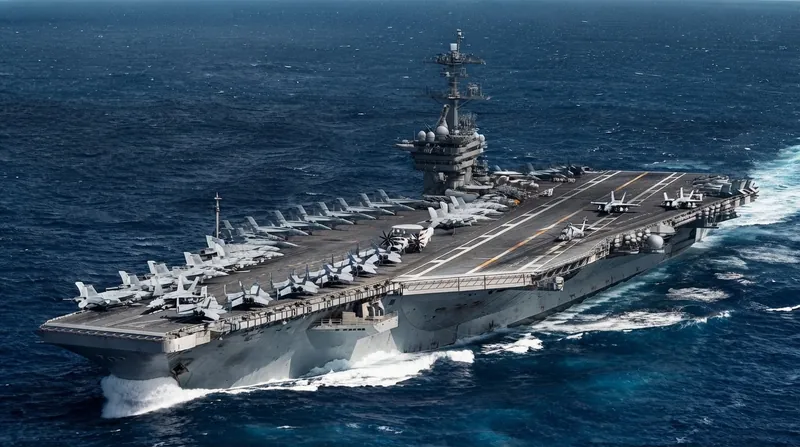
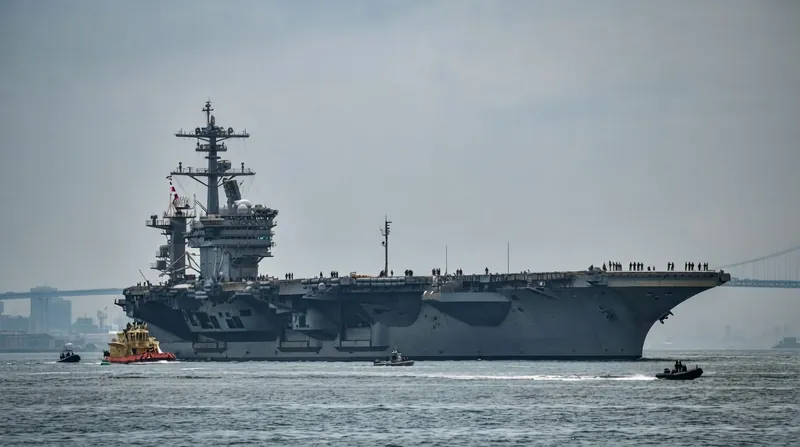
USS Theodore Roosevelt Assumes Middle East Watch as George Washington Departs
AIAIAIBahrain Reports Industrial Blaze After Iranian Strike as IRGC Targets US Bases
AIAIAISenate Republicans Block Bipartisan Resolution to Limit Trump's War Powers in Iran Conflict
AIAISaudi Arabia and US Review War Plans as Coalition Intercepts Houthi Missile Barrage Over Riyadh
AIAIUS Fighter Jets Strike Iranian Missile Launch Site on Qeshm Island Following Gulf Attacks
AIAIUS Weighs Iranian Dirty Bomb Plot Accusations as Trump Issues Warning to Tehran
Houthi Forces Push Toward Interim Capital of Aden Following Strategic Gains
AIAIAI



Earlier live pages
How the story developed
The conflict escalated significantly in early June when US forces struck Iranian radar sites and Iran fired ballistic missiles at US bases in Kuwait and Bahrain. Following US strikes on Iranian military targets after an American helicopter was downed, and threats by President Trump to seize Kharg Island, the two nations finalized the Pakistan-mediated Islamabad Memorandum of Understanding on June 12. The agreement temporarily reopened the Strait of Hormuz and lifted the US naval blockade, easing a global energy crisis.
The ceasefire collapsed by late June after Iran closed the Strait of Hormuz, citing Israeli strikes in Lebanon as a violation of the agreement. Despite brief progress in Switzerland that led to the US waiving oil sanctions and unfreezing $12 billion in Iranian assets on June 23, hostilities resumed. After a brief China-brokered ceasefire collapsed in July, President Trump imposed a 20 percent tariff on Strait cargo and reinstated a full US naval blockade on July 14. The US Treasury subsequently launched a secondary sanctions campaign, weaponizing access to the US dollar to force global markets to sever ties with Tehran.
As the conflict widened, regional powers formed new security architectures. On August 14, Saudi Arabia launched a 14-nation Red Sea defense alliance, and by September 6, Turkey, Pakistan, and Saudi Arabia formalized the Mecca Joint Defense Agreement. Concurrently, Yemen's Houthi rebels escalated their offensive, capturing the strategic Mokha port, Perim Island, and the Hanish Islands in September to tighten control over the Bab el-Mandeb Strait. Houthi forces launched repeated missile and drone strikes on Saudi energy infrastructure and airports, prompting retaliatory coalition airstrikes.
The maritime conflict intensified through September and October, with the US destroying Iranian oil tankers and deploying high-energy laser weapons to the Strait of Hormuz. Iran claimed multiple commercial vessels struck naval mines and launched ballistic missiles at US bases in Jordan, damaging military aircraft. The effective closure of the Strait of Hormuz drove global diesel prices to record highs and prompted the G7 and International Energy Agency to coordinate a 100-million-barrel release from strategic reserves on October 2.
In October, the regional proxy war deepened as Houthi strikes targeted Riyadh's airport and Saudi Aramco facilities. In response, Egypt and Syria pledged military support to Saudi Arabia, and the UK deployed RAF fighter jets to Riyadh. Meanwhile, British counter-terrorism police arrested multiple individuals over an Iranian intelligence plot targeting RAF Fairford, a base used by US strategic bombers, leading the US to evacuate aircraft from multiple British installations.
Diplomatic efforts faltered again in November. After Iran forwarded a nuclear proposal via Qatar with seven preconditions on November 6, the US launched fresh airstrikes on Iranian air defenses on Qeshm Island. On November 13, President Trump abruptly halted US participation in ceasefire negotiations and removed Vice President JD Vance from the diplomatic channel. The breakdown was accompanied by Iranian threats to strike US bases in Europe and a renewed Houthi offensive in Yemen that pushed rebel forces to within 45 kilometers of the interim capital of Aden.